
TL;DR

Get your home office setup delivered free — and shop member deals
- Fast, free delivery on millions of items
- Access to Prime Big Deal Days deals on October 6–7
- Prime Video, Amazon Music and more included
A Livingetc interiors report describes renewed interest in Swedish kakelugnar and other northern European ceramic stoves among UK designers. Industry and design sources say the stoves can store heat for many hours after one burn, but costs, installation requirements and emissions depend on the specific model and fuel.
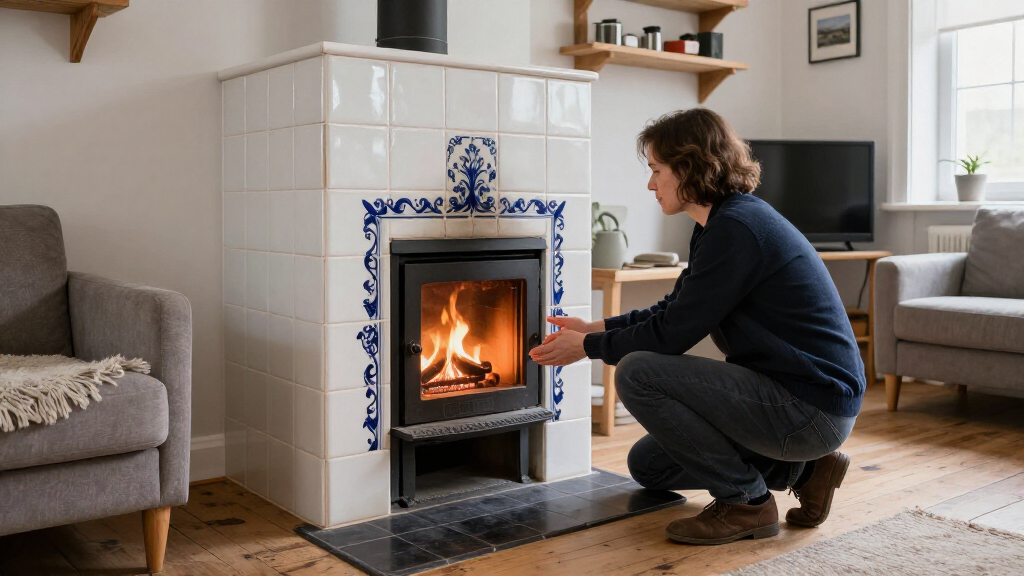
Livingetc has reported that British interior designers are increasingly using ceramic stoves, including Swedish kakelugnar, as sculptural alternatives to conventional woodburners. The report says these stoves can release stored heat for 12 to 24 hours after one burn, according to Alan Hills, director of The Ceramic Stove Company, while also noting their higher upfront cost and installation requirements.
A ceramic stove, known as a kakelugn in Swedish and a kachelofen in German, burns fuel in a firebox and transfers heat to its ceramic body. Hills told Livingetc that a single hot burn can provide warmth for 12 to 24 hours and use fewer logs than a conventional woodburner. The source does not provide independent test results or define the conditions behind that range.
Hills also said the fire burns hotter, allowing more particulates to be combusted in the firebox and resulting in fewer emissions. That is an industry source’s claim, not a quantified comparison in the report. The article does not identify a specific emissions standard, provide measurements, or establish that every ceramic stove performs the same way.
The report describes installations in homes and design projects, including a gas-fitted stove in an East London terrace. Designer Olivia Outred said gas was selected to meet the project’s air-quality requirements. Other examples include a custom pink stove in a Finnish home and a terracotta model in a project in Ontario. These examples show different approaches to appearance and fuel, rather than one standard product or installation.
Heat Storage Meets Interior Design
The appeal described in the report is both practical and visual. Unlike a conventional open fire that sends much of its heat up the chimney, a heat-storing ceramic stove is designed to absorb warmth and release it over time. If a particular model performs as claimed, that could mean longer-lasting radiant heat from a shorter period of burning. The report does not establish household savings, however, and fuel costs, insulation, stove size and use would all affect the outcome.
For homeowners, the installation is also a significant commitment. The article says prices start at several thousand pounds and describes these stoves as long-lasting investments, but gives no detailed price list, payback calculation or independent lifespan data. Their substantial, tiled forms can become a room’s focal point, while their weight and build process require planning before decoration is complete.
The environmental case needs the same care. Lower emissions than a conventional woodburner are presented by Hills, but the article supplies no test data to support a general comparison. Fuel choice and local air-quality rules matter; the East London gas installation is one project-specific example, not proof that every home or model can use the same option.
As an affiliate, we earn on qualifying purchases.
A Northern European Heating Tradition
Ceramic stoves have a centuries-old history in northern Europe, according to the Livingetc report, but the article characterizes them as a relatively new direction for British interior design studios. Their tiled exteriors can be plain, patterned or custom-coloured, and the report notes that some are built from modular components while others are assembled in the room.
Hills attributed limited UK familiarity to households’ greater experience with open fires, which he described as less efficient. The report also places the renewed design interest alongside concerns about clean-air guidance and wood-burning emissions. It does not report a new regulation or a change in national policy; the development is a trend piece about design adoption, not a regulatory announcement.
Installation can involve creating a supporting brick structure before applying ceramic tiles. Hills advised timing the work after wet trades such as plastering are finished and said some properties may need a reinforced base. Outred described the process in her project as assembling the tiled stove in the room. The precise requirements will depend on the product and building.
“Ceramic stoves work by generating heat for 12 to 24 hours from one hot burn, using far fewer logs than a conventional wood burner.”
— Alan Hills, director of The Ceramic Stove Company, as quoted by Livingetc
heat-storing woodburner alternative
As an affiliate, we earn on qualifying purchases.
As an affiliate, we earn on qualifying purchases.
Performance and Costs Vary
The report does not give independent evidence for the stated 12-to-24-hour heat duration, the claim of using fewer logs, or the assertion that the fire produces fewer emissions. It provides no model-by-model data, testing conditions or comparison baseline. Readers cannot use the article alone to determine how a particular stove would perform in their home.
Costs are also only described broadly: the article says prices start at several thousand pounds, without specifying models, installation charges or running costs. It does not set out the structural checks, building approvals or local rules that may apply to an individual property. Those details, as well as whether a wood-, gas- or other fuel option is suitable, remain dependent on the product, home and location.
As an affiliate, we earn on qualifying purchases.
Check the Model Before Installation
Livingetc presents ceramic stoves as a design and heating option, but it does not announce a new product launch, policy decision or scheduled industry milestone. For anyone considering one, the next step is to compare the specific stove’s tested heat and emissions information, fuel requirements, price and installation instructions rather than relying on general claims about the category.
Homeowners should also ask a qualified installer to assess the floor or base, flue and proposed location before work begins. The report recommends planning installation after plastering and other wet trades are complete; its examples show that a stove can be built into a room, so the work needs to be coordinated with the wider project. Local air-quality rules and building requirements should be checked for the property and chosen fuel. The supplied source gives no date for further reporting or any planned policy change.
As an affiliate, we earn on qualifying purchases.
Key Questions
What is a Swedish kakelugn?
A kakelugn is a Swedish term for a ceramic stove. The Livingetc report describes these tiled stoves as heat-storing appliances that can also serve as prominent interior features.
How long can a ceramic stove stay warm after a burn?
Alan Hills of The Ceramic Stove Company told Livingetc that a hot burn can provide heat for 12 to 24 hours. The article does not include independent tests or explain the conditions behind that estimate.
Are ceramic stoves proven to produce fewer emissions?
Hills said the hotter fire combusts more particulates in the firebox and produces fewer emissions. The report gives no emissions measurements or testing comparison, so that claim should not be treated as independently verified for every model.
How much does a ceramic stove cost?
The report says prices start at several thousand pounds. It does not provide model prices, installation costs or a calculation of potential fuel savings.
What should homeowners check before installing one?
Check the chosen model’s fuel, installation instructions and performance information, and have the building and proposed base assessed by a qualified installer. The report says some stoves may need a reinforced base and recommends fitting them after plastering and other wet work; local rules also depend on the home and fuel.
Source: rss
Fall Picks
fall essentials
As an affiliate, we earn on qualifying purchases.