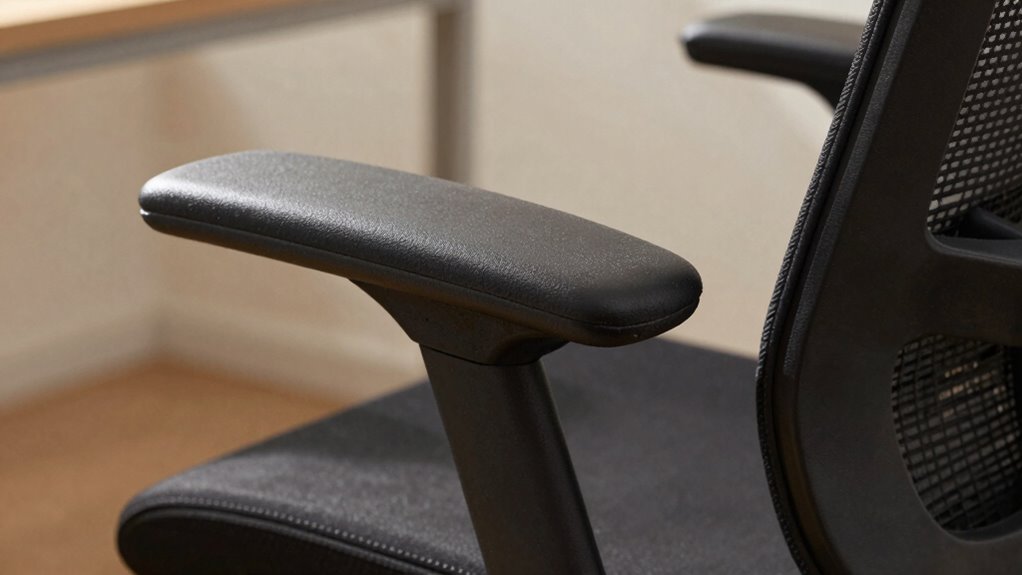

If your armrests are too high or low, you’ll feel discomfort and strain in your shoulders and neck, making your workspace feel wrong. Having armrests that don’t support your arms at a comfortable, relaxed angle—ideally with elbows at about 90°—can cause poor posture and longer-term health issues. Adjusting your armrests precisely can help you stay comfortable and aligned. For tips on perfect positioning, keep going to learn more.
Key Takeaways
- Incorrect armrest height can cause shoulder tension and discomfort during prolonged use.
- Armrests set too high elevate shoulders, leading to strain and poor posture.
- Armrests too low leave arms unsupported, causing hunching and fatigue.
- Properly adjustable armrests help maintain relaxed shoulders and optimal arm alignment.
- Regularly adjusting armrest height ensures ergonomic comfort and prevents musculoskeletal issues.
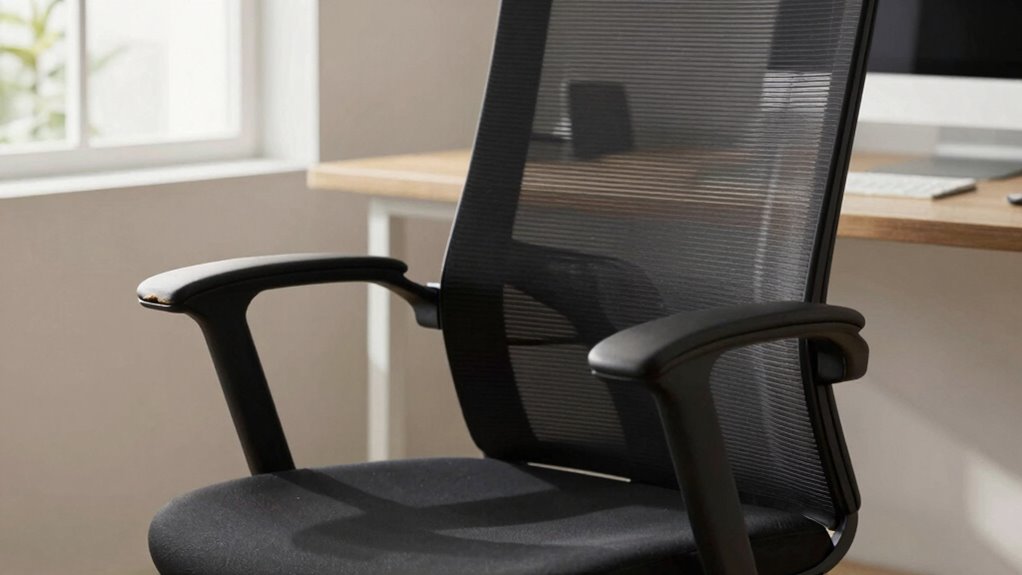
Have you ever wondered how the height of your office chair’s armrests can impact your comfort and posture? It’s a small adjustment that can make a big difference in how you feel during the day. When armrests are set too high or too low, they can cause unnecessary strain on your shoulders, neck, and upper back. Properly positioned armrests provide ergonomic benefits by supporting your arms and reducing muscle fatigue, but only if they’re at the right height. That’s where adjustable features come into play. An office chair with adjustable armrests allows you to fine-tune the height easily, aligning them perfectly with your desk and your body’s natural posture.
Properly adjusted armrests support comfort and posture, reducing strain and fatigue during your workday.
If the armrests are too high, they’ll push your shoulders upward, leading to tension and discomfort over time. Conversely, if they’re too low, your arms might hang unsupported, causing your shoulders to hunch forward and inviting poor posture. Both scenarios can result in ergonomic issues that impact your productivity and overall health. When you understand the importance of proper armrest height, you realize that ergonomic principles can help you optimize your workspace setup for better comfort and health. Adjusting armrests to the correct height is a simple step toward supporting your posture and preventing discomfort. Maintaining proper ergonomic alignment is essential for long-term comfort and health, especially if you spend many hours at your desk. Additionally, being aware of how air quality can influence your overall well-being might encourage you to create a more comfortable and health-supportive workspace.
Getting the height right isn’t complicated, but it does require awareness. You should be able to rest your forearms comfortably on the armrests with your elbows at roughly a 90-degree angle. Your shoulders should remain relaxed and not elevated or hunched. If you notice tension in your neck or shoulders, it’s a sign that your armrests are misaligned. Adjusting them to a more suitable height can alleviate this discomfort, making your workspace more ergonomic and less stressful on your body. A common mistake is leaving armrests at a fixed height that doesn’t match your body or desk setup, which can lead to ineffective ergonomic support and discomfort over time. This oversight makes your workspace feel wrong, even if everything else is perfect. When your armrests are correctly adjusted, the entire experience of working at home becomes more comfortable. It’s a simple tweak that can prevent long-term musculoskeletal problems and boost your overall well-being. Remember, ergonomic benefits are maximized when your chair’s features work harmoniously with your body, so take the time to set your armrests at the right height and enjoy the difference it makes.
adjustable office chair armrests
As an affiliate, we earn on qualifying purchases.
As an affiliate, we earn on qualifying purchases.
Frequently Asked Questions
How Do I Measure the Correct Armrest Height Accurately?
To measure the correct armrest height, sit comfortably with your shoulders relaxed and elbows bent at a 90-degree angle. For ideal ergonomic design, position the armrests so they support your arms without raising or lowering your shoulders. Use a tape measure to find the height from the seat to your forearm. Make certain the armrest padding aligns with your elbows for comfort, preventing strain and promoting better posture.
Can Adjustable Armrests Improve Overall Sitting Comfort?
Sure, adjustable armrests can turn your chair into a throne of comfort. With ergonomic design and cushioned armrest padding, you’ll avoid that “why does my shoulder ache?” feeling. You get to customize height and angle, making long work sessions feel like a breeze. It’s like a personal butler for your arms, ensuring proper posture and reducing fatigue. Who knew comfort could be so adjustable and stylish?
What Materials Are Best for Durable Armrests?
For durable armrests, you should choose materials with high material durability like high-quality plastic, metal, or reinforced foam. These materials resist wear and tear over time, ensuring long-lasting support. While comfort is essential, prioritize armrest comfort with cushioned or padded surfaces that don’t compromise durability. Combining sturdy materials with ergonomic design provides both lasting support and a comfortable resting place for your arms during long hours at your desk.
Do Armrest Height Differences Affect Neck Posture?
Did you know that improper armrest height can increase neck strain by up to 30%? Yes, armrest height differences considerably affect your ergonomic posture and armrest alignment. When armrests are too high or low, you’ll unconsciously tilt your head, leading to neck discomfort. To avoid this, adjust your armrests so they support your arms comfortably, keeping your shoulders relaxed and your neck in a neutral position.
How Often Should I Replace or Adjust My Office Chair Armrests?
You should replace or adjust your office chair armrests whenever they cause discomfort or no longer support your posture. Check the armrest padding for signs of wear and replace if it’s compressed or torn. Adjust the armrest height and width so your shoulders stay relaxed and your elbows form a 90-degree angle. Regularly reviewing these settings guarantees proper support, preventing neck and shoulder strain during long work sessions.
ergonomic office chair with height adjustable armrests
As an affiliate, we earn on qualifying purchases.
As an affiliate, we earn on qualifying purchases.
Conclusion
Getting your office chair armrest height right isn’t just about comfort—it can boost your productivity and prevent strain. Did you know that improper armrest height can contribute to shoulder and neck pain in up to 60% of office workers? Adjusting your armrests properly helps keep your arms and shoulders relaxed, reducing fatigue. So, take a moment to set them correctly; it’s a simple fix that makes a big difference in your daily comfort and long-term health.
office chair armrest height extender
As an affiliate, we earn on qualifying purchases.
As an affiliate, we earn on qualifying purchases.
ergonomic desk chair for shoulder support
As an affiliate, we earn on qualifying purchases.
As an affiliate, we earn on qualifying purchases.