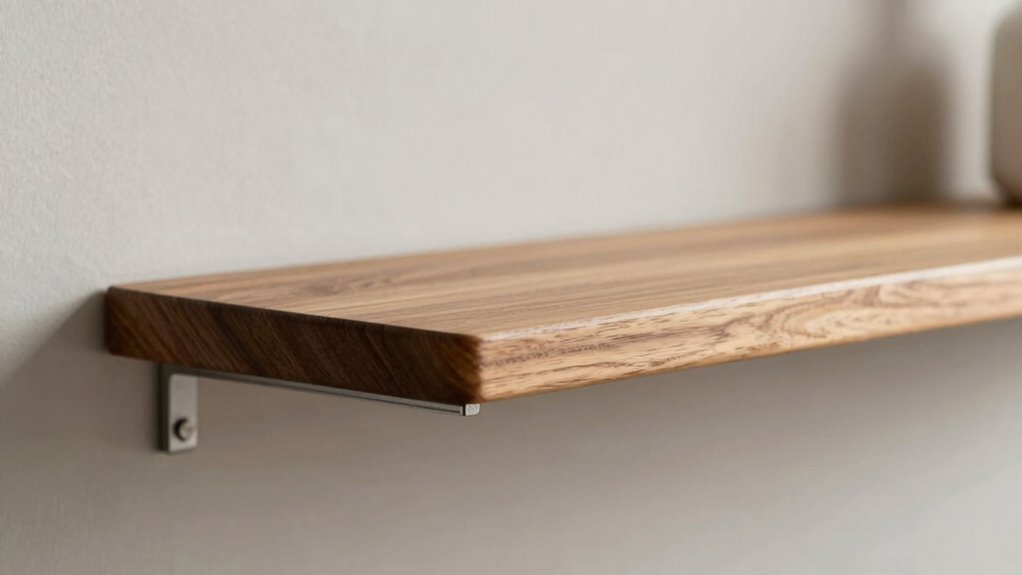
The biggest mistake buyers make is overlooking proper wall anchoring, which leads to sagging over time. Many rely on lightweight hardware or don’t anchor into studs, causing shelves to slowly bend or fall. Using heavy-duty anchors, concealed brackets, and reinforcing weak walls can prevent this. The key is understanding your wall type and load capacity. If you want to keep your shelves sturdy and long-lasting, there’s one essential detail you shouldn’t ignore — learn more to get it right.
Key Takeaways
- Many buyers underestimate the importance of anchoring into wall studs rather than just drywall.
- Using hardware rated below the shelf’s weight capacity causes increased sagging over time.
- Incorrect or insufficient mounting hardware weakens the overall stability of the floating shelf.
- Failing to reinforce weak walls or adding additional support leads to premature sagging.
- Ignoring proper material and thickness selection compromises the shelf’s ability to resist bending.
Floating shelves can add a sleek, modern look to your space, but if not installed properly, they may sag over time. The key to avoiding this common issue lies in understanding how wall mounting techniques and material selection influence the shelf’s durability. Many buyers overlook the importance of how the shelf is anchored to the wall, assuming that simply attaching it will guarantee long-term stability. However, the strength of your wall mounting system directly impacts whether your shelf will hold up under weight or start to dip. Using the right hardware—such as heavy-duty anchors or concealed brackets designed for load-bearing—is crucial. You want to make sure that the mounting hardware is appropriate for your wall type, whether drywall, plaster, or brick, because each requires different installation methods to distribute the weight evenly.
Proper wall mounting and hardware are essential to prevent floating shelves from sagging over time.
Material selection is equally crucial. Many people choose shelves based on aesthetics alone, opting for lightweight or decorative materials that can’t support much weight. But if you want a shelf that resists sagging, you need to look beyond appearance. Solid wood, engineered wood, or metal shelves are better options for durability and load capacity. When selecting material, consider its thickness and density—thicker, denser materials tend to be more resistant to bending or warping over time. It’s also worth considering how the material interacts with the wall mounting system. For example, a thinner shelf with strong brackets can outperform a thicker, unsupported one. Additionally, understanding the importance of wall mounting techniques can help you achieve a secure and long-lasting installation. Proper wall reinforcement can further prevent issues with sagging, especially in weaker wall structures. Using the correct hardware and tools during installation also plays a vital role in ensuring stability and longevity. Moreover, paying attention to the weight capacity of your chosen hardware ensures your shelf can support your intended items without risk of failure.
Many buyers make the mistake of not reinforcing the mounting points properly or failing to use the correct hardware for the weight they plan to put on the shelf. Overloading a shelf beyond its design limits causes sagging, but this can be avoided if you choose a sturdy mounting setup and a suitable material. Proper installation techniques—like anchoring into wall studs whenever possible—can dramatically improve the shelf’s lifespan. If you’re installing a shelf in a wall with no studs, always opt for high-quality wall anchors rated for the weight you expect to support.
Ultimately, preventing sagging isn’t just about choosing the right shelf—it’s about understanding the importance of wall mounting and material selection. When you pay close attention to these details, you guarantee your floating shelf remains sleek and functional for years to come, avoiding the common pitfalls that cause sagging and disappointment.
heavy-duty wall anchors for floating shelves
As an affiliate, we earn on qualifying purchases.
As an affiliate, we earn on qualifying purchases.
Frequently Asked Questions
What Materials Are Best for Preventing Floating Shelf Sag?
You should opt for materials with high durability, like solid wood or metal, to prevent sagging. These materials naturally support more weight. Additionally, incorporating shelf reinforcement, such as metal brackets or internal supports, boosts stability. Avoid weaker materials like particleboard or MDF for heavy loads, as they’re prone to bending over time. Combining durable materials with proper reinforcement guarantees your floating shelf remains sturdy and sag-free.
How Much Weight Can a Typical Floating Shelf Hold?
Like Icarus flying too close to the sun, a typical floating shelf often can’t hold too much weight without sagging. Most standard shelves support around 20-50 pounds, but with proper installation and materials, you can increase this. When considering decorative accents or shelf customization, always check weight limits, and guarantee your brackets and anchors are strong enough. Proper support prevents sagging and keeps your display safe and stylish.
Can I Fix a Sagging Floating Shelf Without Removing It?
Yes, you can fix a sagging floating shelf without removing it. First, check the shelf’s installation—tighten any loose screws or brackets to improve support. If needed, add additional brackets or install a support strip underneath for extra strength. Consider decorative options like a trim or molding to conceal the fix. These steps reinforce the shelf, restoring its appearance and functionality without the hassle of removal.
Are There Specific Wall Types That Support Floating Shelves Better?
You’ll find that solid drywall or plaster walls offer the best support for floating shelves, especially when reinforced with quality wall anchors and sturdy shelf brackets. If your wall is textured or weaker, consider installing additional support or choosing a different wall type. Properly anchored shelves feel more secure and prevent sagging, giving you peace of mind and a beautifully organized space. Don’t underestimate the importance of strong wall support for perfect shelves.
How Often Should I Check My Floating Shelves for Sag?
You should check your floating shelves for sag every few months, especially if you’ve added shelf decor or heavy items. Regular inspections help you catch signs of strain early. Use proper mounting techniques, like sturdy brackets and strong drywall anchors, to prevent sag. When you notice any bowing, reinforce the mounting or redistribute weight. Staying vigilant ensures your shelves stay level and support your decor without issue.
concealed mounting brackets for shelves
As an affiliate, we earn on qualifying purchases.
As an affiliate, we earn on qualifying purchases.
Conclusion
Think of your floating shelf as a delicate bridge—one misstep can cause it to sag and break. By choosing the right materials and installing it properly, you’re building a sturdy path that supports your treasures. When you get it right, your shelf becomes a symbol of strength and balance in your space, holding more than just objects—it holds your confidence. So, take care with each step, and let your shelf stand tall, resilient, and true.
wall reinforcement kits for drywall
As an affiliate, we earn on qualifying purchases.
As an affiliate, we earn on qualifying purchases.
As an affiliate, we earn on qualifying purchases.