TL;DR

Get business pricing on your home office setup
- Business-only prices and quantity discounts
- Tax-exempt purchasing
- Multiple users, one account, clear invoices
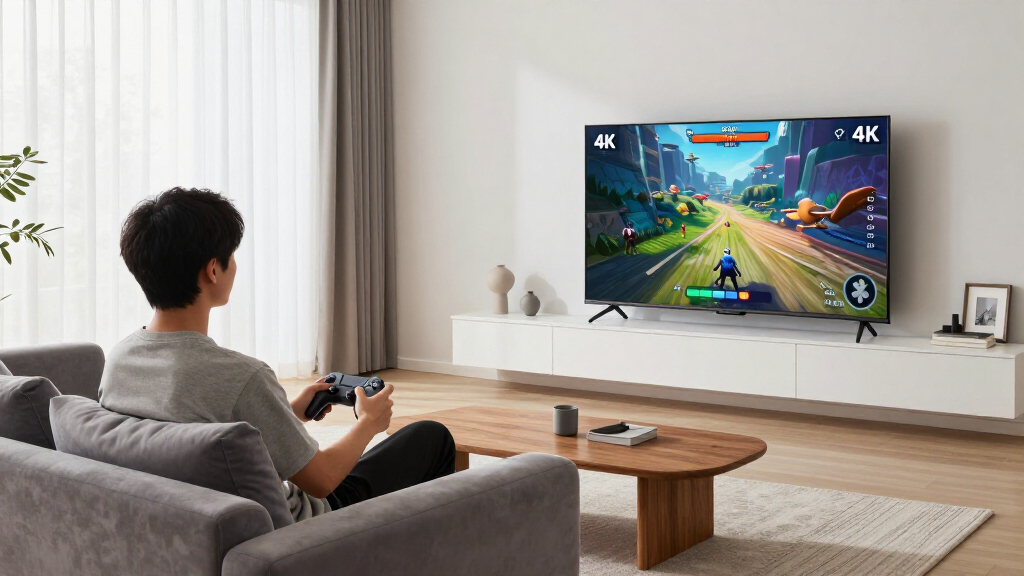
Large 4K OLED TVs combine vivid colors, deep blacks, and fast response times, making them ideal for gaming. Key factors include refresh rate, HDMI 2.1, and size, but room conditions and budget also matter.
Imagine diving into a game world so rich it feels like stepping inside it. That’s what a large 4K OLED TV can do for your gaming setup. These screens aren’t just about size—they’re about stunning contrast, sharp detail, and lightning-fast response times that make every move feel instant.
If you’re eyeing a big upgrade, understanding what makes an OLED a game-changer is essential. From size to smart features, this guide helps you cut through the marketing noise. You’ll learn what specs truly matter and how to pick a TV that turns your living room into a next-gen gaming arena.
Choose a size based on your room and seating distance—larger screens create more immersion but need space.
Prioritize HDMI 2.1, VRR, and low input lag to ensure smooth, responsive gameplay.
High peak brightness and good HDR handling make game effects pop, even in bright environments.
Be aware of potential burn-in; vary your content and use protective features to prolong your TV’s life.
Read independent reviews for real-world data on lag, motion, and picture uniformity before buying.
Why a Large 4K OLED TV Is a Game-Changer for Your Play
OLED technology offers unmatched contrast and color vibrancy. Each pixel lights independently, creating perfect blacks and eye-popping highlights. This means your games will have a more dynamic range, with shadows and highlights rendered with exceptional depth. For gamers, this contrast enhances immersion, making environments feel more realistic and detailed.
Size amplifies this effect. A 77-inch screen, for example, envelops you in the game, making distant enemies appear larger and more detailed, which can improve your situational awareness. Faster pixel response times and low input lag ensure your commands are reflected instantly, a critical advantage in fast-paced titles where reaction time determines success.
Consider the scenario of a sci-fi game where the starship’s engines glow orange against a black void. The OLED’s ability to render deep blacks and bright highlights simultaneously makes the scene feel alive, pulling you deeper into the experience. The combination of size, contrast, and speed not only enhances visual fidelity but also heightens emotional engagement, transforming gaming from a hobby into a visceral experience. However, larger screens demand more space and careful positioning to maximize their benefits without causing discomfort or eye strain.
As an affiliate, we earn on qualifying purchases.
Top Features That Make These OLEDs Perfect for Gaming
| Feature | Why It Matters |
|---|---|
| 120Hz and VRR | These features provide smoother gameplay by reducing tearing and stuttering, especially in fast action scenes. A higher refresh rate ensures that rapid movements are rendered fluidly, which is crucial for competitive gaming. Variable Refresh Rate (VRR) dynamically syncs the display with your GPU’s frame output, preventing artifacts and making gameplay feel more seamless. Without these, fast-paced games can appear choppy, and input lag can be more noticeable, diminishing responsiveness. |
| HDMI 2.1 | Supports 4K at 120Hz, auto low latency mode, and VRR—these features are essential for unlocking the full potential of current gaming consoles like PS5 and Xbox Series X. They enable high-resolution, high-refresh-rate gaming with minimal input lag, providing a competitive edge and stunning visuals. Lacking HDMI 2.1 means missing out on these benefits, forcing compromises on resolution or responsiveness. |
| Low Input Lag | Critical for fast reactions, a low input lag (ideally under 20ms in game mode) ensures that your controller inputs translate nearly instantaneously on-screen. This responsiveness can be the difference between winning and losing in competitive titles. Higher input lag can create a noticeable delay, reducing the feeling of control and immersion, especially in precision-demanding games. |
| High Peak Brightness | Enhances HDR effects by allowing brighter highlights and more vivid reflections. In well-lit rooms, a high peak brightness prevents HDR content from appearing washed out, maintaining contrast and detail. This means explosions, gunfire, and reflective surfaces look more realistic and impactful, elevating the overall visual experience. |
| Fast Response Time | Reduces motion blur during rapid movements, keeping fast scenes clear and smooth. This is especially important in sports, racing, and shooter games where quick reactions are necessary. A fast response time prevents ghosting and smear effects, ensuring that fast-moving objects are crisp and well-defined, which enhances both clarity and immersion. |
For example, a 77-inch OLED with a 120Hz refresh rate and HDMI 2.1 can handle Xbox Series X and PlayStation 5’s best games at 4K/120Hz, delivering crisp, tear-free images with minimal lag, giving you a competitive edge and a more immersive experience.
As an affiliate, we earn on qualifying purchases.
Size Matters: How Big Should Your Gaming Screen Be?
Choosing the right size depends on your room dimensions and how close you sit to the screen. A 55-inch TV feels ideal at around 7-9 feet, providing a good balance between immersion and comfort. Larger screens, like 77 inches or even 83 inches, create a cinema-like experience, immersing you fully in the game world.
Imagine sitting 10 feet from an 83-inch screen. Every detail appears sharp, and the sense of immersion can be overwhelming—in a good way. However, if your seating is closer, such a large display might cause eye strain or make it difficult to take in the entire screen at once, reducing situational awareness.
Use this rule of thumb: measure your room and seating distance, then multiply that distance by 0.6 to 0.8 to determine the optimal screen size. For instance, at 8 feet, a 55-65 inch TV offers a comfortable viewing experience, while at 10+ feet, a 77-inch or larger screen enhances immersion without overwhelming your space.
As an affiliate, we earn on qualifying purchases.
The Trade-Offs: What You Need to Know Before Buying
Large OLEDs offer incredible visual benefits but come with trade-offs that are important to understand. Price is a significant factor; larger screens and models with advanced features tend to be more expensive. Additionally, performance in bright rooms can vary—OLEDs excel in dark environments due to their perfect blacks, but glare and reflections can diminish picture quality in bright sunlight or well-lit spaces.
Burn-in risk remains a consideration, especially if static elements like health bars or HUDs are left on-screen for extended periods. While modern OLEDs include protective measures such as pixel shifting and screen savers, it’s prudent to vary your content and avoid static images to prolong panel life.
Panel uniformity and black level consistency can differ between units, particularly at larger sizes or higher prices. This can manifest as slight variations in black levels or color uniformity across the screen, impacting overall picture quality. Furthermore, not all HDMI 2.1 ports are equal—some may lack full support for all gaming features, so verifying specifications is essential to avoid missing out on key benefits.
For example, investing in a high-end 77-inch OLED with all the latest features can offer superb picture quality, but it may cost nearly twice as much as a smaller or less feature-rich model. Balancing your budget with your desired gaming experience involves considering these trade-offs carefully to ensure you get the best value and performance for your needs.
As an affiliate, we earn on qualifying purchases.
How to Pick the Perfect Large OLED for Your Gaming Setup
- Define your room size and seating distance. Use the 0.6-0.8 rule for screen size to ensure comfort and immersion.
- Check for HDMI 2.1 ports supporting 4K/120Hz, VRR, and ALLM—preferably multiple ports to future-proof your setup.
- Prioritize models with a low input lag (<20ms in game mode) to ensure responsiveness in fast-paced games.
- Consider peak brightness and HDR capabilities for vibrant, impactful visuals, especially in well-lit rooms.
- Set a realistic budget and compare features across brands like LG and Sony. Don’t forget to read customer reviews and independent tests for real-world performance data.
- Assess whether the TV has additional gaming features like auto low latency mode, motion smoothing options, and calibration settings to optimize your experience.
Imagine connecting your PS5 to a 77-inch OLED, gaming in 4K/120Hz, with HDR effects that make your game’s explosions leap off the screen. Choosing the right model involves balancing size, features, and budget to create an ideal gaming environment tailored to your space and preferences.
Current Top Models for Gaming—What’s Available Now
Here are some of the best large OLED options that combine gaming features and top-tier picture quality:
- LG 77-Inch Class OLED evo AI: Offers a 144Hz refresh rate, NVIDIA G-Sync, AMD FreeSync, and a bright, vivid picture. Its combination of size and advanced gaming tech makes it ideal for serious gamers seeking both immersion and responsiveness.
- Sony 83-Inch BRAVIA XR A80L: Boasts 4K HDR, HDMI 2.1, and sophisticated processing that handles fast-paced games with clarity and smoothness, providing a cinematic experience that elevates gameplay.
- LG 55-Inch OLED AI 4K B5: Smaller but packed with gaming features like VRR, 120Hz, and low latency—perfect for limited space while still offering high responsiveness and visual quality.
While the LG 77-inch OLED is a giant and offers impressive performance, the Sony 83-inch provides a more cinematic, immersive experience. Both models include essential gaming tech, but your choice should align with your space, budget, and gaming priorities.
Maximize Your Gaming Experience: Tips for Setup and Use
- Enable game mode to reduce input lag—often under 15ms on OLEDs, which is crucial for competitive play.
- Use HDMI 2.1 cables rated for 48Gbps to ensure full support for 4K/120Hz, VRR, and ALLM features.
- Adjust HDR settings based on your room’s brightness. Overexposure can wash out details, so calibrate to preserve contrast and color vibrancy.
- Position your seating so your eyes are level with the center of the screen. Proper ergonomics improve comfort and reduce eye strain during long gaming sessions.
- Vary your content and use screen savers to prevent burn-in, especially with static HUD elements or health bars that stay on-screen for extended periods.
For example, turning on ALLM when switching from a movie to a game can instantly activate the optimal picture mode, maximizing responsiveness and visual quality without manual adjustments.
Frequently Asked Questions
Is a large 4K OLED TV worth it for gaming?
Yes. The contrast, response times, and immersive size create a gaming experience that’s hard to beat. It’s especially worth it if you play fast-paced or visually rich titles.How does size affect gaming performance?
A larger screen enhances immersion but requires more space and a suitable seating distance. Too close, and it may cause eye strain; too far, and you might miss fine details.Do I need HDMI 2.1 for gaming?
Absolutely. HDMI 2.1 supports 4K at 120Hz, VRR, and ALLM—features that unlock the full potential of current consoles and gaming PCs.Is burn-in still a risk with OLEDs?
While modern OLEDs include protective measures, static elements left on-screen for long periods can cause burn-in. Vary your content and use screen savers for longevity.Will a bright room diminish OLED’s contrast?
Bright environments can wash out OLED contrast slightly, but newer models with higher peak brightness handle reflections better, making HDR effects still stand out.Conclusion
Large 4K OLED TVs can turn your gaming sessions into cinematic adventures—if you pick carefully. Focus on size, gaming features, and room fit, and you’ll get a setup that makes every game feel like the first time.
Remember, the right TV isn’t just about size or specs; it’s about how it fits your space and gaming style. Think of it as choosing your window into another world—make sure it’s perfect.
Fall Picks
fall essentials
As an affiliate, we earn on qualifying purchases.