
To anchor tall bookcases safely, you need to pick the right wall anchors based on your wall type—drywall or concrete—and install brackets or straps properly. Locate studs or use suitable anchors, align everything with a level, and make certain hardware is securely attached. Avoid common mistakes like improper hardware or ignoring weight distribution. Regularly check and maintain your bookcase to prevent accidents. Keep going, and you’ll discover even more essential tips for keeping your family safe.

Get business pricing on your home office setup
- Business-only prices and quantity discounts
- Tax-exempt purchasing
- Multiple users, one account, clear invoices
Key Takeaways
- Always locate wall studs or use appropriate anchors tailored to your wall type before securing the bookcase.
- Attach brackets at multiple points, especially the top and middle, for maximum stability.
- Use level tools during installation to ensure the bookcase is securely and properly aligned.
- Regularly inspect and tighten brackets, and place heavier items on lower shelves to prevent tipping.
- Avoid decorative obstructions that interfere with proper anchoring, and follow manufacturer instructions carefully.
As an affiliate, we earn on qualifying purchases.
Why Unanchored Tall Bookcases Are a Safety Risk
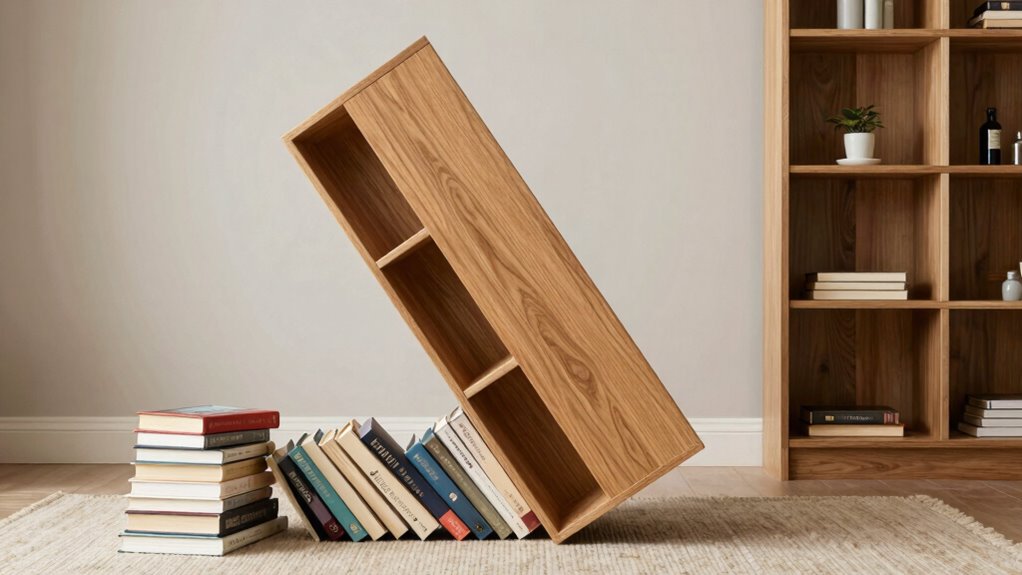
Unanchored tall bookcases pose a serious safety risk because they can easily tip over if bumped or if the weight distribution shifts unexpectedly. Furniture tipping is a common hazard, especially in homes with children or pets. When a bookcase isn’t anchored, even a slight bump can cause it to fall, risking serious injury. Wall reinforcement helps prevent this danger by providing stability. Without proper reinforcement, the entire piece becomes unstable, increasing the likelihood of tipping. You might think a tall bookcase is secure, but unanchored furniture remains a hazard. Recognizing this risk is vital to ensuring your space remains safe and free from preventable accidents. Incorporating sustainable materials when securing furniture can also reduce environmental impact while promoting safer living environments. Additionally, understanding furniture safety standards can help guide proper anchoring techniques to keep your home secure. Being aware of proper anchoring methods ensures that your furniture is correctly secured according to safety guidelines. Using proper installation techniques can further enhance stability and minimize the risk of accidents. For instance, selecting appropriate hardware and following manufacturer instructions can significantly improve the safety of your setup.
As an affiliate, we earn on qualifying purchases.
How to Choose the Right Wall Anchors for Your Bookcase

Choosing the right wall anchors for your bookcase is crucial to guarantee it stays secure and doesn’t tip over. First, consider your wall type—drywall or concrete—as this influences your drilling techniques and anchor choice. For drywall, toggle bolts or plastic expansion anchors work well, providing strong support. For concrete or brick walls, masonry anchors like sleeve anchors are more suitable. When selecting anchor types, look for weight ratings that match your bookcase’s load. Drilling techniques vary: use a drill bit appropriate for your wall material, and make sure you don’t drill too deep or too shallow. Proper installation is key—tighten anchors securely without damaging the wall or the anchor. This careful approach ensures your tall bookcase remains safely anchored and stable.
As an affiliate, we earn on qualifying purchases.
Easy Steps to Secure Your Tall Bookcase to the Wall
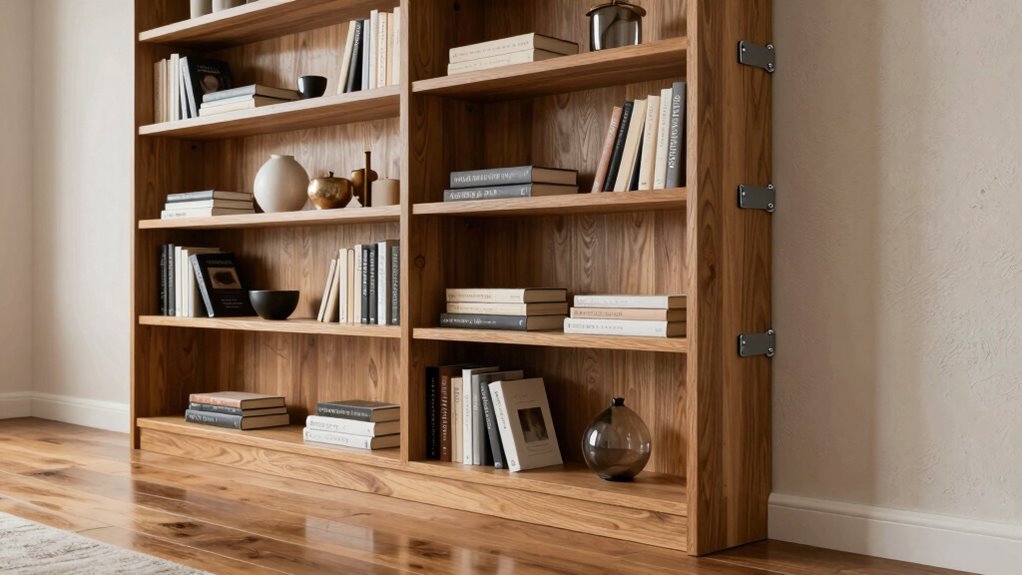
Securing your tall bookcase to the wall is a straightforward process that can substantially improve its stability and safety. Start by locating the studs or using appropriate wall anchors. Attach brackets or straps to the top and middle sections of your bookcase, ensuring they’re hidden behind decorative accents or interior styling elements. Use a level to keep everything straight. Then, connect the brackets to the wall anchors securely. This simple step prevents tipping and keeps your space safe. To make your setup look seamless, hide the hardware behind decorative accents or accessories. Remember, a well-anchored bookcase not only safeguards your family but also enhances your room’s aesthetic. Proper wall anchoring is essential for preventing accidents and ensuring long-term stability.
As an affiliate, we earn on qualifying purchases.
Common Mistakes When Anchoring Tall Bookcases: And How to Avoid Them

Even with the best intentions, it’s easy to make mistakes when anchoring tall bookcases that can compromise their stability and safety. One common mistake is neglecting decorative accents that could interfere with securing the unit properly. For example, placing decorative items on uneven surfaces may cause imbalance or make it harder to anchor securely. Also, focusing solely on aesthetic considerations without considering the weight distribution can lead to instability. Another error is using inappropriate hardware or not following manufacturer instructions, which weakens the anchor’s effectiveness. To avoid these pitfalls, verify decorative accents are placed carefully, keeping the center of gravity in mind. Proper installation techniques are crucial to ensure the stability of your tall bookcase. Prioritize proper hardware and installation techniques over aesthetics, and your tall bookcase will remain both beautiful and safe. Staying informed about market insights and industry best practices can help ensure your anchoring methods are up-to-date and effective. Additionally, familiarizing yourself with anchoring techniques can significantly improve safety and stability.
How to Check and Maintain Your Bookcase’s Stability Over Time

Regularly checking your bookcase’s stability is essential to guarantee it remains safe over time. Start by inspecting for shelf wobble, which can indicate uneven weight distribution or loose shelves. Gently shake each shelf to see if it moves or feels unstable. Check the overall tilt of the bookcase—if it leans forward or sideways, it might need realignment or additional support. Confirm that heavier items are placed on the lower shelves to maintain proper weight distribution, reducing the risk of tipping. Tighten any loose screws or brackets periodically to keep the structure secure. Pay attention to any signs of wear or damage, such as cracks or warping, and address issues promptly. Incorporating online success strategies can help you find reliable tools or tutorials for DIY repairs and maintenance. Regular maintenance, including structural integrity, keeps your bookcase safe and stable for years to come. Additionally, considering childproofing measures can be crucial if you have young children to prevent accidents. Remember that proper weight distribution not only enhances stability but also prolongs the lifespan of your furniture.
The Benefits of Proper Anchoring for Your Family’s Safety

Properly anchoring your tall bookcases considerably enhances your family’s safety by preventing accidental tip-overs that can cause injuries. When securely anchored, you reduce the risk of furniture falling, especially around children and pets. This safety measure also helps maintain a clutter-free environment, avoiding unexpected accidents. Additionally, proper anchoring allows you to choose furniture that complements your decorative aesthetics and seamlessly integrates into your interior design. Securely anchored bookcases can be styled to look sleek and modern or rustic and charming, without sacrificing safety or visual appeal. Investing in good anchoring methods ensures peace of mind, knowing your family is protected while your space retains its aesthetic charm. Incorporating smart home technology insights can further enhance your safety measures and provide added peace of mind. Being aware of furniture safety tips can also help you stay informed about the best practices for protecting your home, especially as furniture design evolves to prioritize safety features. Understanding anchoring techniques is crucial for effective safety upgrades in your home.
Frequently Asked Questions
Can I Anchor a Tall Bookcase Without Damaging My Walls?
Yes, you can anchor a tall bookcase without damaging your walls. Use decorative wall anchors that blend with your decor or opt for adhesive mounting options designed for lightweight fixtures. These solutions provide stability without drilling or causing holes, making your space stylish and safe. Just make certain you choose the right method based on your wall type and the weight of your bookcase to prevent accidents.
What Tools Are Needed to Anchor a Tall Bookcase Securely?
Think of it as building a fortress—you’re only as strong as your tools. To anchor a tall bookcase securely, gather a drill, a level, a stud finder, and appropriate brackets like L-brackets or strap brackets, considering their weight capacity. These tools help guarantee your anchors are precise, stable, and capable of supporting the bookcase’s weight. Proper anchoring keeps your furniture safe, just like a sturdy foundation supports a mighty castle.
How Often Should I Check the Stability of My Anchored Bookcase?
You should check your anchored bookcase’s stability every six months to guarantee proper weight distribution and anchoring height. Over time, furniture can shift or settle, which might loosen the anchors. Regular inspections help you spot any issues early, preventing accidents. During these checks, verify that the brackets or straps remain tight, and ensure the bookcase still sits level. Consistent maintenance keeps your furniture safe and secure.
Are There Specific Wall Types That Are Better for Anchoring?
Certain wall types, like drywall, require additional wall reinforcement for secure anchoring, while concrete or brick walls provide strong support naturally. You should use appropriate anchoring techniques tailored to your wall type, such as toggle bolts for drywall or masonry anchors for brick. Always assess your wall’s structure beforehand, ensuring you choose the right anchors and reinforcement methods to keep your tall bookcase stable and safe.
Can I Anchor a Bookcase to a Plaster Wall Safely?
You can anchor a bookcase to a plaster wall safely if you use decorative wall anchors designed for plaster. Visualize these anchors as tiny, sturdy bridges that hold your furniture in place. If the plaster is too fragile, consider alternative anchoring methods like toggle bolts or installing a ledger board. These options guarantee your tall bookcase stays secure without damaging your wall or risking tipping.
Conclusion
By anchoring your tall bookcase, you’re not just securing furniture—you’re anchoring peace of mind in your home’s foundation. Think of it as planting a mighty oak that withstands storms, safeguarding your loved ones from unexpected falls. With the right steps and attention, your bookcase becomes a steadfast guardian, standing tall and proud. Embrace these safety measures, and turn your space into a fortress of comfort, where every book and every moment is held safe and sound.
Fall Picks
fall essentials
As an affiliate, we earn on qualifying purchases.