
To keep dust and visual chaos at bay on your open shelves, adopt a simple rule: stay consistent with cleaning and choose materials that resist dust buildup. Use microfiber cloths, dust from top to bottom, and incorporate storage solutions like closed containers or barriers to hide clutter. Opt for smooth, non-porous surfaces, and consider smart styling to make dust less noticeable. Keep these practices in mind, and you’ll discover effective ways to maintain a tidy, appealing space.

Get business pricing on your home office setup
- Business-only prices and quantity discounts
- Tax-exempt purchasing
- Multiple users, one account, clear invoices
Key Takeaways
- Regularly dust shelves from top to bottom using microfiber cloths to prevent dust accumulation and maintain a tidy appearance.
- Choose dust-resistant materials like glass or metal with smooth finishes to minimize dust adherence.
- Incorporate concealed storage or fitted barriers to hide dust-prone items and reduce visual clutter.
- Use air purifiers and proper ventilation to reduce airborne dust settling on open shelves.
- Establish a consistent cleaning schedule to prevent dust buildup and keep open shelving visually clean.
microfiber dusting cloths for shelves
As an affiliate, we earn on qualifying purchases.
As an affiliate, we earn on qualifying purchases.
Why Dust Builds Up on Open Shelves and Why It Matters
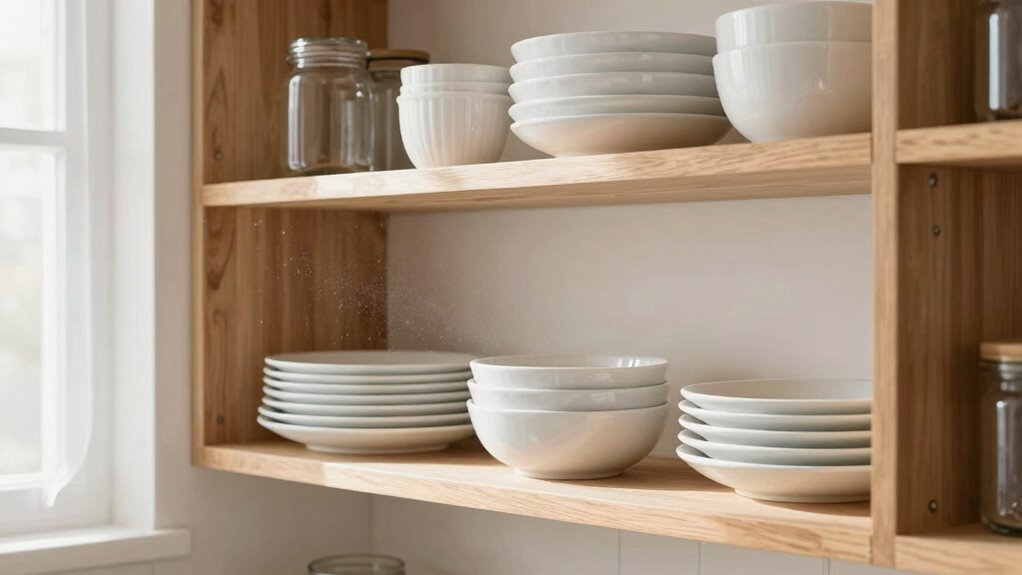
Dust naturally settles on open shelves because they lack the barriers that contain particles. Without doors or glass, airborne particles easily drift onto shelf surfaces, making dust buildup inevitable. The type of shelf materials also influences how quickly dust accumulates; porous or textured surfaces trap more particles, while smooth, non-porous materials resist dust adhesion better. You might notice that shelves made of wood, fabric, or particleboard tend to gather more dust than metal or glass ones. Additionally, the material properties of the shelves play a significant role in how quickly dust settles and adheres. Proper ventilation can help reduce dust buildup by circulating indoor air and removing airborne particles before they settle. Implementing regular cleaning routines is essential to prevent excessive dust accumulation and maintain a healthier environment. Regular dusting with appropriate cleaning tools can further minimize dust transfer, keeping surfaces cleaner over time. This buildup isn’t just about appearance—it can affect air quality and cause allergies or respiratory issues. Understanding why dust collects helps you see the importance of regular cleaning and choosing the right shelf materials to minimize dust accumulation, keeping your space cleaner and healthier.
As an affiliate, we earn on qualifying purchases.
The One Simple Rule to Keep Dust Off Your Shelves

The key to keeping dust off your open shelves is sticking to a simple routine. Regular dusting with the right tools, like a microfiber cloth, makes a big difference. Plus, minimizing clutter helps prevent dust from settling and makes cleaning easier. Incorporating a consistent cleaning schedule ensures your shelves stay tidy and dust-free. Additionally, understanding how sleep health relates to overall wellness can motivate maintaining a clean and organized environment, which supports better rest. Implementing proper cleaning techniques can further reduce the buildup of dust and allergens. Maintaining a clutter-free space can also contribute to mental clarity, making it easier to stay organized and reduce dust accumulation. Staying aware of dust control strategies can help sustain these habits over time.
Regular Dusting Routine
To keep your open shelves looking tidy, establish a regular dusting routine and stick to it. Consistent dusting prevents buildup that can make shelves look cluttered and dirty. Schedule a weekly or biweekly dusting session, adjusting based on your environment’s dust levels. Use air filtration systems nearby to reduce airborne particles that settle on shelves. Proper shelf organization makes dusting easier and more effective, allowing you to access every surface without hassle. Keep cleaning tools handy and in good condition to guarantee swift, thorough dust removal. Staying disciplined with your routine minimizes dust accumulation, preserving the aesthetic appeal of your open shelving. Regular dusting routines are essential for maintaining a clean and inviting space. Implementing dust control techniques can further enhance your efforts. Incorporating effective dust management practices can help sustain your shelves’ appearance over time. Additionally, using air purifiers can significantly reduce dust levels in the room, making cleaning less frequent and more efficient. This simple habit keeps your space fresh, clean, and visually appealing with minimal effort over time.
Use Proper Cleaning Tools
Keeping your open shelves spotless becomes much easier when you have the right cleaning tools at hand. Using a microfiber cloth or soft duster guarantees dust is effectively captured without spreading it around, aiding in dust prevention. A gentle brush can reach into corners and crevices, where dust tends to accumulate. Establishing a consistent cleaning schedule helps prevent dust buildup, making each cleaning session quicker and more efficient. Regularly vacuuming techniques with appropriate tools can also help keep dust from settling deeply into surfaces. Incorporating proper cleaning tools into your routine reduces the need for harsh chemicals, ensuring your shelves remain undamaged and dust-resistant. Proper cleaning tools are essential for effective dust control and visual clarity. Avoid using harsh chemicals or abrasive tools that could damage your shelves or cause dust to cling more stubbornly. Using dust-resistant surfaces can also help maintain a cleaner appearance over time. Additionally, selecting high-quality cleaning equipment designed specifically for delicate surfaces can further improve your dust management efforts. With the proper tools, you’ll find it easier to maintain a tidy, dust-free appearance, and your shelves will stay looking clean and organized longer. Proper cleaning tools are essential for effective dust control and visual clarity. Incorporating habit building into your cleaning routine can make maintaining dust-free shelves a sustainable habit over time.
Minimize Shelf Clutter
Cluttering your shelves provides more surfaces for dust to settle on, making it harder to keep everything clean. To improve dust prevention, focus on simple shelf organization by removing unnecessary items. Keep only what you use regularly or truly love, and avoid overcrowding. When shelves are cluttered, dust can hide in hard-to-reach spots, increasing cleaning time and reducing visual clarity. Clear surfaces not only look neater but also make dusting more effective. Regularly reassess your shelf contents to maintain minimal clutter. Use storage boxes or baskets to contain smaller items, which helps keep things tidy. A clean, organized shelf minimizes dust accumulation, making cleaning easier and maintaining an open, airy look. Less clutter equals less dust and a more peaceful space. Additionally, understanding biographies and sports icons can inspire you to keep your space organized and reflect your interests. Maintaining an organized environment also contributes to interior design trends, emphasizing simplicity and functionality. Incorporating minimalist principles can further enhance your shelf organization and dust control efforts, creating a serene and clutter-free environment. Implementing these strategies can also promote a calmer atmosphere, aligned with stylish ideas for a trendy lifestyle, and understanding home environment solutions can help you find additional ways to improve indoor air quality and reduce dust.
concealed storage containers for open shelves
As an affiliate, we earn on qualifying purchases.
As an affiliate, we earn on qualifying purchases.
How to Choose Dust-Resistant Materials for Shelves

Choosing dust-resistant materials for your shelves starts with understanding how different surfaces repel or attract dust. Material durability matters because you want shelves that withstand daily use without scratching or warping, making dust less likely to settle in crevices. Opt for smooth, non-porous surfaces like glass, metal, or sealed wood finishes, which are easier to wipe clean and resist dust buildup. Aesthetic appeal is also essential—you want materials that complement your décor while serving a practical purpose. Consider finishes that are sleek and modern, reducing visual clutter and making dust less noticeable. Ultimately, selecting the right combination of durability and style guarantees your shelves stay cleaner longer, preventing dust from accumulating and maintaining a tidy, attractive space. Additionally, choosing dust-resistant materials can contribute to creating safer and more hygienic living environments, especially important in spaces designed for elderly care or individuals with allergies.
air purifiers for dust reduction
As an affiliate, we earn on qualifying purchases.
As an affiliate, we earn on qualifying purchases.
Easy Tips for Regularly Cleaning and Maintaining Your Shelves

Regularly cleaning your shelves is essential for maintaining a tidy and dust-free space, and it doesn’t have to be complicated. Start by removing decorative accents to give yourself clear access. Use a soft microfiber cloth or duster to gently wipe down surfaces, catching dust before it settles. Keep shelf organization in mind by grouping items together and avoiding clutter, which makes cleaning easier. For deeper cleaning, lightly dampen the cloth with a mild cleaner or water, but avoid excess moisture that could damage materials. Regularly checking and dusting your shelves prevents dust buildup and keeps your space looking fresh. Maintaining this routine guarantees your decorative accents stay attractive and your open shelving remains visually clean and organized.
Smart Styling Ideas to Make Dust Less Noticeable

Using light colors on your shelves can help dust blend in and become less noticeable. Incorporating textured items adds visual interest while hiding dust buildup. Choosing concealed storage keeps clutter out of sight, making dust less obvious and your shelves neater.
Use Light Colors
Light colors are a smart choice for open shelving because they help make dust less noticeable. They create a clean, airy look that reduces the visual impact of dust buildup. When selecting light shades, consider color coordination to keep your shelves cohesive and polished. Lighter hues work well across different shelf heights, preventing cluttered appearances and maintaining focus on your display. To elevate your styling, incorporate these ideas:
- Use soft pastel tones for a subtle, sophisticated effect
- Match color schemes across shelves for a unified look
- Opt for matte finishes to minimize dust reflection
- Balance light colors with darker accents for contrast
- Consider the shelf height when choosing hues to enhance depth and dimension
This approach keeps your open shelves looking fresh and stylish while minimizing dust visibility.
Incorporate Textured Items
Adding textured items to your open shelves can be a smart way to hide dust and create visual interest. Texture enhancement helps break up smooth surfaces, making dust less noticeable. Incorporate decorative accents like woven baskets, carved wooden pieces, or fabric-covered objects to add depth and variety. These textured elements draw the eye and divert attention from dust buildup, keeping your shelves looking tidy. Mixing different textures also enhances the overall aesthetic, giving your space a layered, curated feel. Aim for a balanced arrangement that highlights these accents without cluttering. By thoughtfully selecting textured items, you add visual richness while naturally concealing dust, reducing the need for frequent cleaning and maintaining a fresh, stylish look.
Opt for Concealed Storage
Concealed storage solutions are a smart way to keep dust out of sight and maintain a tidy appearance on your open shelves. By integrating hidden compartments and concealed drawers, you create a seamless look that minimizes dust collection and visual clutter. These hidden features allow you to store everyday items discreetly, reducing the need for frequent cleaning. Choose cabinetry with built-in concealments that blend seamlessly with your shelving design. Incorporate clever storage options like sliding panels or false backs. This not only enhances the aesthetic but also keeps dust from settling on items that are less frequently used. Opting for concealed storage transforms your open shelves into a sophisticated display while maintaining a clean, dust-free environment.
- Built-in hidden compartments for discreet storage
- Concealed drawers with sleek, handleless fronts
- Sliding panels that hide clutter instantly
- False backs to conceal less attractive items
- Integrated cabinetry that blends with shelving design
Do Protective Barriers or Covers Help Keep Dust Away?

Have you ever wondered if protective barriers or covers really make a difference in reducing dust on open shelving? They can be effective if combined with good air filtration and humidity control. Clear covers or fitted barriers help block dust particles from settling directly on your items, keeping surfaces cleaner longer. Proper air filtration systems trap airborne dust, preventing it from settling on exposed surfaces, while humidity control minimizes static and dust adhesion. Together, these measures create a cleaner environment and reduce the frequency of dust buildup. While covers alone aren’t a complete solution, they’re a helpful addition when paired with ventilation and humidity management. This combination helps maintain a tidier, dust-free space, making your open shelving look neat and well-kept.
Storage Solutions to Reduce Clutter and Dust Accumulation

Choosing the right storage solutions can considerably reduce clutter and prevent dust from settling on your belongings. Proper shelf positioning guarantees items are easy to access and less likely to gather dust. Incorporate decorative accents that double as storage, like stylish baskets or containers, to keep surfaces tidy. Using closed storage options minimizes dust exposure and maintains a clean appearance. To enhance organization and aesthetics, consider these strategies:
Smart storage choices reduce clutter and dust while keeping your space stylish and organized.
- Group similar items together for streamlined shelf design
- Use labeled containers for quick identification
- Arrange decorative accents at varying heights for visual interest
- Position frequently used items at eye level for convenience
- Incorporate closed cabinets or boxes to conceal clutter and dust-prone objects
These solutions keep your shelves orderly, stylish, and dust-free.
Common Mistakes That Lead to Dust Buildup and How to Avoid Them

One common mistake that leads to dust buildup is neglecting regular cleaning and maintenance of your shelves and storage areas. Without consistent dust prevention efforts, dust accumulates quickly, making your open shelving look cluttered and dirty. Relying solely on surface wiping isn’t enough; incorporating air filtration systems can substantially reduce airborne dust particles, preventing buildup before it starts. Also, avoiding neglect of hard-to-reach spots ensures dust doesn’t settle unnoticed. If you skip routine cleaning, dust particles settle on items, increasing the need for more intensive cleaning later. Proper air filtration helps maintain a cleaner environment by trapping airborne dust. To keep your shelves looking tidy and dust-free, make regular cleaning, dust prevention, and air filtration an integral part of your maintenance routine.
How Often Should You Clean Your Open Shelves for Best Results
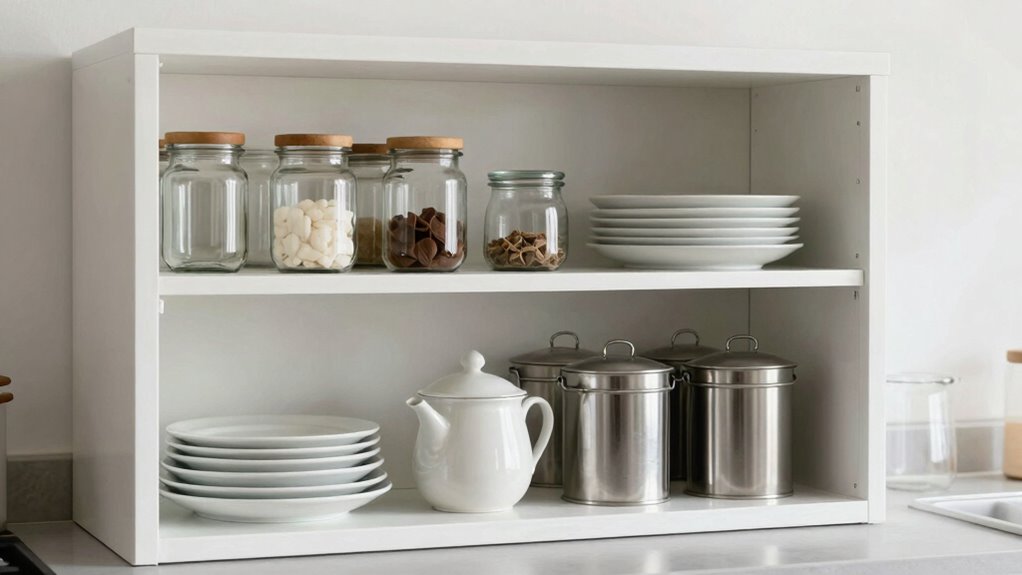
How often you should clean your open shelves depends on their use and environment, but generally, a weekly cleaning schedule works best to keep dust and dirt at bay. Regular maintenance ensures dust prevention and preserves the appearance of your shelves. The frequency may vary based on shelf materials—wood, metal, or glass—each requiring different care. For example, wood might need gentle dusting, while glass shelves benefit from more frequent wiping to prevent smudges. Keep in mind that high-traffic areas may need more frequent attention. To maintain cleanliness and visual appeal, consider these tips:
- Use microfiber cloths for effective dust prevention
- Avoid harsh chemicals that can damage shelf materials
- Dust from top to bottom to prevent recontamination
- Regularly check for signs of dirt buildup
- Incorporate gentle cleaning routines into your schedule
Frequently Asked Questions
Can I Use Air Purifiers to Reduce Dust on Open Shelves?
Yes, you can use air purifiers to reduce dust on open shelves. Air purifier effectiveness depends on choosing models with HEPA filters that trap dust particles. However, for best results, consider shelf material choices—glass and metal are easier to clean than wood, which can trap dust. Regularly running the air purifier and cleaning shelves will help keep dust at bay and maintain a tidy, dust-free look.
Are There Specific Cleaning Products Best for Dust-Resistant Shelves?
Yes, you should use gentle, dust-repellent cleaning products designed for shelves. Implement a regular cleaning schedule to keep dust at bay, and consider applying dust repellents that create a protective barrier. These products help reduce dust accumulation and make maintenance easier. Avoid harsh chemicals that could damage your shelves. Consistent cleaning combined with dust-repellent treatments keeps your open shelves looking tidy and free of dust buildup.
How Does Humidity Affect Dust Accumulation on Open Shelving?
Humidity levels greatly impact dust adhesion on open shelving. When humidity is high, dust particles cling more easily to surfaces, increasing dust buildup. Conversely, low humidity helps reduce dust accumulation, keeping shelves cleaner longer. An ideal humidity range of 40-50% minimizes dust adhesion, making maintenance easier. Keeping your home’s humidity balanced ensures that dust doesn’t settle as quickly, helping you maintain a tidy, visually appealing open shelving display with less effort.
What Are the Best Professional Treatments for Dust Control?
You should implement professional dust prevention strategies like using high-quality air purifiers and regularly scheduled cleanings. Opt for shelf material choices such as sealed wood or metal, which resist dust buildup better than porous surfaces. Applying protective coatings or sealants can also help. Regular maintenance is key—dust your shelves frequently and keep humidity levels in check to minimize dust accumulation and maintain a tidy, visually appealing space.
Do Certain Shelf Designs Naturally Prevent Dust Buildup Better?
Certain shelf designs naturally prevent dust buildup better, especially those with enclosed or decorative storage options. You should choose shelves with smooth, non-porous shelf materials like glass, metal, or sealed wood, as they’re easier to clean and resist dust accumulation. Avoid open, porous, or intricate designs that trap dust. Opt for sleek, minimalist styles that allow for quick dusting, keeping your space looking tidy and dust-free effortlessly.
Conclusion
Stay vigilant with your open shelves, and you’ll keep dust at bay longer than you’d think. But the real secret? It’s in the details—choosing the right materials, implementing simple maintenance routines, and sneaky styling tricks. Just when you think you’ve got it all under control, a new challenge might appear. Ready to discover the final, surprising tip that takes your dust control game to the next level? Keep reading—you won’t want to miss it.
Fall Picks
fall essentials
As an affiliate, we earn on qualifying purchases.