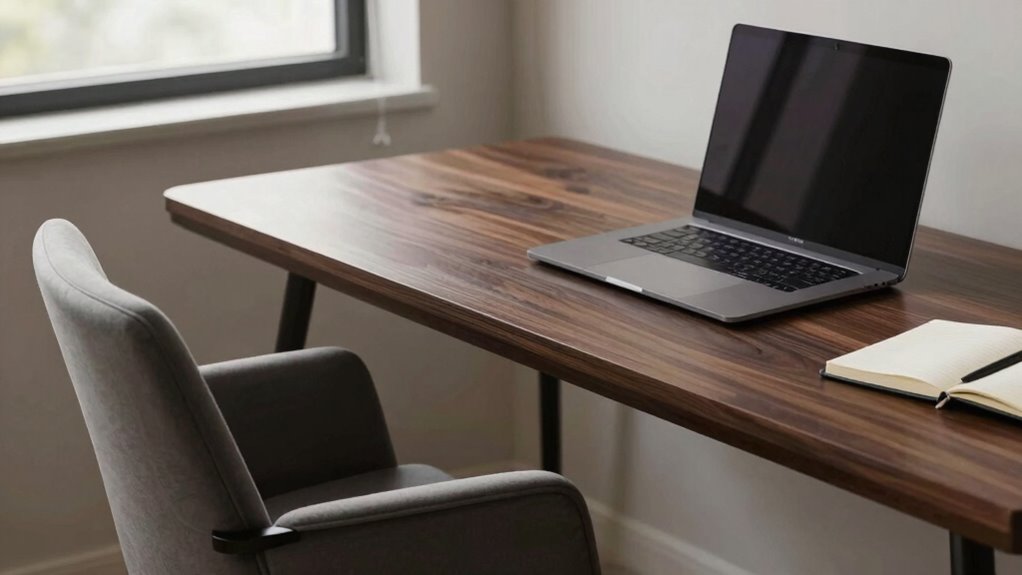

When your desk height doesn’t align with your body, it can feel uncomfortable and awkward, making you struggle to find the right posture. It’s key to set your desk so your elbows are at about 90°, your monitor is at eye level, and your feet are flat on the floor. Small adjustments can make a huge difference in comfort and focus. If you keep this in mind, you’ll discover much more about creating the perfect workspace.

Get business pricing on your home office setup
- Business-only prices and quantity discounts
- Tax-exempt purchasing
- Multiple users, one account, clear invoices
Key Takeaways
- Proper desk height aligns with elbow level when seated, preventing strain and promoting neutral posture.
- Incorrect desk height causes wrist, neck, and shoulder discomfort due to misaligned ergonomics.
- Adjusting monitor and keyboard positions to match body proportions ensures comfort and reduces fatigue.
- Small ergonomic adjustments, like foot support and accessory placement, can significantly improve workspace feel.
- Understanding body anatomy and workspace setup leads to a “click” moment for optimal comfort and productivity.
As an affiliate, we earn on qualifying purchases.
Common Challenges in Setting Your Desk Height
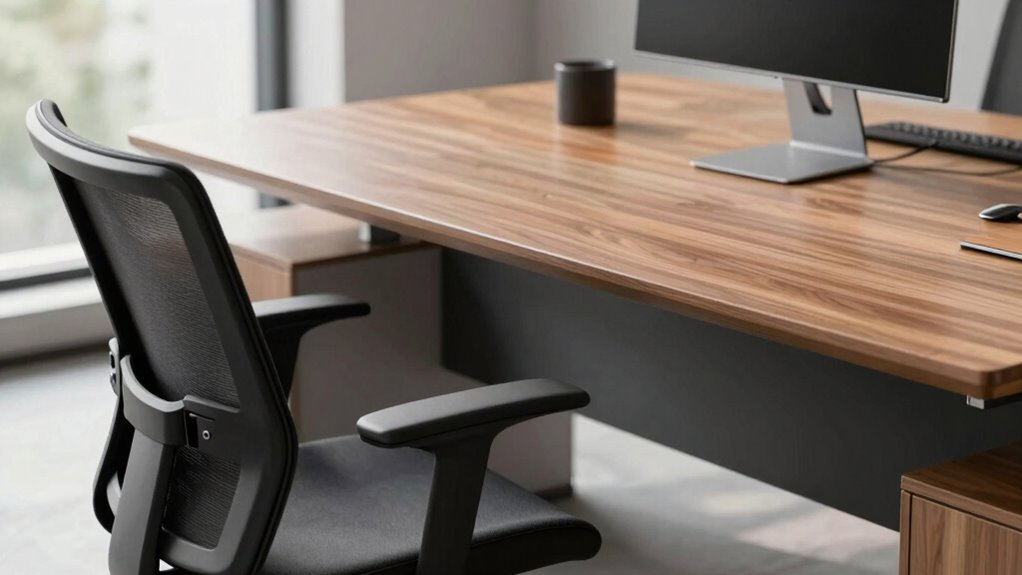
Setting your desk height might seem straightforward, but many people encounter common challenges that can make it difficult to find the perfect position. One challenge is ensuring proper keyboard ergonomics; if your desk is too high or low, your wrists may bend awkwardly, causing discomfort. The desk material also plays a role—hard surfaces can make adjusting height uncomfortable or unstable, while softer materials might influence stability. Additionally, different workspaces and furniture setups often limit options, leading to frustration. You might struggle to balance comfort with functionality, especially when trying to accommodate accessories like mouse pads or monitor stands. These issues can make it harder to find a setup that prevents strain and promotes good posture, even when you think you’ve set the right height. Proper ergonomic setup is essential for avoiding long-term discomfort and improving overall productivity.
As an affiliate, we earn on qualifying purchases.
How Your Body’s Anatomy Affects Desk Height
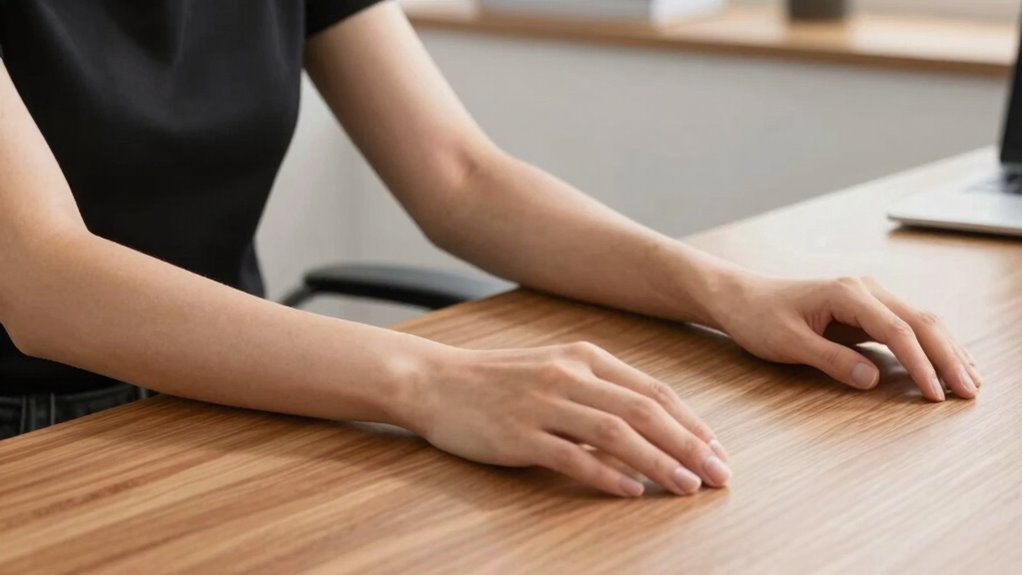
Your arm length and spine alignment play a big role in finding the right desk height. If your arms are longer, you might need a higher surface to keep your elbows at a comfortable angle. Proper spine posture depends on adjusting your desk so your back stays straight and supported. Additionally, considering ergonomic principles from beekeeping tools can help optimize your workspace setup. Understanding biomimicry can provide insights into designing furniture that naturally complements your body’s movements. Recognizing how biomechanics influences ergonomic design can further enhance comfort and reduce strain during seated work.
Arm Length Considerations
Because arm length varies from person to person, it plays a significant role in determining the ideal desk height for seated work. Your arm reach influences how comfortably you can work without overextending or feeling cramped. When your desk height aligns with your arm length, your elbows should be at a roughly 90-degree angle, allowing your forearms to rest naturally. Pay attention to your wrist angle; it should stay straight and neutral, not bent upward or downward. If your desk is too high or low for your arm reach, you’ll strain your shoulders and wrists, leading to discomfort. Adjusting your desk to match your arm length helps maintain proper wrist angle and arm positioning, reducing fatigue and improving comfort during extended periods of work. Proper ergonomic alignment is essential in creating a comfortable and healthy workspace.
Spine Alignment Factors
Arm length is a key factor in finding the right desk height, but your body’s overall structure also plays a significant role. Your spinal curvature and vertebral alignment influence how you should set your workspace. If your spine has a natural curve, you’ll want your desk height to support a neutral spine position, avoiding excessive forward lean or slouching. Poor vertebral alignment can cause discomfort and strain. To help, consider this table:
| Spine Shape | Ideal Desk Adjustment | Common Issue |
|---|---|---|
| Lordotic (inward curve) | Slightly higher to support lumbar | Slouching forward |
| Kyphotic (outward curve) | Slightly lower for better back support | Upper back strain |
| Straight (neutral) | Moderate height aligned with elbows | Minimal strain |
| S-shaped | Custom height for comfort | Uneven pressure distribution |
| Flat spine | Adjust for neutral alignment | Discomfort and fatigue |
Proper alignment minimizes strain, making your work more comfortable.
As an affiliate, we earn on qualifying purchases.
Mistakes That Make Your Desk Setup Uncomfortable
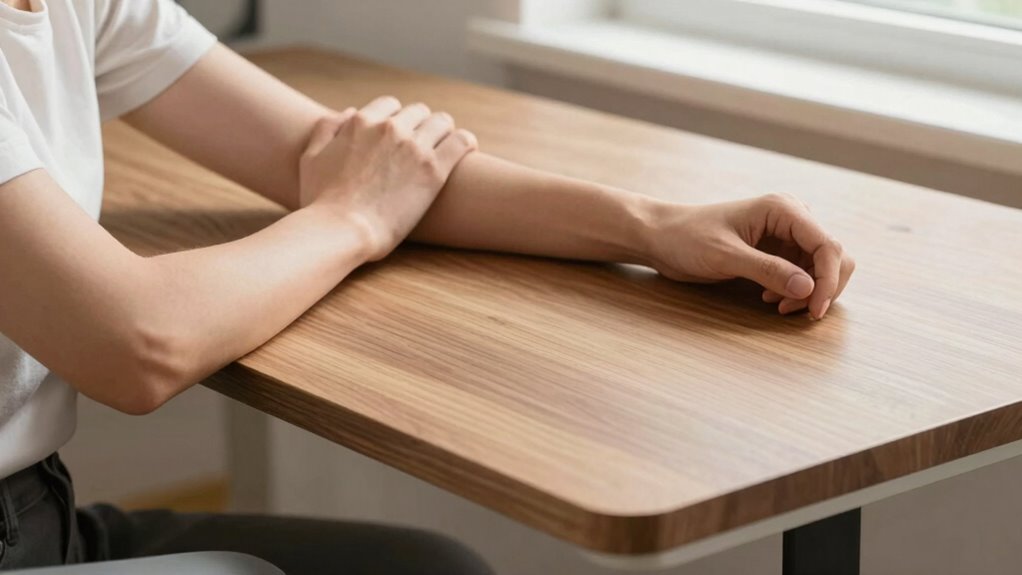
One common mistake that leads to an uncomfortable desk setup is neglecting proper height adjustments, which can cause strain on your neck, shoulders, and back. Poor keyboard ergonomics often results from positioning your keyboard too high or low, forcing you to hunch or stretch unnaturally. Additionally, the desk material plays a role—hard surfaces can create discomfort if your elbows or wrists aren’t supported properly. Failing to take into account these factors can lead to persistent discomfort and fatigue. Many overlook the importance of a balanced setup, assuming that a simple desk height is enough. In reality, adjusting your desk and keyboard position to suit your body helps prevent strain and promotes better posture. Small changes can make a significant difference in your comfort during long hours of work.
As an affiliate, we earn on qualifying purchases.
How to Set Your Desk Height Correctly

Setting your desk height correctly is essential for maintaining comfort and preventing strain during long work sessions. To do this, start by adjusting your desk so that your elbows stay at a 90-degree angle when typing. Proper keyboard positioning means your wrists remain straight, avoiding unnecessary pressure. Your monitor should be positioned so the top of the screen is at eye level, reducing neck strain and encouraging good posture. Make certain your chair height allows your feet to rest flat on the floor, but focus on the desk height first. When everything is aligned, you’ll feel less fatigue and discomfort. Small adjustments can make a big difference, so take your time to find the right height for your specific setup. Ergonomic setup practices can further enhance your comfort and prevent long-term issues, especially when considering adjustable furniture options for personalized comfort. Additionally, paying attention to proper posture can significantly impact your overall well-being during extended periods of seated work, and incorporating proper ergonomic techniques can help maintain these benefits over time. Ensuring your workspace is ergonomically optimized can also help prevent common repetitive strain injuries.
How Your Chair and Desk Setup Affect Your Comfort
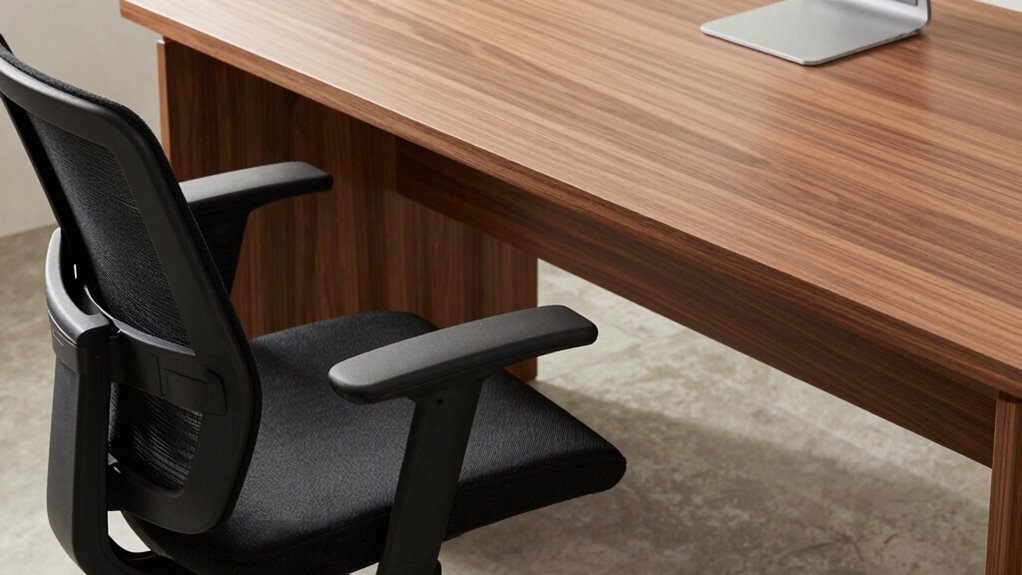
Your chair and desk setup work together to influence how comfortable you feel during work sessions. Proper alignment reduces strain and boosts focus. Keyboard ergonomics are key — your keyboard should be at a height that keeps your wrists straight and relaxed. The desk material selection also matters; smooth, sturdy surfaces prevent slipping and discomfort. When your setup isn’t right, you might feel tension in your shoulders or discomfort in your wrists.
| Feelings | Causes |
|---|---|
| Aching shoulders | Poor chair height |
| Wrist pain | Improper keyboard placement |
| Fatigue | Unsupportive desk material |
| Distraction | Uncomfortable posture |
| Relief | Correct setup |
A mindful setup transforms frustration into ease.
Signs Your Desk Height Isn’t Right
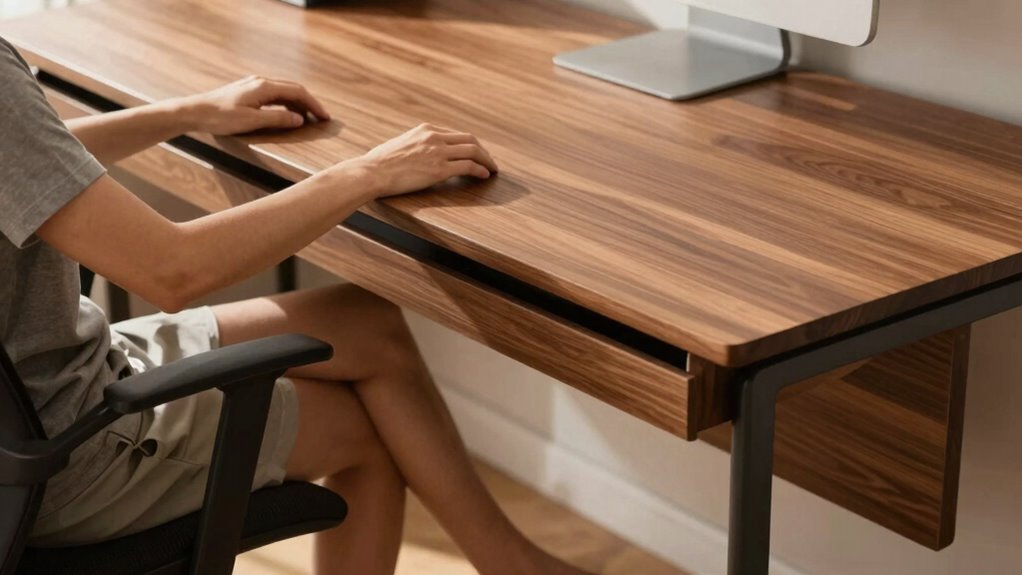
If your desk height isn’t right, you’ll notice discomfort and signs that your body isn’t aligned properly. Common clues include neck strain, aching shoulders, or wrist pain. These symptoms often stem from desk height myths—believing it should be either very high or very low—and posture myths that suggest any position is okay. To spot if your setup is wrong, look for these signs:
- Your elbows aren’t at a 90-degree angle when typing.
- You feel tension in your neck or upper back after short periods.
- Your wrists are bent or strained during work.
These indicators show your desk isn’t supporting proper ergonomics. Recognizing them helps you avoid discomfort and dispels common desk height myths that can lead to poor posture.
Simple Adjustments for Better Comfort and Productivity
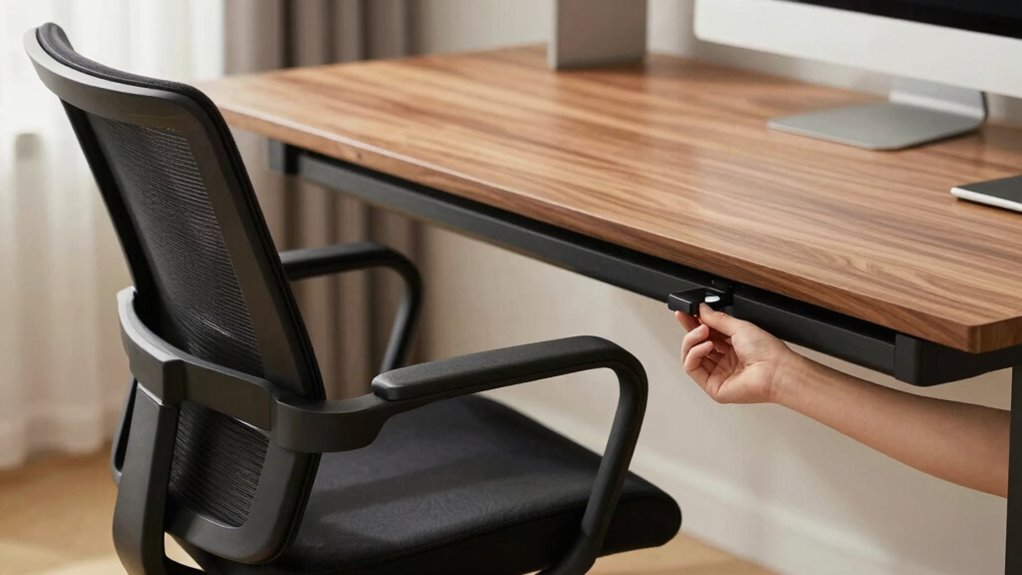
Adjusting your desk to the proper height guarantees your wrists stay straight and your shoulders relax. Using ergonomic accessories like keyboard trays or footrests can make a big difference in comfort. Small tweaks like these can boost your productivity and reduce strain throughout the day.
Proper Desk Height Alignment
Have you ever felt discomfort after working at your desk for a while? Proper desk height alignment makes a big difference. To achieve this, guarantee your desk surface is at elbow height when sitting comfortably. Here are key tips:
- Adjust your keyboard positioning so your wrists stay straight, reducing strain.
- Choose a desk material that provides stability and a slight give to prevent slipping.
- Confirm your monitor is at eye level, preventing neck strain.
- Ensuring your workspace is ergonomically optimized can significantly boost comfort and productivity. Small adjustments to your desk setup can make a notable difference in preventing discomfort and maintaining proper posture throughout the day.
When your desk is correctly aligned, your arms rest naturally, and your keyboard feels just right. If your desk is too high or low, it can lead to discomfort and fatigue. Small adjustments can markedly improve your comfort, productivity, and overall well-being.
Ergonomic Accessories Usage
Ever wondered how a few simple accessories can dramatically boost your comfort and productivity during long work sessions? Adjusting your ergonomic accessories makes a big difference. Proper keyboard placement ensures your wrists stay neutral, reducing fatigue, while monitor positioning keeps your neck aligned and eyes level. Use accessories like keyboard trays or adjustable monitor stands to tailor your setup.
| Accessory | Benefit | Tip |
|---|---|---|
| Adjustable Keyboard | Reduces strain, improves posture | Keep wrists straight and relaxed |
| Monitor Stand | Prevents neck strain | Top of screen at eye level |
| Wrist Supports | Decreases discomfort | Use during typing and mouse use |
| Document Holders | Minimize neck movement | Keep documents at screen height |
Incorporating these tools enhances comfort, helping you focus and work efficiently.
Tips to Maintain Good Posture at Your Desk
Maintaining good posture at your desk is essential for preventing discomfort and long-term musculoskeletal issues. To improve your desk ergonomics and workspace organization, focus on your positioning. First, keep your monitor at eye level to avoid neck strain. Second, sit back fully in your chair, ensuring your feet are flat on the floor or on a footrest. Third, maintain a relaxed shoulder position and keep your wrists straight while typing. Regularly adjusting your workspace helps reinforce good habits. Remember, a well-organized desk minimizes unnecessary movements and distractions. Prioritize ergonomic principles to support your body throughout the day, reduce fatigue, and boost productivity. Small adjustments can make a significant difference in creating a more comfortable, health-conscious workspace. Additionally, understanding caffeine science can help you optimize your energy levels and focus during work hours. Incorporating ergonomic principles into your setup ensures sustained comfort and reduces the risk of strain.
Frequently Asked Questions
How Often Should I Reassess My Desk Height?
You should reassess your desk height every few months or whenever you notice discomfort, to maintain ergonomic posture and proper wrist alignment. Regular checks help guarantee your workspace remains supportive, especially if you change your chair or workstation setup. Pay attention to signs like strained wrists, slouching, or fatigue. Adjusting your desk height promptly keeps you comfortable, prevents injury, and promotes better productivity during seated work.
Can Adjustable Desks Really Improve Long-Term Comfort?
Sure, adjustable desks can boost long-term comfort—if you stop buying into desk height myths. They help you find that sweet spot for ergonomic posture, preventing strain and fatigue. No more slouching or neck craning! With proper adjustments, you’ll stay comfortable longer, making your workspace more functional. So yes, investing in one is worth it, as long as you actually use it correctly.
What Tools Can Help Me Find the Perfect Desk Height?
You can use ergonomic tools like a digital height measurement device or a simple measuring tape to find your ideal desk height. These tools help you accurately determine the right level so your elbows rest comfortably at about 90 degrees. Adjust your desk accordingly, ensuring your wrists stay neutral while typing. Consistently using these tools makes it easier to achieve a comfortable, ergonomic setup that minimizes strain.
Does Desk Height Impact Productivity and Focus?
Think of your desk height as your secret weapon, like a knight’s sword—when it’s just right, it boosts your focus and productivity. An ergonomic posture guarantees comfort, preventing fatigue that distracts you. Workspace customization helps you find that perfect height, making it easier to stay attentive and efficient. When your setup feels natural, you’ll work more effectively, just like a well-tuned instrument in a symphony.
How Do I Accommodate Multiple Users With One Desk?
To accommodate multiple users with one desk, you should focus on shared workspace design and ergonomic accessories. Use adjustable height desks or add risers, so each person can customize their setup. Incorporate ergonomic accessories like monitor stands, keyboard trays, and footrests to support comfort. Clear organization and flexible components guarantee everyone’s needs are met, making the shared workspace both functional and comfortable for all users.
Conclusion
Getting your desk height right feels like a small detail, but it’s the foundation of comfort and productivity. Just as a crooked picture distracts from a beautiful room, an improper setup distracts you from your work. When everything aligns—your body, chair, and desk—you’ll notice the difference. It’s not about perfection; it’s about finding that sweet spot where comfort meets focus, turning a simple workspace into a place where your best work happens effortlessly.
Halloween Picks
halloween
As an affiliate, we earn on qualifying purchases.