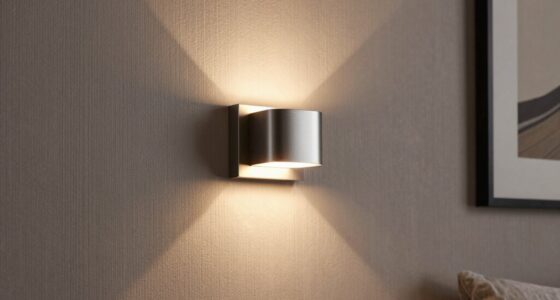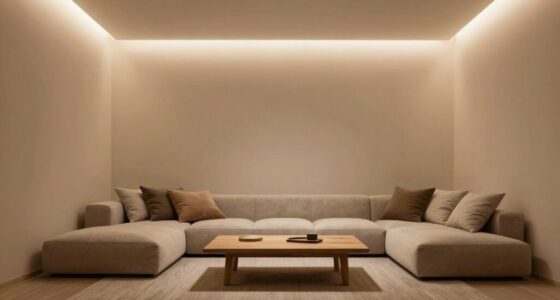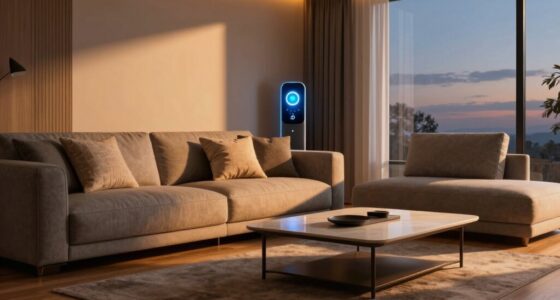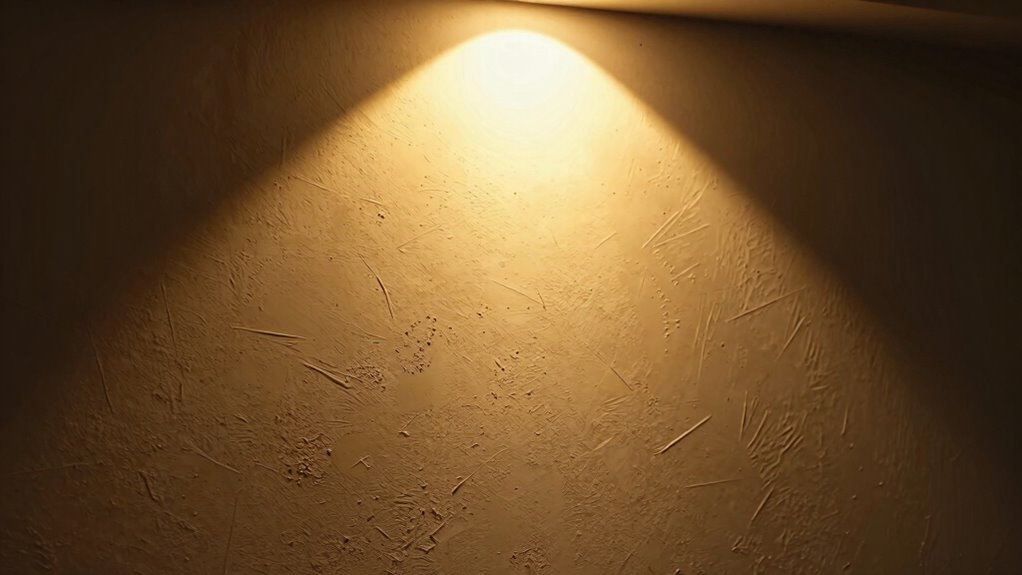
Uplight lamps can greatly enhance textured walls by creating shadows and highlights that add depth and visual interest. This lighting technique emphasizes surface details, making your walls stand out as eye-catching features. The effect varies with wall color and light temperature, influencing mood and ambiance. Proper placement and direction of uplights can transform a plain wall into a mesmerizing focal point. Keep exploring to discover how combining these ideas can elevate your space even further.
Key Takeaways
- Uplights create shadows that enhance textured wall surfaces, adding depth and visual interest.
- The angle and placement of uplights highlight specific surface details and irregularities.
- Wall color influences how uplighting effects are perceived, affecting contrast and texture prominence.
- Warm or cool lighting temperatures can alter the mood and accentuate different wall textures.
- Proper uplight positioning transforms plain walls into focal points, elevating overall interior design.
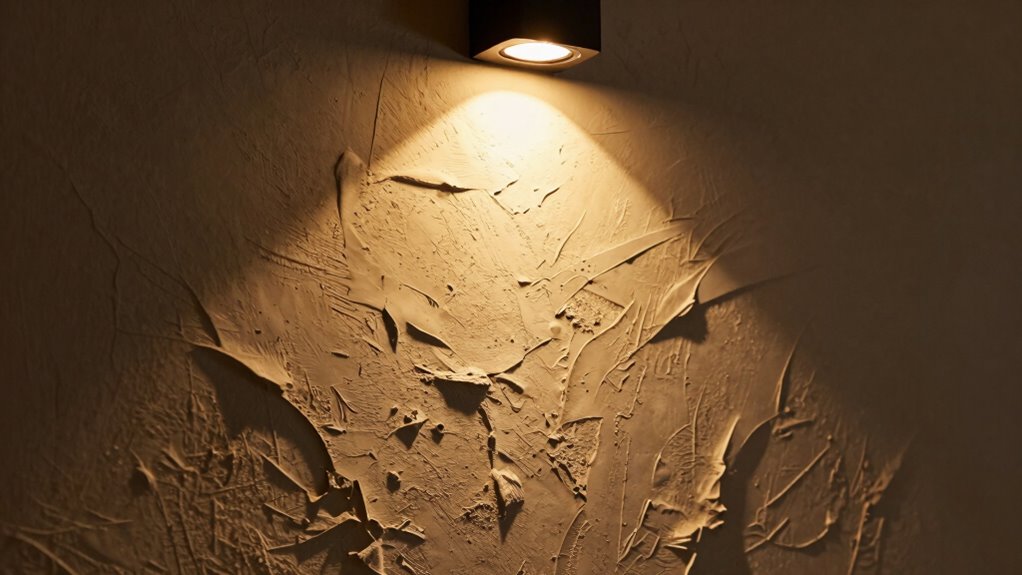
When you install an uplight lamp on textured walls, it can dramatically enhance the room’s ambiance by highlighting the wall’s surface details. The way light interacts with textured surfaces creates shadows and depth that flat lighting simply can’t achieve. This effect depends heavily on your choice of wall color and lighting temperature. Your wall color influences how light reflects and diffuses across the surface, with lighter shades bouncing more light and deeper hues absorbing it. With textured walls, a light-colored wall can make shadows softer, emphasizing subtle surface variations, while darker tones cast more dramatic shadows, adding to the room’s visual interest.
Uplights enhance textured walls by creating shadows and depth, influenced by wall color and lighting temperature choices.
Lighting temperature plays a pivotal role as well. Warm lighting, with a lower Kelvin rating, tends to produce a cozy, inviting glow that enhances warm wall colors like beige, terracotta, or soft yellows. It can make textures appear more pronounced, creating a sense of intimacy and comfort. Conversely, cooler lighting temperatures, with higher Kelvin ratings, deliver a crisp, clean light that accentuates cooler wall colors such as gray, blue, or slate. This type of lighting can make textured walls look sharper and more modern, emphasizing fine details and surface irregularities.
Understanding the lighting interaction with textured surfaces can help you make more informed decisions about your lighting setup, ensuring your design intentions are fully realized. Additionally, the lighting angle is crucial for achieving the desired shadow play and depth, as the direction of light can dramatically change how textures are perceived. Using an uplight lamp also allows you to control the direction and intensity of light, making it easier to highlight specific areas or features of textured walls. Proper placement and angle can enhance the wall’s surface details, creating a layered visual effect that changes throughout the day with varying natural light. This dynamic interplay between light and wall color is what makes uplight fixtures so effective; they turn ordinary textured walls into focal points. Most buyers overlook how much the interplay of wall color and lighting temperature can influence a room’s overall aesthetic. Recognizing the lighting effects and how they interact with wall textures can help you select the perfect lighting setup for your space. By paying close attention to these elements, you’ll guarantee your uplight enhances your space rather than just illuminating it. The right combination can transform a plain wall into a textured masterpiece, adding both depth and personality to your room’s ambiance.
uplight wall lamp for textured walls
As an affiliate, we earn on qualifying purchases.
As an affiliate, we earn on qualifying purchases.
Frequently Asked Questions
How Does Wall Texture Influence Uplight Lamp Effectiveness?
Wall texture considerably influences uplight lamp effectiveness because surface patterns affect how light is reflected and absorbed. If your textured walls have deep grooves or pronounced patterns, lighting angles become essential to highlight these details without creating harsh shadows. Adjusting the uplight’s position guarantees the surface patterns are evenly illuminated, enhancing the wall’s visual appeal and creating a warm, inviting atmosphere.
Can Different Light Colors Affect Textured Wall Appearances?
Bright amber or warm white light can make textured walls feel cozy and inviting, while cool blue or violet tones give a modern, calming vibe. Different light colors affect textured wall appearances by highlighting or softening surface details. You notice how color temperature influences mood enhancement, shaping the room’s ambiance. So, choosing the right hue isn’t just about style—it’s about creating the atmosphere you want to experience daily.
What Is the Ideal Distance for Placement of Uplight Lamps?
You should place uplight lamps about 3 to 6 feet away from textured walls for ideal effect. Keep in mind, using dimming controls allows you to adjust brightness, enhancing the textured wall’s appearance while conserving energy. This setup maximizes visual impact and energy efficiency, ensuring your lighting complements the wall’s texture without over-illuminating or wasting power. Experiment within this range to find the perfect balance.
Do Textured Walls Require Specific Types of Uplight Fixtures?
Yes, textured walls benefit from specific uplight fixtures like decorative wall sconces designed to highlight wall texture patterns. These fixtures cast subtle, strategic light that emphasizes the wall’s depth and detail, enhancing the overall aesthetic. When selecting uplight fixtures, choose those that complement your wall’s texture and style, ensuring the lighting accentuates patterns without creating harsh shadows. Proper lighting elevates your space’s visual appeal markedly.
How Does Ambient Lighting Interact With Uplight Effects?
They say, “It’s all about the big picture,” and that’s true for how ambient lighting interacts with uplight effects. Your ambient light, with its color temperature and light diffusion, sets the mood, highlighting textured walls beautifully. When you combine warm ambient lighting with strategic uplighting, shadows and textures become more vivid, creating depth and dimension. Proper balance guarantees the uplight enhances, rather than competes with, your overall lighting design.
As an affiliate, we earn on qualifying purchases.
Conclusion
So, next time you choose an uplight lamp, remember it’s not just about illumination; it’s about highlighting textures, creating depth, and enhancing ambiance. It’s about transforming your walls, accentuating details, and elevating your space. It’s about embracing the subtle yet powerful impact of light, the way it reveals, the way it defines, and the way it truly matters. Because in lighting, as in life, details matter most—so light up your walls with intention, purpose, and style.
warm and cool LED uplight for walls
As an affiliate, we earn on qualifying purchases.
As an affiliate, we earn on qualifying purchases.
wall accent lighting for textured surfaces
As an affiliate, we earn on qualifying purchases.
As an affiliate, we earn on qualifying purchases.