When choosing between fixed frame and motorized screens, consider your need for permanence versus flexibility. Fixed screens offer stable tension, sharp picture quality, and a sleek look, making them ideal for permanent setups. Motorized screens provide remote control convenience and space-saving features, perfect for flexible or hidden installations. Both options have their advantages and costs. To find out which suits your space and needs best, keep exploring the key differences that truly matter.

Get business pricing on your home office setup
- Business-only prices and quantity discounts
- Tax-exempt purchasing
- Multiple users, one account, clear invoices
Key Takeaways
- Fixed frame screens are permanently stretched on a rigid structure, providing stability and optimal image sharpness.
- Motorized screens offer remote control and automatic operation, enhancing convenience and versatility.
- Fixed screens are more durable and less prone to mechanical issues, while motorized screens require regular maintenance.
- Cost varies: fixed screens are generally more affordable; motorized screens include advanced features but come at a higher price.
- Choose fixed screens for permanent setups; opt for motorized screens for flexible, hidden, or multi-use environments.
As an affiliate, we earn on qualifying purchases.
What Are Fixed Frame and Motorized Projection Screens?

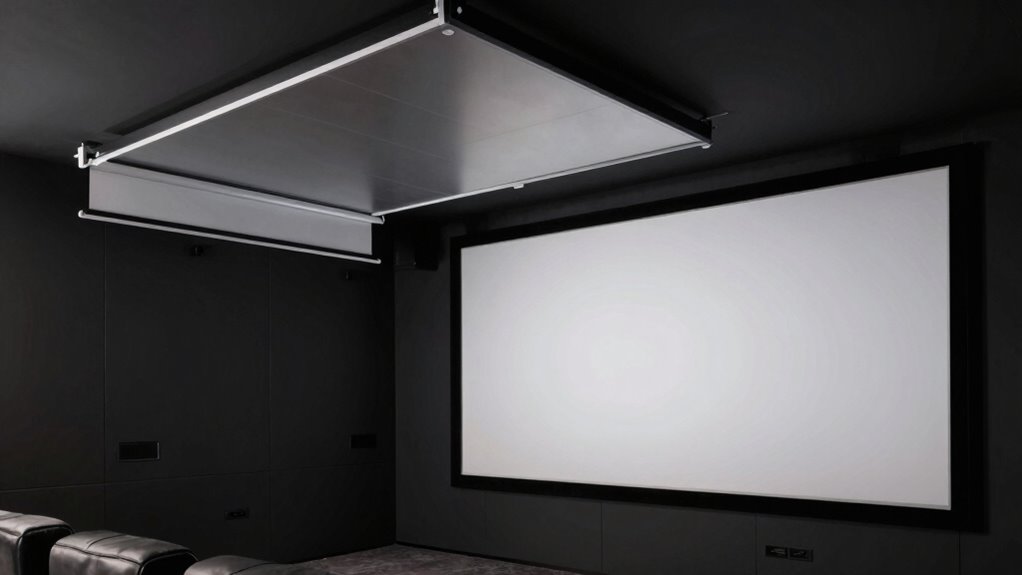
Have you ever wondered what exactly distinguishes fixed frame and motorized projection screens? Fixed frame screens are sturdy, permanently stretched on a rigid frame, offering consistent tension that enhances projection clarity. They’re ideal for spaces where you want a sleek, professional look without the hassle of movement. Motorized screens, on the other hand, feature a motorized mechanism allowing you to lower or retract the screen at the push of a button. While convenient, they can present installation challenges, especially if ceiling space is limited or wiring is complex. Fixed screens tend to be easier to install securely, but motorized options offer flexibility for multi-use rooms. Your choice depends on your priorities for ease of use, space, and maintaining projection quality. Additionally, projection surface quality can influence the overall viewing experience, making the choice of screen type even more crucial.
As an affiliate, we earn on qualifying purchases.
How Do Fixed Frame and Motorized Screens Differ?
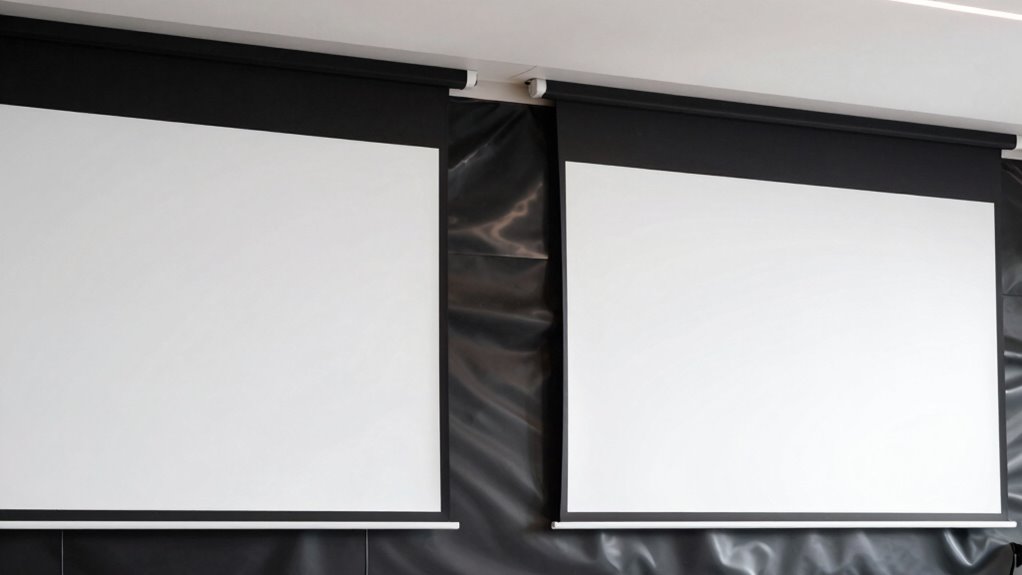
Fixed frame and motorized screens differ primarily in how they are installed, operated, and maintained. Fixed frames are permanently mounted, offering high screen durability but less installation flexibility, as they are designed to stay put. Motorized screens, on the other hand, can be retracted or extended with a remote, providing greater flexibility for different spaces or uses. They require electrical connections and regular maintenance of the motor and remote system. Additionally, the installation process for each type impacts overall convenience and suitability for specific environments. The maintenance requirements can vary significantly depending on the type, with motorized screens generally needing more frequent checks due to their moving parts. The space-saving design of motorized screens makes them ideal for versatile room setups, and their ability to be hidden when not in use can also contribute to a cleaner aesthetic. Moreover, choosing the right type can influence the cost and longevity of your setup, making it an important decision for long-term use.
electric retractable projection screen
As an affiliate, we earn on qualifying purchases.
As an affiliate, we earn on qualifying purchases.
What Are the Pros and Cons of Fixed Frame Screens?

Are fixed frame screens a smart choice for your viewing space? They offer excellent screen durability because their sturdy frames keep the material taut and flat, preventing wrinkles or sagging over time. This stability ensures a consistently sharp picture quality. However, installation complexity can be a downside; fixed frames require precise mounting on your wall, which might involve drilling and alignment skills. Once installed, they stay in place, making them a reliable long-term option. The clean, professional look of a fixed frame adds to the aesthetic appeal of your room. But keep in mind, their permanence means you can’t easily move or hide them, and they lack the convenience of motorized operation. Overall, fixed frame screens excel in durability and stability but demand careful installation.
fixed vs motorized projection screen
As an affiliate, we earn on qualifying purchases.
As an affiliate, we earn on qualifying purchases.
Are Motorized Screens Worth the Cost?
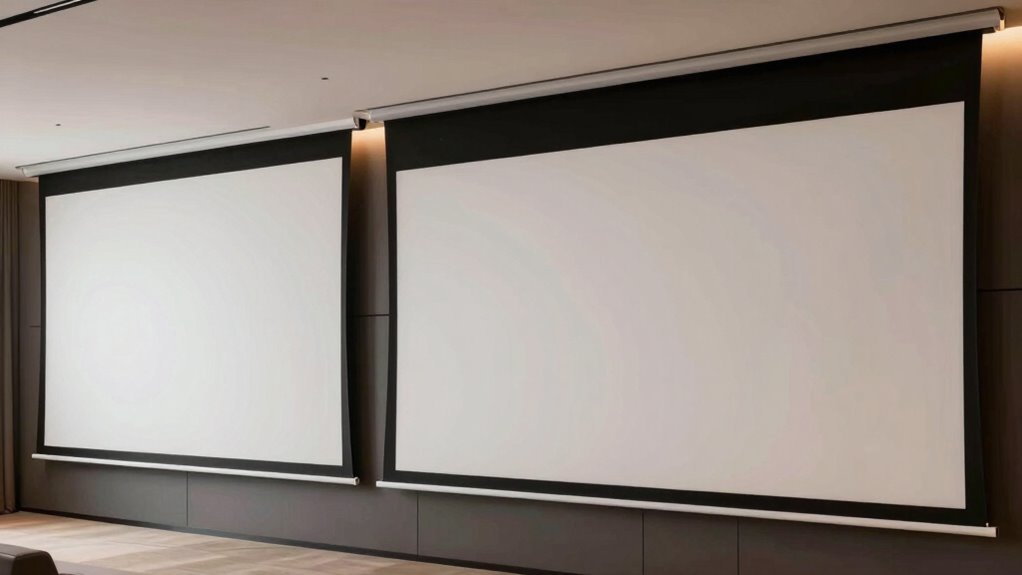
Motorized screens can substantially enhance your viewing experience with their convenience and sleek operation, but they also come with a higher price tag. When considering if they’re worth it, think about the cost comparison and installation ease. Motorized models tend to be more expensive upfront, but they offer effortless operation and a clean look. If you prioritize convenience, automation, and a seamless setup, the investment may be justified. Additionally, home theater technology advancements have made motorized screens more reliable and feature-rich over time. These innovations often incorporate symbolic meanings to improve user experience and aesthetic appeal. Furthermore, automation features can add to the overall value by providing more control options and integration with smart home systems. However, if budget is your main concern, fixed frame screens provide excellent picture quality at a lower cost. Keep in mind, installing a motorized screen might require professional help, adding to the overall expense. Ultimately, whether they’re worth it depends on your budget, preferences, and how much value you place on ease of use.
How to Choose the Right Projection Screen for Your Space
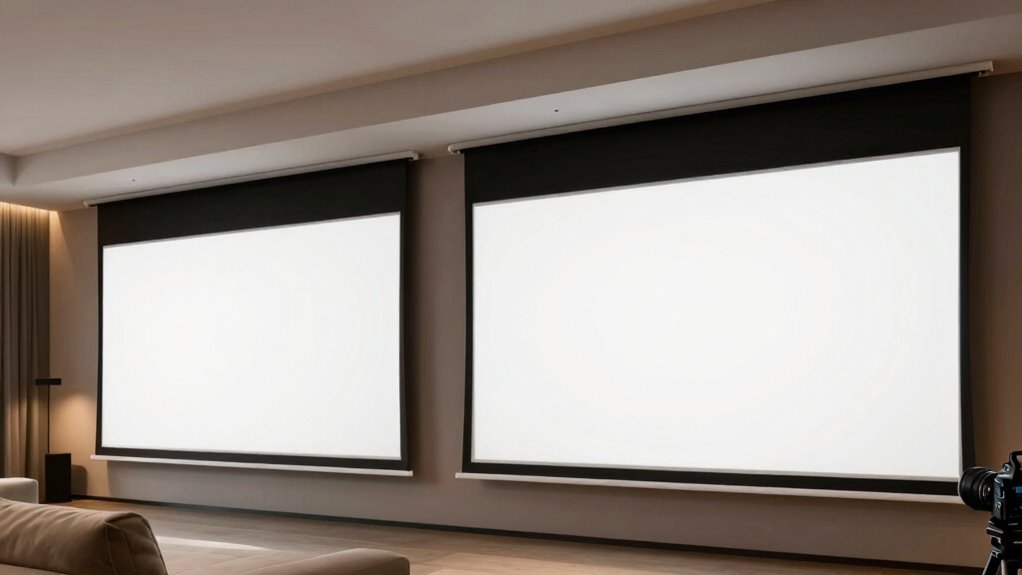
Choosing the right projection screen for your space starts with understanding your room’s size, lighting conditions, and viewing needs. For example, if your room has high ambient lighting, opt for a screen with high gain or ambient light rejecting technology to improve picture clarity. Consider how easy screen installation will be—fixed frame screens are more permanent, while motorized options offer flexibility. Measure your space carefully to determine the ideal screen size and aspect ratio. If you plan to hide the screen when not in use, a motorized model might suit you better. Also, think about whether you need a portable or fixed solution based on your setup. By matching your room’s characteristics with the right type and features, you’ll guarantee a better viewing experience.
Frequently Asked Questions
How Long Do Fixed Frame and Motorized Screens Typically Last?
Fixed frame screens generally last 10 to 20 years, thanks to their durable materials and sturdy construction. Motorized screens tend to have a slightly shorter lifespan of around 8 to 15 years due to the moving parts and mechanism wear over time. Your screen’s durability depends on material quality and usage frequency, so choosing high-quality components can extend the material lifespan and guarantee long-lasting performance.
Can Fixed Frame and Motorized Screens Be Used Outdoors?
Yes, you can use fixed frame and motorized screens outdoors, but weather resistance becomes essential. Imagine a screen standing strong against rain or sun, designed with durable, weatherproof materials. Portability considerations also matter—motorized screens are often bulkier and harder to move, while fixed frames stay put. To guarantee longevity, pick screens specifically built for outdoor use, and consider protective covers or enclosures for harsh weather conditions.
What Maintenance Is Required for Each Type of Screen?
You should clean both types of screens regularly—at least once a month—to remove dust and debris, which helps maintain image quality. Fixed frame screens typically require less maintenance due to their sturdy material, but motorized screens might need occasional checks on their moving parts and remote controls. Prioritize cleaning the material’s durability by using gentle solutions and avoiding harsh chemicals to prevent damage and prolong your screen’s lifespan.
Are There Any Compatibility Issues With Different Projectors?
You might wonder if your projector will work with different screen types. Compatibility concerns largely depend on the screen material and projector brightness. Most modern projectors are compatible with both fixed frame and motorized screens, but check the screen’s gain and material—some materials reflect light differently, affecting image quality. To guarantee perfect compatibility, compare your projector’s specifications with the screen’s features, especially if you have a high-lumen or specialty projector.
How Do Installation Processes Differ Between Fixed Frame and Motorized Screens?
You’ll find that installation differs mainly in screen tension and mounting options. Fixed frame screens require precise tensioning during setup to keep the material flat, often mounting directly to a wall or ceiling. Motorized screens involve installing a motor and remote control, with mounting options that accommodate the motor’s housing. Both need secure mounting, but motorized setups might need more space and electrical connections, making installation slightly more complex.
Conclusion
Choosing between fixed frame and motorized screens is like selecting the perfect dance partner — each has its own rhythm and style. Fixed frame screens offer stability and crisp visuals, ideal for dedicated home theaters. Motorized screens add convenience and flexibility, perfect for multi-purpose spaces. Consider your space, budget, and how often you’ll use the screen. Whichever you pick, you’ll be bringing the magic of the movies into your home—a true window to another world.
Fall Picks
fall essentials
As an affiliate, we earn on qualifying purchases.