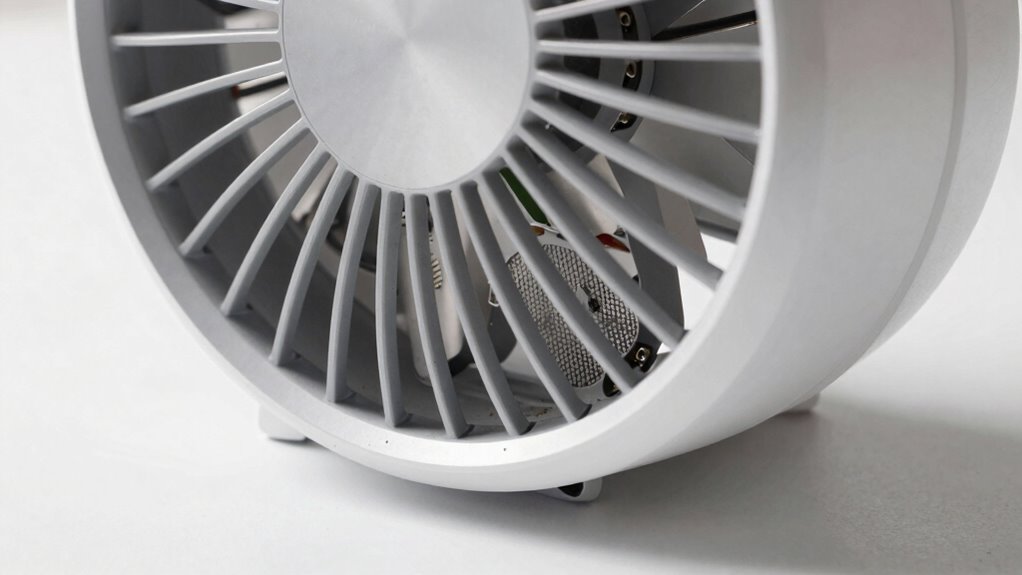
You might think a bladeless fan is easy to clean because it looks sleek, but dust and debris settle inside the narrow air channels, affecting airflow and noise levels. Regular cleaning isn’t just about wiping the surface—internal dust buildup can lower efficiency and make the fan louder over time. Proper maintenance, including filter checks, is essential to keep it running quietly and efficiently. If you want to understand the full cleaning challenge and how to keep your fan performing at its best, keep exploring these details.

Get business pricing on your home office setup
- Business-only prices and quantity discounts
- Tax-exempt purchasing
- Multiple users, one account, clear invoices
Key Takeaways
- Internal dust buildup inside narrow air channels reduces airflow and can cause the fan to become noisier over time.
- Regular cleaning of internal components and filters is essential to maintain optimal performance and quiet operation.
- Dust accumulation inside the fan often goes unnoticed, silently diminishing efficiency and increasing operational noise.
- Surface cleaning alone is insufficient; internal dust removal is critical for preserving airflow and reducing noise.
- Proper maintenance extends the lifespan of the fan and prevents performance issues that buyers might overlook.
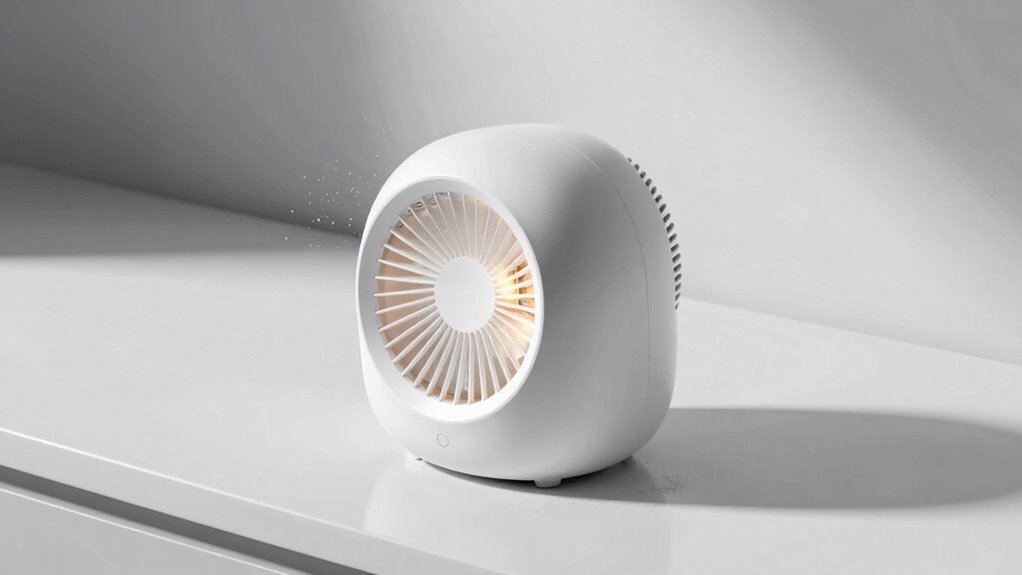
Have you ever wondered if bladeless fans are truly easier to clean than traditional fans? It’s a common assumption, but the reality might surprise you. While these fans look sleek and seem straightforward to wipe down, maintaining ideal airflow isn’t always as simple as it appears. The design minimizes visible blades, but it doesn’t eliminate the need for regular cleaning to keep airflow flowing smoothly. Dust and debris can settle inside the narrow air channels, reducing efficiency and making the fan work harder. This means that, despite their clean appearance, bladeless fans still require diligent airflow maintenance to perform at peak levels.
Bladeless fans may look sleek, but they still need regular cleaning to maintain optimal airflow and efficiency.
When it comes to cleaning, many assume that bladeless fans are a quick wipe-and-go affair. However, that’s only part of the story. The internal components, especially the air intake and outlet areas, can accumulate dust over time, which can impair airflow and cause the fan to sound noisier during operation. To keep airflow maximized, you’ll need to regularly check and clean these areas, often using a soft cloth or a gentle brush. Some models even include small filters that trap dust before it enters the internal mechanisms. These filters need periodic replacement to prevent clogging, which could otherwise compromise airflow and reduce cooling efficiency. Regular maintenance is essential to prevent dust buildup from reducing fan performance****.
Cleaning a bladeless fan isn’t just about aesthetics; it’s about maintaining the integrity of its airflow system. The design makes it seem low-maintenance, but neglecting regular cleaning and filter replacement can turn a sleek device into a noisy, inefficient appliance. You’ll find that taking a few minutes to clear dust from internal components and swap out filters keeps your fan performing as intended. Regularly inspecting and cleaning internal parts is an essential step in the overall fan maintenance process. Additionally, understanding the importance of air filtration can help prolong the lifespan and efficiency of your fan. Proper dust removal techniques are crucial to ensure that dust doesn’t silently diminish your fan’s effectiveness over time. Ultimately, the quiet problem many buyers overlook isn’t just noise—it’s how dust and lack of proper maintenance can quietly undermine the performance, making regular upkeep essential for long-term satisfaction.
bladeless fan internal cleaning tools
As an affiliate, we earn on qualifying purchases.
As an affiliate, we earn on qualifying purchases.
Frequently Asked Questions
How Often Should I Clean My Bladeless Fan?
You should clean your bladeless fan every 2 to 4 weeks to prevent dust buildup and maintain ideal airflow. Regular cleaning guarantees dust doesn’t clog the air channels, which can reduce efficiency. Use a soft, damp cloth or a gentle brush to wipe the surfaces and vents. Keeping up with this routine helps your fan operate quietly and effectively, prolonging its lifespan and ensuring fresh, clean air in your space.
Can I Use Water to Clean the Fan’s Internal Parts?
Think of your fan’s internal parts like a delicate garden; using water is tempting but risky. Water damage can ruin the electrical components, and you could compromise electrical safety. Instead, opt for a soft, damp cloth to gently wipe the surfaces, avoiding any internal parts. Keep water away from the electronics to prevent damage, ensuring your fan stays safe, quiet, and effective for years to come.
Are There Specific Cleaning Products Recommended for Bladeless Fans?
You should use gentle, non-abrasive cleaning products specifically designed for electronics or delicate appliances. Avoid harsh chemicals that could damage the fan’s internal components. Regularly check for dust accumulation and clean the filter as recommended by the manufacturer. Using the right cleaner helps maintain ideal airflow and noise levels, ensuring your bladeless fan functions quietly and efficiently. Always follow the manufacturer’s cleaning instructions for the best results.
Will Cleaning Affect the Fan’s Noise Level?
Cleaning your bladeless fan won’t turn it into a roaring lion; instead, it can substantially reduce noise caused by dust buildup. When you remove dust and debris, you allow the fan to operate smoothly and quietly. So, yes, cleaning can improve noise reduction, making the fan quieter and more efficient. Regular maintenance keeps the noise at bay and ensures your fan performs at its best without any unexpected roars.
Is Professional Cleaning Necessary for Optimal Performance?
Professional cleaning isn’t always necessary for peak performance, but it can help with airflow maintenance and reducing dust buildup. If you notice your bladeless fan isn’t cooling or circulating air as effectively, a deep clean from a professional can restore its efficiency. Regularly wiping down surfaces and checking for dust buildup can keep your fan quiet and functioning well, reducing the need for costly repairs or replacements.
bladeless fan filter replacement
As an affiliate, we earn on qualifying purchases.
As an affiliate, we earn on qualifying purchases.
Conclusion
Cleaning a bladeless fan isn’t as effortless as it seems—you might overlook hidden dust buildup that affects its performance. Did you know that regular cleaning can extend your fan’s lifespan by up to 20%? Staying on top of maintenance guarantees quiet operation and maximum airflow. So, don’t skip the cleaning routine; it’s a small effort for long-lasting comfort and efficiency. Keep your fan spotless and enjoy a cooler, quieter environment every day.
airflow cleaning brush for bladeless fans
As an affiliate, we earn on qualifying purchases.
As an affiliate, we earn on qualifying purchases.
As an affiliate, we earn on qualifying purchases.
Halloween Picks
halloween
As an affiliate, we earn on qualifying purchases.