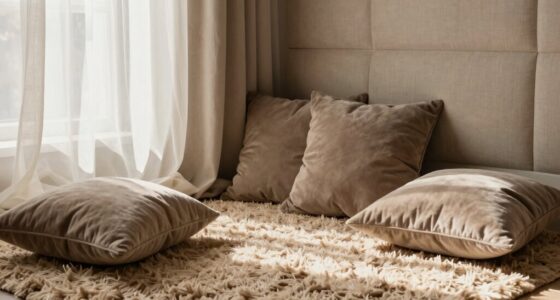

Sound dampening in apartments is essential to block out noise and improve your privacy and comfort. You can install temporary solutions like acoustic panels, door seals, and layered rugs, which are easy to manage and renter-friendly. For longer-lasting results, professional options like sound barriers and acoustic treatments provide better noise control. Keeping your soundproofing effective takes regular checks and repairs. Keep going to discover more ways to make your space quieter and more peaceful.

Get business pricing on your home office setup
- Business-only prices and quantity discounts
- Tax-exempt purchasing
- Multiple users, one account, clear invoices
Key Takeaways
- Use removable acoustic panels and curtains to absorb sound without damaging walls or violating lease agreements.
- Seal gaps around doors and windows with acoustic door seals and weatherstripping for effective sound blocking.
- Layer rugs and heavy curtains to dampen noise transmission and enhance overall soundproofing.
- Consider professional solutions like acoustic wall treatments and sound barriers for long-term noise reduction.
- Regularly inspect and maintain soundproofing materials to ensure ongoing effectiveness and address potential issues early.
Popular right now

Bose QuietComfort Wireless Bluetooth Noise-Cancelling Headphones, Ice Blue

Vitamix VX1 Professional-Grade Blender, 64 oz, Black

Roborock Qrevo 2 Pro Robot Vacuum and Mop
As an affiliate, we earn on qualifying purchases.
Why Is Soundproofing Important for Apartment Living?
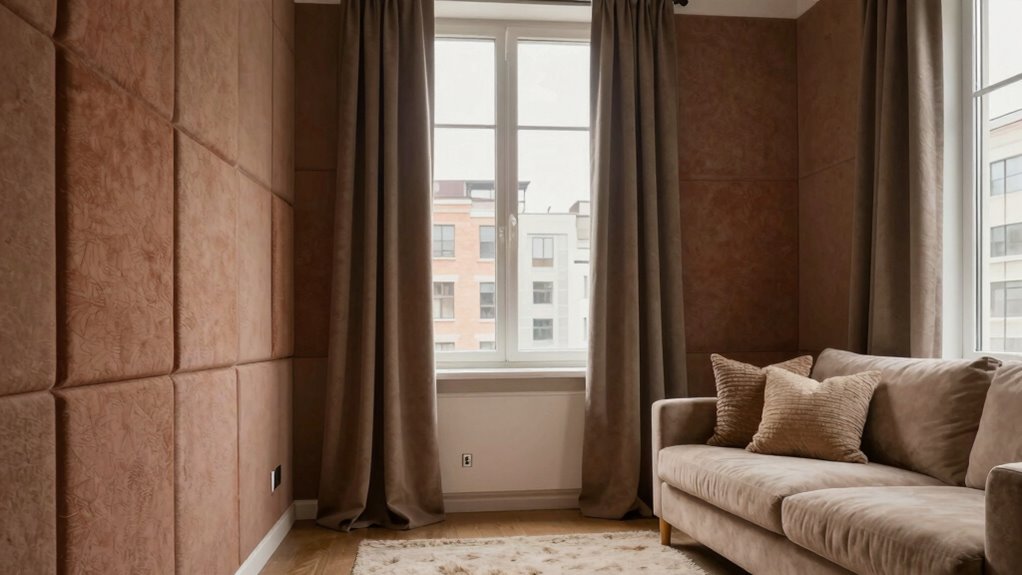
Living in an apartment means sharing walls, floors, and ceilings with neighbors, which can lead to frequent noise disturbances. Noise pollution from footsteps, conversations, or appliances can disrupt your daily routine and sleep. That’s why soundproofing is essential. Acoustic treatments help reduce the impact of outside noise and prevent sounds from escaping your unit. Incorporating biodiversity-friendly soundproofing materials can also contribute to a healthier indoor environment. Using the right marine equipment can offer innovative solutions for sound insulation, especially in apartments near water or with specific acoustic needs. Without proper soundproofing, you might find yourself frustrated by loud neighbors or feeling disconnected from your own space. Investing in sound dampening measures improves your comfort and privacy. It creates a calmer environment, making it easier to concentrate, relax, and get restful sleep. Additionally, understanding the acoustic properties of different materials can help you choose the most effective soundproofing solutions for your apartment. Incorporating innovative insulation techniques can further enhance soundproofing effectiveness in shared spaces. For example, exploring sound absorption methods can significantly improve noise reduction. In apartment living, soundproofing isn’t just a luxury; it’s a practical solution to maintain peace and quiet amid shared spaces.
What Should You Consider Before Soundproofing Your Rental?

Before you start soundproofing your rental, it’s important to assess your lease agreement and speak with your landlord or property manager. Some leases restrict modifications, so check for clauses about structural changes or wall treatments. Consider your budget and the impact of temporary solutions like acoustic curtains or decorative panels, which can be effective without permanent alterations. Incorporating security strategies can also help protect your space during modifications. Additionally, understanding rental restrictions can help you plan soundproofing measures that comply with your lease terms. Being aware of building codes and regulations can further ensure your soundproofing efforts are legal and appropriate.
DIY Soundproofing Ideas for Renters

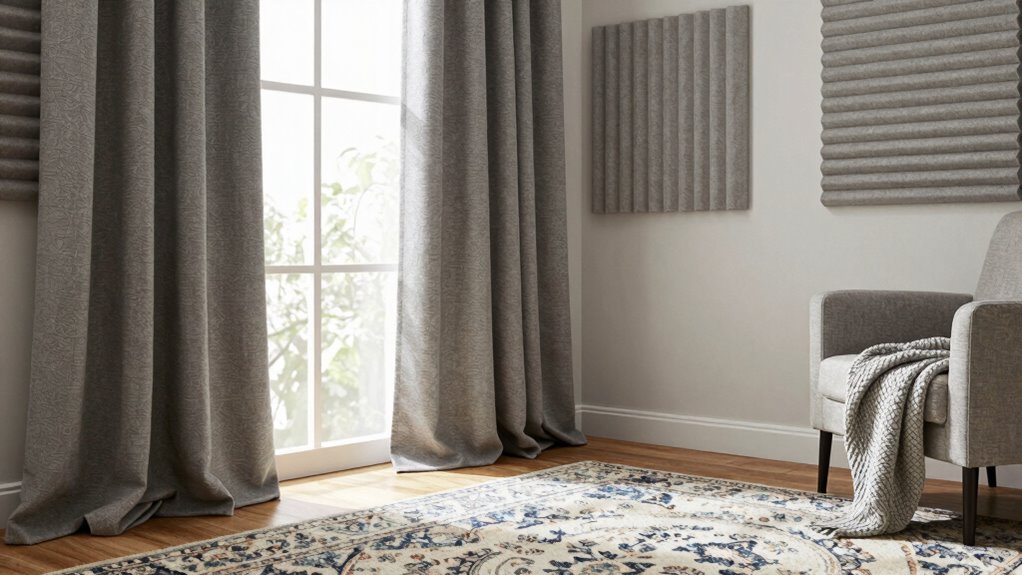
Renters can effectively reduce noise with simple, DIY soundproofing ideas that don’t require permanent modifications. Adding decorative wall panels can absorb sound and improve your space’s acoustics without damaging walls. These panels come in various styles, so you can choose ones that match your decor and bring a cozy vibe. Installing acoustic door seals is another quick fix; they block gaps around your doors, preventing sound from sneaking through. For a more noticeable difference, consider layering rugs and curtains to dampen noise further. These affordable, non-permanent solutions make your apartment more peaceful without risking your security deposit. Incorporating soundproofing materials into your space can enhance overall noise reduction and create a more comfortable environment. Additionally, selecting appropriate insulation can further boost your efforts in minimizing sound transmission between rooms. Using soundproofing techniques tailored for renters can maximize your results without compromising your lease agreement. You might also explore acoustic treatments that are removable and easy to install, offering extra flexibility for your needs. Exploring noise reduction methods can help identify the most effective strategies tailored to your specific space.
Professional Soundproofing Options for Apartments

Are professional soundproofing solutions worth the investment for apartment dwellers? Absolutely. Acoustic panels are a popular choice, designed to absorb sound waves and reduce echo, making your space quieter. They can be installed on walls or ceilings, providing a noticeable difference without major renovations. Sound barriers, on the other hand, create physical partitions that block noise from neighboring units or outside sources. These barriers can be added within walls or as standalone room dividers, offering effective soundproofing without disrupting your apartment’s layout. While professional options can be more costly upfront, they deliver long-lasting results, considerably improving your living environment. If noise is a constant issue, investing in these solutions can transform your apartment into a peaceful retreat.
How to Maintain Your Soundproofing Improvements Over Time

Maintaining your soundproofing improvements guarantees they continue to perform effectively over time. Regularly check your acoustic treatment and noise isolation measures to catch any wear or damage early. Keep surfaces clean and intact, replacing or repairing damaged materials promptly. Consistent upkeep ensures your apartment remains a peaceful haven. To preserve your progress, consider resealing gaps or cracks that may develop, and avoid heavy impacts that could weaken barriers. Staying vigilant helps prevent sound leaks from re-emerging. Incorporating innovative tech gadgets designed for sound monitoring can help you detect issues before they become noticeable.
Frequently Asked Questions
How Much Does Soundproofing Typically Cost for Apartments?
Soundproofing your apartment typically costs between $500 and $2,500, depending on the methods you choose. A cost comparison shows that budget-friendly options like adding rugs, installing weatherstripping, or foam panels can keep expenses low. For more effective noise reduction, investing in drywall or acoustic insulation increases costs but offers better sound dampening. Consider your budget and desired quiet level to find the best soundproofing solution for your space.
Are There Legal Restrictions on Soundproofing Modifications in Rentals?
Did you know that over 60% of renters worry about noise disruptions? When it comes to soundproofing modifications, rental regulations often limit what you can do without permission. You need to check your lease and local laws, as many places require landlord approval before making any soundproofing changes. Always get permission first to avoid potential penalties or eviction risks, ensuring your quiet space stays within legal boundaries.
Which Materials Are Most Effective for Temporary Soundproofing?
You should consider temporary solutions like foam panels, mass-loaded vinyl, and thick curtains, which are easy to install and remove. Foam panels are lightweight and absorb sound well, while mass-loaded vinyl offers superior soundproofing with added weight. Thick curtains can block noise and are simple to hang. Comparing these materials helps you choose the best option based on your budget, ease of installation, and desired noise reduction level.
How Long Does DIY Soundproofing Usually Last?
Diy soundproofing typically lasts between 6 months to 2 years, depending on materials and use. For example, acoustic panels can stay effective for around a year if not properly maintained. Wall insulation may last longer, but its effectiveness diminishes if damaged or exposed to moisture. Regularly inspecting and replacing your soundproofing, especially acoustic panels, guarantees you maintain a quieter, more peaceful apartment environment.
Can Soundproofing Increase My Apartment’s Property Value?
Yes, adding soundproofing can boost your apartment’s property value. Noise cancellation and acoustic insulation appeal to future buyers or renters seeking a peaceful living space. Improved soundproofing reduces noise transfer, making your apartment more attractive. It demonstrates a commitment to comfort and quality, which can justify higher asking prices. Plus, enhanced acoustic insulation can make your space more desirable overall, increasing its market value and appeal.
Conclusion
Imagine a life where every whisper, footstep, and loud event fades into absolute silence—like living inside a peaceful sanctuary, no matter what’s happening outside. Soundproofing your apartment isn’t just a small upgrade; it’s a game-changer that transforms your entire living experience. Say goodbye to sleepless nights and stressful noise battles forever. With the right steps, you’ll create a haven so serene, even the loudest city sounds will seem like distant thunder.