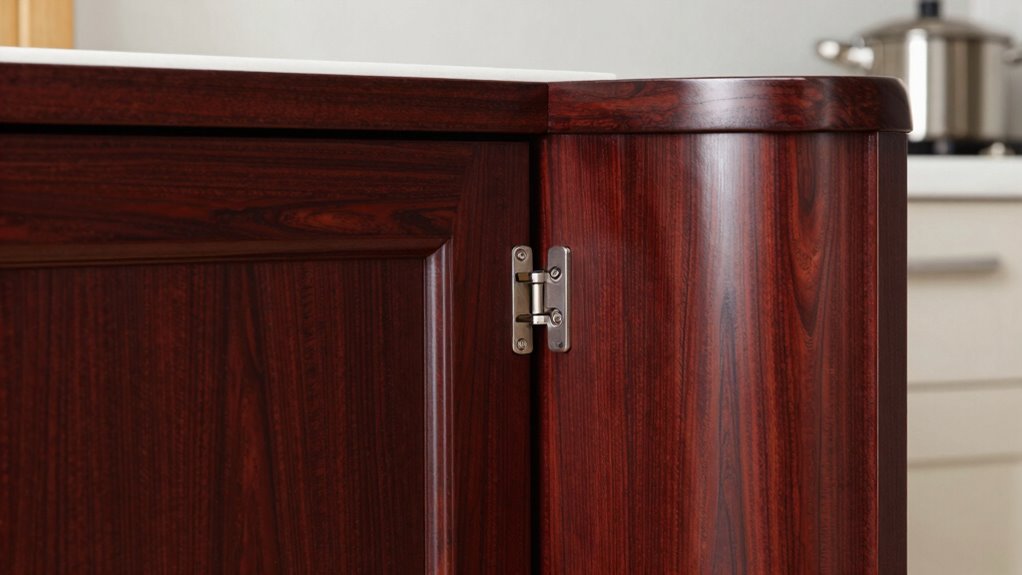
When choosing a corner cabinet door swing, you often have to balance accessibility with space limitations. Wide swings can give you better access to the interior but may require more room, risking interference with nearby cabinets or appliances. Narrow swings save space but limit how much you can open the door, making it harder to reach items. Understanding these trade-offs helps you select hinges that fit your needs. Keep exploring to discover how to make the best choice for your kitchen.

Get business pricing on your home office setup
- Business-only prices and quantity discounts
- Tax-exempt purchasing
- Multiple users, one account, clear invoices
Key Takeaways
- Wider door swings improve access but require more surrounding space, which many shoppers overlook.
- Concealed European hinges often offer better adjustment and smoother operation for corner cabinets.
- Limited swing angles can restrict access to corner cabinet contents, impacting usability.
- Space constraints may force trade-offs between door accessibility and overall kitchen layout.
- Proper hinge selection balances door swing, space efficiency, and ease of daily access.

Choosing the right corner cabinet door swing can make a significant difference in how efficiently you use your kitchen space. When planning your cabinet setup, one of the most overlooked factors is the type of cabinet hinge you select and how it impacts door clearance. Many shoppers focus on aesthetics or price, but the type of hinge and the door swing direction can drastically affect accessibility and overall functionality.
There are several cabinet hinge types to consider, each offering different advantages. For corner cabinets, the most common are traditional butt hinges, European hinges, and specialty pivot hinges. European hinges, in particular, are popular because they allow for smooth, concealed operation and can be adjusted easily. These hinges typically support a soft-close feature, adding to convenience. However, not all hinge types are created equal when it comes to maximizing door clearance. Some hinges, especially those with a wider opening arc, can significantly increase the accessibility of your cabinet interior, making it easier to reach items stored in the back. On the flip side, hinges with limited swing angles might restrict how far the door opens, creating difficulty if you need to access the farthest corners of your cabinet.
The door clearance is a critical aspect you need to evaluate. It determines how much space you’ll need around the cabinet to open the door fully without hitting neighboring cabinets, appliances, or walls. If you choose a door swing that’s too wide for your kitchen layout, you could end up with doors that bump into each other or block access to other areas. Conversely, a door that swings too narrowly might limit your reach, making it frustrating to retrieve or store items. The key is finding a balance—selecting hinge types and swing directions that maximize door clearance without sacrificing stability or safety. Additionally, considering hinge adjustment features can help fine-tune door operation to better suit your space. To optimize your cabinet setup, understanding the influence of door swing radius**** can be incredibly helpful.
Most shoppers overlook this trade-off, assuming all corner cabinet doors operate similarly. But the difference in hinge design and swing radius can make your daily routine much smoother or more cumbersome. It’s worth investing time in understanding how different hinges influence door clearance and how that, in turn, impacts your overall kitchen workflow. When you pick the right combination, you’ll enjoy easier access, better organization, and a more functional space. So don’t just consider the initial look or cost—think about how your cabinet doors will operate day-to-day, and choose hinges and swings that truly serve your needs.
Frequently Asked Questions
How Do I Measure for the Perfect Corner Cabinet Door Swing?
To measure for the perfect corner cabinet door swing, start by choosing the right hinge types, like full overlay or partial, based on your needs. Open the door fully and check the door alignment with the cabinet frame, ensuring it swings smoothly without hitting adjacent surfaces. Measure the distance from the hinge to the edge of the door, and test swing angles to confirm the door opens wide enough without obstruction.
What Materials Are Best for Durable Corner Cabinet Doors?
For durable corner cabinet doors, opt for materials with high durability, like solid wood or plywood, which resist warping and cracking over time. MDF is affordable but less durable, whereas laminate offers added protection against moisture and scratches. Choosing high-quality materials enhances material durability and cabinet longevity, ensuring your doors stay sturdy and attractive for years. Prioritize durability to minimize repairs and keep your corner cabinets looking great long-term.
Can I Retrofit Existing Cabinets With Different Door Swings?
You can definitely retrofit your existing cabinets with different door swings, but it’s like trying to fit a square peg in a round hole—sometimes tricky. To make it work smoothly, consider updating with decorative hardware and custom finishes that complement your new swing. Be prepared for some adjustments, and consult a professional if needed, to guarantee your cabinets look seamless and function just right with the new setup.
Are There Space-Saving Corner Cabinet Door Options?
Yes, there are space-saving corner cabinet door options that can enhance your kitchen. You might consider Lazy Susan shelves or bi-fold doors, which maximize accessibility without taking up extra space. Pair these with decorative finishes and modern hardware to add style and functionality. These options help you utilize corner areas efficiently, making your kitchen feel more open and organized, all while maintaining a sleek, contemporary look.
How Does Hinge Placement Affect Door Swing and Accessibility?
Hinge placement directly impacts door swing and accessibility by controlling how far the door opens and how much clearance you need. Choosing the right hinge types, like pivot or lazy Susan hinges, can maximize space and improve access in tight corners. Proper hinge positioning minimizes obstruction, making it easier to reach inside without knocking into neighboring cabinets. This guarantees your corner cabinet remains functional and efficient, saving you time and effort.
Conclusion
Ultimately, understanding the trade-offs of corner cabinet door swings helps you make smarter decisions, ensuring your kitchen remains functional and stylish. While some believe that choosing a specific swing type guarantees maximum efficiency, reality shows it’s more about balancing accessibility with space. The theory that a single solution fits all is flawed; instead, tailoring your choice to your unique needs and layout often yields the best results. Don’t overlook this detail—your kitchen’s convenience depends on it.
Fall Picks
fall essentials
As an affiliate, we earn on qualifying purchases.