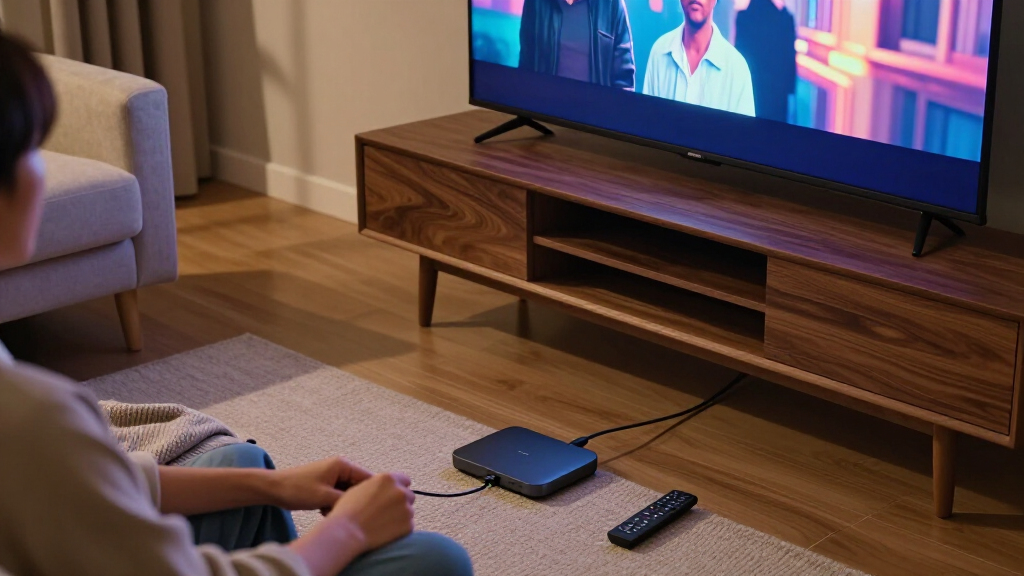

For most households, I’d start with the Amazon Fire TV Stick 4K Max (2nd Gen): it pairs a compact design with strong streaming features and broad app access. The Roku Ultra stands out for viewers who want a more capable player and Roku’s straightforward interface, while the onn 4K Pro is a Google TV alternative with more built-in storage than many basic sticks. The main tradeoffs are platform preference, support for formats such as Dolby Vision and Dolby Atmos, and whether you need premium connectivity or just reliable 4K playback. A device’s 4K label alone does not guarantee that every app or title will stream in 4K on your setup. Continue reading for my full breakdown of all 13 4K streaming devices and guidance on choosing the right one.

Get business pricing on your home office setup
- Business-only prices and quantity discounts
- Tax-exempt purchasing
- Multiple users, one account, clear invoices
Complete the kit


Key Takeaways
- The Fire TV Stick 4K Max (2nd Gen) is my best overall pick for buyers who want a capable, compact streaming device without moving to a set-top box.
- The amazon.com/dp/B0C6W3D4RM?tag=funigy-20&ascsubtag=dc-1160725″ target=”_blank” rel=”nofollow sponsored noopener”>amazon.com/dp/B0DXY833HV?tag=funigy-20&ascsubtag=dc-1160725″ target=”_blank” rel=”nofollow sponsored noopener”>Roku Ultra and Fire TV Cube serve different premium needs: the Ultra suits Roku users seeking a fuller-featured player, while the Cube adds hands-free Alexa control and Wi-Fi 6E.
- Google TV options vary more than their shared platform suggests. The amazon.com/dp/B09BZZ3MM7?tag=funigy-20&ascsubtag=dc-1160725″ target=”_blank” rel=”nofollow sponsored noopener”>amazon.com/dp/B0B75QMC7X?tag=funigy-20&ascsubtag=dc-1160725″ target=”_blank” rel=”nofollow sponsored noopener”>onn 4K Plus and onn 4K Pro offer different hardware configurations, while Xiaomi’s TV Box S is a separate box-style alternative.
- Roku’s Streaming Stick 4K and Streaming Stick Plus are not interchangeable picks. Compare their listed video-format support and remote features against the TV and viewing setup you already have.
- Small sticks are convenient, but not automatically the best fit. Buyers with weak Wi-Fi, limited HDMI access, or a preference for hands-free control may benefit from a larger player such as the Cube, Ultra, or onn 4K Pro.
| Amazon Fire TV Stick 4K Max (2nd Gen) Streaming Device |  | Best Overall Fire TV Stick | Generation: 2nd Gen | Maximum resolution: 2160p at up to 60 fps | Processor: Quad-core 2.0 GHz | VIEW LATEST PRICE | See Our Full Breakdown |
| ONN Android TV 4K UHD Streaming Device with Voice Remote Control, Google Assistant and High-Speed HDMI Cable – Black |  | Best for Google TV Beginners | Resolution: 3840 × 2160 (4K Ultra HD) | Operating system: Android TV | RAM: 2 GB | VIEW LATEST PRICE | See Our Full Breakdown |
| Amazon Fire TV Cube (3rd Gen) 4K Streaming Media Player with Alexa, Wi-Fi 6E |  | Best Premium Hands-Free Option | Generation: 3rd Gen | Maximum video: 4K Ultra HD at up to 60 fps | Processor: Octa-core: 4 × 2.2 GHz and 4 × 2.0 GHz | VIEW LATEST PRICE | See Our Full Breakdown |
| Xiaomi TV Box S (3rd Gen) 4K UHD Streaming Media Player |  | Best for App Storage | Model: TV Box S (3rd Gen), XM-BOXS | Resolution: 3840 × 2160 pixels | Processor: 64-bit quad-core A55, up to 2.5 GHz | VIEW LATEST PRICE | See Our Full Breakdown |
| Amazon Fire TV Stick 4K Plus |  | Best Straightforward Fire TV Value | Maximum resolution: 2160p, 1080p and 720p at up to 60 fps | Processor: Quad-core 1.7 GHz | GPU: 650 MHz | VIEW LATEST PRICE | See Our Full Breakdown |
| Roku Streaming Stick Plus 4K HDR Streaming Device with Voice Remote |  | Best Compact Roku Pick | Resolution: 4K | HDR: HDR10, HDR10+ | Connectivity: Wi-Fi, Bluetooth | VIEW LATEST PRICE | See Our Full Breakdown |
| Amazon Fire TV Stick 4K Select |  | Best for Alexa Households | Output resolution: 2160p, 1080p, and 720p up to 60 fps | HDR formats: HDR10, HDR10+, HLG | Processor: Quad-core 1.7 GHz | VIEW LATEST PRICE | See Our Full Breakdown |
| Roku Ultra 4K Streaming Player with Voice Remote Pro |  | Best Premium Roku Player | Resolution: 4K (3840 × 2160 pixels) | HDR formats: HDR10, HDR10+, Dolby Vision | Audio: Dolby Atmos | VIEW LATEST PRICE | See Our Full Breakdown |
| ONN 4K Plus Streaming Device with Google TV, 16 GB Storage, 2 GB RAM, Remote with Voice Control (US Only) |  | Best Google TV Value Pick | Resolution: 4K Ultra HD | Storage: 16 GB | RAM: 2 GB | VIEW LATEST PRICE | See Our Full Breakdown |
| onn 4K Pro Streaming Device with Google TV |  | Best for Dolby Home Theater on Google TV | Resolution: 4K Ultra HD | Video: Dolby Vision | Audio: Dolby Atmos | VIEW LATEST PRICE | See Our Full Breakdown |
| Roku Streaming Stick 4K with Voice Remote, HDR10+ & Dolby Vision |  | Best for Simple, Compact 4K Streaming | Video output: 4K UHD, up to 2160p at 60fps | HDR formats: Dolby Vision, HDR10+ | Connectivity: Long-range Wi-Fi | VIEW LATEST PRICE | See Our Full Breakdown |
| Amazon Fire TV Stick 4K with Alexa+ and Wi-Fi 6 |  | Best for Alexa Households | Resolution: 4K | HDR: HDR10+ | Wireless connectivity: Wi-Fi 6 | VIEW LATEST PRICE | See Our Full Breakdown |
| TiVo Stream 4K – All Streaming Apps & Live TV – 4K UHD, Dolby Vision HDR, Dolby Atmos – Android TV Powered Plug-In Smart TV Stick |  | Best for App and Live TV Discovery | Resolution: 4K UHD | HDR: Dolby Vision | Audio: Dolby Atmos | VIEW LATEST PRICE | See Our Full Breakdown |
| 4K streaming device | Storage | Resolution |
|---|---|---|
| Amazon Fire TV Stick 4K Max | 16 GB | — |
| ONN Android TV 4K UHD Streamin | 8 GB | 3840 × 2160 (4K Ultra HD) |
| Amazon Fire TV Cube | 16 GB | — |
| Xiaomi TV Box S | 32 GB | 3840 × 2160 pixels |
| Amazon Fire TV Stick 4K Plus | 8 GB | — |
| Roku Streaming Stick Plus 4K H | — | 4K |
| Amazon Fire TV Stick 4K Select | — | — |
| Roku Ultra 4K Streaming Player | — | 4K (3840 × 2160 pixels) |
| ONN 4K Plus Streaming Device w | 16 GB | 4K Ultra HD |
| onn 4K Pro Streaming Device wi | 32 GB | 4K Ultra HD |
| Roku Streaming Stick 4K with V | 16 GB | — |
| Amazon Fire TV Stick 4K with A | — | 4K |
| TiVo Stream 4K | 8 GB | 4K UHD |
More Details on Our Top Picks
Amazon Fire TV Stick 4K Max (2nd Gen) Streaming Device
I’d put the Fire TV Stick 4K Max first for buyers who want a compact 4K streamer with broad picture and audio format support. Dolby Vision, HDR10+ and Dolby Atmos cover the key formats listed here, while 16 GB of storage gives apps and games more room than the 8 GB Fire TV Stick 4K Plus. Its Wi-Fi 6E and quad-core 2.0 GHz processor also make it the more capable stick in this pair, though the faster wireless standard only helps with a compatible router.
The tradeoff is that it still relies on Fire TV and a nearby HDMI connection; buyers wanting hands-free Alexa and Ethernet should look to the Fire TV Cube instead. I’d choose the Max for a well-equipped stick, not for its extra network features alone.
Pros:- Supports 4K at up to 60 fps with Dolby Vision, HDR10+, HDR10 and HLG.
- 16 GB of storage offers more room for apps and games than the Fire TV Stick 4K Plus.
- Wi-Fi 6E and a quad-core 2.0 GHz processor support a capable streaming setup.
- Alexa remote can control compatible TVs and audio devices.
Cons:- Wi-Fi 6E requires a compatible router to use its 6 GHz band.
- Some apps, games and streaming content require separate subscriptions or compatible equipment.
Best for: Fire TV households with a 4K television, a Wi-Fi 6E router, and enough installed apps or games to benefit from 16 GB of storage.
Not ideal for: People with older routers who do not need extra storage, or buyers who want hands-free Alexa and Ethernet in the streaming device.
- Generation:2nd Gen
- Maximum resolution:2160p at up to 60 fps
- Processor:Quad-core 2.0 GHz
- Storage:16 GB
- Wi-Fi:Wi-Fi 6E tri-band: 2.4, 5 and 6 GHz
- Video formats:Dolby Vision, HDR10, HDR10+, HLG, H.265, H.264, VP9 and AV1
- Audio:Dolby Atmos, 7.1 surround sound, stereo, and HDMI audio passthrough up to 5.1
- Bluetooth:Bluetooth 5.2 + BLE
Our verdict“Choose the Fire TV Stick 4K Max if you want a feature-rich Fire TV stick with more storage and Wi-Fi headroom than the 4K Plus.”
ONN Android TV 4K UHD Streaming Device with Voice Remote Control, Google Assistant and High-Speed HDMI Cable – Black
The ONN Android TV 4K device is a straightforward pick for someone who wants Google’s app ecosystem and phone casting without assembling a separate cable setup. Its included HDMI cable makes connection simple, and Chromecast built-in lets a viewer send compatible content from a mobile device. Google Assistant voice search is another useful route to finding shows without typing titles into an onscreen keyboard.
Against the Xiaomi TV Box S (3rd Gen), this ONN model is the simpler, lower-capacity option: it has 8 GB of storage and supports H.264 and H.265/HEVC, while Xiaomi lists 32 GB and additional video codecs. The ONN’s listing also restricts use to the United States. I’d pick it for basic 4K streaming and casting, but skip it if app storage or use outside the U.S. matters.
Pros:- Android TV provides access to Google Play Store apps.
- Chromecast built-in supports casting from compatible mobile apps.
- Google Assistant voice remote can help find and control content.
- A high-speed HDMI cable is included for setup.
Cons:- 8 GB of storage leaves limited room for installed apps and media.
- The product is listed for use in the United States only.
Best for: U.S. viewers new to Android TV who want Google Play apps, Google Assistant, mobile casting and an HDMI cable in the box.
Not ideal for: People outside the United States or viewers who plan to install many apps and need more than 8 GB of storage.
- Resolution:3840 × 2160 (4K Ultra HD)
- Operating system:Android TV
- RAM:2 GB
- Storage:8 GB
- Voice remote:Google Assistant enabled
- Casting:Chromecast built-in
- Video codec support:H.264 and H.265/HEVC
- Included cable:High-speed HDMI cable
Our verdict“Choose this ONN device for a basic U.S.-only Google TV-style setup with casting and the connection cable included.”
Amazon Fire TV Cube (3rd Gen) 4K Streaming Media Player with Alexa, Wi-Fi 6E
The Fire TV Cube (3rd Gen) is the lineup’s better fit for a living room where voice control and connection options matter as much as 4K playback. Its built-in Alexa microphones and speaker allow hands-free commands, and its HDMI input, HDMI output, USB-A and Ethernet offer more flexibility than the Fire TV Stick 4K Max’s compact stick format. The octa-core processor and 16 GB of storage round out a strong Fire TV setup.
That extra hardware comes with a clear compromise: the Cube is a 513 g box rather than a small stick, so it needs space near the TV and a power connection. The Max is easier to tuck behind a screen and also supports Wi-Fi 6E, but lacks the Cube’s built-in voice hardware and Ethernet port. I’d pick the Cube for a connected home theater, not for the tidiest installation.
Pros:- Built-in microphones and speaker support hands-free Alexa commands.
- HDMI input and output, USB-A and Ethernet provide more connection options than a stick.
- Octa-core processor and 16 GB storage support a capable streaming setup.
- Supports 4K at up to 60 fps with Dolby Vision, HDR10+ and Dolby Atmos.
Cons:- Its box design and 513 g weight take more room than a streaming stick.
- Wi-Fi 6E requires a compatible router, and the listed setup also calls for WPA3 encryption.
Best for: Fire TV users who want hands-free Alexa, wired Ethernet and control of compatible TVs, soundbars or other devices.
Not ideal for: People who need a tiny behind-the-TV device or do not want a separate box occupying space near the television.
- Generation:3rd Gen
- Maximum video:4K Ultra HD at up to 60 fps
- Processor:Octa-core: 4 × 2.2 GHz and 4 × 2.0 GHz
- Memory:2 GB
- Storage:16 GB
- Wi-Fi:Wi-Fi 6E tri-band
- Ports:HDMI 2.1 input and output, USB-A 2.0, Ethernet 10/100 Mbps, and IR extender
- Voice control:Alexa remote plus built-in microphones and speaker
- Video and audio formats:Dolby Vision, HDR10, HDR10+, HLG and Dolby Atmos
Our verdict“Choose the Fire TV Cube if hands-free Alexa and Ethernet justify a larger, more connected device than the Fire TV Stick 4K Max.”
Xiaomi TV Box S (3rd Gen) 4K UHD Streaming Media Player
The Xiaomi TV Box S (3rd Gen) earns its place for buyers who want room for a larger app collection in a Google TV box. Its 32 GB of storage is double the Fire TV Cube’s 16 GB and four times the ONN Android TV device’s 8 GB, giving installed apps more breathing room. Google Assistant, Google Cast and Wi-Fi 6 make it a natural fit for households already using Google services, while Dolby Vision, HDR10+, Dolby Atmos and DTS:X cover a broad set of home-theater formats.
The tradeoff is that the supplied specs list 2 GB of RAM and a quad-core processor, rather than the Cube’s octa-core design. Xiaomi also specifies H.264, H.265/HEVC and VP9 video formats, without listing AV1. I’d favor it for storage and Google TV features, but choose the Cube for hands-free Alexa and more listed ports.
Pros:- 32 GB storage offers more app space than the Fire TV Cube and ONN Android TV device in this lineup.
- Google TV includes Google Assistant voice control and Google Cast.
- Supports 4K UHD, HDR10+, Dolby Vision, Dolby Atmos and DTS:X.
- Wi-Fi 6 provides a current wireless connection option with a compatible router.
Cons:- Wi-Fi 6 benefits require a compatible router.
- The listed 2 GB RAM and quad-core processor may be less appealing than the Fire TV Cube’s octa-core hardware.
Best for: Google TV households that install many apps and want substantial onboard storage plus casting and modern HDR and audio format support.
Not ideal for: People seeking built-in hands-free Alexa, Ethernet, or a device with a listed AV1 codec.
- Model:TV Box S (3rd Gen), XM-BOXS
- Resolution:3840 × 2160 pixels
- Processor:64-bit quad-core A55, up to 2.5 GHz
- RAM:2 GB
- Storage:32 GB
- Operating platform:Google TV
- Connectivity:Wi-Fi 6, Bluetooth, HDMI and USB
- Video formats:H.264, H.265/HEVC and VP9
- HDR and audio support:HDR10+, Dolby Vision, Dolby Atmos and DTS:X
Our verdict“Choose the Xiaomi TV Box S if generous app storage and Google TV matter more to you than the Fire TV Cube’s hands-free Alexa and ports.”
Amazon Fire TV Stick 4K Plus
The Fire TV Stick 4K Plus covers the core 4K formats in a compact design: Dolby Vision, HDR10+ and Dolby Atmos are all listed, and its Alexa remote handles voice search plus compatible TV power and volume. For viewers who mainly want a Fire TV stick for streaming, that is a straightforward feature set without moving up to the Max’s 16 GB storage and Wi-Fi 6E.
The tradeoff is that this model has 8 GB of storage and a quad-core 1.7 GHz processor, compared with the Max’s 16 GB and 2.0 GHz chip. It uses Wi-Fi 6 rather than Wi-Fi 6E, which can be a sensible fit for a typical dual-band network but offers no 6 GHz band. I’d choose the Plus for basic 4K viewing; buyers with larger app libraries or a Wi-Fi 6E router should compare it closely with the Max.
Pros:- Supports 4K playback with Dolby Vision, HDR10+ and Dolby Atmos.
- Wi-Fi 6 supports dual-band 2.4 GHz and 5 GHz connections.
- Alexa remote includes TV power and volume controls.
- Compact stick form factor connects through HDMI.
Cons:- 8 GB of storage is half the capacity listed for the Fire TV Stick 4K Max.
- Its 1.7 GHz quad-core processor is less powerful on paper than the Max’s 2.0 GHz chip.
- Some streaming services and content require separate subscriptions, and 4K/HDR availability depends on compatible equipment and service.
Best for: Viewers who want a compact Fire TV stick with 4K HDR, Dolby Atmos and Alexa controls for a dual-band Wi-Fi setup.
Not ideal for: People who need extra app storage, want Wi-Fi 6E, or plan to rely on extensive local game and app installations.
- Maximum resolution:2160p, 1080p and 720p at up to 60 fps
- Processor:Quad-core 1.7 GHz
- GPU:650 MHz
- Storage:8 GB
- Wi-Fi:Dual-band Wi-Fi 6: 2.4 GHz and 5 GHz
- Bluetooth:Bluetooth 5.2 + BLE
- Audio support:Dolby Atmos, 7.1 surround, stereo, and HDMI audio passthrough up to 5.1
- Included remote:Alexa Voice Remote with TV power and volume control
Our verdict“Choose the Fire TV Stick 4K Plus for core 4K Fire TV features on Wi-Fi 6, but step up to the Max if storage or Wi-Fi 6E matters.”
Roku Streaming Stick Plus 4K HDR Streaming Device with Voice Remote
The Roku Streaming Stick Plus suits buyers who want straightforward 4K streaming without a separate box taking up space. Its stick plugs into HDMI and draws power from the TV, so setup stays tidy; the voice remote also handles TV power and volume. Compared with the Roku Ultra, it gives up Dolby Vision, Dolby Atmos, Ethernet, and the Ultra’s more advanced remote, but its small form is easier to tuck behind a screen. HDR10 and HDR10+ support cover common HDR formats, and Bluetooth headphone mode offers a private-listening option. The tradeoff is a more basic connection and feature set: this is a practical fit for a 4K TV with accessible Wi-Fi, not a home theater build that needs the Ultra’s broader format support.
Pros:- Compact HDMI stick keeps the setup unobtrusive and neighboring ports accessible.
- Draws power from the TV, avoiding a separate wall outlet.
- Supports 4K resolution with HDR10 and HDR10+.
- Voice remote controls streaming, TV power, and volume.
Cons:- Does not list Dolby Vision or Dolby Atmos support, unlike the Roku Ultra.
- 4K playback requires a compatible TV and supported content.
- Relies on Wi-Fi rather than offering Ethernet.
Best for: Roku users who want a compact, TV-powered 4K streamer with a voice remote and minimal visible hardware.
Not ideal for: Home theater buyers seeking Dolby Vision, Dolby Atmos, or wired Ethernet; the Roku Ultra offers those features.
- Resolution:4K
- HDR:HDR10, HDR10+
- Connectivity:Wi-Fi, Bluetooth
- Connector:HDMI
- Video codecs:H.264/AVC, H.265/HEVC, AV1, VP9
- Remote:Voice control; controls streaming, TV power, and volume
- Dimensions:3.7 × 0.8 × 0.5 in
- Weight:80 g
Our verdict“Choose this Roku stick for discreet, uncomplicated 4K streaming, but pick the Roku Ultra for a wired connection or more advanced home theater formats.”
Amazon Fire TV Stick 4K Select
The Fire TV Stick 4K Select is a compact choice for viewers who want 4K playback and Alexa voice search in a familiar Fire TV setup. Its remote and supported apps make finding shows by voice more direct, while the listed support for HDR10+, HLG, and AV1 gives it a capable format range. Compared with the Roku Streaming Stick Plus, this model adds Alexa-centered search and mentions cloud gaming, but it has 8 GB of storage and gaming depends on a subscription and compatible controller. Its Wi-Fi 5 connection is also a step behind the onn 4K Plus and its Wi-Fi 6 support. The device makes the most sense for someone already using Alexa and Fire TV apps; buyers wanting Roku’s simpler interface or a wired network connection should look elsewhere.
Pros:- Supports 4K output with HDR10+, HLG, and several video codecs.
- Alexa Voice Remote is included for voice search and control.
- Small stick design connects directly to an HDMI port.
- Cloud gaming support adds an option beyond video streaming.
Cons:- 8 GB of internal storage may limit room for apps and games.
- Cloud gaming requires a subscription and compatible controller.
- Uses Wi-Fi 5 rather than the Wi-Fi 6 listed for the onn 4K Plus.
Best for: Viewers already using Alexa and Fire TV who want a compact 4K stick with voice search and optional cloud gaming.
Not ideal for: Buyers who need Ethernet, more than 8 GB of device storage, or cloud gaming without extra subscriptions and a compatible controller.
- Output resolution:2160p, 1080p, and 720p up to 60 fps
- HDR formats:HDR10, HDR10+, HLG
- Processor:Quad-core 1.7 GHz
- Internal storage:8 GB
- Wi-Fi:Dual-band, dual-antenna MIMO; 802.11a/b/g/n/ac
- Bluetooth:Bluetooth 5.0 and Bluetooth Low Energy
- Ports:HDMI output; micro-USB for power
- Audio:HDMI pass-through for Dolby-encoded audio
Our verdict“Pick the Fire TV Stick 4K Select if Alexa and Fire TV are already part of your household, but skip it if you need Ethernet or room for a large app library.”
Roku Ultra 4K Streaming Player with Voice Remote Pro
The Roku Ultra is the strongest fit here for viewers building a more capable 4K setup around Roku. Unlike the Roku Streaming Stick Plus, it supports Dolby Vision and Dolby Atmos, and adds both Wi-Fi 6 and Ethernet for a choice of wireless or wired networking. Its rechargeable Voice Remote Pro has backlit buttons, hands-free voice control, and a lost-remote finder—useful upgrades for a living room where the remote often disappears. Those additions make the Ultra more than a basic streamer, but they also make it a less minimal choice than a stick. The onn 4K Pro also lists Dolby Vision, Dolby Atmos, Wi-Fi 6, and Ethernet, so Roku’s case rests on its platform and remote features rather than a unique format advantage. Choose the Ultra if those Roku conveniences matter; a simpler stick may suit casual viewing better.
Pros:- Supports 4K, HDR10, HDR10+, and Dolby Vision.
- Dolby Atmos support suits compatible home theater audio equipment.
- Offers both Wi-Fi 6 and Ethernet for flexible network setup.
- Rechargeable remote includes backlighting, hands-free voice control, and a finder.
Cons:- Its extra remote and connectivity features may be unnecessary for basic streaming.
- Requires a compatible TV and internet connection for streaming.
- The onn 4K Pro lists similar Dolby Vision, Dolby Atmos, Wi-Fi 6, and Ethernet capabilities.
Best for: Roku fans with a Dolby Vision-capable TV and Atmos audio setup who want Ethernet and an upgraded rechargeable remote.
Not ideal for: Casual streamers seeking the smallest plug-in device or buyers who do not need advanced HDR, audio, and remote features.
- Resolution:4K (3840 × 2160 pixels)
- HDR formats:HDR10, HDR10+, Dolby Vision
- Audio:Dolby Atmos
- Connectivity:Wi-Fi 6, Ethernet, Bluetooth, HDMI, USB
- Remote:USB-C rechargeable; backlit buttons, hands-free voice control, lost remote finder
- Supported services:Apple TV+, Disney+, Hulu, Netflix, Prime Video
- Dimensions:5 × 4.9 × 1 in
- Weight:18 g
Our verdict“Choose the Roku Ultra for a feature-rich Roku setup with a premium remote and wired networking, rather than for a basic 4K stick replacement.”
ONN 4K Plus Streaming Device with Google TV, 16 GB Storage, 2 GB RAM, Remote with Voice Control (US Only)
The ONN 4K Plus stands out for buyers who want Google TV with more room for apps than the Fire TV Stick 4K Select’s 8 GB of storage. Its 16 GB capacity and 2 GB of RAM are useful for households that install multiple streaming apps, while Wi-Fi 6 is a newer wireless standard than the Fire stick’s Wi-Fi 5. It also supports an optional USB-C hub with Ethernet, giving buyers a wired-network path that the Roku Streaming Stick Plus lacks. The tradeoff is that Ethernet depends on an additional hub, and the listing limits this model to the US. Unlike the Roku Ultra, the supplied specifications do not name Dolby Vision or Dolby Atmos, so I would rank it for storage and Google TV flexibility rather than a premium home theater. Its larger listed dimensions also make it less discreet than a stick.
Pros:- 16 GB of storage provides more app space than the Fire TV Stick 4K Select’s 8 GB.
- Google TV interface includes voice-controlled remote support.
- Wi-Fi 6 is listed for wireless streaming.
- Optional USB-C hub with Ethernet provides a wired connection option.
Cons:- Listed as US-market only.
- Ethernet requires a compatible USB-C hub rather than being listed as built in.
- Product data does not specify Dolby Vision or Dolby Atmos support.
Best for: US-based Google TV users who install several apps and want Wi-Fi 6 plus the option of Ethernet through a USB-C hub.
Not ideal for: Buyers outside the US, people who want a compact HDMI stick, or home theater viewers prioritizing specified Dolby Vision and Atmos support.
- Resolution:4K Ultra HD
- Storage:16 GB
- RAM:2 GB
- Operating system:Google TV
- Wi-Fi:Wi-Fi 6 (802.11ax), 2.4/5 GHz
- Ethernet option:USB-C hub with Ethernet port
- Dimensions:6 × 3.95 × 1.9 in
- Market availability:US only
Our verdict“Choose the ONN 4K Plus for Google TV, Wi-Fi 6, and extra app storage in the US, but look elsewhere for confirmed premium Dolby formats or a stick-sized design.”
onn 4K Pro Streaming Device with Google TV
The onn 4K Pro is the Google TV pick for buyers who want confirmed Dolby Vision and Dolby Atmos alongside stronger listed memory and storage than the ONN 4K Plus. Its 32 GB of storage and 3 GB of RAM give more headroom for apps than the Plus’s 16 GB and 2 GB, while Wi-Fi 6 and an Ethernet port cover wireless and wired networking. A backlit remote with a find-my-remote feature is another practical upgrade over a basic voice remote. The tradeoff is its much larger listed size and weight compared with compact HDMI sticks such as the Roku Streaming Stick Plus. The product data also gives little detail about included accessories, so buyers should check what their setup requires. For Google TV users with a compatible Dolby-capable screen and audio system, this is the more home-theater-focused option; casual streamers may not benefit from its extra capacity.
Pros:- Supports 4K Ultra HD with Dolby Vision and Dolby Atmos.
- 32 GB of storage and 3 GB of RAM exceed the ONN 4K Plus specifications.
- Wi-Fi 6 and an Ethernet port offer wireless and wired connectivity.
- Backlit remote includes a find-my-remote feature.
Cons:- Listed dimensions and weight make it less portable than a streaming stick.
- Product description provides limited detail about included accessories.
- Dolby Vision and Dolby Atmos benefits depend on compatible display and audio equipment.
Best for: Google TV households with Dolby Vision displays and Dolby Atmos audio equipment that want extra app capacity and Ethernet.
Not ideal for: Travelers and buyers who need a compact stick, or casual viewers unlikely to use the extra storage and Dolby formats.
- Resolution:4K Ultra HD
- Video:Dolby Vision
- Audio:Dolby Atmos
- Storage:32 GB
- RAM:3 GB
- Connectivity:Wi-Fi 6; Ethernet port
- Remote:Backlit with find-my-remote feature
- Dimensions:10 × 4 × 4 in
Our verdict“Pick the onn 4K Pro for a better-equipped Google TV home theater, but choose a smaller streamer if portability or simple everyday viewing matters more.”
Roku Streaming Stick 4K with Voice Remote, HDR10+ & Dolby Vision
The Roku Streaming Stick 4K is a strong fit for viewers who want a small, straightforward way to add 4K, Dolby Vision, and HDR10+ to a compatible TV. Its stick design tucks behind the screen, while the long-range Wi-Fi receiver may help when the router is farther away. Roku’s broad channel selection and voice search keep everyday browsing simple. Compared with the TiVo Stream 4K, this Roku favors a compact setup and Roku’s own interface rather than combining apps and live TV in one Android TV hub. Its voice remote adds convenient search and playback control, but the listed details do not specify TV power or volume buttons. The tradeoffs are no Ethernet port, limited 16 GB storage, and a platform tied to Roku’s app ecosystem.
Pros:- Supports 4K UHD output up to 2160p at 60fps
- Offers Dolby Vision and HDR10+ for compatible TVs
- Compact stick form fits behind the TV and helps avoid blocking nearby HDMI ports
- Long-range Wi-Fi and a voice-enabled remote support convenient streaming and search
Cons:- No Ethernet connection for wired network stability
- 16 GB storage is limited and mainly intended for apps
- Roku’s platform may not suit buyers seeking a different app ecosystem
Best for: Viewers with a 4K TV who want a compact Roku device, broad channel access, and voice search without adding a separate streaming box.
Not ideal for: Buyers who need wired networking, want Android TV or Google Assistant, or expect substantial storage for downloaded media.
- Video output:4K UHD, up to 2160p at 60fps
- HDR formats:Dolby Vision, HDR10+
- Connectivity:Long-range Wi-Fi
- Connection:HDMI
- Form factor:TV stick
- Storage:16 GB
- RAM:1 GB
- Remote:Voice-control remote
Our verdict“Choose this Roku for a compact, easy-to-navigate 4K setup, but pick the TiVo Stream 4K if a unified Android TV interface matters more.”
Amazon Fire TV Stick 4K with Alexa+ and Wi-Fi 6
This Fire TV Stick 4K makes the most sense for viewers already using Alexa who want a stick-style player with 4K streaming and HDR10+. The remote’s TV power and volume controls can reduce the need to juggle remotes, and Bluetooth headphone support offers a private-listening option. Compared with the Roku Streaming Stick 4K, its clearest distinction is Alexa+ integration and the specified TV controls; Roku, by contrast, lists Dolby Vision support alongside HDR10+. Wi-Fi 6 is included, though the product details do not state Ethernet or storage capacity, so buyers with demanding network or app-storage needs have less information to weigh. Direct power from a compatible TV can keep the setup tidy, but that convenience depends on the TV and may not work with every model. Some content also requires subscriptions.
Pros:- Supports 4K streaming with HDR10+
- Voice remote controls TV power and volume
- Bluetooth support allows private listening with compatible headphones
- Direct TV power may avoid a separate wall adapter on compatible televisions
Cons:- Direct power depends on TV compatibility
- Some content requires paid subscriptions
- Product details do not specify storage capacity or an Ethernet option
Best for: Alexa users who want 4K HDR10+ streaming, TV power and volume controls on the remote, and Bluetooth headphone listening.
Not ideal for: Viewers whose TV is incompatible with direct power, who specifically need Dolby Vision, or who want a device with listed wired networking and storage specifications.
- Resolution:4K
- HDR:HDR10+
- Wireless connectivity:Wi-Fi 6
- Bluetooth:Supported
- Connection:HDMI
- Power:Direct power from TV; compatible TV required
- Remote:Voice remote with TV power and volume controls
- Voice assistant:Alexa+
Our verdict“Pick this Fire TV Stick if Alexa and remote-based TV controls are priorities, but choose the Roku Streaming Stick 4K if Dolby Vision support is a deciding factor.”
TiVo Stream 4K – All Streaming Apps & Live TV – 4K UHD, Dolby Vision HDR, Dolby Atmos – Android TV Powered Plug-In Smart TV Stick
The TiVo Stream 4K stands apart by putting streaming apps and live TV discovery in a shared interface, with Google Assistant voice control for searches and navigation. It pairs 4K UHD with Dolby Vision HDR and Dolby Atmos, giving it an audio-and-video feature set that is broader than the Fire TV Stick 4K’s listed HDR10+ support. Its 2 GB of RAM also exceeds the Roku Streaming Stick 4K’s 1 GB, though that alone does not promise faster performance. The Android TV foundation suits viewers who want access to a range of apps and a consolidated browsing experience. The compromise is a modest 8 GB of storage, no Ethernet, and a requirement for an external 5 V / 1 A power supply, so its setup is less minimal than a device powered directly by a compatible TV.
Pros:- Combines streaming apps and live TV browsing in one interface
- Supports 4K UHD with Dolby Vision HDR
- Dolby Atmos support for compatible audio setups
- Google Assistant voice control and 2 GB of RAM
Cons:- 8 GB storage may constrain app installations
- Requires an external 5 V / 1 A power supply
- No Ethernet port for wired networking
Best for: Viewers who use several streaming services and live TV apps and want Google Assistant and a shared interface for discovering what to watch.
Not ideal for: Buyers seeking a TV-powered setup, wired networking, or more room for installed apps than the listed 8 GB storage provides.
- Resolution:4K UHD
- HDR:Dolby Vision
- Audio:Dolby Atmos
- Operating system:Android TV
- Voice assistant:Google Assistant
- Connectivity:Wi-Fi
- RAM:2 GB
- Storage:8 GB
- Power:5 V / 1.0 A DC; maximum 5 W
Our verdict“Choose the TiVo Stream 4K for unified app and live TV discovery with Dolby Vision and Atmos, but choose the Roku Streaming Stick 4K for a simpler, more compact setup.”

How We Picked
I ranked these 4K streaming devices by how well their features answer common buying needs: dependable 4K playback, useful HDR and audio-format support, app and platform usability, wireless connectivity, remote controls, and device form factor. I also weighed practical details such as storage where specified, whether a product is a stick or a set-top player, and how much added capability it offers beyond basic streaming.
The order reflects versatility for the widest range of households, not a claim that one platform suits everyone. Compact devices rank well when they balance features and convenience; premium players earn a place for specific benefits such as hands-free control or a more capable remote. I distinguish products with different platforms and hardware rather than treating similar-looking model names as equivalent. A buyer who prefers Roku, Google TV, or Alexa may reasonably choose a lower-ranked option that fits their household better.
Factors to Consider When Choosing 4K Streaming Devices
Before choosing among these devices, I’d match the hardware to the TV, network, and people using it. These factors can matter more than the broad promise of 4K support.
Check What Your TV Can Actually Display
A streaming device can send a 4K signal, but your television, HDMI connection, and the video you play all affect the result. Check whether your TV supports 4K and the HDR formats you care about before paying extra for device-level format support. Dolby Vision and HDR10+ support are not interchangeable, and not every television accepts both. Streaming apps may also vary in which formats they offer for a particular title. If your TV is 1080p, a 4K device may still run your apps, but its picture capabilities will not turn that screen into a 4K display.
Choose a Platform Your Household Will Use
Fire TV, Roku, and Google TV arrange recommendations, apps, and voice features differently, so the interface shapes everyday use. Think about which apps your household relies on and whether you want a particular voice assistant or content-discovery style. A familiar platform can matter more than a small hardware advantage, especially when several people share the remote. Check app availability in your region and on the exact device rather than assuming every app works the same way across platforms. If you are switching ecosystems, expect some differences in search, menus, and home-screen recommendations.
Match the Device to Your Wi-Fi and HDMI Setup
Fast wireless features help only when your router and room placement can make use of them. A device with advanced Wi-Fi cannot fix a weak broadband connection or a signal blocked by walls, so test the network near the TV if buffering is a recurring problem. Sticks keep the area behind the television tidy, but their placement can be awkward when HDMI ports are crowded or hard to reach. A box-style player may fit better when you have shelf space or want to keep the device away from the TV’s ports. Check the available HDMI inputs before buying, particularly if a soundbar or game console already occupies them.
Pay for Features You Will Use
Premium features are worthwhile when they solve a real problem in your setup. Hands-free voice control can be useful when you regularly search from across the room, while a basic voice remote may be enough if you mainly open familiar apps. Extra storage is more relevant to households that install many apps or use other supported functions than to viewers who stream from a short list of services. A more capable player may offer room to grow, but it adds hardware that some buyers do not need. Compare the specific added functions with your habits rather than assuming a higher-tier model improves every viewing experience.
Look Beyond the 4K Label at HDR and Audio
Resolution is only one part of the viewing chain: HDR formats and surround-sound support can shape the result too. Confirm that the device, TV, sound system, app, and content all support the format you want; one unsupported link can limit playback. Dolby Vision or Atmos support is a poor reason to pay more if the rest of your setup cannot use it. On the other hand, buyers with compatible televisions and audio equipment may prefer a device that matches those capabilities. Treat format lists as compatibility details, not a promise that every title will use every format.
Think About Who Will Use the Remote
A device that is easy to operate for one person may feel cluttered or unfamiliar to another. Consider whether users need simple navigation, voice search, direct access to apps, or control of other home devices. A voice remote can make searching easier, but it is not a substitute for a clear interface or accessible buttons. If the device is for a guest room or a less tech-confident viewer, prioritize a familiar platform and a straightforward setup over advanced wireless features. For a shared living room, check whether the remote and voice controls fit everyone’s habits.
Frequently Asked Questions
Will a 4K streaming device improve my picture on a 1080p television?
It will not make a 1080p television display native 4K detail. The device may still provide access to current streaming apps and can be a convenient upgrade if your TV’s built-in software is slow or no longer supported. Picture quality will remain limited by the television’s resolution and capabilities. If you plan to replace the TV soon, a 4K device can carry over, but you do not need to pay extra for advanced picture formats your current screen cannot show.
Should I choose Roku, Fire TV, or Google TV?
Choose based on the interface and ecosystem your household prefers, not on the platform name alone. Roku, Fire TV, and Google TV offer different ways to find content and use voice features, while app availability can vary by service and region. Make a short list of the apps you use most and confirm they are available on the exact model. If you already use Alexa or Google Assistant at home, that may also influence which voice controls feel most convenient.
Do I need Dolby Vision or Dolby Atmos on a streaming device?
Only pay attention to those formats if the rest of your setup can use them. Dolby Vision requires a compatible TV and supported content, while Dolby Atmos needs compatible playback equipment and a service or title that provides it. A device may support a format without every app or stream using it. If your TV and audio system do not support these features, a less expensive or simpler model may serve you just as well for everyday streaming.
Is a streaming stick enough, or should I buy a box-style device?
A stick is a good fit when you want a compact setup that plugs into an HDMI port and stays out of sight. A box-style model may be easier to place when the TV’s HDMI ports are crowded, the stick would be obstructed, or you want a device with a larger form factor and added capabilities. Neither shape guarantees better streaming by itself; network strength and app support still matter. Check where the device will sit and how it connects before deciding that smaller is automatically more convenient.
Why does a show still play below 4K after I buy a 4K device?
Playback resolution depends on several parts working together: a 4K television, a compatible app and title, a suitable HDMI connection, and a network capable of sustaining the stream. Your streaming service may also require a specific plan or setting for 4K content. Check the device’s display settings and the TV’s input settings, then confirm that the title is offered in 4K on that service. A 4K device makes compatible playback possible, but it cannot make a lower-resolution stream into native 4K.
Conclusion
For the best overall balance, I recommend the Amazon Fire TV Stick 4K Max (2nd Gen). Buyers seeking a best value should compare the onn 4K Plus and Amazon Fire TV Stick 4K Select against their preferred platform and required formats, since the right fit depends on those needs. For a premium player, choose the Roku Ultra if you want Roku’s set-top approach or the Fire TV Cube if hands-free Alexa control and Wi-Fi 6E matter more. The Roku Streaming Stick Plus is a straightforward option for beginners who prefer Roku’s simple stick format. For specific needs, consider the onn 4K Pro or Xiaomi TV Box S for a Google TV box-style setup, and the Roku Streaming Stick 4K or Amazon Fire TV Stick 4K with Alexa+ if their listed format and voice features suit your equipment. Match the pick to your TV, network, and preferred interface, and you can avoid paying for features your setup will not use.
Halloween Picks
halloween
As an affiliate, we earn on qualifying purchases.