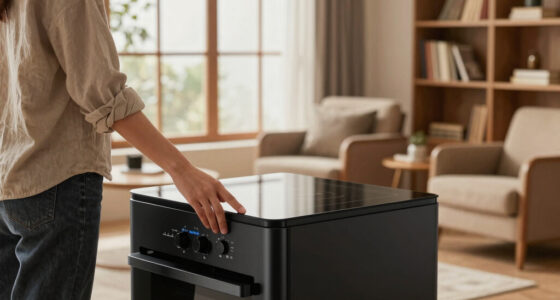
The right bookshelf speakers for a home office balance desk-friendly size, clean sound at low-to-moderate volumes, and simple connectivity — and not every pair on this list nails all three. My top pick is the Edifier R1280T, which pairs genuine hi-fi tone controls with a wired remote that keeps volume adjustments off your desk clutter, making it the most complete office companion here. Close behind, the Edifier M60 offers a compact footprint with USB and Bluetooth in one chassis, while the budget-friendly Sanyun SW208 squeezes a 24-bit DAC into speakers that take up barely more room than a coffee mug. The biggest tradeoff you’ll face is powered convenience versus passive flexibility: powered models plug straight into your computer, while passive pairs like the Polk Audio T15 demand an amplifier but scale better if you later build out a full system. Size matters too — a 5-inch woofer sounds fuller but swallows desk real estate that a 3-inch model leaves free. Keep reading for the full breakdown of all 14 picks and which one fits your workspace.

Get business pricing on your home office setup
- Business-only prices and quantity discounts
- Tax-exempt purchasing
- Multiple users, one account, clear invoices
Complete the kit


Key Takeaways
- Powered speakers with built-in Bluetooth (Edifier M60, Saiyin, MEVOSTO DS19) dominated the top of this comparison because they eliminate the amplifier and extra cables that clutter a home office desk.
- Passive options like the Polk Audio T15 and Edifier P12 only make sense if you already own an amp or receiver — buying one adds cost and desk space that most office setups can’t spare.
- The Sanyun SW208’s 24-bit DAC is the standout feature for anyone listening from a computer, bypassing cheap onboard audio without needing an external sound card.
- The MEVOSTO DS19 appears twice in this lineup in black and white, so color preference — not performance — is the deciding factor between them.
- Desktop real estate was the hidden differentiator: 3-inch models suit cramped desks, while 5-inch models like the DS19 deliver fuller bass but demand twice the footprint.
| MEVOSTO DS19 5-Inch Powered Bookshelf Speakers |  | Best Overall | Woofer: 5 inches (dual) | Tweeter: 1 inch silk-dome (dual) | Amplifier: 36W RMS built-in | VIEW LATEST PRICE | See Our Full Breakdown |
| OHAYO 60W Bluetooth 5.3 Bookshelf Computer Speakers, Stereo 2.0, Black |  | Best Value Pick | Power Output: 60W total (30W x 2) | Configuration: Stereo 2.0 powered | Tweeter: 0.75-inch carbon fiber silk dome | VIEW LATEST PRICE | See Our Full Breakdown |
| Edifier M60 Multimedia Speakers, 66W RMS, Black |  | Best for Near-Field Desk Listening | Total Output Power: 66W RMS | Drivers: 3-inch aluminum mid-low; 1-inch silk dome tweeter | Connectivity: Bluetooth 5.3, USB-C, AUX | VIEW LATEST PRICE | See Our Full Breakdown |
| MEVOSTO DS19 Powered Bookshelf Speakers, White |  | Best Style Pick | Configuration: 2.0 powered speakers | Amplifier: 36W RMS | Drivers: 5-inch woofer; 1-inch silk-dome tweeter | VIEW LATEST PRICE | See Our Full Breakdown |
| Edifier R1280T Powered Bookshelf Speakers |  | Best for Multi-Source Setups | Configuration: 2.0 powered speakers | Tweeter: 13 mm silk dome | Driver: 4-inch full-range | VIEW LATEST PRICE | See Our Full Breakdown |
| Powered Desktop Computer Speakers, Black Pair |  | Best Simple Plug-and-Play Pick | Speaker type: Active bookshelf pair | Power output: Up to 60W | Driver size: 3 inches | VIEW LATEST PRICE | See Our Full Breakdown |
| RIOWOIS Passive Bookshelf Speakers, Wall-Mountable, Pair |  | Best for Off-Desk Wall Mounting | Type: Passive bookshelf speakers (pair) | Peak power: 30W | Impedance: 6 ohms | VIEW LATEST PRICE | See Our Full Breakdown |
| Sanyun SW208 3-Inch Active Bluetooth Bookshelf Speakers with 24-Bit DAC |  | Best for Sound Tweaking at the Desk | Speaker type: Active bookshelf speakers | Driver size: 3 inches, carbon fiber | Power output: 30W x 2 | VIEW LATEST PRICE | See Our Full Breakdown |
| Edifier P12 Passive Bookshelf Speakers, 2-Way, Pair |  | Best Passive Pick for Sound Quality | Type: Passive 2-way bookshelf speakers (pair) | Tweeter: 19mm silk dome | Bass driver: 4 inches with bass reflex port | VIEW LATEST PRICE | See Our Full Breakdown |
| Saiyin Powered Bluetooth Bookshelf Speakers |  | Best Connectivity Hub Pick | Configuration: Active + passive speaker pair | Bluetooth: 5.3 | Inputs: Optical, coaxial, 3.5mm, dual RCA | VIEW LATEST PRICE | See Our Full Breakdown |
| Polk Audio T15 Passive Bookshelf Speakers, Black, Pair |  | Best Passive Pick for Full-Spectrum Sound | Brand: Polk Audio | Model: T15 | Type: Passive bookshelf speakers | VIEW LATEST PRICE | See Our Full Breakdown |
| Elimavi Passive Bookshelf Speakers, Black |  | Best Budget Passive Pair | Speaker Type: Passive, 2-way | Woofer: 4 inches | Frequency Response: 60 Hz–20 kHz | VIEW LATEST PRICE | See Our Full Breakdown |
| RIOWOIS Passive Bookshelf Speakers for Home Stereo and Record Players |  | Best Passive Pair for Vinyl Setups | Type: Passive bookshelf speakers | Tweeter: Silk dome horn tweeter | Woofer: 4 inches | VIEW LATEST PRICE | See Our Full Breakdown |
| Saiyin Powered Bluetooth Bookshelf Speakers |  | Best All-in-One Desk Companion | Bluetooth: 5.3 | Woofer: 4 inches | Tweeter: 0.5-inch silk dome | VIEW LATEST PRICE | See Our Full Breakdown |
| bookshelf speakers for home office | Tweeter | Woofer |
|---|---|---|
| MEVOSTO DS19 5-Inch Powered Bo | 1 inch silk-dome (dual) | 5 inches (dual) |
| OHAYO 60W Bluetooth 5.3 Booksh | 0.75-inch carbon fiber silk dome | — |
| Edifier M60 Multimedia Speaker | — | — |
| MEVOSTO DS19 Powered Bookshelf | — | — |
| Edifier R1280T Powered Bookshe | 13 mm silk dome | — |
| Powered Desktop Computer Speak | — | — |
| RIOWOIS Passive Bookshelf Spea | 2 inches | 2.75 inches |
| Sanyun SW208 3-Inch Active Blu | — | — |
| Edifier P12 Passive Bookshelf | 19mm silk dome | — |
| Saiyin Powered Bluetooth Books | 0.5-inch silk dome | 3.75 inches |
| Polk Audio T15 Passive Bookshe | 0.75 in | 5.25 in Dynamic Balance |
| Elimavi Passive Bookshelf Spea | — | 4 inches |
| RIOWOIS Passive Bookshelf Spea | Silk dome horn tweeter | 4 inches |
| Saiyin Powered Bluetooth Books | 0.5-inch silk dome | 4 inches |
More Details on Our Top Picks
MEVOSTO DS19 5-Inch Powered Bookshelf Speakers
For a dedicated home office, this option stands out for combining real 5-inch woofers with a built-in amplifier, which is rare at this desk-friendly size. The dual-driver layout produces fuller low-end than smaller models like the Edifier M60, so music and video calls carry more weight without adding a subwoofer to your workspace. Flexibility is another strength: USB, Bluetooth 5.4, RCA, and AUX inputs mean one pair can serve a laptop, a phone, and a turntable-adjacent setup. The bass and treble knobs plus a remote let me tune the sound without reaching behind a monitor. The tradeoff is that USB audio depends on a compatible device output, and there’s no Dolby support — a non-issue for stereo office listening, but worth knowing before buying.
Pros:- Dual 5-inch woofers deliver fuller bass than typical compact desktop speakers
- Built-in 36W amplifier eliminates the need for separate gear
- Four input options cover computer, phone, and analog sources
- Independent tone controls plus a remote simplify daily adjustments
Cons:- No Dolby Audio support limits home-theater versatility
- USB audio requires a compatible device output
Best for: Home office workers who want genuinely full stereo sound from a single powered pair without a separate amp
Not ideal for: Anyone hoping to decode Dolby surround content or run USB audio from an older device
- Woofer:5 inches (dual)
- Tweeter:1 inch silk-dome (dual)
- Amplifier:36W RMS built-in
- Inputs:USB, Bluetooth 5.4, RCA, AUX
- Controls:Bass and treble knobs; remote
- Dimensions (each):5.9 x 6.1 x 9.7 inches
- Power:12V/15V/18V DC; 18V/2A adapter included
Our verdict“The most complete all-around pick for a home office that needs big-speaker sound in a powered, desk-ready package.”
OHAYO 60W Bluetooth 5.3 Bookshelf Computer Speakers, Stereo 2.0, Black
When the goal is respectable stereo sound without overspending, this pair makes the most sense. The 60W total output outguns its compact footprint, and the MDF wood enclosure with a rear bass port gives it a warmer, less hollow character than plastic-bodied desktop alternatives. Compared with the MEVOSTO DS19, the smaller 3-inch full-range drivers mean less low-end authority, but the cabinets take up less desk space and the front-panel volume knob is genuinely convenient for daily office use. Bluetooth 5.3 plus RCA, AUX, and USB inputs cover essentially every source a home office throws at it. The main compromise is bass depth — with no subwoofer and no sub output, bass-heavy music will sound thinner than on the DS19.
Pros:- 60W stereo output punches above its size
- MDF enclosure and rear bass port improve warmth over plastic rivals
- Four input options including Bluetooth 5.3
- Front-panel volume knob is easy to reach on a desk
Cons:- No dedicated subwoofer or sub output limits low-end extension
- 3-inch full-range drivers lack the bass authority of 5-inch designs
Best for: Budget-conscious home office workers who want clean stereo sound and broad connectivity in a small footprint
Not ideal for: Bass lovers and movie watchers — there’s no subwoofer included or output for adding one
- Power Output:60W total (30W x 2)
- Configuration:Stereo 2.0 powered
- Tweeter:0.75-inch carbon fiber silk dome
- Driver:3-inch carbon fiber full-range
- Enclosure:MDF wood with rear bass port
- Connectivity:Bluetooth 5.3, RCA, AUX, USB
Our verdict“A smart budget choice for everyday office listening where convenience and footprint matter more than deep bass.”
Edifier M60 Multimedia Speakers, 66W RMS, Black
This model is better suited to listeners who sit within arm’s reach of their speakers all day. The included 15-degree angled aluminum stands direct sound up toward ear level — a detail most desktop pairs ignore, and one that noticeably tightens imaging compared with flat-placed options like the OHAYO 60W. Where the MEVOSTO DS19 aims for room-filling punch, the M60 prioritizes clarity and precision at close range, aided by LDAC and Hi-Res Audio certification for higher-quality wireless streaming from compatible phones. Bluetooth 5.3, USB-C, and AUX round out the connections sensibly for a modern desk. Drawbacks are modest but real: it’s a corded setup with no battery option, and the compact 3-inch drivers won’t shake a room the way larger woofers can.
Pros:- Angled aluminum stands aim sound directly at seated ear level
- LDAC and Hi-Res Audio support for higher-quality streaming
- Modern USB-C connectivity alongside Bluetooth and AUX
- Compact footprint fits crowded desks
Cons:- Requires a nearby power outlet — no battery option
- 3-inch drivers limit maximum low-end output
Best for: Desk-bound professionals and remote workers who prioritize detailed, ear-level sound during long listening sessions
Not ideal for: Anyone wanting loud, room-filling sound for a large space — the compact drivers favor closeness over volume
- Total Output Power:66W RMS
- Drivers:3-inch aluminum mid-low; 1-inch silk dome tweeter
- Connectivity:Bluetooth 5.3, USB-C, AUX
- Bluetooth Codec:LDAC
- Audio Certification:Hi-Res Audio
- Dimensions:100 x 168 x 147 mm per speaker
- Included Accessory:Pair of 15-degree angled aluminum stands
Our verdict“The clear pick for near-field desk listening where angled stands and hi-res streaming elevate everyday office audio.”
MEVOSTO DS19 Powered Bookshelf Speakers, White
Functionally, this is the same speaker as the black MEVOSTO DS19 — dual 5-inch woofers, a 36W built-in amp, USB, Bluetooth 5.4, RCA, and AUX — but the white leather-textured finish changes the equation for bright, minimalist home offices where black boxes would clash. Compared with the Edifier R1280T and its wood-effect vinyl, this finish reads more contemporary and pairs naturally with white desks and Apple-adjacent accessories. The shared strengths carry over: tone knobs and a remote make it easy to dial in sound for music versus calls, and flexible 12V/15V/18V DC power suits unusual setups. The same caveats apply too — the two speakers must be wired together, so cable routing across a desk takes a moment of planning, and Dolby Audio isn’t supported.
Pros:- White leather-textured finish suits bright, modern offices
- Same full 5-inch dual-woofer sound as the black DS19
- Built-in amplifier with four input options
- Tone controls and remote included
Cons:- Speakers must be wired to each other, requiring cable planning
- No Dolby Audio support
Best for: Design-conscious remote workers with light-colored or minimalist office setups who want full-sized powered sound
Not ideal for: Home-theater users or anyone who strongly dislikes visible cables between two speakers
- Configuration:2.0 powered speakers
- Amplifier:36W RMS
- Drivers:5-inch woofer; 1-inch silk-dome tweeter
- Inputs:USB audio, Bluetooth 5.4, RCA, 3.5 mm AUX
- Finish:White, leather-textured
- Dimensions:5.9 x 6.1 x 9.7 inches
- Power:Corded; 12V/15V/18V DC compatible, 18V/2A adapter included
Our verdict“The DS19’s sound in a finish made for design-led workspaces — choose it when aesthetics matter as much as audio.”
Edifier R1280T Powered Bookshelf Speakers
Plenty of home offices juggle two sources — a computer and a phone dock, or a monitor and a small mixer — and this pair handles that without an input switcher thanks to two simultaneous AUX inputs. The classic wood-effect vinyl MDF cabinet looks at home on a bookshelf rather than a keyboard tray, and the side-panel volume, bass, and treble controls plus remote make adjustments painless. Compared with the MEVOSTO DS19, the 4-inch full-range drivers and 13 mm tweeters favor a natural, easygoing balance over outright punch — better for long workdays than bass-heavy genres. Note the older connectivity: there’s no Bluetooth or USB here, so wireless streaming requires a separate adapter, which is the main reason to look elsewhere if your phone is your primary source.
Pros:- Dual AUX inputs allow two sources connected simultaneously
- Remote and side-panel tone controls for easy adjustment
- Natural tuning suits extended listening sessions
- Wood-effect MDF cabinet fits bookshelf styling
Cons:- No Bluetooth or USB connectivity built in
- 4-inch full-range drivers limit deep bass compared with larger woofers
Best for: Workers who want to keep two wired devices connected at once and prefer a warm, traditional bookshelf look
Not ideal for: Wireless-first listeners — the absence of Bluetooth or USB means phones need an adapter
- Configuration:2.0 powered speakers
- Tweeter:13 mm silk dome
- Driver:4-inch full-range
- Inputs:2 AUX inputs (3.5 mm or dual RCA)
- Controls:Remote; side-panel volume, bass, treble
- Cabinet:MDF with wood-effect vinyl finish
Our verdict“A dependable wired classic for multi-source office desks — ideal if cables don’t scare you and Bluetooth isn’t needed.”
Powered Desktop Computer Speakers, Black Pair
Not everyone wants to think about amplifiers, DACs, or signal chains — sometimes a desk just needs sound that works the moment you plug it in. This pair earns its spot by keeping things genuinely simple: powered amplification, a 3-inch driver in each wooden cabinet, and a front-panel dial that handles power and volume in one twist. Compared with the Sanyun SW208, it trades away onboard bass and treble tuning in exchange for a more straightforward setup, and its 60W output ceiling gives it more headroom for filling a room beyond your desk. The wood enclosure is a step up from plastic alternatives at this size, helping avoid the hollow sound common in cheap desktop units. The tradeoff is flexibility: no optical or coaxial inputs here, and the advertised Bluetooth range is inconsistently documented, so don’t count on reliable streaming from across the house. For a near-field desk setup, that rarely matters.
Pros:- Wooden enclosure reduces the resonance issues of plastic cabinets
- Bluetooth 5.3 plus RCA, USB-C, and AUX covers virtually any source
- Front-panel power/volume dial is easy to reach on a desk
- Includes cables for wired setup out of the box
Cons:- No tone controls for adjusting bass or treble
- Bluetooth range is documented inconsistently, making placement planning harder
Best for: Remote workers who want zero-setup stereo sound straight out of the box with multiple input options
Not ideal for: Audiophiles who want tone controls or digital inputs — this pair keeps its feature list deliberately minimal
- Speaker type:Active bookshelf pair
- Power output:Up to 60W
- Driver size:3 inches
- Enclosure material:Wood
- Connectivity:Bluetooth 5.3, RCA, USB-C, 3.5mm AUX
- Dimensions:6 x 9 x 6 inches
- Weight:6.6 pounds
Our verdict“If you want desk audio that works in five minutes without buying anything else, this is the fuss-free pick.”
RIOWOIS Passive Bookshelf Speakers, Wall-Mountable, Pair
When desk real estate is the scarcest resource in your office, speakers that can live on the wall change the whole equation. This passive pair arrives with mounting accessories in the box, which is rarer than it should be — the Edifier P12 also includes brackets, but its larger 4-inch drivers make it heavier and more furniture-like on a wall. Here, the compact ABS/MDF cabinets with wood-grain finish tuck neatly beside shelving, and the separate 2.75-inch woofer and 2-inch tweeter deliver clearer separation than the single-driver designs common at this budget. The honest tradeoff is total cost of ownership: you must supply an amplifier or receiver, and unlike the Edifier P12, no speaker wires come included, so the real spend is higher than the sticker suggests. Sound will also stay polite at 30W peak — fine for background music and video calls, thin for filling a large room.
Pros:- Wall-mounting kit included, saving a separate accessory purchase
- Two-way driver design gives distinct woofer and tweeter clarity
- Compact cabinets suit shelves and tight wall placements
- Wood-grain finish blends into office decor
Cons:- Requires a separate amplifier or receiver to function
- Speaker wires not included
- No Bluetooth — wired connection only
Best for: Small home offices where desk space is precious and an amp or receiver is already on hand
Not ideal for: Anyone starting from scratch with no amplifier — the extra purchases erase the budget appeal
- Type:Passive bookshelf speakers (pair)
- Peak power:30W
- Impedance:6 ohms
- Woofer:2.75 inches
- Tweeter:2 inches
- Mounting:Wall-mountable; kit included
- Enclosure:ABS, metal, and MDF
Our verdict“A sensible wall-mount choice for space-strapped offices, provided you already own something to power them.”
Sanyun SW208 3-Inch Active Bluetooth Bookshelf Speakers with 24-Bit DAC
Most compact desktop speakers give you volume and nothing else — this pair lets you actually shape the sound. Side-mounted bass and treble controls mean you can tame low-end boom on a hollow desk or lift vocals for clearer conference calls, which is a genuine advantage over the Powered Desktop Computer Speakers elsewhere in this lineup. The standout feature is the built-in 24-bit DAC over USB: plugging directly into your computer bypasses the laptop’s often-mediocre audio circuitry, and the difference on video and music is the kind of thing you notice within minutes. The 3-inch carbon fiber drivers stay composed at desk-listening volumes thanks to 30W per channel. What you give up is raw reach — there’s no subwoofer output, so bass heads will find the low end polite, and the side-mounted controls can be awkward if you park anything beside the right speaker. AC power is mandatory, so this is a fixed desk setup, not portable.
Pros:- Built-in 24-bit DAC delivers cleaner USB audio than most laptop outputs
- Independent bass and treble controls for tuning to your room
- Bluetooth 5.0, USB, and AUX cover all common sources
- Carbon fiber drivers keep sound tight at desktop volumes
Cons:- No subwoofer output limits low-end expansion
- Requires a permanent AC outlet at the desk
Best for: Desk-based workers who listen closely to music and want USB DAC quality plus adjustable tone
Not ideal for: Bass-forward listeners — without a subwoofer output there’s no path to adding low-end later
- Speaker type:Active bookshelf speakers
- Driver size:3 inches, carbon fiber
- Power output:30W x 2
- Connectivity:Bluetooth 5.0, USB, 3.5mm AUX
- DAC:Built-in 24-bit
- Controls:Volume, bass, and treble
- Bluetooth range:10 meters
Our verdict“The pick for listeners who care about fine-tuning their sound rather than just playing it.”
Edifier P12 Passive Bookshelf Speakers, 2-Way, Pair
Among the passive options in this roundup, this pair makes the strongest case on sound alone. The 19mm silk dome tweeters produce the smooth, non-fatiguing treble that cheaper dome designs struggle with, and the 4-inch bass drivers paired with a reflex port push more low-end than the smaller RIOWOIS passive pair — a real difference when you’re listening to music, not just meeting audio. Edifier also includes speaker wires and built-in wall brackets, which means fewer accessory purchases than the RIOWOIS route. The tradeoff is unavoidable: like every passive speaker here, it needs a separate amplifier or receiver, so compare your total budget against powered rivals like the Saiyin before committing. Where a powered speaker locks you into its built-in amp forever, this pair grows with you — upgrade the amplifier later and the speakers improve with it. That upgrade path is exactly why this makes sense for someone building a system rather than buying an appliance.
Pros:- Silk dome tweeters deliver smooth, detailed treble for long listening sessions
- Bass reflex port adds low-end depth the smaller passive pairs lack
- Speaker wires and wall-mount brackets both included
- Improves when you upgrade the driving amplifier
Cons:- Requires a separate amplifier or receiver to operate
- Larger cabinets take up more desk or shelf space than compact rivals
Best for: Listeners already owning (or planning) an amplifier who prioritize richer bass and refined treble
Not ideal for: Anyone who wants one-purchase simplicity — the amplifier requirement adds cost and cabling
- Type:Passive 2-way bookshelf speakers (pair)
- Tweeter:19mm silk dome
- Bass driver:4 inches with bass reflex port
- Impedance:6 ohms
- Mounting:Built-in wall-mount brackets
- Included:Speaker wires
- Power requirement:Separate amplifier or receiver
Our verdict“The passive pick that rewards an existing amp with the best sound in this group.”
Saiyin Powered Bluetooth Bookshelf Speakers
If your desk is a junction of devices — computer, TV, console, maybe a turntable — this pair’s input selection is the reason to buy it. Optical and coaxial inputs sit alongside RCA and 3.5mm, a spread that the Sanyun SW208 and the Powered Desktop Computer Speakers simply don’t match, and Bluetooth 5.3 handles wireless duty. The 0.5-inch silk dome tweeter over a 3.75-inch woofer is a more grown-up driver layout than most desktop pairs at this size, giving music actual texture rather than flatness. A remote control means you adjust volume without reaching across your desk — small thing, big daily difference. The caveats cluster around source compatibility: turntables need a Bluetooth transmitter or a preamp if they only output PHONO, and your source must output PCM stereo rather than surround, which trips up some TV setups. Check your gear before buying and this pair repays the effort.
Pros:- Optical and coaxial inputs alongside Bluetooth, RCA, and AUX
- Silk dome tweeter and 3.75-inch woofer give a balanced two-way sound
- Remote control plus top-panel buttons for easy adjustments
- No external amplifier needed — powered out of the box
Cons:- PHONO-only turntables require a separate preamplifier
- Sources must output PCM stereo — some surround-signaling TVs won’t cooperate
Best for: Multi-device desks that need optical, coaxial, Bluetooth, and analog inputs in one speaker pair
Not ideal for: Turntable owners without a preamp or Bluetooth transmitter — PHONO-only setups won’t connect
- Configuration:Active + passive speaker pair
- Bluetooth:5.3
- Inputs:Optical, coaxial, 3.5mm, dual RCA
- Tweeter:0.5-inch silk dome
- Woofer:3.75 inches
- Dimensions:5.3 W x 6.3 D x 8.6 H inches
- Amplifier required:No
Our verdict“The most versatile connection hub in this batch, ideal for a crowded multi-source desk.”
Polk Audio T15 Passive Bookshelf Speakers, Black, Pair
Most speakers in this roundup stick to 4-inch woofers, but the Polk Audio T15 steps up to a 5.25-inch Dynamic Balance driver, and that extra cone area translates into fuller, weightier sound at a desk — something the Elimavi and RIOWOIS passives can’t match without a subwoofer. The 0.75-inch tweeter keeps voices and podcasts crisp, which matters if your home office doubles as a video-call space. Like the other passive options here, it needs an AV receiver or amplifier to function, so it isn’t a plug-and-play choice like the Saiyin powered speakers. Wall-mountability helps when desk real estate runs short. The real tradeoff is hidden cost: speaker wire, an amp, and eventually a sub are all on you. This model makes the most sense for buyers who already own a receiver or plan to build a larger setup over time.
Pros:- 5.25-inch woofer delivers deeper bass than the compact 4-inch passives in this roundup
- Wall-mountable design frees up desk space in tight offices
- Versatile enough for front, rear, or stereo duty in a home theater
- Clear, balanced tuning suits music, calls, and video equally well
Cons:- Requires an AV receiver, amplifier, and speaker wire before it produces any sound
- A true 5.1 system means buying a subwoofer and more speakers down the road
Best for: Home office workers who already own an AV receiver and want roomier, bass-forward sound they can expand into a surround system later
Not ideal for: Anyone wanting a one-box desktop solution — without buying an amplifier and wire, these won’t make a sound
- Brand:Polk Audio
- Model:T15
- Type:Passive bookshelf speakers
- Woofer:5.25 in Dynamic Balance
- Tweeter:0.75 in
- Power Handling:100 watts
- Mounting:Wall-mountable
- Quantity:1 pair (black)
Our verdict“Buy these if you already have a receiver and want the fullest sound of the passive picks here; skip them if you want speakers that work out of the box.”
Elimavi Passive Bookshelf Speakers, Black
If you want the traditional passive-speaker route without paying for the Polk T15’s larger cabinet and driver, the Elimavi passive pair is the straightforward entry point. Its 4-inch woofer and silk horn tweeter cover the fundamentals — vocals come through cleanly at conversation volume, which is most of what a workday demands. The high-density wood enclosure does genuine work here, suppressing cabinet buzz that plagues cheaper plastic boxes. Compared with the RIOWOIS passives, you give up the bass reflex port and the furniture-grade finish, but you keep flexible bookshelf, tabletop, or wall placement. There’s no Bluetooth at all, unlike the Saiyin powered speakers, so everything runs through wire and an amp. That’s the tradeoff: less depth and fewer refinements in exchange for a simpler, lower-cost passive setup you drive with gear you may already own.
Pros:- Two-way design with a dedicated woofer and silk horn tweeter for balanced detail
- High-density wood enclosure reduces vibration and cabinet coloration
- Works on a bookshelf, tabletop, or wall for flexible office placement
- Audio cables included, so hookup to an amp is immediate
Cons:- Requires an external amplifier or receiver to operate
- No Bluetooth or any wireless input option
- 4-inch woofer limits low-end reach compared with the Polk T15
Best for: Buyers who already have a spare amp or receiver and want an affordable, no-frills wired pair for background music at a desk
Not ideal for: Wireless-first listeners — with no Bluetooth and no built-in amp, this pair demands external hardware before it plays anything
- Speaker Type:Passive, 2-way
- Woofer:4 inches
- Frequency Response:60 Hz–20 kHz
- Enclosure:High-density wood panels, matte black vinyl
- Placement:Bookshelf, tabletop, or wall-mounted
- Bluetooth:Not included
- Amplifier:External amplifier or receiver required
- Accessories:Audio cables
Our verdict“A sensible low-cost passive pair for anyone with an amp already on the shelf — but it’s the wrong pick if you expect wireless convenience.”
RIOWOIS Passive Bookshelf Speakers for Home Stereo and Record Players
Of the three passive pairs in this batch, the RIOWOIS sits in the sweet spot between the bare-bones Elimavi and the bigger Polk T15. Its rear bass reflex port gives the 4-inch woofer low-end punch the Elimavi can’t produce, while the silk dome horn tweeter keeps records and streams sounding detailed rather than harsh. The furniture-grade, hand-sanded cabinet looks at home on a visible office shelf in a way the matte-vinyl Elimavi doesn’t attempt. Gold-plated terminals that accept banana plugs or bare wire make amp connections cleaner than typical spring clips. It’s tuned for turntables specifically, so vinyl listeners with a receiver get the most from it. Note that speaker wire isn’t in the box, and the bass port rewards careful placement away from walls — fussier setup than the powered Saiyin, but better sound for the effort.
Pros:- Rear bass reflex port adds low-end depth the Elimavi’s sealed design lacks
- Furniture-grade cabinet with rounded edges looks good on display
- Gold-plated terminals support banana plugs, U-type, or bare wire
- Built-in wall-mount bracket with foam padding for secure placement
Cons:- Requires a separate amplifier or receiver that isn’t included
- Speaker wires are not in the box
- Best bass depends on careful positioning of the rear port
Best for: Vinyl collectors and stereo traditionalists who have an amp or receiver and want a refined, room-friendly passive pair beside the desk
Not ideal for: Plug-and-play buyers — no amp, no wire in the box, and no Bluetooth means real setup work before the first note
- Type:Passive bookshelf speakers
- Tweeter:Silk dome horn tweeter
- Woofer:4 inches
- Bass Port:Rear-mounted bass reflex
- Terminals:Gold-plated; banana plug, U-type, bare wire
- Cabinet:Furniture-grade, hand-sanded rounded edges
- Mounting:Built-in wall-mount bracket with foam padding
- Amplifier:External amplifier or receiver (not included)
Our verdict“The passive pick for listeners who care about finish, vinyl warmth, and hooking into a proper stereo — just budget for an amp and wire.”
Saiyin Powered Bluetooth Bookshelf Speakers
Against a batch dominated by passive pairs that need external amps, the Saiyin powered speakers are the zero-friction choice: plug into the wall, pair over Bluetooth 5.3, and start working. The input selection is where this model earns its spot — optical, coaxial, RCA, and Bluetooth with 24-bit/192 kHz support means a computer, monitor, and TV audio can all stay connected at once. A subwoofer output gives it an upgrade path the Elimavi and RIOWOIS can’t offer without extra amp hardware, and the remote beats crawling behind a desk to adjust volume. The 4-inch woofer and 0.5-inch silk dome tweeter won’t fill a large room the way the Polk T15 on a receiver can, and turntable owners need line-level output or a preamp since these aren’t PHONO-ready. For a typical home office, that’s a fair exchange for true simplicity.
Pros:- Built-in amplifier means no receiver or extra gear required
- Bluetooth 5.3 plus optical, coaxial, and RCA inputs handle every desk source
- Subwoofer output allows genuine bass expansion later
- Remote control and top buttons make volume changes effortless
Cons:- Turntables with PHONO output require a separate preamp
- Compact 4-inch drivers limit room-filling output versus amped passive pairs like the Polk T15
Best for: Desk workers who want immediate wireless sound from a laptop or phone, with room to add a subwoofer later
Not ideal for: Turntable owners with PHONO-only output — these need a preamp or Bluetooth transmitter before a record player will connect
- Bluetooth:5.3
- Woofer:4 inches
- Tweeter:0.5-inch silk dome
- Inputs:Optical, coaxial, RCA, Bluetooth
- Digital Audio Support:24-bit/192 kHz
- Subwoofer Output:Yes
- Controls:Remote and top buttons
- Dimensions:150 × 170 × 240 mm
- Amplifier Required:No
Our verdict“The easiest recommendation in this batch for anyone who values plug-and-play convenience over audiophile expansion.”

How We Picked
I judged every pair through one specific lens: daily use at a desk. That meant prioritizing near-field performance — how speakers sound from two to four feet away, not across a living room — along with footprint, cable management, and how easily each pair connects to a computer. Powered models got credit for simplicity, while passive models had to justify the added cost and space of an external amplifier. Volume control placement, remote availability, and tone adjustment options mattered more here than they would in a casual living-room roundup, because office listeners constantly tweak levels during calls and music sessions.
Build quality, driver size, connectivity options (Bluetooth version, USB, RCA, AUX), and total system cost rounded out the criteria. I ranked powered, computer-ready models higher for most readers, but placed passive picks strategically for buyers building larger systems. Where two models overlapped almost exactly — like the black and white MEVOSTO DS19 — I treated finish as the practical differentiator rather than inventing performance gaps that don’t exist.
Factors to Consider When Choosing Bookshelf Speakers For Home Offices
Before you pick a pair from the list above, step back and think about how you actually work and listen. The factors below separate buyers who love their speakers from buyers who return them.Powered vs. Passive: The First Decision
This is the single biggest fork in the road, and it’s where most buyers overspend or undershoot. Powered (active) speakers have amplification built in, so they connect directly to your computer with one cable or over Bluetooth — ideal if you want sound today with zero extra purchases. Passive speakers require an external amp or receiver, which adds cost, another box on or under your desk, and more cables to hide. The honest tradeoff: passive setups scale better. If you already own a receiver or plan to add a turntable and TV later, a passive pair grows with you. If your office is purely computer-based, buying passive means paying for flexibility you’ll never use. A common mistake is buying passive speakers on price alone, then discovering the necessary amp doubles the total spend.
Desk Footprint and Near-Field Sound
Home office listening happens at close range, which changes everything about speaker design. Speakers tuned for filling a room often sound harsh or boomy when placed two feet from your head, while near-field designs keep their composure at desk distance. Size follows the same logic: a 5-inch woofer delivers satisfying low end but may force you to push your monitor back or give up a second monitor. Three-inch models sacrifice bass depth but sit unobtrusively beside a laptop. Measure your actual desk surface before buying — the listed dimensions don’t include the clearance you need behind rear-ported designs, which sound wrong when jammed against a wall. If wall-mounting is your only option, the RIOWOIS wall-mountable passive pair stands out as one of the few here designed for it.
Connectivity: Match Inputs to Your Workflow
How you connect matters more than most spec sheets suggest. If you switch between a work laptop and personal phone all day, Bluetooth with multipoint or quick pairing saves real friction. If you’re an audio purist, a USB connection with a built-in DAC — like the Sanyun SW208’s 24-bit setup — bypasses your computer’s mediocre onboard audio entirely. RCA and AUX inputs remain useful for older devices or plugging in a DAC later. The mistake to avoid: buying speakers with only one input, then discovering you can’t keep your computer and a turntable connected simultaneously. Think through every source you’ll use over the next two years, not just today’s setup.
Volume Control and Daily Adjustability
This is the most overlooked factor in the category, yet you’ll touch it dozens of times a day. Speakers with a side-mounted volume knob or included remote — like the Edifier R1280T’s wired remote — let you mute quickly when a call starts without hunting through your computer’s sound settings. Rear-mounted controls are frustrating when speakers sit against a wall, which describes most desks. Tone controls (bass and treble) are equally practical in an office: rooms with hard surfaces and glass make many speakers sound sharp, and trimming treble fixes that without moving furniture. If you take frequent video calls, easy volume access isn’t a luxury — it’s part of your workflow.
Total Cost of Ownership
The sticker price rarely tells the whole story. Passive speakers need an amp, speaker wire, and possibly banana plugs — a ‘budget’ pair can quietly become the most expensive option on the list. Powered speakers need nothing but the included cables, though you may want a USB hub or cable routing accessories to keep things tidy. Also factor in watts honestly: in a small office, 30–60 watts is genuinely loud, and paying for headroom you’ll never use is wasted money. Spend the savings instead on positioning — speaker stands or angled pads that point the tweeters at ear level improve clarity more than a spec bump ever will. Finally, check whether the warranty and brand support match how long you plan to keep the pair, since office speakers tend to stay in service for years.
Frequently Asked Questions
Are powered bookshelf speakers good enough for a home office, or should I buy passive ones with an amp?
For most home offices, powered speakers are the smarter choice. They connect straight to your computer, take up less total space, and cost less once you add up the amp, cables, and stands a passive setup requires. Passive speakers earn their place only when you already own amplification or plan to expand into a multi-source system with a turntable or TV. In this lineup, the powered Edifier and Saiyin models deliver everything a desk listener needs, while the passive Polk T15 and Edifier P12 exist for buyers with bigger system ambitions. If you’re starting from zero, buying passive means paying for a flexibility you won’t use at a desk.
Do I need a DAC in my office speakers if I’m listening from a computer?
It depends on your computer and how picky your ears are. Built-in DACs in speakers like the Sanyun SW208 bypass your machine’s onboard audio chip, which can be noisy or flat-sounding — this is especially noticeable on older laptops or budget desktops. If your computer already has decent audio output, the difference shrinks, and you can put the budget toward larger drivers or better build quality instead. One practical note: a built-in DAC usually means a USB connection, which is more reliable than analog AUX for avoiding interference from other desk equipment. For music-focused workdays, I’d lean toward the DAC-equipped option; for background audio during calls, it’s a nice-to-have rather than a necessity.
What speaker size works best on a crowded desk?
Three-inch models like the Sanyun SW208 or compact designs like the Edifier M60 fit desks under four feet wide without crowding your monitor. Five-inch models such as the MEVOSTO DS19 sound fuller and richer, but realistically need a larger desk or dedicated stands beside it. Remember that listed dimensions exclude rear port clearance — ported speakers pressed against a wall lose bass and can boom unnaturally. If floor space is available, small stands flanking the desk often beat cramming larger speakers onto the surface itself. As a rule, choose the largest drivers your space genuinely allows, because bass depth is the first casualty of going too small.
Is Bluetooth worth it for office speakers, or does it hurt sound quality?
Modern Bluetooth versions like 5.3 have narrowed the quality gap enough that most listeners can’t reliably tell the difference at desk volumes. The practical value is huge: switching audio from your work laptop to your phone for a call takes seconds, with no cable swapping. The main downside is reliability during video meetings — Bluetooth can introduce slight latency or occasional dropouts, so keeping a wired connection for calls while using Bluetooth for music is the best of both. Models like the OHAYO and Saiyin pairs handle this dual role well. If you never stream from mobile devices, you can safely ignore Bluetooth and prioritize other features.
Can I use bookshelf speakers for video calls, or do I need a soundbar or headset instead?
Bookshelf speakers work well for hearing callers clearly, and their stereo separation actually makes voices easier to follow than a single soundbar at desk distance. The limitation is on your end of the call: speakers have no microphone, and if you use your computer’s mic while playing audio loudly, callers may hear an echo. Pairing the speakers with a dedicated microphone or headset for your voice solves this completely — the speakers handle output while a boom mic handles input. Tone controls help here too; trimming bass reduces the rumble that muddies speech in untreated rooms. If meetings dominate your day, prioritize models with a front-facing volume knob or remote so you can mute instantly when needed.
Conclusion
After comparing all 14 options, the right choice comes down to how you work and how much system-building you want to do. For best overall, the Edifier R1280T stands out with its wired remote, tone controls, and proven sound — the most complete desk companion in this lineup. The Sanyun SW208 takes best value for tight budgets and tighter desks, thanks to its built-in 24-bit DAC and compact footprint. If you want one chassis that does everything, the Edifier M60 is the best premium pick, combining USB, Bluetooth, and real power in a tidy package. Beginners should start with the Saiyin powered Bluetooth pair or the MEVOSTO DS19 — either plugs in and works within minutes with zero audio knowledge required. For specific needs: the RIOWOIS wall-mountable passive pair solves the no-desk-space problem, the Polk Audio T15 suits buyers building a larger system around an existing receiver, and the white MEVOSTO DS19 covers lighter workspaces where black boxes would clash. Whatever you pick, size it to your actual desk and match the connectivity to your daily routine — those two decisions matter more than any spec on the box.
Halloween Picks
halloween
As an affiliate, we earn on qualifying purchases.