Choosing among 4K OLED TVs for media rooms comes down to three variables: screen size relative to your seating distance, peak brightness for a controlled-light space, and how seriously you take film-grade picture processing. My best overall pick is the Sony BRAVIA XR A95L 77-Inch QD-OLED, because its QD-OLED panel pairs the deepest available blacks with the brightest highlights — exactly what a darkened media room demands at a large size. If your room is smaller, the LG 48-Inch OLED evo C6 delivers flagship-level contrast in a compact footprint, while the LG 83-Inch OLED evo G5 is the standout when you want true theater scale. The main tradeoffs you’ll face are paying a premium for QD-OLED color volume versus standard OLED value, and balancing panel brightness against the fact that media rooms rarely need the anti-glare muscle of brighter, pricier panels. Read on for the full breakdown of all 15 models and which one fits your room, your sources, and your budget.

Get business pricing on your home office setup
- Business-only prices and quantity discounts
- Tax-exempt purchasing
- Multiple users, one account, clear invoices
Complete the kit


Key Takeaways
- QD-OLED models (Sony A95L and BRAVIA 8 II) separated themselves on color volume and highlight brightness, but the gap only justifies the premium in larger media rooms where you sit far enough to notice it.
- The 48-inch tier — Samsung S90H, Sony A90K, Sony BRAVIA 6, and LG C6 — proved that small media rooms and gaming dens don’t require compromise; the C6 and S90H carry near-flagship processing at compact sizes.
- LG’s C-series (C5 and C6) emerged as the value spine of this roundup: across 48, 55, and 77 inches, they consistently offered the best ratio of picture performance to feature set.
- 83-inch options from LG (G5) and Samsung (S85F) trade some processing refinement for sheer scale — the right call if your seating distance exceeds 10 feet, the wrong call in a smaller room where a 65-inch panel at the same price outperforms it.
- Sony‘s XR processor models consistently led on upscaling and motion handling for film content, while Samsung and LG pulled ahead on gaming features like refresh rate and input lag — a real fork depending on whether your media room is movie-first or mixed-use.
| Sony BRAVIA XR A95L 77-Inch 4K QD-OLED Smart TV |  | Best Overall for Dedicated Media Rooms | Display technology: QD-OLED | Screen size: 77 inches | Resolution: 4K | VIEW LATEST PRICE | See Our Full Breakdown |
| Samsung 42-Inch Class S90H Series OLED 4K Smart TV (2026 Model) |  | Best Compact OLED for Small Media Spaces | Screen size: 42 inches | Display technology: OLED | Resolution: 4K | VIEW LATEST PRICE | See Our Full Breakdown |
| Samsung 83-Inch OLED S85F 4K Smart TV (2025) |  | Best Big-Screen Value | Display technology: OLED | Screen size: 82.5 inches (83-inch class) | Resolution: 4K | VIEW LATEST PRICE | See Our Full Breakdown |
| Sony BRAVIA XR8B 77-Inch 4K OLED Google TV |  | Best for Movie-First Sony Fans | Screen size: 77 inches | Display technology: OLED | Resolution: 4K | VIEW LATEST PRICE | See Our Full Breakdown |
| LG 48-Inch OLED evo C6 Series 4K Smart TV (2026) |  | Best for Gaming-Focused Media Rooms | Screen size: 48 inches | Display technology: OLED evo | Resolution: 4K | VIEW LATEST PRICE | See Our Full Breakdown |
| LG 83-Inch OLED evo G5 Series 4K Smart TV (OLED83G5WUA, 2025) |  | Best Statement Piece for a Dedicated Media Room | Screen Size: 83 inches | Resolution: 4K | Processor: α11 AI Processor Gen 2 | VIEW LATEST PRICE | See Our Full Breakdown |
| LG 77-Inch Class OLED evo AI Super Upscaling 4K C5 Series Smart TV |  | Best Big-Screen Value | Screen Size: 77 inches | Technology: OLED evo | Resolution: 4K | VIEW LATEST PRICE | See Our Full Breakdown |
| Samsung 65-Inch S90F OLED 4K Smart TV (2025) |  | Best for PC Gamers | Display Technology: OLED | Screen Size: 65 inches | Resolution: 4K | VIEW LATEST PRICE | See Our Full Breakdown |
| Sony 48″ A90K BRAVIA XR 4K HDR OLED Smart Google TV (XR-48A90K) |  | Best Compact Media Room Pick | Screen Size: 48 inches | Display Technology: OLED | Resolution: 4K Ultra HD | VIEW LATEST PRICE | See Our Full Breakdown |
| Sony BRAVIA 8 II 65-Inch QD-OLED 4K HDR Google TV (K-65XR80M2) |  | Best for Home Theater Audio Flexibility | Display Technology: QD-OLED | Screen Size: 65 inches | Resolution: 4K | VIEW LATEST PRICE | See Our Full Breakdown |
| LG 55-Inch OLED evo C5 4K Smart TV (2025) |  | Best Balanced Pick | Screen size: 55 inches | Display technology: OLED evo | Resolution: 4K | VIEW LATEST PRICE | See Our Full Breakdown |
| Sony BRAVIA 8 65-Inch 4K OLED Google TV (K-65XR80) | 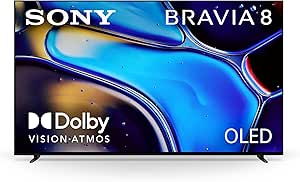 | Best for Home Theater Sound | Screen size: 65 inches | Display technology: OLED | Resolution: 4K | VIEW LATEST PRICE | See Our Full Breakdown |
| Samsung QN65S90F 65-inch Class OLED 4K S90F Smart TV (2025) |  | Best for Fast-Motion Content | Screen size: 65 inches | Display technology: OLED | Resolution: 4K | VIEW LATEST PRICE | See Our Full Breakdown |
| LG 55-Inch OLED evo AI 4K C6 Series Smart TV (2026) |  | Best for Gamers | Screen size: 55 inches | Display technology: OLED evo | Resolution: 4K | VIEW LATEST PRICE | See Our Full Breakdown |
| Sony BRAVIA 6 48-Inch 4K OLED Smart TV with Google TV (K-48A60) |  | Best Compact Media Room Pick | Screen size: 48 inches | Display technology: OLED | Resolution: 4K | VIEW LATEST PRICE | See Our Full Breakdown |
| 4K OLED TVs for media room | Screen size | Resolution | Display technology | Refresh rate |
|---|---|---|---|---|
| Sony BRAVIA XR A95L 77-Inch 4K | 77 inches | 4K | QD-OLED | 120 Hz |
| Samsung 42-Inch Class S90H Ser | 42 inches | 4K | OLED | — |
| Samsung 83-Inch OLED S85F 4K S | 82.5 inches (83-inch class) | 4K | OLED | 120 Hz |
| Sony BRAVIA XR8B 77-Inch 4K OL | 77 inches | 4K | OLED | 120 Hz |
| LG 48-Inch OLED evo C6 Series | 48 inches | 4K | OLED evo | Native 120 Hz, VRR up to 165 Hz |
| LG 83-Inch OLED evo G5 Series | 83 inches | 4K | — | — |
| LG 77-Inch Class OLED evo AI S | 77 inches | 4K | — | — |
| Samsung 65-Inch S90F OLED 4K S | 65 inches | 4K | OLED | 144 Hz |
| Sony 48" A90K BRAVIA XR 4K HDR | 48 inches | 4K Ultra HD | OLED | 120 Hz |
| Sony BRAVIA 8 II 65-Inch QD-OL | 65 inches | 4K | QD-OLED | 120 Hz |
| LG 55-Inch OLED evo C5 4K Smar | 55 inches | 4K | OLED evo | 120 Hz |
| Sony BRAVIA 8 65-Inch 4K OLED | 65 inches | 4K | OLED | 120 Hz |
| Samsung QN65S90F 65-inch Class | 65 inches | 4K | OLED | 144 Hz |
| LG 55-Inch OLED evo AI 4K C6 S | 55 inches | 4K | OLED evo | Up to 165 Hz |
| Sony BRAVIA 6 48-Inch 4K OLED | 48 inches | 4K | OLED | 120 Hz |
More Details on Our Top Picks
Sony BRAVIA XR A95L 77-Inch 4K QD-OLED Smart TV
For a room built around movie nights, this model sets the benchmark the rest of the lineup is measured against. Its QD-OLED panel is the key differentiator: unlike the standard OLED in the Samsung S85F, it pushes brightness high enough that HDR highlights genuinely pop even with some ambient light in the room. Sony’s Cognitive Processor XR also does the best job here of making streamed content look like it was mastered for a cinema, not compressed for an app.
The tradeoff is scale and weight — at 81.3 pounds and nearly six feet wide, this is a TV you build the room around, not one that flexes into a corner. If your media room is on the smaller side, the LG C6 at 48 inches delivers a comparable OLED experience in a far more forgiving footprint.
Pros:- QD-OLED panel delivers both deep blacks and brightness standard OLED can’t match
- 120 Hz refresh with full HDMI 2.1, VRR, and ALLM for console and PC gaming
- Dolby Vision and Dolby Atmos support for full cinematic formats
- 60 W audio output is stronger than most TVs in this lineup
Cons:- 81.3-pound build makes wall mounting a two-person (or professional) job
- 77-inch footprint overwhelms rooms where viewers sit closer than about ten feet
Best for: Homeowners with a dedicated, light-controlled media room who want reference-grade HDR and Dolby Vision movie playback on a big canvas
Not ideal for: Anyone with a small or multipurpose room — the 77-inch panel and heavy build demand serious wall or stand real estate
- Display technology:QD-OLED
- Screen size:77 inches
- Resolution:4K
- Refresh rate:120 Hz
- HDR format:Dolby Vision
- Audio:60 W, Dolby Atmos
- Operating system:Google TV
- Gaming features:HDMI 2.1, 4K/120, VRR, ALLM, PS5 Auto HDR Tone Mapping
Our verdict“If your media room is the centerpiece of the house and you want the best image in this group, this is the one to buy.”
Samsung 42-Inch Class S90H Series OLED 4K Smart TV (2026 Model)
Not every media room is a cavern — and this is the pick for dens, bedrooms, or converted offices where a 77-inch panel would be absurd. The glare-free screen treatment is what separates it from the similarly sized Sony A90K: it handles lamps and daytime windows far better, which matters when your ‘media room’ doubles as the living room. The NQ4 AI Gen3 processor also does respectable upscaling of older cable and streaming content.
The honest tradeoff is immersion. A 42-inch screen at ten feet simply can’t deliver the theater feeling of the Sony A95L, and the premium feature set — 165 Hz motion support, G-Sync, FreeSync Premium Pro — is partly wasted if you don’t game on it. Buyers paying for capability they won’t use should step down a tier.
Pros:- Glare-free coating keeps the picture watchable in rooms with windows
- NQ4 AI Gen3 processor upscales sub-4K content convincingly
- Motion Xcelerator with G-Sync and FreeSync Premium Pro suits serious gaming
- Fits on standard furniture without special mounting
Cons:- 42-inch size limits immersion for group movie nights
- Premium gaming hardware goes unused without a compatible PC or console setup
Best for: Apartment dwellers or anyone converting a small spare room into a media nook where glare and space are the constraints
Not ideal for: Buyers wanting a true theater experience — the 42-inch panel can’t fill a dedicated viewing room at normal seating distances
- Screen size:42 inches
- Display technology:OLED
- Resolution:4K
- HDR:HDR+
- Processor:NQ4 AI GEN3
- Motion:Motion Xcelerator 165Hz, AI Motion Enhancer Pro
- Gaming:NVIDIA G-SYNC, AMD FreeSync Premium Pro
Our verdict“The right OLED when the room — not the budget — is the limiting factor.”
Samsung 83-Inch OLED S85F 4K Smart TV (2025)
If the appeal of the Sony A95L is its size but not its flagship price, this is the sensible pivot. At 83 inches it’s actually the larger picture, and the NQ4 AI Gen2’s 20-network upscaling means legacy Blu-rays and standard streams still look sharp. Pantone-validated color is a nice practical touch for anyone who cares that skin tones and team colors look right, not just ‘vivid’.
Where it trails Sony is HDR format support — you get HDR10+ but no Dolby Vision, which limits how it handles a large slice of the premium streaming catalog. And the 20 W two-channel speakers are the weakest audio story in this lineup; unlike the A95L’s 60 W output, this TV really needs a soundbar or receiver from day one.
Pros:- 83-inch OLED panel is the biggest picture in this batch
- AI upscaling with 20 neural networks cleans up non-4K sources
- Pantone-validated color accuracy out of the box
- Built-in Alexa adds hands-free control without extra hardware
Cons:- No Dolby Vision support, unlike the Sony and LG options here
- 20 W two-channel speakers fall flat for cinematic audio
Best for: Buyers who want maximum screen inches for a dedicated media room and already own (or plan to buy) a sound system
Not ideal for: Dolby Vision-first streamers and anyone planning to rely on built-in speakers — the audio and HDR format gaps will show immediately
- Display technology:OLED
- Screen size:82.5 inches (83-inch class)
- Resolution:4K
- Refresh rate:120 Hz
- Processor:NQ4 AI Gen2
- HDR formats:HDR10, HDR10+, HLG
- Audio:2-channel, 20 W, Dolby Atmos
- VESA mount:400 x 300 mm
Our verdict“The smart way to go big on OLED if you supply your own sound and don’t need Dolby Vision.”
Sony BRAVIA XR8B 77-Inch 4K OLED Google TV
This model slots in as the more grounded alternative to the A95L: same 77-inch scale, same Google TV platform, same Dolby Vision and Atmos support, but with a standard OLED panel instead of QD-OLED. For a light-controlled media room — where you’re watching in the dark anyway — the brightness advantage of the flagship largely evaporates, and this becomes the rational pick for film-focused viewers.
Sony’s XR Processor still delivers the motion handling and upscaling polish the brand is known for, and the IMAX Enhanced certification will appeal to format purists. The catch is that in brighter rooms the picture falls behind the Samsung S90H’s glare management, and like every 77-inch set here, it demands a big wall and a sturdy mount. It’s also a newer model with less established track record than Sony’s longer-running lines.
Pros:- Self-lit OLED pixels deliver true black levels for dark-room viewing
- Dolby Vision, Dolby Atmos, and IMAX Enhanced cover the full cinema format stack
- Google TV with AirPlay 2 and Google Cast makes streaming from any device simple
- XR Processor handles motion and upscaling better than most mid-tier rivals
Cons:- Lacks the peak brightness of QD-OLED alternatives like the A95L
- As a newer model, long-term reliability and firmware track record are unproven
Best for: Dark-room movie watchers who want Sony’s processing and Dolby Vision at 77 inches without paying flagship QD-OLED prices
Not ideal for: Bright, multi-use living spaces — without QD-OLED brightness or glare coating, reflections and ambient light will wash out the image
- Screen size:77 inches
- Display technology:OLED
- Resolution:4K
- Refresh rate:120 Hz
- HDR format:Dolby Vision
- Processor:XR Processor
- Smart platform:Google TV
- Ports:4 HDMI, 1 USB 3.0, 1 USB
Our verdict“A near-flagship Sony movie experience for buyers whose media room stays dark and whose budget says ‘not quite A95L’.”
LG 48-Inch OLED evo C6 Series 4K Smart TV (2026)
If the media room doubles as a gaming den, this is the standout mid-size choice. Four HDMI 2.1 inputs — more than the Sony A95L offers in practice for simultaneous next-gen consoles — plus a 0.1 ms response time and VRR up to 165 Hz make it the most future-proof gaming panel in this group. The OLED evo panel and Alpha 11 AI processor also hold their own for movies, with Dolby Vision, Atmos, and Filmmaker Mode covering the cinematic side.
The honest caveats: hitting 165 Hz requires a capable PC graphics card, so console-only players are paying for headroom they can’t use. And some of webOS 26’s smarter features sit behind an LG account login or subscriptions, which is more friction than Google TV on the Samsung or Sony sets. Still, as a hybrid gaming-and-movie centerpiece, nothing else at 48 inches matches its connectivity.
Pros:- Four HDMI 2.1 inputs accommodate multiple consoles plus a PC at once
- 0.1 ms response time with G-Sync and FreeSync support for tear-free gaming
- OLED evo panel with Dolby Vision, Atmos, and Filmmaker Mode handles movies well
- Alpha 11 AI Processor Gen3 optimizes both picture and sound automatically
Cons:- 165 Hz VRR only pays off with a high-end PC graphics card
- Some smart features require an LG account, internet, or paid subscriptions
Best for: PC and console gamers who want one 48-inch screen for both competitive play and movie nights in a compact media room
Not ideal for: Console-only casual viewers — the 165 Hz capability and fourth HDMI port go unused, and webOS account requirements add friction
- Screen size:48 inches
- Display technology:OLED evo
- Resolution:4K
- Refresh rate:Native 120 Hz, VRR up to 165 Hz
- Response time:0.1 ms
- HDMI inputs:4 HDMI 2.1
- Smart platform:webOS 26
- Formats:Dolby Vision, Dolby Atmos, Filmmaker Mode
Our verdict“The best small-screen pick when gaming performance matters as much as movie night.”
LG 83-Inch OLED evo G5 Series 4K Smart TV (OLED83G5WUA, 2025)
When a media room exists for one purpose — recreating the cinema at home — size and brightness matter more than anything else, and this 83-inch G5 delivers both. The Brightness Booster Max panel pushes images up to 45% brighter than standard OLED, which means HDR highlights hold up even with ambient light leaking in during daytime viewing. Compared with the LG 77-inch C5, the G5’s second-generation α11 AI processor and dedicated wall-flush design make it feel like a different tier of product, not just a bigger version of the same TV. Gaming credentials are equally serious: 0.1ms response time, 120Hz, and four HDMI 2.1 ports mean a console and PC can stay plugged in simultaneously. The tradeoffs are real, though — it demands a large wall, professional mounting, and a budget that assumes premium everything.
Pros:- Brightness Booster Max keeps HDR content punchy even in rooms with some ambient light
- Four HDMI 2.1 ports with 0.1ms response time and VRR support handle multiple gaming sources at once
- Five-year panel warranty adds long-term confidence at this price tier
- Flush wall-mount design genuinely works as an art display when the screen is off
Cons:- Premium pricing places it well above strong options like the LG C5 series
- Wall-mount-first design means limited stand flexibility and a more involved installation
- Deep webOS 25 settings menus can overwhelm viewers who just want a great picture out of the box
Best for: Homeowners building a dedicated, light-controlled media room who want a theater-scale centerpiece with serious gaming headroom
Not ideal for: Casual buyers or anyone with a mid-size living space — the 83-inch panel and wall-only Re:New design overwhelm typical rooms and setups
- Screen Size:83 inches
- Resolution:4K
- Processor:α11 AI Processor Gen 2
- Brightness:Up to 45% brighter with Brightness Booster Max
- HDR:Dolby Vision
- Gaming Features:0.1ms response time, 120Hz, G-Sync, FreeSync Premium, VRR, 4 HDMI 2.1 ports
- Smart Platform:webOS 25
- Warranty:5 years panel warranty
Our verdict“This is the pick for a serious dedicated theater space where maximum size, brightness, and gaming capability justify the premium.”
LG 77-Inch Class OLED evo AI Super Upscaling 4K C5 Series Smart TV
Not everyone needs the flagship G5’s extreme brightness, and that’s exactly where this 77-inch C5 earns its spot. It covers the core media-room essentials — perfect blacks, Dolby Vision, Dolby Atmos, and Filmmaker Mode — at a meaningfully lower commitment than its 83-inch sibling, while still delivering the screen real estate that makes movie nights feel cinematic. The AI Super Upscaling on the Alpha 9 Gen8 processor is the standout here: it takes older streaming libraries, cable, and non-4K Blu-rays and makes them look genuinely presentable, which matters if your household watches mixed-quality content rather than only 4K discs. Compared with the Samsung S90F, the C5 trades a little gaming-oriented polish for broader HDR and filmmaker-focused features. The compromise is peak brightness — in a very sun-drenched room, the G5 pulls ahead.
Pros:- AI Super Upscaling makes non-4K sources look far better than they have any right to
- Filmmaker Mode plus Dolby Vision delivers accurate, director-intended movie playback
- Perfect black levels and vibrant color straight out of the box
- Brightness Booster holds up reasonably well in brighter rooms
Cons:- Peak brightness trails the G5 series, so heavy HDR in bright rooms is less impactful
- 77 inches demands a viewing distance of roughly eight feet or more
- No 144Hz support for PC gamers, capping at the standard OLED refresh rates
Best for: Movie-focused households who want a large 77-inch OLED for mixed-quality content without paying flagship prices
Not ideal for: Very bright, sun-flooded rooms or hardcore competitive gamers — the G5 or S90F handle those scenarios better
- Screen Size:77 inches
- Technology:OLED evo
- Resolution:4K
- Processor:Alpha 9 AI Processor Gen8
- HDR:HDR10, Dolby Vision
- Sound:Dolby Atmos
- Features:AI Super Upscaling, Filmmaker Mode, Brightness Booster
Our verdict“The smart money pick for a large OLED media room where upscaling flexibility and cinematic playback matter more than flagship brightness.”
Samsung 65-Inch S90F OLED 4K Smart TV (2025)
If a gaming PC shares the media room with the couch, the S90F makes a strong case as the gaming-first choice. Its 144Hz refresh rate is the differentiator here — the LG C5 and Sony A90K both cap at 120Hz, so anyone with a capable graphics card gets visibly smoother motion in supported titles. The NQ4 AI Gen3 processor handles upscaling and sound tuning, while Motion Xcelerator cleans up fast action in sports and shooters alike. At 65 inches, it’s also the most flexible size in this batch: big enough for a movie night, small enough for a dual-purpose gaming den. The honest catch is that the 144Hz advantage only materializes with compatible hardware, and Samsung’s HDR10+ support skips Dolby Vision — a real consideration if your movie library leans on that format, where the Sony Bravia 8 II is the stronger pick.
Pros:- 144Hz refresh rate support exceeds the 120Hz ceiling of most OLED rivals
- Motion Xcelerator keeps fast sports and action content smooth
- 65-inch size fits a wider range of rooms than the 77- and 83-inch options
- 40W 2.1-channel Dolby Atmos audio is stronger than typical built-in TV sound
Cons:- 4K at 144Hz only works with a compatible PC and graphics card
- No Dolby Vision support, limiting HDR playback for movie-focused buyers
- Upscaling quality varies noticeably depending on the source material
Best for: PC gamers with modern graphics cards who want a dual-purpose OLED for gaming and movies in a mid-size media space
Not ideal for: Movie purists invested in Dolby Vision content — Samsung’s HDR10+ focus means missing the most common premium HDR format
- Display Technology:OLED
- Screen Size:65 inches
- Resolution:4K
- Refresh Rate:144 Hz
- HDR Format:HDR10+
- Processor:NQ4 AI Gen3
- Audio:2.1-channel, 40W, Dolby Atmos
- VESA Mount:300 × 200 mm
Our verdict“The right choice when a gaming PC is the main source feeding the TV and 144Hz smoothness outweighs Dolby Vision movie playback.”
Sony 48″ A90K BRAVIA XR 4K HDR OLED Smart Google TV (XR-48A90K)
Not every media room is a cavern — converted bedrooms, dens, and small basement nooks need a TV that doesn’t dominate the space, and the 48-inch A90K is the standout small-format option here. Sony’s Cognitive Processor XR approaches picture processing differently than the LG models, analyzing the frame the way a human eye does to prioritize focal points, and the result is deep, layered contrast that punches well above its screen size. Gaming is a quiet strength: input lag as low as 8.5ms with full HDMI 2.1 features makes it a natural companion for a PlayStation 5 on a desk or small setup. Compared with the larger LG 48-inch C6, the A90K’s Acoustic Surface Audio+ — sound produced by the screen itself — gives it a cleaner look without a soundbar. The tradeoff is simple: at 48 inches, group movie nights feel cramped.
Pros:- Cognitive Processor XR delivers reference-level contrast and color at a small size
- 8.5ms input lag and full HDMI 2.1 support make it ideal for PS5 gaming
- Acoustic Surface Audio+ produces sound directly from the screen, eliminating the need for a soundbar
- Google TV with voice control keeps app navigation simple
Cons:- 48-inch panel limits seating distance and group-viewing comfort
- At over 36 pounds, it’s deceptively heavy for its size and awkward to wall-mount solo
- 25 watts of audio output is modest compared with the Samsung S90F’s 40W system
Best for: Owners of small media rooms, bedrooms, or gaming dens who want flagship picture quality in a space-efficient size
Not ideal for: Households hosting regular group movie nights — 48 inches is too small for shared viewing beyond two or three people
- Screen Size:48 inches
- Display Technology:OLED
- Resolution:4K Ultra HD
- Refresh Rate:120 Hz
- HDR Formats:Dolby Vision, IMAX Enhanced, HDR10
- Processor:Cognitive Processor XR with XR OLED Contrast Pro
- Audio:Acoustic Surface Audio+ with Dolby Atmos (25W)
- HDMI:2.1 (4K/120Hz, VRR, ALLM)
- Operating System:Google TV
Our verdict“The smart choice when space is the constraint but picture quality and gaming performance can’t be compromised.”
Sony BRAVIA 8 II 65-Inch QD-OLED 4K HDR Google TV (K-65XR80M2)
The Bravia 8 II stands apart in this lineup for what it supports on the audio side: alongside Dolby Atmos, it handles DTS:X and IMAX Enhanced — formats that matter if your media room runs a proper receiver and a collection of 4K Blu-rays, since many discs carry DTS soundtracks that other TVs here simply can’t pass through. The QD-OLED panel combines self-lit pixels with Quantum Dot color, delivering the saturation punch of Samsung’s panels with Sony’s XR processing on top, and it holds up well against the LG C5’s standard OLED in color volume. Built-in 50W audio output is also among the strongest in this batch. The drawbacks: it matches the S90F’s 120Hz ceiling rather than pushing higher, and as a newer model, real-world feedback is still limited, so early adopters carry some risk.
Pros:- Full support for Dolby Vision, Dolby Atmos, DTS:X, and IMAX Enhanced covers virtually every home theater format
- QD-OLED panel delivers wider, more saturated color than standard OLED
- 50W built-in audio output is among the strongest in this lineup
- Apple AirPlay 2 and Google Cast support makes it platform-agnostic for households
Cons:- Premium QD-OLED pricing sits above comparable standard OLED models like the LG C5
- 120Hz ceiling offers nothing extra for high-refresh PC gaming versus the S90F’s 144Hz
- Newer release means less long-term ownership data is available
Best for: Home theater enthusiasts with receivers, 4K Blu-ray collections, and DTS-based soundtracks who need full audio format support
Not ideal for: Budget-focused buyers or those who stream exclusively — the premium AV features go unused without a disc-based or receiver-driven setup
- Display Technology:QD-OLED
- Screen Size:65 inches
- Resolution:4K
- Refresh Rate:120 Hz
- HDR Formats:Dolby Vision, HDR10, HLG
- Processor:XR Processor with AI
- Audio Output:50 watts
- Operating System:Google TV
- Storage:32 GB
Our verdict“The pick for a disc-and-receiver home theater where audio format support and QD-OLED color matter more than gaming refresh rates.”
LG 55-Inch OLED evo C5 4K Smart TV (2025)
The LG C5 hits the sweet spot most media rooms actually need: a 55-inch OLED panel, 120 Hz refresh, and the Gen8 α9 AI processor handling upscaling so older Blu-rays and cable broadcasts look sharper than they have any right to. Compared with the Sony BRAVIA 8, it draws less power and weighs 16 pounds less, which matters if your media console is already loaded with gear. Dolby Vision plus Filmmaker Mode means movies display as directors intended — a real advantage over the Samsung S90F, which pushes its own OLED HDR+ tone mapping instead. The tradeoff is screen size: at 55 inches, it fills a bedroom or modest media room nicely but disappears in a dedicated home theater where the LG 83-inch G5 would dominate.
Pros:- Self-lit OLED pixels deliver true blacks and reference-grade contrast for dark-room movie sessions
- Gen8 AI upscaling improves non-4K sources like cable and older streaming libraries
- Filmmaker Mode and Dolby Vision preserve director intent for critical viewing
- 120 Hz refresh rate handles fast action without motion blur
Cons:- 55-inch panel is small for a dedicated media room with seating beyond nine feet
- 2.2-channel onboard audio will need a soundbar or receiver in any serious setup
Best for: Movie watchers furnishing a small-to-medium media room who want reference-quality OLED without overspending on size they don’t have wall for
Not ideal for: Owners of large dedicated theaters — at 55 inches, this panel is undersized for viewing distances beyond about nine feet
- Screen size:55 inches
- Display technology:OLED evo
- Resolution:4K
- Refresh rate:120 Hz
- Processor:α9 AI Processor 4K Gen8
- HDR formats:Dolby Vision, HDR10, HLG
- Smart platform:webOS
- Power consumption:133.1 watts
Our verdict“Buy this if you want LG’s most proven OLED formula in a size that fits average media rooms without the premium of the larger C-series and G-series panels.”
Sony BRAVIA 8 65-Inch 4K OLED Google TV (K-65XR80)
Sony’s Acoustic Surface Audio+ turns the entire 65-inch panel into the speaker, which gives the BRAVIA 8 a soundstage no slab TV in this lineup matches — including the Samsung S90F and its conventional 40-watt 5.1 setup. XR processing also gives Sony a motion-handling character that film enthusiasts tend to prefer over LG’s sharper, more aggressive look. Add DTS:X support, which the LG C5 lacks entirely, and this model makes a strong case for movie libraries built on physical discs. The compromises are real: at 438 watts rated power draw and 51.2 pounds, it runs hotter and heavier than every 65-inch alternative here, and it costs more than the similarly sized S90F.
Pros:- Acoustic Surface Audio+ produces audio that tracks on-screen action directly from the panel
- Pixel-level dimming with XR processing delivers exceptional contrast and clarity
- DTS:X support covers physical media soundtracks most competitors skip
- PlayStation 5 optimization features auto-calibrate picture and latency for gamers
Cons:- Highest power consumption in this group at 438 watts
- Premium positioning makes it a tougher sell against the cheaper 65-inch Samsung S90F
Best for: Film collectors and home theater builders who want screen-driven sound and DTS:X support for disc-based movie libraries
Not ideal for: Energy-conscious buyers or those on media consoles with weight limits — 438 watts and 51.2 pounds exceed typical OLED rivals in this size class
- Screen size:65 inches
- Display technology:OLED
- Resolution:4K
- Refresh rate:120 Hz
- Audio output:50 watts, Acoustic Surface Audio+
- Audio formats:Dolby Atmos, DTS:X
- Smart platform:Google TV
- Weight:51.2 pounds
Our verdict“This is the pick when audio quality from the TV itself matters and your movie collection lives on discs rather than streaming apps.”
Samsung QN65S90F 65-inch Class OLED 4K S90F Smart TV (2025)
The S90F is the only 65-inch option here pushing a 144 Hz native refresh rate, which translates to cleaner motion in sports broadcasts and lower-latency gaming than the 120 Hz Sony BRAVIA 8 or LG C5. Its OLED HDR+ format leans punchy and saturated — great for a bright, multipurpose media room, though purists who want the neutral Dolby Vision rendering of the LG panels may find it overcooked. At 149 watts, it’s dramatically more efficient than the Sony despite the higher refresh rate, and the 200 x 200 mm VESA pattern keeps mounting simple. The catch: Samsung’s Tizen-driven platform is feature-dense, so expect a longer initial setup and menu-navigation learning curve than Google TV or webOS demand.
Pros:- 144 Hz refresh rate delivers the smoothest motion handling in this 65-inch group
- OLED HDR+ produces vivid, high-impact images in rooms with ambient light
- Object Tracking Sound Lite with Dolby Atmos creates directional audio cues
- Efficient operation at 149 watts despite the higher refresh rate
Cons:- Feature-heavy platform makes initial setup and menus more complicated than rivals
- At 49.6 pounds, it requires a sturdy mount or console
Best for: Sports fans and competitive gamers who prioritize motion clarity above cinematic color accuracy
Not ideal for: Home cinema purists — the aggressive HDR+ tone mapping deviates from the neutral Filmmaker Mode-style rendering LG and Sony offer
- Screen size:65 inches
- Display technology:OLED
- Resolution:4K
- Refresh rate:144 Hz
- HDR format:OLED HDR+
- Audio output:40 watts, 5.1 channels
- Power consumption:149 watts
- VESA mount:200 x 200 mm
Our verdict“Choose this when your media room doubles as a sports bar and gaming den and 144 Hz motion matters more than director-grade color neutrality.”
LG 55-Inch OLED evo AI 4K C6 Series Smart TV (2026)
For a media room that hosts a console as often as a movie night, the C6 is the most future-proofed screen in this batch. A 165 Hz maximum refresh rate, 0.1 ms response time, and full support for NVIDIA G-Sync, AMD FreeSync Premium, and VRR out-spec the 144 Hz Samsung S90F and leave the 120 Hz LG C5 a generation behind. The newer a11 AI processor and Brightness Booster also push highlights harder than the C5 manages, so HDR films benefit too. What you give up is content support: no DTS passthrough is listed, so the Sony BRAVIA 8 remains the better disc-library machine, and at 55 inches this panel suits a gaming den more than a large theater.
Pros:- Up to 165 Hz refresh rate with 0.1 ms response time is the fastest spec in this roundup
- Full G-Sync, FreeSync Premium, and VRR support covers both PC and console setups
- Brightness Booster and a11 AI processing improve HDR punch over the previous C5 generation
- webOS with Google Gemini simplifies voice-driven content discovery
Cons:- 55-inch size limits impact in larger dedicated theaters
- Cutting-edge feature set commands a premium over the 2025 C5 at the same size
Best for: PC and console gamers who want tear-free 165 Hz OLED performance in a room that also handles movie duty
Not ideal for: Physical-media collectors — without DTS support, this panel favors streaming over disc-based soundtracks
- Screen size:55 inches
- Display technology:OLED evo
- Resolution:4K
- Refresh rate:Up to 165 Hz
- Response time:0.1 ms
- Gaming features:NVIDIA G-Sync, AMD FreeSync Premium, VRR
- Processor:a11 AI Processor Gen 3
- Smart platform:webOS
Our verdict“If a PlayStation, Xbox, or gaming PC shares your media room, this is the panel built to keep up with all of them.”
Sony BRAVIA 6 48-Inch 4K OLED Smart TV with Google TV (K-48A60)
Not every media room is a living room. The 48-inch BRAVIA 6 brings genuine OLED blacks, Dolby Vision, and four HDMI 2.1 ports to bedrooms, dens, and bonus rooms where the 65-inch Samsung S90F or Sony BRAVIA 8 would overwhelm the space. At 27.6 pounds, one person can mount it, and the wide viewing angle plus Triluminos Pro color keep the picture honest from off-axis seating — useful in a room with a sectional rather than stadium rows. Compared with Samsung’s 42-inch S90H, the extra six inches and full HDMI 2.1 complement make it the more complete small-room package. The limitation is simple: a 48-inch panel can’t deliver theatrical immersion no matter how good the pixels are.
Pros:- Four HDMI 2.1 ports with 4K/120, VRR, and ALLM support multiple consoles simultaneously
- Triluminos Pro color and wide viewing angles hold up from off-axis seating
- Featherweight 27.6-pound build simplifies wall mounting in small rooms
- Google TV with Gemini handles voice search and smart home control
Cons:- 48-inch panel sacrifices the immersive scale of the 65-inch and larger options here
- Onboard audio will still need external help for anything beyond casual viewing
Best for: Apartment dwellers and anyone setting up a secondary movie-and-gaming space under ten feet of viewing distance
Not ideal for: Main-theater builders — 48 inches cannot deliver the scale a dedicated media room experience demands
- Screen size:48 inches
- Display technology:OLED
- Resolution:4K
- Refresh rate:120 Hz
- HDMI ports:4 (HDMI 2.1 with 4K/120, VRR, ALLM)
- HDR formats:Dolby Vision, HDR10, HLG
- Smart platform:Google TV
- Weight:27.6 pounds
Our verdict“This is the right OLED when the media room is compact — you get the full feature set of bigger panels in a footprint that actually fits.”

How We Picked
I evaluated each TV through the specific demands of a media room: controlled lighting, dedicated seating distances, and sustained movie or gaming sessions rather than casual daytime viewing. The criteria that mattered most were black level and contrast consistency, peak brightness for HDR impact, processing quality for film and streaming sources, size-to-room fit, and audio capability for buyers who don’t run a full receiver-and-speaker setup. I also weighed gaming features — refresh rate, input lag, HDMI 2.1 bandwidth — because modern media rooms increasingly pull double duty as console spaces.
The ranking logic follows a simple principle: the bigger and darker your room, the more brightness, processing, and panel size justify their cost. Flagship QD-OLED models ranked highest overall because they exploit a media room’s controlled lighting better than anything else, but mid-tier C-series and S-series models ranked within reach of them where the real-world difference is small. Compact models were judged against their own size class rather than penalized for scale — a 48-inch TV in the right room beats a mismatched 77-inch one every time.
| 4K OLED TVs for media room | Display technology |
|---|---|
| Sony BRAVIA XR A95L 77-Inch 4K | QD-OLED |
| Samsung 42-Inch Class S90H Ser | OLED |
| Samsung 83-Inch OLED S85F 4K S | OLED |
| Sony BRAVIA XR8B 77-Inch 4K OL | OLED |
| LG 48-Inch OLED evo C6 Series | OLED evo |
| LG 83-Inch OLED evo G5 Series | — |
| LG 77-Inch Class OLED evo AI S | — |
| Samsung 65-Inch S90F OLED 4K S | OLED |
| Sony 48" A90K BRAVIA XR 4K HDR | OLED |
| Sony BRAVIA 8 II 65-Inch QD-OL | QD-OLED |
| LG 55-Inch OLED evo C5 4K Smar | OLED evo |
| Sony BRAVIA 8 65-Inch 4K OLED | OLED |
| Samsung QN65S90F 65-inch Class | OLED |
| LG 55-Inch OLED evo AI 4K C6 S | OLED evo |
| Sony BRAVIA 6 48-Inch 4K OLED | OLED |
Factors to Consider When Choosing 4K OLED TVs For Media Rooms
Before settling on a specific model, it helps to understand how media room conditions change the buying math compared with a general living room TV. These are the factors that most often make or break the purchase.Match Screen Size to Seating Distance First
The most common mistake I see is buying the biggest panel the budget allows, then discovering it overwhelms the room. A useful rule for 4K OLED: divide your seating distance in inches by 1.5 to get a comfortable screen size — so 8 feet of viewing distance points toward roughly a 65-inch panel, while 10 to 12 feet justifies 77 or 83 inches. Sitting too close to a large OLED also exposes the screen door effect on lower-bitrate streaming content, which is ironic given these panels’ reputation for perfection. Conversely, undersizing wastes the resolution advantage you’re paying for; a 48-inch TV viewed from 12 feet is barely distinguishable from a good 1080p set. Measure your room before browsing prices, because size mismatches can’t be fixed with settings.
Panel Brightness Matters Less Than You Think in a Dark Room
Marketing around peak nits is aimed at bright living rooms with windows, and it drives thousands of dollars of price difference. In a media room with controlled lighting, a standard OLED evo panel already delivers full HDR impact because your eyes are dark-adapted and highlights pop against true-black surroundings. This is why mid-tier models like the C5 and S90F hold up so well against flagships in this specific environment. Where brightness still matters is with large screens at long distances, where specular highlights in 77-inch-plus panels benefit from the extra headroom of QD-OLED or a G5-class panel. If your room has unavoidable ambient light or you watch with lights on, shift your budget toward the brighter panels — but in a blackout room, spend it on size or sound instead.
Processing Quality Separates Good Panels From Great TVs
Two TVs can share nearly identical panels while looking completely different, because upscaling, motion interpolation, and tone mapping are handled by the processor. This matters more in media rooms than anywhere else, because that’s where you’ll actually notice artifacting in fast pans, smeared motion in 24fps film, and compressed streaming noise on a big screen. Sony’s XR processor line is widely regarded as the strongest for film cadence and upscaling, which is why the BRAVIA models punch above their panel class for movie watchers. LG and Samsung close the gap on native 4K and high-bitrate sources, so if your library is mostly 4K discs or top-tier streaming tiers, the processing advantage shrinks. Check what you actually watch — a diet of cable, older streaming, and standard Blu-ray rewards strong processing more than any panel spec.
Don’t Assume You’ll Skip the Soundbar
Every TV in this category claims impressive built-in audio, and the slim chassis physics mean none of them genuinely replace a dedicated sound system. That said, the gap between models is real: larger Sony and LG flagships fire sound forward with meaningful stereo separation, while thinner wall-flush designs like the G-series trade audio depth for aesthetics. A smart budgeting move is to allocate part of your TV budget to audio — a mid-range OLED plus a good soundbar routinely outperforms a flagship panel with tiny internal speakers. Also check for eARC and pass-through support if you plan to route consoles or players through an AVR, since HDMI handling varies across models. Your media room’s whole point is immersion; neglecting sound undercuts the panel you just paid a premium for.
Gaming Features: Decide Before You Buy, Not After
If a console or gaming PC lives in your media room, panel specs like 144Hz support, VRR, and low input lag need to be on your checklist from the start, because they vary even within a single manufacturer’s lineup. LG’s C-series has historically led here, with full HDMI 2.1 bandwidth across ports and excellent game-mode handling, while Sony prioritizes picture processing and can lag on refresh-rate features. A common trap is buying a cinema-first flagship and discovering its game mode compromises latency or disables the motion features you paid for. Also count your HDMI 2.1 ports against your devices — a PS5, Xbox, and AVR can exhaust them quickly. Mixed-use rooms should weight this heavily; pure movie rooms can safely ignore it.
Model-Year Strategy: When Last Year’s Panel Wins
OLED TV generations improve incrementally — a brightness bump here, a new processor there — while prices on the outgoing model drop sharply once successors launch. In a light-controlled media room, a previous-generation C5 or S90F often delivers 90-plus percent of the current flagship’s real-world performance for considerably less. The exceptions worth paying current-generation prices for: first-time QD-OLED adopters, buyers needing the newest gaming standards, and anyone wanting longer runway of firmware support. Check that the panel type itself hasn’t changed between years, since a generational switch (standard OLED to OLED evo, or evo to QD-OLED) is a bigger deal than a processor refresh. Patience at the right moment in the product cycle is the single easiest way to upgrade a tier of quality at the same spend.
Frequently Asked Questions
Is a QD-OLED TV like the Sony A95L worth the premium over standard OLED for a media room?
It depends on your screen size and viewing distance more than anything else. QD-OLED’s advantages — higher color volume and brighter highlights — become visible at larger sizes and longer seating distances, so on a 77-inch panel viewed from 10 feet, the difference in HDR punch is real and lasting. At 55 or 65 inches in a small, dark room, the gap narrows to something most viewers would struggle to identify side by side. If your budget forces a choice between a 65-inch QD-OLED and a 77-inch standard OLED evo for a large room, the bigger panel is usually the better experience. Save the QD-OLED premium for situations where you’re already at the size ceiling and want the last word in picture quality.
Can a 48-inch OLED really work as a media room TV, or is it too small?
A 48-inch OLED is a legitimate media room choice when seating distance is 6 to 8 feet, which describes plenty of converted bedrooms, bonus rooms, and den spaces. At that distance, a 48-inch 4K panel fills a comparable amount of your visual field as an 83-inch panel viewed from 12 feet, so the immersion math can actually work out. The models in this size class — LG’s C6, Samsung’s S90H, Sony’s A90K and BRAVIA 6 — carry essentially the same panel technology as their larger siblings, so you’re not settling for lesser contrast or processing. Where 48 inches fails is in shared spaces or rooms where seating sprawls beyond 9 feet; there, save longer and buy bigger. Size the panel to the room, not to the room you wish you had.
How much does the processor generation matter when the panel specs look identical?
More than most buyers expect, and less than marketing suggests. The processor controls upscaling of non-4K content, motion interpolation smoothness, tone mapping in HDR, and how cleanly the panel handles fast camera pans — none of which appear on a spec sheet. Two consecutive years of the same panel with different processors can look noticeably different on film content, which is why Sony’s XR-driven models consistently lead for movie playback even against panels with equal or better raw brightness. That said, if your sources are native 4K — UHD discs, premium streaming tiers, current consoles — the processing gap compresses considerably. Feed a TV garbage and the processor matters enormously; feed it pristine 4K and almost any current OLED looks superb.
Should I buy an 83-inch LG G5 or save with a 77-inch flagship at the same price?
This is purely a seating-distance decision. Beyond roughly 10 to 11 feet, a 77-inch screen starts to feel small, and the 83-inch G5’s sheer scale delivers more perceived impact than any processing or brightness advantage the smaller flagship holds. Under 10 feet, reverse the logic: the 77-inch model gives you a sharper, denser image at a viewing angle that fills your field of vision comfortably, often with better-tier processing than the size-focused alternative. Also weigh the practical side — 83-inch panels are a two-person install, may need reinforced mounting, and some can’t tilt on standard brackets. My honest framing: buy the 83 for scale in a big room, buy the 77 for refinement everywhere else, and don’t let either decision be driven by spec-sheet pride.
Do these OLED TVs need special care or burn-in protection in a media room setup?
Burn-in risk in a movie-and-gaming media room is genuinely low with current panels, but your usage pattern shapes the answer. Modern OLEDs run automatic pixel refresh cycles, logo-dimming, and pixel-shifting routines that handle static elements from sports tickers, news, or game HUDs over typical viewing hours. The risk cases involve thousands of cumulative hours of the same static interface — think a PC desktop left on the TV all day — which is not how most media rooms are used. Sensible habits close the gap: enable the built-in care features, vary content early in the panel’s life, and avoid leaving pause screens overnight. For mixed movie and gaming use with normal habits, I wouldn’t let burn-in anxiety steer you away from any model in this lineup.
Conclusion
Mapping these 15 models to buyer types: for the best overall, the Sony BRAVIA XR A95L 77-Inch QD-OLED is the pick that best exploits what a media room is for — a dark space where its color volume and highlight control can actually shine. The best value goes to the LG C5 series, available in 55 and 77 inches, which delivers the core OLED experience with strong Dolby support at a price that leaves room in the budget for audio. For best premium, the LG 83-Inch OLED evo G5 buys true theater scale for large rooms, provided your seating distance justifies it. Beginners — first-time OLED buyers setting up a first dedicated room — are best served by the Samsung 65-Inch S90F, which pairs a forgiving, self-adjusting picture with a straightforward smart platform and enough gaming headroom to grow into.
For specific needs: the LG 48-Inch C6 is the clear choice for small rooms and gaming dens, the Sony A90K 48-inch suits compact film-first setups that prioritize processing, and console-heavy mixed-use rooms should lean toward LG’s C-series for gaming features or the Sony BRAVIA 8 II if movie quality and gaming both rank high. Whatever you choose, size to your seating distance first, match the panel’s strengths to your lighting, and reserve part of the budget for sound — those three decisions will shape your media room experience more than any spec sheet.
Evergreen bestsellers Picks
bestsellers
As an affiliate, we earn on qualifying purchases.