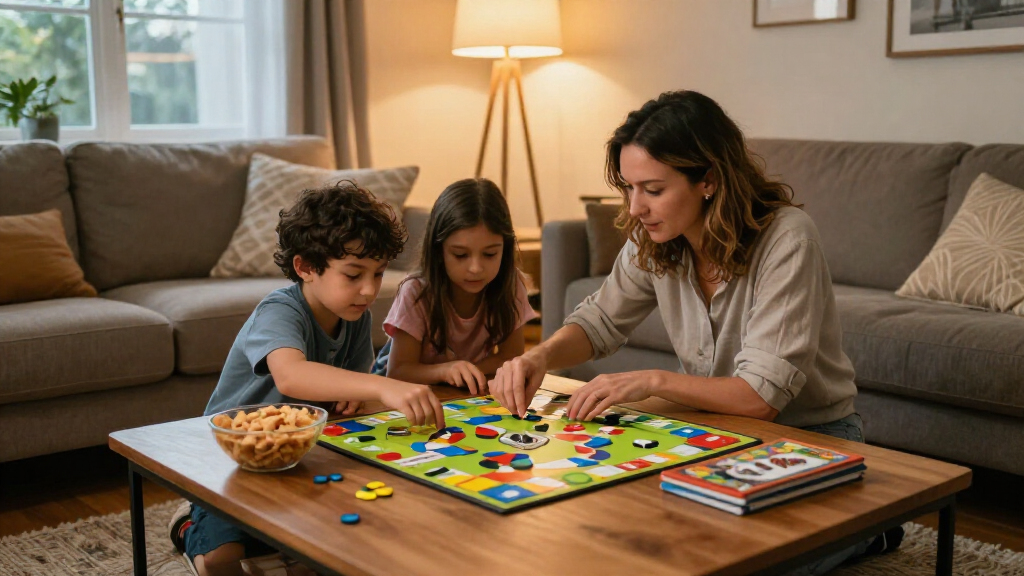

The best family board game overall is CATAN for households ready for strategic play, while Herd Mentality suits larger groups and The Uzzle 3.0 offers a more hands-on puzzle challenge. The right choice depends on your family’s ages, group size, and appetite for rules: quick party games are easy to start, while strategy and word games reward repeat play. Some picks work only for two players, so a game’s player count matters as much as its theme. I compare all 15 options by ease of learning, replay value, and fit for different family game nights below.

Get business pricing on your home office setup
- Business-only prices and quantity discounts
- Tax-exempt purchasing
- Multiple users, one account, clear invoices
Complete the kit


Key Takeaways
CATAN stands apart for strategic replay: trading and resource decisions give it more long-term depth than the quicker party and word games, but its rules and play time ask for a more committed group.
Herd Mentality is the clearest large-group pick: its 4–20 player range fits gatherings that rule out two-player games like Battleship, though its appeal depends on enjoying shared, often silly answers.
The Uzzle 3.0 fills a different niche: it centers on visual puzzles rather than conversation or competition, making it a useful alternative when the family wants a hands-on challenge.
Short rules do not mean the same kind of fun: Flip 7 and Taco Cat Goat Cheese Pizza favor brisk, lively rounds, while Blank Slate and HUES and CUES lean on word association and interpreting clues.
Player count can narrow the shortlist quickly: Battleship is for two, while games such as HUES and CUES and Herd Mentality can accommodate larger groups; check who will actually be playing before choosing.
| The Uzzle 3.0 Board Game |  | Best for Mixed-Age Puzzle Play | Recommended age: 4 years and up | Players: 1–4 | Challenges: 100 | VIEW LATEST PRICE | See Our Full Breakdown |
| Do You Really Know Your Family? Card Game |  | Best for Family Conversation | Recommended age: 8 years and up | Players: 3–8 | Approximate playing time: 3 minutes | VIEW LATEST PRICE | See Our Full Breakdown |
| Clue Board Game for Ages 8 and Up, Reimagined Clue Game |  | Best for Family Mystery Night | Recommended age: 8 years and up | Players: 2–6 | Estimated playing time: 45 minutes | VIEW LATEST PRICE | See Our Full Breakdown |
| Tapple Family Word Game |  | Best for Fast Word-Racing Rounds | Recommended age: 8 years and up | Players: 2–8 | Playing time: 15 minutes | VIEW LATEST PRICE | See Our Full Breakdown |
| HUES and CUES |  | Best for Creative Group Play | Recommended age: 8 years and up | Players: 3–10 | Color squares: 480 | VIEW LATEST PRICE | See Our Full Breakdown |
| Hasbro Gaming Battleship Classic Board Game for 2 Players |  | Best for Two-Player Head-to-Head Play | Brand: Hasbro Gaming | Players: 2 | Recommended age: 7 years and up | VIEW LATEST PRICE | See Our Full Breakdown |
| Flip 7 Card Game |  | Best Press-Your-Luck Card Game | Brand: USAopoly | Number of players: 3 or more | Age range: 8 years and up | VIEW LATEST PRICE | See Our Full Breakdown |
| Blank Slate Word Association Party Game |  | Best for Wordplay Across a Group | Players: 3–8 | Recommended age: 8 years and up | Playing time: 20–35 minutes | VIEW LATEST PRICE | See Our Full Breakdown |
| Taco Cat Goat Cheese Pizza Card Game | 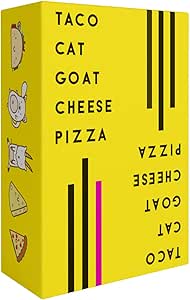 | Best for Fast, Active Family Rounds | Brand: Dolphin Hat Games | Players: 2–8 | Age range: 7 years and up | VIEW LATEST PRICE | See Our Full Breakdown |
| CATAN Board Game, 6th Edition |  | Best for Families Ready for Deeper Strategy | Players: 3–4 | Recommended age: 10 years and up | Edition: 6th Edition | VIEW LATEST PRICE | See Our Full Breakdown |
| Hasbro Gaming Scrabble Classic Crossword Board Game |  | Best for Word-Loving Families | Brand: Hasbro Gaming | Players: 2–4 | Recommended age: 8 years and up | VIEW LATEST PRICE | See Our Full Breakdown |
| Hasbro Sorry! Classic Board Game for Ages 6 and Up |  | Best for Younger Kids Who Like Take-That Play | Brand: Hasbro Gaming | Players: 2–4 | Recommended age: 6 years and up | VIEW LATEST PRICE | See Our Full Breakdown |
| Herd Mentality Board Game |  | Best for Large Family Gatherings | Players: 4–20+ | Recommended audience: Families, adults, teens, and children aged 10 and up | Game mechanics: Social deduction and majority-answer guessing | VIEW LATEST PRICE | See Our Full Breakdown |
| Magical Athlete Board Game |  | Best Quick Race Game | Brand: CMYK | Players: 2–6 | Recommended age: 6 years and up | VIEW LATEST PRICE | See Our Full Breakdown |
| SEQUENCE Original Game |  | Best for Team Strategy | Players: 2–12 | Recommended age: 7 years and up | Game mechanics: Area control, hand management, and team-based gameplay | VIEW LATEST PRICE | See Our Full Breakdown |
| family board game | Players | Recommended age | Included components | Language |
|---|---|---|---|---|
| The Uzzle 3.0 Board Game | 1–4 | 4 years and up | — | — |
| Do You Really Know Your Family | 3–8 | 8 years and up | — | — |
| Clue Board Game for Ages 8 and | 2–6 | 8 years and up | Gameboard, 6 character tokens, 6 weapon tokens, 50 cards, solve envelope, notepad, 2 dice, and rules | English |
| Tapple Family Word Game | 2–8 | 8 years and up | Tapple wheel, 36 cards, and instructions | English |
| HUES and CUES | 3–10 | 8 years and up | — | English |
| Hasbro Gaming Battleship Class | 2 | 7 years and up | 2 portable battle cases, 10 plastic ships, 73 red hit pegs, 168 green miss pegs, and instructions | English |
| Flip 7 Card Game | — | — | 94 cards and rules | — |
| Blank Slate Word Association P | 3–8 | 8 years and up | Scoreboard, 8 dry-erase slates, 250 double-sided word cue cards, and rules | English |
| Taco Cat Goat Cheese Pizza Car | 2–8 | — | Cards | — |
| CATAN Board Game | 3–4 | 10 years and up | 19 terrain hexes, 6 sea frame pieces, 18 number discs, 4 player aids, 2 bonus victory point tiles, 96 wooden player pieces, 2 card trays, 2 dice, 120 cards, and rules | English |
| Hasbro Gaming Scrabble Classic | 2–4 | 8 years and up | Gameboard, 100 wooden letter tiles, 4 wooden tile racks, drawstring letter bag, and game rules | English |
| Hasbro Sorry! Classic Board Ga | 2–4 | 6 years and up | Gameboard, 12 pawns, 45 cards, and instructions | English |
| Herd Mentality Board Game | 4–20+ | — | — | — |
| Magical Athlete Board Game | 2–6 | 6 years and up | Double-sided race track, 36 racer cards, 36 wooden racers, 6 dice, and point tokens | — |
| SEQUENCE Original Game | 2–12 | 7 years and up | Folding game board, 2 decks of SEQUENCE playing cards, 135 playing chips, and instructions | — |
More Details on Our Top Picks
The Uzzle 3.0 Board Game
The Uzzle 3.0 is a strong fit for families who want a game that gets children and adults solving side by side, rather than relying on trivia or conversation. Players flip, spin, and combine blocks to match patterns, with 100 challenges across four difficulty levels offering a way to adjust the mental load for different ages. Rules take little time to learn, and solo play gives it use beyond family game night. Compared with the more verbal Tapple Family Word Game, Uzzle rewards visual problem-solving and can be played alone; its head-to-head races, though, may leave slower or younger players feeling outmatched. The larger blocks are easier for small hands to manage, but the hardest puzzles may still be a stretch for younger children. Choose it for short, focused puzzle sessions, not a sprawling shared-board adventure.
Pros:- 100 challenges offer repeat play across four difficulty levels
- Larger blocks are easier for younger players to handle
- Rules are quick to learn
- Supports solo play as well as matches for up to four players
Cons:- The hardest challenges may frustrate younger children
- Competitive races can favor faster or more experienced puzzle-solvers
- Indoor-only play limits where the game can be used
Best for: Families with children and adults who want a quick visual puzzle game with solo and competitive play options
Not ideal for: Families seeking a cooperative story game or a relaxed activity where players do not compete against a timer or one another
- Recommended age:4 years and up
- Players:1–4
- Challenges:100
- Difficulty levels:4
- Blocks:4 sets of 10
- Material:Plastic
- Dimensions:8 × 8 inches
- Weight:1.7 pounds
Our verdict“Choose The Uzzle 3.0 for a family that wants adaptable visual puzzles and does not mind a little competitive pressure.”
Do You Really Know Your Family? Card Game
Do You Really Know Your Family? is for households that want a game to prompt stories, opinions, and silly challenges rather than test strategy. Its questions and social prompts make the experience more about learning what relatives think than winning through deduction, setting it apart from Clue, where players focus on tracking evidence and solving a mystery. The simple format suits a broad age range, and the tin is easy to pack for visits or travel. The tradeoff is limited depth: the listed play time is only about three minutes, so families may want to draw more cards or use it as a warm-up rather than expect a full evening of play. A fixed question set can also feel familiar after repeat sessions. Pick this for an easy conversation starter, not a game with a long arc or much tactical choice.
Pros:- Questions and challenges encourage family conversation
- Easy to learn across a range of ages
- Compact tin is convenient to store and carry
- Needs no batteries or complicated setup
Cons:- Approximate three-minute play time may feel too brief for a full game night
- A fixed set of questions can grow repetitive
- Requires at least three players
Best for: Families with children aged eight and up who want an easy conversation game for gatherings, visits, or a game-night opener
Not ideal for: Players looking for strategic decisions, a longer game session, or fresh content that changes substantially from play to play
- Recommended age:8 years and up
- Players:3–8
- Approximate playing time:3 minutes
- Material:Cardstock
- Container:Tin
- Theme:Trivia
- Dimensions:2 × 4.7 × 6.7 inches
- Power:Manual; no batteries required
Our verdict“Choose it as a portable conversation starter for families who value shared stories more than strategy.”
Clue Board Game for Ages 8 and Up, Reimagined Clue Game
Clue is the pick here for families who want a substantial shared game built around deduction. Players gather information, eliminate suspects, rooms, and weapons, then race to make the correct accusation; at roughly 45 minutes, it gives game night more structure than the quick rounds of Tapple Family Word Game. The reimagined setting and detailed pieces add atmosphere, while Clue cards can introduce extra twists and help move the investigation along. It supports two to six players, though the social deduction is liveliest when several people are involved. That longer, more deliberate pace is also its main tradeoff: younger players may need help tracking clues, and anyone hoping for an instant, casual party game may prefer HUES and CUES. Choose Clue for a group ready to focus on evidence and take turns patiently.
Pros:- Deduction gives players a clear, satisfying mystery to solve
- Clue cards add twists and can speed up information gathering
- Detailed board and character pieces support the mansion setting
- Works for two to six players
Cons:- Around 45 minutes is a long commitment for a casual game
- Players must track clues and make deductions, which may challenge younger children
- Turn-based investigation can involve downtime while others play
Best for: Families with children aged eight and up who enjoy mystery stories, note-taking, and a longer turn-based game
Not ideal for: Families wanting very short rounds, minimal reading, or an active party game with little downtime between turns
- Recommended age:8 years and up
- Players:2–6
- Estimated playing time:45 minutes
- Mechanics:Deduction, dice rolling, and elimination
- Included components:Gameboard, 6 character tokens, 6 weapon tokens, 50 cards, solve envelope, notepad, 2 dice, and rules
- Language:English
- Dimensions:15.75 × 10.5 inches
- Weight:2.2 pounds
Our verdict“Choose this Clue edition for family groups that want a focused, story-rich mystery rather than a quick party game.”
Tapple Family Word Game
Tapple Family Word Game turns vocabulary into a quick race: name a word that fits the category and starts with an available letter before the 10-second timer runs out. That pressure makes it livelier and more competitive than Do You Really Know Your Family?, which centers on conversation rather than rapid recall. Its 144 categories provide plenty of prompts, and the wheel stores the cards for easier transport and cleanup. The same timer that gives Tapple its energy is also its main hurdle: players who need extra thinking time, or who feel uncomfortable answering under pressure, may enjoy it less. It also needs at least two people, so it cannot fill the solo-puzzle role of The Uzzle 3.0. Choose Tapple for a lively word challenge, not a low-pressure discussion game.
Pros:- Built-in 10-second timer keeps turns brisk
- 144 categories provide a wide range of word prompts
- Wheel stores the cards for transport and cleanup
- Encourages vocabulary and word association
Cons:- The short timer can pressure players who need more thinking time
- Requires at least two players
- Fast recall may give some players a consistent advantage
Best for: Families with children aged eight and up who enjoy quick verbal challenges and want a portable game for groups
Not ideal for: Players who dislike time pressure, need extra time to find words, or want a game they can play alone
- Recommended age:8 years and up
- Players:2–8
- Playing time:15 minutes
- Categories:144 across 36 cards
- Timer:Built-in 10-second timer
- Included components:Tapple wheel, 36 cards, and instructions
- Material:Paper and plastic
- Language:English
Our verdict“Choose Tapple for family groups who like fast verbal competition and are comfortable thinking aloud against a timer.”
HUES and CUES
HUES and CUES makes communication the game: one player gives a short verbal clue for a color, and everyone else tries to locate the matching square among 480 hues. Unlike Tapple Family Word Game, it does not reward the fastest word recall; success depends on how players interpret and connect a clue to a color. That makes it a relaxed fit for a mixed group, and support for three to ten players lets it scale to gatherings that exceed Clue’s six-player limit. The open-ended clues can lead to funny disagreements, but color interpretation is subjective, so exact guesses may feel less satisfying for players who want a single objectively correct answer. It also needs at least three players. Choose HUES and CUES for a social, creative table, not a tightly strategic contest.
Pros:- 480 color squares create a broad range of visual guessing targets
- Short clues invite creative associations and discussion
- Supports groups of up to ten players
- Rules are quick to learn
Cons:- Color matching can feel subjective when players interpret shades differently
- Requires at least three players
- Less suited to players seeking strategy or precise, objective answers
Best for: Families and mixed-age groups of three to ten who enjoy creative clues, visual guessing, and playing together at gatherings
Not ideal for: Two-player households or players who prefer strict right-or-wrong answers, tactical planning, or fast word races
- Recommended age:8 years and up
- Players:3–10
- Color squares:480
- Mechanic:Give one- or two-word clues to guide color guesses
- Educational objectives:Creative thinking, communication, and problem-solving
- Material:Paper and wood
- Dimensions:10 × 10 × 2.5 inches
- Language:English
Our verdict“Choose HUES and CUES for larger family gatherings where creative interpretation matters more than strict competition.”
Hasbro Gaming Battleship Classic Board Game for 2 Players
Battleship is the clearest pick here for a family that often has exactly two people ready to play. Calling coordinates and tracking hits gives each player a simple task, while the hidden fleets create suspense without the wordplay of Blank Slate or the quick reflexes demanded by Taco Cat Goat Cheese Pizza. The included portable cases keep the ships and pegs together, making it easier to pack than a conventional board setup. More experienced players can add the Salvo option for a change in pace. The main limitation is also the defining one: it is built for two, so it cannot bring a whole family into the same game. Its small pegs can also go missing, and the turn-by-turn search may feel slow for players who prefer lively group play.
Pros:- Two portable cases store the ships and pegs for easier packing
- Coordinate guessing makes the core rules easy to learn
- Salvo option adds a more advanced way to play
- Five ship types give each player a varied fleet to hide
Cons:- Supports exactly two players, unlike group games such as Blank Slate
- Small pegs can be misplaced
- Turn-by-turn play may feel slow for families seeking fast group action
Best for: Families who want a straightforward strategy game for a parent and child or two siblings to play head-to-head.
Not ideal for: Families who want everyone involved at once, or players who dislike slower, turn-based guessing.
- Brand:Hasbro Gaming
- Players:2
- Recommended age:7 years and up
- Estimated playing time:30 minutes
- Edition:Classic
- Included components:2 portable battle cases, 10 plastic ships, 73 red hit pegs, 168 green miss pegs, and instructions
- Language:English
Our verdict“Choose Battleship for a portable, easy-to-learn duel between two family members, but skip it if your usual game night needs room for everyone.”
Flip 7 Card Game
Flip 7 suits families who enjoy deciding whether to keep pushing their luck or stop and protect a score. Players flip cards toward a 200-point goal while avoiding duplicate numbers, and cards such as Freeze, Second Chance, and Flip Three can disrupt a comfortable plan. Compared with CATAN, it takes far less time and setup, but it offers less room for long-term planning; luck has a substantial say in who succeeds. Its compact deck is easy to carry for trips or waiting-room play, though the paper cards are less robust than Battleship’s plastic ships and pegs. The three-player minimum also narrows its usefulness for a family with only two people available. It is a lively group choice, not a strategy-first game.
Pros:- Press-your-luck rules are quick to teach
- Freeze, Second Chance, and Flip Three cards add changing tactical choices
- Compact card format is convenient for travel
- A 200-point goal gives repeated rounds a clear target
Cons:- Requires at least three players
- Luck can outweigh careful decisions
- Paper cards may wear with frequent travel and handling
Best for: Families with at least three players who want a compact, quick-to-explain game built around risk decisions and surprise turns.
Not ideal for: Two-player households and strategy-focused players who want choices to outweigh luck.
- Brand:USAopoly
- Number of players:3 or more
- Age range:8 years and up
- Included components:94 cards and rules
- Material:Paper
- Model year:2025
- Model number:PA172-871-002508-32
Our verdict“Pick Flip 7 for portable, luck-driven group play, but choose CATAN instead if your family wants deeper planning and longer sessions.”
Blank Slate Word Association Party Game
Blank Slate makes the most sense when a family likes guessing how other people think. Each player writes a response to a cue, then tries to match someone else’s answer, turning word association into a social game rather than a test of trivia. With 500 cues across 250 double-sided cards and dry-erase slates for repeated rounds, it offers more replay prompts than a small, fixed deck. Compared with Flip 7, it relies less on luck and more on reading the group; compared with CATAN, it is easier to teach and fits a shorter session. The tradeoff is that players need to be comfortable writing and interpreting cues, which can leave younger children or reluctant readers at a disadvantage. It also needs at least three players.
Pros:- Simple premise makes it quick to learn
- 500 word cues support variety across repeat plays
- Dry-erase slates can be reused
- Accommodates groups of three to eight players
Cons:- Requires players to read cues and write answers
- Needs at least three players
- Small components may pose a choking hazard for young children
Best for: Families of three to eight, including older children and adults who enjoy word association and guessing one another’s answers.
Not ideal for: Families with children who are not comfortable reading or writing, or households that often play with only two people.
- Players:3–8
- Recommended age:8 years and up
- Playing time:20–35 minutes
- Included components:Scoreboard, 8 dry-erase slates, 250 double-sided word cue cards, and rules
- Game mechanics:Word association, guessing, and deduction
- Dimensions:9.84 x 9.84 x 0.1 inches
- Weight:0.94 kg
- Language:English
Our verdict“Choose Blank Slate when your group enjoys wordplay and matching minds; choose Taco Cat Goat Cheese Pizza for a faster game that does not ask players to write.”
Taco Cat Goat Cheese Pizza Card Game
Taco Cat Goat Cheese Pizza is the pick for families who want everyone reacting at once rather than planning a turn. Players say a word as cards are revealed and race to slap the pile when the word and card match; action cards add sudden changes to the routine. Its 10–15 minute rounds and compact card format make it easy to bring along, while the rules are simpler to teach than Blank Slate’s written word-matching prompts. That speed comes with real tradeoffs: quick hands matter more than strategy, and players with slower reflexes may feel at a disadvantage. Larger groups can also get chaotic around the pile. Compared with Flip 7, this is more physical and immediate, but offers less room for considered decisions between turns.
Pros:- Straightforward rules and quick setup
- Short rounds fit between longer games or activities
- Compact card format is easy to carry
- Action cards keep the matching routine unpredictable
Cons:- Fast reflexes can give some players an advantage
- Limited strategic depth may feel repetitive over time
- Simultaneous slapping can become chaotic with a larger group
Best for: Families with children aged seven and up who enjoy energetic, short rounds and want a small game for travel or casual gatherings.
Not ideal for: Players with limited hand mobility, families who prefer thoughtful strategy, or groups that find simultaneous action frustrating.
- Brand:Dolphin Hat Games
- Players:2–8
- Age range:7 years and up
- Playing time:10–15 minutes
- Included components:Cards
- Manufacturer part number:TCGCPDH
Our verdict“Choose Taco Cat Goat Cheese Pizza for a portable burst of lively family play, not for strategic depth or a calm table.”
CATAN Board Game, 6th Edition
CATAN is the strongest fit here for families seeking a longer game with meaningful planning, trading, and changing opportunities. Players gather resources to build roads, settlements, and cities, racing to reach 10 victory points; the modular hex board changes the map between games, so openings and resource access vary. Compared with quick options like Taco Cat Goat Cheese Pizza, CATAN asks for more time and attention, but gives players more decisions to shape their path. The tradeoffs are its 60–90 minute session and a base player count of just three or four. A separate extension is needed for five or six, so it is less flexible for a larger family than Blank Slate, which supports up to eight. Its recommended age of 10 and up also makes it better suited to older children and adults.
Pros:- Modular hex board changes the layout between plays
- Trading and building give players several ways to pursue points
- Wooden player pieces provide tactile components
- Resource and victory-point goals create clear choices throughout play
Cons:- Base game supports only three to four players
- Five- or six-player games require a separate extension
- A 60–90 minute session is a larger time commitment than the card games in this lineup
Best for: Families with three or four players, including children aged 10 and up, who want trading, resource planning, and a longer shared game.
Not ideal for: Families with younger children, short game-night windows, or five or more players who do not want to add a separate extension.
- Players:3–4
- Recommended age:10 years and up
- Edition:6th Edition
- Language:English
- Playing time:60–90 minutes
- Game mechanics:Trading and area control
- Included components:19 terrain hexes, 6 sea frame pieces, 18 number discs, 4 player aids, 2 bonus victory point tiles, 96 wooden player pieces, 2 card trays, 2 dice, 120 cards, and rules
- Expansion compatibility:CATAN 5–6 Player Extension, sold separately
Our verdict“Choose CATAN if your family wants a substantial strategy game for three or four players and has time for a longer session.”
Hasbro Gaming Scrabble Classic Crossword Board Game
Scrabble is the pick for families who enjoy spelling, vocabulary, and a slower game built around individual turns. Players make words on a textured board, where premium letter and word spaces reward planning beyond simply finding the longest word. The wooden tiles and racks give the set a traditional feel, while the included guide offers strategies and alternate ways to play. Compared with Herd Mentality, which rewards matching the group’s instincts, Scrabble favors players who like working through words on their own. That makes it a better fit for a quiet game night than a large, chatty gathering. Its limits are clear: it needs at least two players, and differences in vocabulary can make play feel uneven. The listed 40-minute playing time also calls for more patience than a quick party game.
Pros:- Wooden letter tiles and racks provide a classic tactile playing experience.
- Textured board helps keep tiles from shifting during play.
- Supports both individual and team play.
- Strategy tips and alternate ways to play add options beyond the core rules.
Cons:- Vocabulary and spelling differences can create an uneven experience across ages.
- Limited to two to four players, so it does not suit larger family gatherings.
- A listed 40-minute playing time may feel long for younger or restless players.
Best for: Families with children aged eight and up who enjoy word games and are comfortable with spelling and vocabulary challenges.
Not ideal for: Families seeking a fast, low-reading game for mixed language abilities or a group larger than four.
- Brand:Hasbro Gaming
- Players:2–4
- Recommended age:8 years and up
- Playing time:40 minutes
- Language:English
- Edition:Standard Edition
- Included components:Gameboard, 100 wooden letter tiles, 4 wooden tile racks, drawstring letter bag, and game rules
Our verdict“Choose Scrabble for a small family that wants a thoughtful word challenge, not a quick or language-light group game.”
Hasbro Sorry! Classic Board Game for Ages 6 and Up
Sorry! suits families who want children to grasp the basic goal quickly: draw a card, move a pawn, and try to reach home. The changing card moves keep turns from feeling entirely scripted, while slides and pawn collisions add direct interaction. Compared with Magical Athlete, which also uses chance to create unpredictable races, Sorry! gives players more ways to interfere with one another—and that can bring lively reactions as well as frustration. A setback can send a pawn back to start, so this is not the gentlest choice for a child who dislikes losing progress. The listed playtime is 120 minutes, much longer than a short family filler, so it may be better suited to households willing to pause or spread play out. It supports up to four players, but not a big family table.
Pros:- Card-driven movement is straightforward for younger players to learn.
- Slides and collisions create lively interaction between players.
- Changing card moves add variety to each turn.
- Designed for family play with two to four players.
Cons:- Opponents can send pawns back to start, undoing substantial progress.
- The listed 120-minute playing time is lengthy for a simple family race game.
- The two-to-four-player limit excludes larger groups.
Best for: Families with children aged six and up who enjoy simple rules, race-to-home goals, and playful competition.
Not ideal for: Players who get upset by setbacks, families wanting a short game, or gatherings with more than four players.
- Brand:Hasbro Gaming
- Players:2–4
- Recommended age:6 years and up
- Estimated playing time:120 minutes
- Language:English
- Edition:Standard Edition
- Included components:Gameboard, 12 pawns, 45 cards, and instructions
Our verdict“Pick Sorry! for younger players who enjoy direct, swingy competition and can handle having progress reversed.”
Herd Mentality Board Game
Herd Mentality is the clearest choice here for a crowded family game night: it accommodates 4–20+ players and asks everyone to guess what the group is likely to answer. Match the majority to collect cows; land outside it and take the pink cow of doom. That social, low-rules format is a sharp contrast to Scrabble, where word knowledge and individual scoring shape the contest. Herd Mentality is easier to bring to a mixed-age gathering, though the stated audience begins at age 10, and its appeal depends on enjoying group answers and playful teasing. The extra questions support replay, but the game’s central format remains the same, so families seeking tactical board movement or a quieter, head-to-head challenge should choose another option. Its small, cardboard-based components suit a party table, not a strategy-heavy session.
Pros:- Accommodates groups far larger than Scrabble or Sorry! can.
- Simple majority-answer format is easy to explain to a gathering.
- Extra questions offer more variety across repeated sessions.
- Compact cardboard game components are easy to bring to a party.
Cons:- Requires at least four players, limiting use for smaller family nights.
- The social-answer format may not suit players who prefer strategy or individual challenges.
- Its listed age guidance starts at 10, making it less suitable for younger children.
Best for: Families and friends hosting groups of four to twenty or more, especially with teens and adults who enjoy social guessing games.
Not ideal for: Households with fewer than four players, children under 10, or players who prefer tactical decisions over group humor.
- Players:4–20+
- Recommended audience:Families, adults, teens, and children aged 10 and up
- Game mechanics:Social deduction and majority-answer guessing
- Indoor/outdoor use:Indoor
- Dimensions:7.4 × 5.8 × 0.04 inches
- Weight:449 g
- Material:Cardboard
- Rulebook:Printed rulebook included
Our verdict“Choose Herd Mentality for a large, talkative group that wants shared laughs rather than a tactical board contest.”
Magical Athlete Board Game
Magical Athlete keeps family races moving with a 20-minute playtime, colorful wooden racers, and powers that give each character a different twist. Players roll a die and move along one of two tracks, so the rules stay approachable for children while racer abilities can change what a seemingly simple roll means. Compared with Sorry!, it offers more distinct character effects and a shorter listed session; Sorry! leans harder on sending opponents back to start. The tradeoff is that dice luck remains central, so players who want steady control may find outcomes swingy. The 36 racers offer variety, though a family still needs to learn how each power works. This is a strong fit for a short, playful race, not for households seeking a deeper strategy game or a large-group party format.
Pros:- Listed 20-minute playing time suits shorter family sessions.
- Unique racer powers make characters behave differently.
- Includes 36 racer cards and wooden racers.
- Double-sided track offers two race layouts.
Cons:- Dice rolls have a strong influence on movement and outcomes.
- The six-player maximum does not suit large gatherings.
- Players need to learn racer abilities to get the most from character variety.
Best for: Families with children aged six and up who want a short race game for two to six players, with character variety to keep repeat plays lively.
Not ideal for: Players who dislike dice-driven outcomes, want a longer strategic game, or need a game for more than six people.
- Brand:CMYK
- Players:2–6
- Recommended age:6 years and up
- Playing time:20 minutes
- Game mechanics:Roll and move; variable player powers
- Included components:Double-sided race track, 36 racer cards, 36 wooden racers, 6 dice, and point tokens
- Materials:Cardboard and wood
- Dimensions:12.13 × 7.83 × 0.1 inches
- Weight:1.9 pounds
Our verdict“Choose Magical Athlete for a brisk, characterful race with younger players, provided your family is comfortable with dice-driven results.”
SEQUENCE Original Game
SEQUENCE offers a useful middle ground between a card game and a spatial board game: play a card, place a chip on its matching space, and work toward five in a row. Jacks add ways to affect the board, so players can plan a sequence while watching for blocks. Its stated range of 2–12 players also makes it more flexible for group size than Scrabble or Sorry!, and teams can bring adults and children into the same contest. Compared with Herd Mentality, SEQUENCE rewards board positioning rather than guessing the group’s answer, making it a better choice for families who want shared tactics. Card luck still shapes which spaces are available, and the large folding board needs room on the table. At age seven and up, it is not the best fit for the youngest children.
Pros:- Supports two to twelve players, including team play.
- Easy-to-understand card-to-board action gives children a clear way to participate.
- Five-in-a-row goal encourages planning and blocking.
- Folding board, two card decks, and 135 chips provide the core components for group play.
Cons:- The full board measures 19.75 × 15.25 inches and needs ample table space.
- Card draws affect which board spaces players can target.
- Listed age guidance begins at seven, excluding younger children.
Best for: Families with children aged seven and up who want a team-friendly game combining cards, planning, and board positioning for up to 12 players.
Not ideal for: Families short on table space, children under seven, or players who want a fast game with little card luck.
- Players:2–12
- Recommended age:7 years and up
- Game mechanics:Area control, hand management, and team-based gameplay
- Board dimensions:19.75 × 15.25 inches
- Included components:Folding game board, 2 decks of SEQUENCE playing cards, 135 playing chips, and instructions
- Chip colors:50 green, 50 blue, and 35 red
- Batteries:Not required
- Material:Paper
Our verdict“Choose SEQUENCE for families who want accessible team tactics and can spare table space for a larger board.”
How We Picked
I ranked these games around the needs of a shared family game night: how readily a mixed-age group can learn the rules, how well the format fits its stated player count, and whether the central activity gives different players a way to participate. I also weighed replay potential, the kind of interaction each game creates, and whether it fills a distinct role rather than duplicating another pick. A game’s theme alone was not enough to earn a high place.
The order reflects breadth of fit first, then specialized strengths. CATAN ranks highly for families who want decisions and replay, while accessible party picks can be better for casual or larger gatherings. Narrower options, including two-player games and games centered on a specific word or dexterity style, rank lower for all-purpose family use—not because they are poor fits for their audience, but because fewer households will want them for every occasion.
Factors to Consider When Choosing Best Family Board Games
Before choosing from this lineup, match the game to the way your household actually gathers. A title that works for a patient, competitive group may fall flat when players want a quick activity or a wide age range needs to join in. These practical checks can help narrow the options beyond theme alone.
Match the Game to Your Group Size
Start with the number of people likely to play on an ordinary evening, not the largest gathering you host once a year. Some games in this list are designed for two, while others can include a much larger group; those formats create very different kinds of interaction. A game that supports many players may still involve waiting between turns, so player count does not tell the whole story. For a flexible household, consider whether the game stays lively when everyone participates at once. A common mistake is buying for a hypothetical group and then finding the game awkward for the usual three or four players. If your group changes often, prioritize a format that can handle both smaller and larger sessions comfortably.
Check Age Range Against Reading and Rule Load
Age labels are a useful starting point, but they do not capture every skill a game asks players to use. Word games may rely on reading fluency, while strategy games can require planning several turns ahead and keeping track of changing resources. Younger players may enjoy a game’s theme but struggle to follow its decisions without help. Think about whether an adult is willing to explain rules or coach during play, especially for a first session. A frequent buying mistake is choosing a game for the youngest player without checking whether older family members will find it engaging. The best mixed-age choice gives younger players a fair way to contribute without removing meaningful choices for adults.
Choose the Energy Level You Want
Family games can create very different moods: quick reactions, quiet concentration, conversation, or competitive planning. Pick the mood that suits the people at your table rather than assuming every family wants a lively party game. Fast, noisy play can be a poor fit for players who need time to think, while a longer strategy session may frustrate a group looking for a short evening activity. Consider whether your family enjoys being put on the spot, since clue and word-association games can feel less comfortable for shy players. It also helps to think about how much direct competition your group enjoys. A shared laugh and a close tactical contest are both valid goals, but they call for different games.
Balance Setup and Play Time With Replay Value
A game that takes little time to explain is easier to bring out spontaneously, but brevity alone does not make it a lasting choice. Look for variety in the decisions, prompts, or puzzles if you expect to play the same title often. Longer games can be worthwhile when the group enjoys building a plan and seeing it unfold; they are less appealing when players frequently need to leave midway. Account for setup, cleanup, and table space as well as the advertised play experience. One common mistake is choosing a game for its replay value without checking whether the family will want to commit to its length. If game night is usually casual, a compact, easy-to-start option may see more use than a deeper game that rarely makes it to the table.
Treat Player Interaction as a Core Feature
Ask what players do while someone else is taking a turn. Some games keep everyone involved through simultaneous guessing or discussion, while others focus attention on the active player and make everyone else wait. This distinction can matter more than the theme, particularly for younger players or groups that lose focus between turns. Competitive interaction also varies: direct conflict can be exciting for some households but a poor match for players who dislike having their plans disrupted. Cooperative-feeling discussion, personal puzzle solving, and head-to-head play each suit different family dynamics. When possible, choose a style your household already enjoys rather than hoping a game will change everyone’s preferences.
Pay for the Experience Your Family Will Repeat
When comparing games, focus on the activity and replay pattern your household will return to, not simply the number of components in the box. A more involved strategy game can justify extra commitment if your group likes learning systems and making evolving decisions. For occasional play, an accessible format with quick rounds may be a better fit even if it offers less strategic depth. Consider whether the game depends on a particular group size, reading ability, or shared sense of humor; those limits affect how often it comes out. Avoid buying multiple games that fill the same role unless your family particularly enjoys that style. A balanced shelf has options for different moods and group sizes rather than several versions of the same game night.
Frequently Asked Questions
Which of these games works best for a family with a wide age range?
Look for a game where younger players can take part without needing to read complex instructions or plan far ahead, while older players still have meaningful choices. The party and association games in this lineup rely more on shared prompts and interpretation than on long strategic turns, so they can suit mixed ages when everyone enjoys that style. The Uzzle offers a hands-on puzzle alternative for families who prefer visual challenges. For a strategy game such as CATAN, expect younger players to need help learning the rules. The best fit depends on the youngest player’s abilities and the older players’ patience for coaching.
Which game should I choose for a family gathering with more than six people?
Check the listed player range before settling on a title: Herd Mentality and HUES and CUES are among the lineup’s options for larger groups. A high maximum player count is only part of the decision, though. Consider whether everyone gets to participate frequently or has to wait while turns go around the table. A party-style format may keep a crowd involved more easily than a game built around individual turns. If your group size changes from gathering to gathering, choose a game whose play remains comfortable at its lower player count too.
Are two-player games a good choice for family game nights?
They can be a strong choice when two people regularly want to play, but they are not flexible substitutes for a group game. Battleship is explicitly for two players, so it suits a parent-and-child session or a pair of siblings better than a full-family gathering. Before buying a two-player title, think about how often that exact pairing happens in your home. If more people may join, a game with a broader player range will be easier to bring out. You can also treat a two-player game as a useful complement to, rather than a replacement for, a group favorite.
Should I choose a quick party game or a longer strategy game?
Choose based on the time and attention your group wants to give the session. A quick party game is easier to start between other activities and can work well when players want conversation or fast rounds. A strategy game such as CATAN asks players to follow rules, plan, and stay engaged for longer, which can make repeat sessions more rewarding for the right group. Do not assume the longer game is automatically better for adults or the shorter game is automatically better for children. The best test is whether your household enjoys that pace and style of decision-making.
What should I prioritize if I want one game the family will play repeatedly?
Choose a format that suits your household’s most common group size and preferred energy level, since those factors determine whether the box gets opened at all. Then look for a reason the game will feel different from one session to the next, such as changing decisions, puzzles, or group responses. A game can offer strong replay potential and still be a poor purchase if its rules feel like too much work for a casual evening. Check that the play style appeals to both the people who usually choose games and those they invite to join. If no single title fits every mood, a quick party option paired with a deeper game can serve the family better than asking one game to do everything.
Conclusion
For the best all-around strategic pick, choose CATAN if your family enjoys planning, trading, and a more involved session. For larger gatherings and a best-value-style party choice, Herd Mentality is a more natural fit when people want to join in together; for a more tactile activity, choose The Uzzle 3.0. For beginners, start with a quick, accessible option such as Flip 7, while families who prefer word play can look to Tapple or Blank Slate. For a specific need, pick Battleship for two players or HUES and CUES for a larger group that enjoys interpreting clues. There is no single best family board game for every household: choose by who will play, how much time they have, and whether they want strategy, puzzles, or lively conversation.