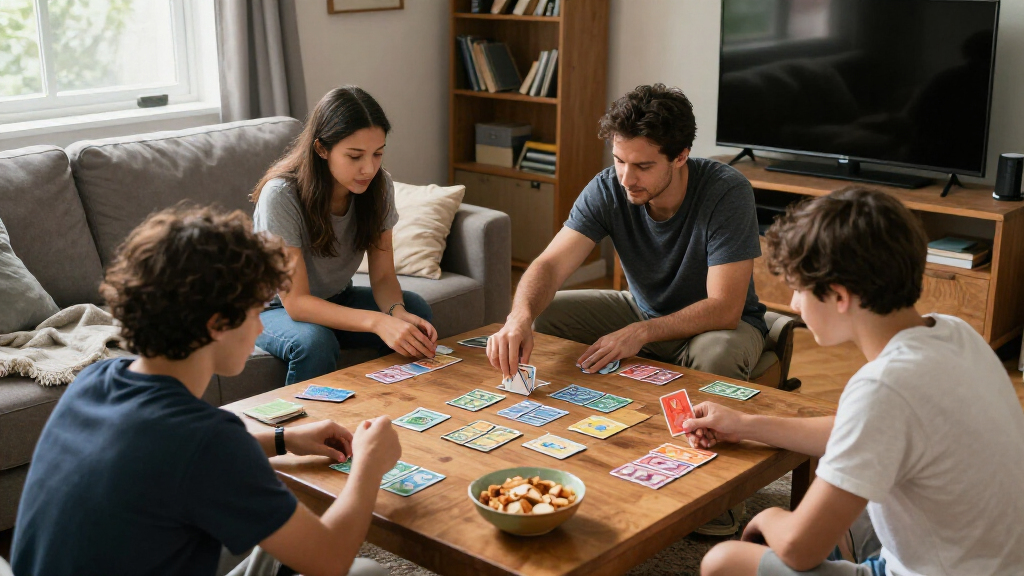

For most households, UNO is the best overall family card game: its familiar rules, broad player range, and quick rounds make it easy to bring different ages to the same table. Spot It! is a sharper pick for fast visual play, while Monopoly Deal suits families who want more tactical choices in a compact game. The main tradeoffs are how quickly players can learn, whether the game rewards speed or planning, and how well its humor and competition fit your group. I compare those differences across all 15 games so you can choose a match for your family’s ages, attention spans, and preferred style of play; continue reading for the full breakdown.

Get business pricing on your home office setup
- Business-only prices and quantity discounts
- Tax-exempt purchasing
- Multiple users, one account, clear invoices
Complete the kit


Key Takeaways
- UNO earns the broadest all-around role because its recognizable rules and flexible player count can work for mixed-age groups, though it offers less novelty for families who already know it well.
- Spot It! and Taco Cat Goat Cheese Pizza favor quick reactions, making them better for energetic, short rounds than for players who prefer quiet strategy or have difficulty with fast visual or verbal cues.
- Monopoly Deal and Cover Your Assets add more direct competition than the simplest matching games, but take-that moves can feel personal in families that dislike having plans disrupted.
- Five Crowns and Play Nine suit families who enjoy familiar card-game structure; their appeal depends more on set-building and hand management than reflexes, which can make them easier to revisit over time.
- The lineup’s strongest choices serve different table moods: Do You Really Know Your Family? prompts conversation, Dutch Blitz rewards simultaneous play, and Cards Against Humanity: Family Edition depends on whether its humor suits your household.
| Asmodee Spot It! Classic Card Game, 2024 Refresh |  | Best for Quick, Lively Rounds | Players: 2–8 | Recommended age: 6 years and up | Playing time: 10 minutes | VIEW LATEST PRICE | See Our Full Breakdown |
| Happy Camper Trio Card Game |  | Best for Small-Team Play | Players: 3–6 | Recommended age: 8 years and up | Estimated playing time: 15 minutes | VIEW LATEST PRICE | See Our Full Breakdown |
| Play Nine: The Card Game of Golf |  | Best for Score-Loving Families | Players: 2–6 | Recommended age: 8 years and up | Cards: 108 | VIEW LATEST PRICE | See Our Full Breakdown |
| Mattel Games UNO Card Game, Ages 7+, 2–10 Players |  | Best for Mixed-Size Groups | Players: 2–10 | Recommended age: 7 years and up | Cards: 112 | VIEW LATEST PRICE | See Our Full Breakdown |
| Monopoly Deal Card Game |  | Best for Property-Deal Fans | Players: 2–5 | Recommended age: 8 years and up | Playing time: As little as 15 minutes | VIEW LATEST PRICE | See Our Full Breakdown |
| Grandpa Beck’s Games Cover Your Assets Card Game |  | Best for Playful Take-That Strategy | Players: 2–6 | Recommended age: 7 years and up | Playing time: 20–40 minutes | VIEW LATEST PRICE | See Our Full Breakdown |
| Beat the Heat Family Card Game |  | Best for Larger Family Groups | Brand: Hasbro Gaming | Age range: 8 years and up | Players: 2–10 | VIEW LATEST PRICE | See Our Full Breakdown |
| USAOPOLY Flip 7 Card Game |  | Best for Press-Your-Luck Rounds | Players: 3+ | Recommended age: 8 years and up | Playing time: 20 minutes | VIEW LATEST PRICE | See Our Full Breakdown |
| Five Crowns Collectible Tin Card Game |  | Best for Rummy Fans and Solo Play | Players: 1–7 | Recommended age: 8 years and up | Game type: Rummy-style card game | VIEW LATEST PRICE | See Our Full Breakdown |
| Do You Really Know Your Family? Family Card Game |  | Best for Conversation and Family Bonding | Age range: 8 years and up | Players: 3–8 | Playing time: 3 minutes | VIEW LATEST PRICE | See Our Full Breakdown |
| Magilano SKYJO Card Game |  | Best for Low-Score Strategy | Players: 2–8 | Recommended age: 8 years and up | Playing time: Approximately 30 minutes | VIEW LATEST PRICE | See Our Full Breakdown |
| Taco Cat Goat Cheese Pizza Card Game | 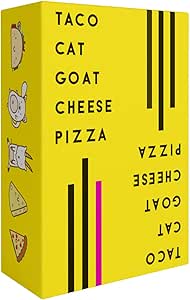 | Best for Quick, Lively Rounds | Players: 2–8 | Age range: 7 years and up | Round duration: 10–15 minutes | VIEW LATEST PRICE | See Our Full Breakdown |
| Cards Against Humanity: Family Edition Card Game |  | Best for Large Family Groups | Players: 4–20+ | Age range: 8 years and up | Number of cards: 600 | VIEW LATEST PRICE | See Our Full Breakdown |
| Dutch Blitz Original Card Game with 160 Cards |  | Best for Competitive Two-to-Four-Player Families | Players: 2–4 | Recommended age: 8 years and up | Cards included: 160 | VIEW LATEST PRICE | See Our Full Breakdown |
| Five Crowns Rummy-Style Card Game |  | Best for Rummy Fans and Longer Sessions | Brand: PlayMonster | Players: 2–7 | Recommended age: 8 years and up | VIEW LATEST PRICE | See Our Full Breakdown |
| family card game | Players | Included components | Recommended age | Material |
|---|---|---|---|---|
| Asmodee Spot It! Classic Card | 2–8 | — | 6 years and up | Cardstock |
| Happy Camper Trio Card Game | 3–6 | 36 cards and rules of play | 8 years and up | Paper |
| Play Nine: The Card Game of Go | 2–6 | 108 cards, scorecards, pencil, and game instructions | 8 years and up | — |
| Mattel Games UNO Card Game | 2–10 | 112 cards and instructions | 7 years and up | — |
| Monopoly Deal Card Game | 2–5 | 110 cards and instructions | 8 years and up | Plastic |
| Grandpa Beck’s Games Cover You | 2–6 | Cards | 7 years and up | Paper |
| Beat the Heat Family Card Game | 2–10 | 104 numbered cards and game rules | — | Plastic |
| USAOPOLY Flip 7 Card Game | 3+ | 94 cards and rules | 8 years and up | Paper |
| Five Crowns Collectible Tin Ca | 1–7 | Cards and custom score card | 8 years and up | — |
| Do You Really Know Your Family | 3–8 | — | — | Cardstock |
| Magilano SKYJO Card Game | 2–8 | 150 playing cards, 1 game pad, 1 instruction manual | 8 years and up | Cardstock |
| Taco Cat Goat Cheese Pizza Car | 2–8 | Cards | — | — |
| Cards Against Humanity: Family | 4–20+ | — | — | Paper |
| Dutch Blitz Original Card Game | 2–4 | Colorful cards and instructions | 8 years and up | Cardboard, paper |
| Five Crowns Rummy-Style Card G | 2–7 | Cards, rulebook | 8 years and up | — |
More Details on Our Top Picks
Asmodee Spot It! Classic Card Game, 2024 Refresh
Spot It! is my pick for families who want fast rounds that get everyone looking and reacting at once. Players race to spot the shared symbol, so the rules are easy to grasp and five gameplay variations give the small deck more than one way to hit the table. Its 10-minute play time also makes it easier to fit in between other activities than a longer, score-based game such as Play Nine.
The tradeoff is the game’s reliance on quick visual observation and reflexes. That can make play uneven if players have different reaction speeds or visual-processing needs. It supports 2–8 players and includes rules in English, Spanish, and French, but families looking for turns built around planning or a slower pace may prefer UNO.
Pros:- Five gameplay variations offer different ways to play with the same deck.
- Around 10-minute rounds suit short family game sessions.
- Supports a wide group size of two to eight players.
- Rules are included in English, Spanish, and French.
Cons:- Fast visual matching and reflexes can give some players an advantage.
- The focus on spotting symbols may not suit families who prefer planning or wordplay.
Best for: Families with children ages 6 and up who want short, active rounds for a group of two to eight.
Not ideal for: Families seeking a calm, strategic game or one that does not reward fast visual recognition and reflexes.
- Players:2–8
- Recommended age:6 years and up
- Playing time:10 minutes
- Cards:55
- Gameplay variations:5
- Rulebook languages:English, Spanish, and French
- Material:Cardstock
- Packaging:Eco-Blister
Our verdict“Choose Spot It! for quick, energetic family rounds, but pick Play Nine if your group would rather weigh choices than race to react.”
Happy Camper Trio Card Game
Happy Camper Trio suits families who like collecting sets but want the option to play cooperatively as teams. Players reveal or request cards to make three of a kind, mixing memory with luck; the included team rules give it a different feel from the individual race in UNO. Two play modes add some flexibility, while the compact 36-card set and roughly 15-minute play time make it easy to bring along.
The main limitation is its three-to-six-player range: unlike UNO or Spot It!, it does not cover a two-player evening. Its reliance on remembering cards and chance also means choices may not always outweigh the draw. This makes the most sense for families who can gather at least three players and want a modest, team-friendly game rather than a broad-group staple.
Pros:- Two play modes include team rules for a change from individual play.
- The compact 36-card format is suited to travel.
- Estimated 15-minute play time fits a short game session.
- A portion of sales supports camp scholarships.
Cons:- Requires at least three players, unlike UNO and Spot It!.
- Memory and luck both influence how readily players can collect sets.
Best for: Families of three to six, especially those who want a compact set-collecting game with team rules for travel or casual gatherings.
Not ideal for: Two-player households or families seeking a game with little dependence on memory and luck.
- Players:3–6
- Recommended age:8 years and up
- Estimated playing time:15 minutes
- Included components:36 cards and rules of play
- Play modes:2, including team rules
- Material:Paper
- Item weight:0.23 kg
- Item dimensions:4.72 x 1.57 x 4.72 inches
Our verdict“Pick Happy Camper Trio if your group has at least three players and likes team-based set collection; choose UNO for a wider player range.”
Play Nine: The Card Game of Golf
Play Nine is the more score-focused choice in this group: players draw, flip, discard, and trade cards to finish with the lowest total. That gives families more room to weigh decisions than the quick symbol race in Spot It!, while the golf theme offers a clear structure for tracking how a round is going. The game supports two to six players and includes scorecards and a pencil, so the supplies for keeping score come in the box.
Its appeal depends on enjoying both scorekeeping and luck of the draw. The card values range from -5 to 12, but a good plan cannot control every draw. Compared with UNO, it asks players to pay closer attention to their running totals and offers less of a simple match-and-play rhythm. Families wanting the shortest, most straightforward game may find UNO easier to bring out.
Pros:- Combines card choices with luck rather than relying only on matching.
- Supports two to six players.
- Includes scorecards and a pencil for tracking totals.
- Card values range from -5 to 12, giving scoring a distinctive golf theme.
Cons:- Luck of the draw can outweigh players’ decisions.
- Scorekeeping adds a step that may feel less casual than UNO or Spot It!.
- No warranty is specified in the supplied product information.
Best for: Families with players ages 8 and up who enjoy golf, keeping scores, and making choices around a changing hand.
Not ideal for: Groups seeking a very simple, rapid-play game or families who would rather avoid scorekeeping and chance-driven turns.
- Players:2–6
- Recommended age:8 years and up
- Cards:108
- Included components:108 cards, scorecards, pencil, and game instructions
- Card values:-5 to 12
- Model:P11001
Our verdict“Choose Play Nine for a family that enjoys tracking scores and managing a hand, rather than Spot It!’s fast visual races.”
Mattel Games UNO Card Game, Ages 7+, 2–10 Players
UNO earns this spot for its broad player range and easy entry point: players match by color or number, then use action cards to disrupt the flow. It accommodates two to ten players, reaching larger gatherings than Play Nine or Monopoly Deal. Color symbols alongside the colors give players with color blindness another way to identify cards, a practical distinction from games that rely chiefly on visual speed, such as Spot It!.
The straightforward matching can make UNO easier to teach, but its simplicity is also a limit for families looking for more involved choices. Action cards can shift a hand’s direction, and players must remember to call out “UNO” when they have one card. Three customizable Wild Cards allow house rules, though groups that prefer fixed rules may not use that flexibility. This is the lineup’s most adaptable pick for changing group sizes, not its most strategic one.
Pros:- Supports two to ten players, the widest range among these five games.
- Color symbols help players with color blindness identify card colors.
- Simple matching rules make it accessible to mixed-age groups.
- Three customizable Wild Cards let families adjust house rules.
Cons:- The basic match-and-discard loop may feel repetitive to strategy-minded players.
- Players need to remember to call out “UNO” when they have one card.
- Action cards can disrupt a player’s progress.
Best for: Families who need one familiar, easy-to-teach card game for groups that can range from two to ten players.
Not ideal for: Players seeking deeper strategy, a distinctive theme, or a game without a callout rule and swingy action cards.
- Players:2–10
- Recommended age:7 years and up
- Cards:112
- Included components:112 cards and instructions
- Language:English
- Container type:Box
- Model number:GDJ85
Our verdict“Choose UNO when group size and simple rules matter most; pick Play Nine for a more score-driven game.”
Monopoly Deal Card Game
Monopoly Deal brings property collecting into a compact card game, with a clear goal: complete three property sets in different colors. Its action cards add swapping, stealing, and rent collection, so plans can change more abruptly than in Play Nine, where players work toward a low score. The game supports two to five players and can take as little as 15 minutes, making it a quicker way to get a Monopoly-style contest to the table than a board-game session.
That pace comes with disruptive swings and luck: action cards can break up a set just as it seems close to completion. The 2–5 player range is also narrower than UNO’s two to ten, so it is less suited to a large family gathering. Families who enjoy direct take-that moves may like the tension; those who want steadier progress may prefer Play Nine.
Pros:- Property-set objective is easy to explain to Monopoly fans.
- Action cards let players swap properties, steal, and collect rent.
- Games can take as little as 15 minutes.
- Compact card format is suited to travel and family game nights.
Cons:- Luck can change the result quickly.
- Action cards can disrupt property sets and planned moves.
- Supports only two to five players, fewer than UNO.
Best for: Families with players ages 8 and up who enjoy property collecting, direct interaction, and short Monopoly-inspired games for two to five players.
Not ideal for: Large groups or players who dislike having completed sets disrupted by action cards and sudden changes of fortune.
- Players:2–5
- Recommended age:8 years and up
- Playing time:As little as 15 minutes
- Cards:110
- Included components:110 cards and instructions
- Game type:Card game
- Material:Plastic
- Model number:B0965
Our verdict“Choose Monopoly Deal for quick, interactive property battles; choose UNO if you need a game that accommodates a larger group.”
Grandpa Beck’s Games Cover Your Assets Card Game
Cover Your Assets suits families who want card play with more direct rivalry than a simple shedding game. Players collect matching assets, build stacks, and can steal from or defend against opponents, so decisions affect the whole table. Its rules are described as easy to learn, while set collection gives returning players more to think about than a purely luck-driven game. At 20–40 minutes, it can fill a game-night slot without the longer arc of Five Crowns’ 11 rounds. The tradeoff is the take-that element: families who dislike having a lead challenged may prefer the more conversational Do You Really Know Your Family? It also needs at least two players, so it cannot serve as a solo option like Five Crowns.
Pros:- Easy-to-learn rules help younger players join quickly
- Set collection adds decisions beyond simply playing a card
- Stealing and defending create direct interaction between players
- Compact box is practical for trips and family gatherings
Cons:- Requires at least two players
- Stealing can frustrate players who dislike take-that mechanics
- Play can run up to 40 minutes
Best for: Families with children ages 7 and up who enjoy collecting sets, defending a lead, and playful competition around a table
Not ideal for: Solo players or families who prefer cooperative, conversation-led play over stealing and blocking
- Players:2–6
- Recommended age:7 years and up
- Playing time:20–40 minutes
- Included components:Cards
- Material:Paper
- Dimensions:5.5 x 4 x 1.1 inches
- Weight:9.6 ounces
- Manufacturer warranty:30 days against manufacturer defects
Our verdict“Choose Cover Your Assets for accessible set collection and lively rivalry, but pick a gentler conversation game if family members dislike having their plans disrupted.”
Beat the Heat Family Card Game
Beat the Heat is the most accommodating choice here for a crowded table: it supports 2–10 players, more than Cover Your Assets or Five Crowns. The goal is to keep your score low by placing number cards into four rows, but playing the sixth card makes you collect the first five and their points. That rule creates a clear tension between finding a place for a card and avoiding a costly row pickup, giving an easy-to-learn game a light strategic layer. Its roughly 20-minute play time and compact format suit gatherings and travel. The central penalty can also feel abrupt when a carefully managed row fills; families wanting more control may prefer Cover Your Assets’ set-building and defensive choices. The supplied description does not specify an age ceiling, but recommends play from age eight.
Pros:- Accommodates groups of 2–10 players
- Simple row-placement rules are approachable for ages 8 and up
- Light strategy gives players choices without a complex ruleset
- Compact card format works well for travel and gatherings
Cons:- Playing a sixth card in a row forces the player to collect the first five cards and their points
- The penalty can make a round feel sudden or swingy
- A 20-minute game may feel brief for families seeking a longer session
Best for: Families and mixed-age gatherings that need a quick, straightforward card game for groups of up to ten
Not ideal for: Players who dislike penalty-based decisions or want a game where a single play cannot force them to collect a row
- Brand:Hasbro Gaming
- Age range:8 years and up
- Players:2–10
- Play time:20 minutes
- Included components:104 numbered cards and game rules
- Model number:G2953
- Material:Plastic
Our verdict“Pick Beat the Heat when your main need is an easy-to-teach game for a large group, and skip it if row penalties are likely to irritate your players.”
USAOPOLY Flip 7 Card Game
Flip 7 makes a family game out of a simple question: keep drawing for more points, or stop before a duplicate number ends your round? That push-your-luck choice gives it a different feel from Beat the Heat, where players manage rows and avoid collecting penalty cards. Special action and modifier cards add variation, while the target of 200 points gives play a longer-term goal beyond any one risky turn. The rules are quick to teach, and the recommended age of eight makes it accessible to many families. The tradeoff is reliance on luck: a duplicate can remove a player from the round abruptly, which may frustrate anyone who prefers steady control. It also requires at least three players, unlike Cover Your Assets, which works with two.
Pros:- Quick-to-learn rules make it straightforward to teach
- Press-your-luck decisions give players an active choice each turn
- Special action and modifier cards vary the play
- Compact 94-card set is suitable for travel
Cons:- Requires at least three players
- A duplicate number can abruptly end a player’s round
- Luck can outweigh careful decisions in individual rounds
Best for: Families of three or more with children ages 8 and up who enjoy taking calculated risks and making quick stop-or-continue choices
Not ideal for: Two-player households or players who want more control over outcomes than duplicate-driven busts allow
- Players:3+
- Recommended age:8 years and up
- Playing time:20 minutes
- Included components:94 cards and rules
- Material:Paper
- Language:English
- Educational objectives:Memory, strategic thinking, and decision-making
Our verdict“Choose Flip 7 for lively risk-taking with a group of at least three, but favor a more controlled strategy game if sudden busts will sour the mood.”
Five Crowns Collectible Tin Card Game
Five Crowns is the most flexible pick for families who may play alone, with a small group, or around a fuller table: it supports 1–7 players. Its rummy-style play changes as the hand grows over 11 rounds, and a rotating wild card gives each round a slightly different puzzle. That structure gives it more continuity than the quick decisions in Flip 7, but also asks players to stay with a full sequence of rounds. Beginners can learn the basic pattern, while experienced card players have room to plan melds and manage their hand. The tin and custom score card make storage and scoring convenient. The drawback is commitment: families seeking a very short filler may find 11 rounds too much, and this edition lists no manufacturer warranty.
Pros:- Supports solo play as well as groups of up to seven
- Rotating wild cards change the challenge from round to round
- Rummy-style rules can suit both beginners and experienced card players
- Collectible tin and custom score card offer convenient storage and tracking
Cons:- A complete game runs for 11 rounds
- The longer structure is less suited to short gaps or restless players
- No manufacturer warranty is included
Best for: Families who enjoy rummy, want a game that works for solo play or groups up to seven, and are happy to play through multiple rounds
Not ideal for: Families looking for a very short, spontaneous game or players who want action and scoring to resolve in a single quick round
- Players:1–7
- Recommended age:8 years and up
- Game type:Rummy-style card game
- Rounds:11
- Container:Collectible tin
- Included components:Cards and custom score card
- Dimensions:6.5 x 4.25 x 1.5 inches
- Weight:9.6 ounces
- Language:English
Our verdict“Pick this Five Crowns edition for flexible player counts and a multi-round rummy challenge, not for a quick game-night filler like Flip 7.”
Do You Really Know Your Family? Family Card Game
Do You Really Know Your Family? puts family stories and silly challenges ahead of card strategy. Players answer questions about one another, so the fun depends on what people know, remember, and are willing to share. That makes it a more personal choice than Cover Your Assets, where players focus on sets, stealing, and defending stacks. It can bring kids, teens, and adults into the same activity, and the tin is handy to take along. The listing gives a three-minute playing time, which makes this a better fit for a brief conversation starter than a sustained game-night session. It also needs at least three players, so it will not work for a two-person household. Families looking for tactical card play may prefer Five Crowns or Beat the Heat.
Pros:- Prompts conversation through questions about family members
- Silly challenges add activity beyond answering trivia
- Designed for kids, teens, and adults to play together
- Tin container is convenient for storing and carrying the cards
Cons:- Requires at least three players
- The listed three-minute playing time makes it a brief activity rather than a sustained game
- Relies on players enjoying personal questions and silly challenges
Best for: Families with three or more players who want questions and silly challenges to prompt conversation across ages
Not ideal for: Two-player households, families wanting a longer strategic card game, or players who prefer not to answer personal questions or perform challenges
- Age range:8 years and up
- Players:3–8
- Playing time:3 minutes
- Components:Cards
- Material:Cardstock
- Language:English
- Container type:Tin
- Battery required:No
- Dimensions:2 x 4.7 x 6.7 inches
Our verdict“Choose this game when family conversation matters more than strategy, but pick Five Crowns or Beat the Heat for a fuller card-game session.”
Magilano SKYJO Card Game
SKYJO makes the most sense for families who enjoy watching a score change over several rounds. Players uncover and exchange cards while trying to finish with as few points as possible, giving children practice with simple calculations and probability without requiring a complicated ruleset. Its 2–8 player range is more flexible than Dutch Blitz, which is limited to four, and its calmer pace offers a contrast to the frantic slapping in Taco Cat Goat Cheese Pizza. At about 30 minutes, though, it asks for more sustained attention than those quick games. The rules are designed for ages eight and up, but the included manual may not be in English, so buyers should check the language before play. Choose it for repeatable rounds, not instant, high-energy chaos.
Pros:- Simple rules make it approachable for children and adults.
- Uncovering and exchanging cards gives players practice with calculation and probability.
- Supports 2–8 players, making it more adaptable to group size than Dutch Blitz.
- Round-based play gives families natural stopping points.
Cons:- Approximately 30 minutes is a longer commitment than Taco Cat Goat Cheese Pizza’s 10–15-minute rounds.
- The English-language manual is not guaranteed.
- Its score management may feel less lively to families who prefer reflex-based play.
Best for: Families with children eight and older who want a relaxed, score-focused game that can accommodate up to eight players.
Not ideal for: Groups looking for a very short, high-energy game or buyers who need a guaranteed English-language instruction manual.
- Players:2–8
- Recommended age:8 years and up
- Playing time:Approximately 30 minutes
- Included components:150 playing cards, 1 game pad, 1 instruction manual
- Languages:German, English, French, Spanish, Italian
- Material:Cardstock
- Country of manufacture:Germany
Our verdict“Pick SKYJO for a broad age range and gentle score-based strategy, provided a possible non-English manual is acceptable.”
Taco Cat Goat Cheese Pizza Card Game
For families who want a game to start in minutes, Taco Cat Goat Cheese Pizza is the liveliest choice in this group. Players chant the sequence and race to slap the pile when a spoken word matches a card; action cards add sudden changes that reward attention and quick reactions. Its 10–15-minute rounds make it easier to fit between other activities than SKYJO’s roughly 30-minute play, and the compact card format is well suited to travel. That speed has a clear cost: players need to be comfortable with fast hand movement and a noisy, competitive table. Dutch Blitz also delivers a race, but it focuses on sequencing cards rather than matching a chant to a pile. Choose this one for energetic groups, not for a quiet or low-contact game night.
Pros:- Quick to learn, with little setup before play begins.
- Short rounds fit easily into a busy family evening.
- Action cards keep the matching challenge from feeling entirely predictable.
- Compact cards are convenient to take along.
Cons:- Fast slapping may be uncomfortable or unwelcome for some players.
- The quick pace can be difficult for players who need more time to react.
- Requires at least two players.
Best for: Families with children seven and older who enjoy short, noisy reaction games and want a compact option for trips.
Not ideal for: Players who dislike rapid slapping, need a calm-paced game, or often have only one player available.
- Players:2–8
- Age range:7 years and up
- Round duration:10–15 minutes
- Included components:Cards
- Edition:Original
- Manufacturer:Dolphin Hat Games
Our verdict“Choose Taco Cat Goat Cheese Pizza when your group wants compact, high-energy rounds and is happy with a slapping mechanic.”
Cards Against Humanity: Family Edition Card Game
Cards Against Humanity: Family Edition suits gatherings where a large group needs to play together and silly humor is part of the appeal. Its prompt-and-response format and 600 cards offer plenty of material for repeat sessions, while support for 4–20+ players makes it far easier to include a crowd than Dutch Blitz, which tops out at four. The humor is presented as family-friendly, with topics such as toilets, but the format depends on players enjoying the answers and jokes; families looking for strategy or active play may get more from Five Crowns or Taco Cat Goat Cheese Pizza. It also needs at least four players, ruling it out for smaller households. The large card set is a strength for variety, though it means a less compact package than a travel-oriented deck.
Pros:- Designed for children and adults to play together.
- Large 600-card set supports variety across sessions.
- Can include very large groups, with support for 4–20+ players.
- Prompt-and-response play gives a group a shared focus.
Cons:- Requires at least four players, making it a poor fit for small family game nights.
- Its humor-based format may not suit families who prefer strategic or action-focused games.
- The box is less suited to travel than a compact game such as Taco Cat Goat Cheese Pizza.
Best for: Families with four or more players who want a group humor game for gatherings and are comfortable with silly, toilet-themed jokes.
Not ideal for: Small households, players seeking strategy or physical activity, and families who prefer humor-free gameplay.
- Players:4–20+
- Age range:8 years and up
- Number of cards:600
- Language:English
- Material:Paper
- Dimensions:8 x 4.1 x 2.7 inches
- Weight:2.7 pounds
- Edition:Family Edition
Our verdict“Choose Family Edition for a large group that enjoys silly prompt-and-response humor, but skip it for smaller or strategy-minded households.”
Dutch Blitz Original Card Game with 160 Cards
Dutch Blitz is the pick for a small group that wants everyone playing at once rather than taking turns. Players race to place cards in sequence and clear their Blitz piles, making the game more frantic and competitive than SKYJO’s round-based effort to keep scores low. Its 2–4 player limit is a real constraint beside Taco Cat Goat Cheese Pizza, which accommodates up to eight, but it can suit a family that usually plays in a smaller group. The rules are quick to learn, while the race gives players room to sharpen their sequencing and reactions over repeat games. That same speed can exclude people who find rapid play stressful or difficult. With 160 colorful cards and instructions, it offers a direct fit for energetic, small-table game nights.
Pros:- Quick to learn, with room to improve as players get familiar with the race.
- Simultaneous card play keeps all players active.
- Competitive sequencing offers a different feel from SKYJO’s score-focused rounds.
- Includes 160 colorful cards and instructions.
Cons:- Limited to four players, unlike games such as Taco Cat Goat Cheese Pizza.
- Fast reactions are central to play and may not suit every family member.
- The competitive pace may be less comfortable for players who prefer relaxed turns.
Best for: Families of two to four players who enjoy simultaneous play, quick decisions, and direct competition.
Not ideal for: Larger households or players who prefer a calm game that allows time to plan each move.
- Players:2–4
- Recommended age:8 years and up
- Cards included:160
- Included components:Colorful cards and instructions
- Material:Cardboard, paper
- Manufacturer:Flat River Group
- Model number:201
Our verdict“Pick Dutch Blitz for a small family that wants an energetic, simultaneous card race, not for larger groups or slower-paced players.”
Five Crowns Rummy-Style Card Game
Five Crowns is the strongest fit here for families who like building sets and sequences rather than racing to slap or play cards first. The extra suit adds a twist to familiar rummy, while wild cards change across 11 rounds, giving each hand a shifting puzzle. That structure asks more planning than Taco Cat Goat Cheese Pizza and creates a longer, more gradual arc than its short rounds. It supports two to seven players, so it works for smaller households and medium-sized groups, though it cannot match the very large group capacity of Cards Against Humanity: Family Edition. Chance still affects which cards players draw, so it will not satisfy families seeking full control over outcomes. Its portable format and familiar core make it a practical travel choice for rummy fans.
Pros:- Familiar set-and-sequence play is easy for rummy players to pick up.
- The fifth suit and changing wild cards add variety across 11 rounds.
- Works with two to seven players, including smaller households.
- Portable card format suits travel.
Cons:- Card draws make luck a meaningful part of each game.
- Eleven rounds create a longer commitment than Taco Cat Goat Cheese Pizza.
- The seven-player limit is less suitable for very large gatherings than Cards Against Humanity: Family Edition.
Best for: Families with players eight and older who enjoy rummy-style set building and want a portable game for two to seven people.
Not ideal for: Groups seeking a fast reaction game, very large-group play, or a game where outcomes depend less on card draws.
- Brand:PlayMonster
- Players:2–7
- Recommended age:8 years and up
- Included components:Cards, rulebook
- Number of rounds:11
- Deck:Double deck with 5 suits; no aces or twos
Our verdict“Choose Five Crowns for a travel-friendly, rummy-style game with evolving rounds, as long as your family is comfortable with luck affecting the results.”
How We Picked
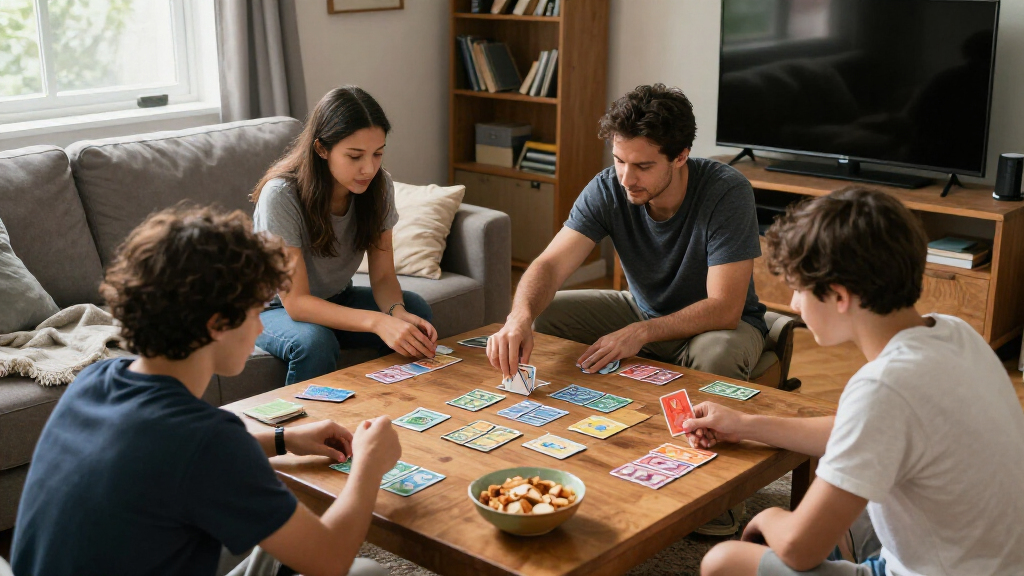
I ranked these games for real family table fit, weighing how easily people of different ages can join, how much explanation a first round needs, and whether the play style gives the group a reason to return. I also compared round pace, player interaction, replay potential, and practical fit for a shared game night. Familiarity can be a benefit when it gets everyone playing quickly, but a game needed more than name recognition to rank highly.
The order favors broad usability and low friction over a narrow strength. Games with clear entry points and flexible appeal sit ahead of picks that rely on quick reflexes, a specific sense of humor, or a taste for direct conflict. Those more specialized games still earn a place because they can be excellent for the right household; their narrower fit is reflected in their role rather than treated as a flaw for every buyer.
| family card game | Material |
|---|---|
| Asmodee Spot It! Classic Card | Cardstock |
| Happy Camper Trio Card Game | Paper |
| Play Nine: The Card Game of Go | — |
| Mattel Games UNO Card Game | — |
| Monopoly Deal Card Game | Plastic |
| Grandpa Beck’s Games Cover You | Paper |
| Beat the Heat Family Card Game | Plastic |
| USAOPOLY Flip 7 Card Game | Paper |
| Five Crowns Collectible Tin Ca | — |
| Do You Really Know Your Family | Cardstock |
| Magilano SKYJO Card Game | Cardstock |
| Taco Cat Goat Cheese Pizza Car | — |
| Cards Against Humanity: Family | Paper |
| Dutch Blitz Original Card Game | Cardboard, paper |
| Five Crowns Rummy-Style Card G | — |
Factors to Consider When Choosing Best Family Card Games
Choosing a family game is less about finding one title that suits everyone and more about matching the game’s demands to your group. I’d start with how your family likes to play together, then use age, pace, and replay habits to narrow the field.
Match the game’s demands to the youngest regular player
Age labels are a starting point, but the real question is what a child must do during play: read text, hold several rules in mind, spot visual matches, or make quick decisions. A child may understand a simple rule but still find rapid turn-taking frustrating, so think about attention and confidence as well as reading ability. If ages vary widely, choose a game where younger players can participate without an adult quietly making their choices. A little help with a first round can be fine; a game that needs constant translation may not reach the table often. Families with older children may prefer deeper choices, while younger groups often benefit from short turns and immediately visible goals. Avoid buying for the oldest player alone if everyone is expected to join.
Choose the pace your group actually enjoys
Fast games create energy, but they also reward quick reactions and can leave slower players feeling behind. Sequential games give each person time to think, though long pauses can test the patience of a restless group. Consider whether your family enjoys simultaneous action, taking turns, or a mix before choosing a title. Short rounds can help a game fit between dinner and bedtime, but very brief play may feel repetitive if the core action does not change much. Longer sessions can work well when players enjoy planning and watching strategies unfold. A common mistake is treating “quick to learn” as the same thing as “calm to play”; speed and simplicity are separate traits.
Decide how much competition feels fun at home
Some families enjoy blocking a rival or taking a useful card; others would rather build their own score without disrupting anyone else. Direct attacks can make a short game lively, but they can also cause friction when younger players take setbacks personally. Cooperative or conversation-led play may suit groups that want more shared laughter than winner-focused tension. Think about whether your family can enjoy playful conflict without carrying it into the next round. If you are unsure, start with a game where setbacks are temporary and turns move along quickly. Do not assume a game is a good fit just because everyone likes competition in other settings; card-game interaction can feel more personal.
Balance replay value against novelty
A familiar format lowers the barrier to play, which is useful when family members have different experience levels or little time to learn rules. The tradeoff is that an old favorite may not feel like a new discovery. Games with changing hands, varied prompts, or different ways to pursue a goal can hold attention across repeat sessions, but extra variety may come with more rules. Ask whether your family prefers a reliable routine or a game that changes from round to round. If you already own several matching or shedding games, a different mechanism may add more to your collection than another familiar variant. Pick the kind of replay your household values, not just the largest number of possible combinations.
Check player count and table logistics before choosing
A game that works for a small family may feel crowded when relatives join, so compare the stated player range with the group you host most often. More players can bring louder, livelier rounds, but may also mean more waiting or less control over your turn. Compact card games are easy to store and bring along, yet a small footprint does not always mean the play is suited to travel or a noisy setting. Consider how much table space cards need and whether players must see everyone’s cards, read prompts, or react to spoken cues. Also think about how often the game will leave the shelf; a specialist pick can be worthwhile if it fills a regular gathering’s needs. Buying for an occasional maximum group can be a mistake if most sessions happen with fewer players.
Pay for a better fit, not just more components
A higher-complexity or more distinctive game is only a better purchase if your family will use what makes it different. A special theme, collectible-style package, or expanded set can add appeal, but does not automatically improve ease of play or repeat enjoyment. On the other hand, a basic deck or familiar design can be the smarter choice when it gets played often and needs little explanation. Before choosing a more involved option, ask whether its added rules, humor, or strategy match a real preference in your household. Consider durability and storage too, especially if the cards will travel or be handled by younger children. The best value is the game that fits your group well enough to make regular appearances.
Frequently Asked Questions
Which game is the safest first choice for a family with a wide age range?
UNO is my broadest starting point in this lineup because its familiar turn structure is easy to explain and does not rely on reading long prompts or planning several moves ahead. If your group prefers a more visual, energetic game, Spot It! may be a better fit, though speed can favor some players. For families who want more choices on a turn, Monopoly Deal adds tactical decisions but may need more guidance at first. Think about the youngest regular player’s comfort with the game’s pace, not only the age printed on the box. When possible, choose a game that lets adults offer help without taking over a child’s turn.
What should I choose if my family gets frustrated by direct competition?
Look for a game whose enjoyment comes from recognition, shared conversation, or making sets rather than repeatedly disrupting another player’s plans. Spot It! focuses on noticing matches, while Do You Really Know Your Family? centers on prompts and discussion. Competitive games such as Monopoly Deal and Cover Your Assets are better suited to groups that can laugh off blocked moves and changing fortunes. The distinction is not simply whether a game has a winner; it is how much players can affect one another along the way. If conflict is a concern, agree that the goal is a lively round rather than protecting a lead.
Are quick reaction games a good choice for younger children?
They can be, if the child enjoys watching for visual or verbal cues and does not mind missing a moment now and then. Spot It! and Taco Cat Goat Cheese Pizza both lean on fast attention, so they may feel exciting to one child and stressful to another. A slower turn-based game gives players more time to process a move and can be a better first choice for a child still learning to play with a group. Try a brief round with an adult nearby before making a reaction game your main family pick. Keep age guidance in mind, but use the child’s comfort with speed as the deciding factor.
Which picks make sense if we want more than simple matching?
Monopoly Deal offers more tactical choices and direct interaction than a basic matching game, while Five Crowns and Play Nine lean toward making sets and managing a hand over successive turns. These styles ask players to think about what to keep, what to play, and how the round may develop. SKYJO is another option for households that like tracking choices and trying to improve a changing card layout. More decision-making can add replay interest, but it may also slow early rounds while everyone learns. Choose the depth your group will enjoy rather than assuming a more strategic game is automatically better for family night.
How do I choose between a conversation game and a traditional card game?
Choose a conversation-led option when the point is to share opinions, stories, or jokes as much as to compete. Do You Really Know Your Family? asks players to engage with one another, while Cards Against Humanity: Family Edition depends on whether its style of humor suits your household. Traditional card-game structures such as UNO, Five Crowns, and Dutch Blitz put more emphasis on playing cards, following a turn or race, and pursuing a game objective. Consider who will be at the table and whether they enjoy answering personal prompts or prefer a clear gameplay task. If your group has varied comfort levels with jokes or sharing, a conventional card game is the more dependable choice.
Conclusion
For the best overall fit, choose UNO if you want familiar rules and a flexible game-night staple. For best value in everyday versatility, I’d start with Spot It! when your family enjoys lively visual rounds; pick Taco Cat Goat Cheese Pizza instead if spoken cues and physical speed are part of the fun. Families seeking a more involved, polished experience can look to Five Crowns for rummy-style set building, while Monopoly Deal is a strong match for players who want sharper tactical conflict. For beginners, UNO’s recognizable structure is the easiest entry point; for conversation, choose Do You Really Know Your Family?; for simultaneous competition, consider Dutch Blitz. Match the game to your family’s ages, pace, and tolerance for direct competition, and the right pick is the one everyone will want to play again.