The best family party games are easy to explain, work for a mix of ages, and keep the whole group involved. My best overall pick is Herd Mentality, which rewards shared thinking rather than trivia knowledge or quick reflexes. For music fans, Hitster makes songs the center of the game, while Blank Slate suits groups that enjoy guessing how others think. The main tradeoffs are whether you want creative answers, trivia, performance, or bluffing—and whether younger players can comfortably join in. Read on for how all 15 options compare and which one fits your family’s style.

Get business pricing on your home office setup
- Business-only prices and quantity discounts
- Tax-exempt purchasing
- Multiple users, one account, clear invoices
Complete the kit


Key Takeaways
- Herd Mentality stands out for mixed groups because matching the group’s answer matters more than knowing facts or being the fastest player.
- Hitster gives music-loving families a distinct shared activity, but its appeal depends more on song familiarity than a broad word or guessing game.
- Blank Slate and Double Ditto both reward matching answers, yet their wordplay format is a better fit for families who like open-ended prompts than performance-focused play.
- Catch Phrase and Grab The Mic bring more energy and pressure to the table, while quieter groups may prefer card-based conversation or guessing.
- The lineup’s strongest choices prioritize simple entry points; trivia-heavy, bluffing, and inside-joke games can be more rewarding when the group already shares the right knowledge or sense of humor.
| Jumbo Hitster Music Party Quiz Card Game, 2–10 Players, 300+ Hits | 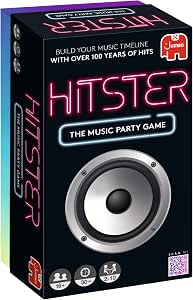 | Best for Music-Loving Groups | Players: 2–10 | Age recommendation: 16 years and up | Included cards: 300+ music cards with QR codes | VIEW LATEST PRICE | See Our Full Breakdown |
| You Can’t Say Umm Family Card Game |  | Best for Quick, Lively Team Play | Brand: Big Potato | Players: 4–10 | Recommended age: 10 years and up | VIEW LATEST PRICE | See Our Full Breakdown |
| Double Ditto Family Party Game |  | Best for Kids and Mixed-Age Families | Brand: Inspiration Play | Players: 4 or more | Recommended age: 8 years and up | VIEW LATEST PRICE | See Our Full Breakdown |
| What Do You Meme? Family Edition |  | Best for Caption-and-Photo Humor | Players: 3 or more | Recommended age: 8 years and up | Edition: Family Edition | VIEW LATEST PRICE | See Our Full Breakdown |
| Blank Slate Party Word Game |  | Best for Word Association and Matching | Brand: USAopoly | Players: 3–8 | Recommended age: 8 years and up | VIEW LATEST PRICE | See Our Full Breakdown |
| I Should Have Known That! Trivia Game |  | Best for Everyday Trivia Fans | Brand: Hygge Games | Model: 21026 | Recommended age: 14 years and up | VIEW LATEST PRICE | See Our Full Breakdown |
| Our Family Is So Weird Family Card Game |  | Best for Family In-Jokes | Players: 3 or more | Recommended age: 14 years and up | Prompt cards: 150 | VIEW LATEST PRICE | See Our Full Breakdown |
| Hasbro Gaming Catch Phrase Electronic Game |  | Best for High-Energy Team Play | Players: 4 or more | Teams: 2 | Words and phrases: 5,000 | VIEW LATEST PRICE | See Our Full Breakdown |
| Grab The Mic Karaoke Party Game with Foam Microphone |  | Best for Music-Loving Mixed-Age Groups | Brand: Lucky Egg | Model: LE24 | Players: 2–12 | VIEW LATEST PRICE | See Our Full Breakdown |
| USAopoly Flip 7 Card Game |  | Best for Quick Push-Your-Luck Rounds | Brand: USAopoly | Included components: 94 cards, rules | Age range: 8 years and up | VIEW LATEST PRICE | See Our Full Breakdown |
| Herd Mentality Family Party Board Game with 20 Bonus Questions |  | Best for Large Family Groups | Players: 4–20 | Recommended age: 10 years and up | Playing time: 20 minutes | VIEW LATEST PRICE | See Our Full Breakdown |
| The Chameleon: Bluffing and Social Deduction Party Game |  | Best for Bluffing and Deduction | Players: 3–8 | Recommended age: 12 years and up | Playing time: 15 minutes | VIEW LATEST PRICE | See Our Full Breakdown |
| Ransom Notes: The Ridiculous Word Magnet Party Game |  | Best for Silly Sentence-Making | Players: 3–6+ | Playing time: 30–90 minutes | Age range: 17 years and up | VIEW LATEST PRICE | See Our Full Breakdown |
| Spin Master Games Hedbanz Classic Edition Picture Guessing Game |  | Best for Younger Kids | Players: 2–6 | Age range: 6 years and up | Material: Paper | VIEW LATEST PRICE | See Our Full Breakdown |
| Do You Really Know Your Family? Family Card Game |  | Best for Family Conversation | Game type: Family card game | Recommended age: 8 years and up | Intended players: Kids, teens, and adults | VIEW LATEST PRICE | See Our Full Breakdown |
| family party game | Players | Recommended age | Material | Playing time |
|---|---|---|---|---|
| Jumbo Hitster Music Party Quiz | 2–10 | — | Cardboard | — |
| You Can’t Say Umm Family Card | 4–10 | 10 years and up | Cardstock | 20 minutes |
| Double Ditto Family Party Game | 4 or more | 8 years and up | — | 25 minutes |
| What Do You Meme? Family Editi | 3 or more | 8 years and up | Paper | — |
| Blank Slate Party Word Game | 3–8 | 8 years and up | — | 20–35 minutes |
| I Should Have Known That! Triv | More than 2 | 14 years and up | Paper | — |
| Our Family Is So Weird Family | 3 or more | 14 years and up | — | — |
| Hasbro Gaming Catch Phrase Ele | 4 or more | — | — | — |
| Grab The Mic Karaoke Party Gam | 2–12 | 8+ years | — | 20 minutes |
| USAopoly Flip 7 Card Game | 3 or more | — | Paper | 20 minutes |
| Herd Mentality Family Party Bo | 4–20 | 10 years and up | Cardboard | 20 minutes |
| The Chameleon: Bluffing and So | 3–8 | 12 years and up | — | 15 minutes |
| Ransom Notes: The Ridiculous W | 3–6+ | — | Paper | 30–90 minutes |
| Spin Master Games Hedbanz Clas | 2–6 | — | Paper | — |
| Do You Really Know Your Family | — | 8 years and up | — | — |
More Details on Our Top Picks
Jumbo Hitster Music Party Quiz Card Game, 2–10 Players, 300+ Hits
Hitster makes music the center of the party: players scan song cards with the free app, then place each track in the right spot on a timeline. With more than 300 songs spanning a century, it can spark recognition and stories across generations, while competitive, cooperative, and solo modes give the group different ways to play. Compared with You Can’t Say Umm, which hinges on quick verbal descriptions, Hitster rewards music knowledge and chronology rather than fast talking. Its 2–10-player range also suits a wider gathering than games with a four-player minimum. The tradeoff is the phone: QR scanning requires the app, so it is less suited to groups that want a fully screen-free game. Its age recommendation of 16 and up also rules out many younger family players.
Pros:- Accommodates 2–10 players, making it flexible for small groups and larger parties.
- More than 300 songs across 100 years give players a broad range of eras to recognize.
- Competitive, cooperative, and solo modes offer different ways to play.
- QR code scanning connects cards to songs for a music-led guessing experience.
Cons:- Requires the free Hitster app and a phone to scan the QR codes.
- Recommended for ages 16 and up, limiting play with younger children.
- Music recognition and chronology may be less enjoyable for players unfamiliar with the songs.
Best for: Families with teens and adults who enjoy recognizing songs from different decades and have a phone available for app-based play.
Not ideal for: Households looking for a screen-free game or a single game that younger children can join, since scanning uses the app and the recommended age is 16 and up.
- Players:2–10
- Age recommendation:16 years and up
- Included cards:300+ music cards with QR codes
- Other components:37 chips and instructions
- App support:Free Hitster app
- Game modes:Competitive, cooperative, and solo
- Dimensions:8.5 × 4.5 × 3 inches
- Material:Cardboard
Our verdict“Choose Hitster for a teen-and-adult gathering that wants a music-centered game and is happy to use an app.”
You Can’t Say Umm Family Card Game
You Can’t Say Umm turns everyday speaking habits into the challenge: describe an item to your team while avoiding filler words, as the opposing team listens for them and rings the bell. Extra prompts, such as speaking in a high-pitched voice, change the delivery without adding much rule-learning. At 20 minutes and 4–10 players, it suits a lively group that wants a short, team-based round. Compared with Double Ditto, it puts more pressure on speaking in the moment; Double Ditto instead asks players to write down answers they think others will share. That makes this pick more energetic, but less comfortable for players who dislike being put on the spot. The bell is part of the scoring, so the action can get noisy, and the verbal-filler rule may frustrate players who find it hard to monitor their speech.
Pros:- Quick-to-learn rules make it easy to start with a mixed group.
- Supports teams and groups of 4–10 players.
- Extra speaking challenges add variety to the core description task.
- A 20-minute playing time suits a short party-game slot.
Cons:- Players must monitor and avoid common verbal fillers while speaking.
- The bell-based scoring can make play noisy.
- Requires at least four players, so it is less flexible for smaller households.
Best for: Families with four or more players who enjoy team challenges, quick explanations, and a noisy, energetic game.
Not ideal for: Quieter groups or players who feel self-conscious speaking under pressure, especially if a ringing bell would disturb others.
- Brand:Big Potato
- Players:4–10
- Recommended age:10 years and up
- Playing time:20 minutes
- Language:English
- Material:Cardstock
- Included components:You Can’t Say Umm game
- Dimensions:7.48 × 2.59 × 0.1 inches
Our verdict“Pick You Can’t Say Umm when your group wants a fast team game and does not mind speaking challenges or bell noise.”
Double Ditto Family Party Game
Double Ditto rewards guessing what other people will write, rather than knowing a single correct answer. Players get a category, write two likely responses, and score when their answers match someone else’s. That open-ended format gives children and adults room to contribute on their own terms, and its age recommendation of 8 and up makes it one of the more accessible options here. Compared with Blank Slate, which also centers on matching word associations, Double Ditto provides 400 category cards and a 15-second timer to keep rounds moving. The pace can help a party avoid long pauses, but the timer may feel rushed for younger writers or players who need more time. Because everyone must read and write, an adult teammate may help younger children take part.
Pros:- Simple rules make it easy to explain to new players.
- Open-ended categories reward shared instincts and creative responses.
- Includes 400 category cards, supporting repeated play with varied prompts.
- The 15-second timer keeps turns moving.
Cons:- Players need to read prompts and write answers.
- Younger children may need an adult teammate to participate comfortably.
- The short timer can feel rushed for players who need more writing time.
Best for: Families with children age 8 and up who can read and write and enjoy predicting how relatives will answer open-ended prompts.
Not ideal for: Groups with non-readers or players who find timed writing stressful; younger children may need an adult teammate.
- Brand:Inspiration Play
- Players:4 or more
- Recommended age:8 years and up
- Playing time:25 minutes
- Included components:400 category cards, 1 answer pad, 1 15-second timer, and instructions
- Language:English
- Edition:Original
Our verdict“Choose Double Ditto for a mixed-age family that enjoys written wordplay and can handle a brisk timer.”
What Do You Meme? Family Edition
What Do You Meme? Family Edition builds each round around a photo and a hand of captions, with a rotating judge choosing the funniest match. That format makes the joke easy to understand at a glance and gives the group a new person’s sense of humor to follow each round. Its family edition is aimed at players age 8 and up, and 408 cards offer plenty of combinations for game nights or travel. Compared with Double Ditto, which asks players to predict matching written answers, this game depends more on punchlines and a judge’s taste. That can make the fun immediate, but it also means a strong caption may lose if it does not suit the judge. It needs at least three players, and families seeking a less humor-driven word game may prefer Blank Slate.
Pros:- Family Edition is designed for play across children, teens, and adults.
- A rotating judge gives different players a turn choosing the winning caption.
- Includes 300 caption cards and 108 photo cards for many combinations.
- Portable format suits family game nights and travel.
Cons:- Requires at least three players.
- A judge’s personal sense of humor decides which combination wins each round.
- Players who dislike caption humor may find the central matching task less engaging.
Best for: Families of three or more, with players age 8 and up, who enjoy matching jokes to pictures and taking turns judging.
Not ideal for: Two-player households or groups that prefer answers to be scored by matching rather than one player’s personal humor judgment.
- Players:3 or more
- Recommended age:8 years and up
- Edition:Family Edition
- Caption cards:300
- Photo cards:108
- Other components:Instructions and easel
- Material:Paper
- Model number:WDYM109
Our verdict“Choose What Do You Meme? Family Edition for a group of three or more that enjoys photo prompts and subjective humor.”
Blank Slate Party Word Game
Blank Slate is a strong fit for players who like filling in a word cue and predicting someone else’s answer. Each person writes a completion, then tries to match another player without giving hints. Its 500 cues across 250 double-sided cards provide variety, while eight dry-erase slates and a scoreboard supply the basic writing and scoring equipment. Compared with What Do You Meme? Family Edition, Blank Slate is less focused on photo captions and a rotating judge; it rewards shared word associations instead. It also supports up to eight players, but its writing-based turns are not as immediate as You Can’t Say Umm‘s spoken team challenge. The 3–8-player range and 20–35-minute play time suit a sit-down group, though everyone needs to be comfortable writing and matching words.
Pros:- 500 word cues across 250 double-sided cards offer varied prompts.
- Eight dry-erase slates and a scoreboard are included.
- Supports groups of 3–8 players.
- Word association and matching let players score through shared answers rather than trivia knowledge.
Cons:- Requires players to write and match word answers.
- The 20–35-minute playing time may be longer than a quick party round.
- Small parts present a choking hazard.
Best for: Families and friend groups of 3–8 with players age 8 and up who enjoy word associations and writing quick answers on reusable slates.
Not ideal for: Groups seeking a spoken, movement-based game or players who do not want to write; the listed small-parts choking hazard also calls for care around young children.
- Brand:USAopoly
- Players:3–8
- Recommended age:8 years and up
- Playing time:20–35 minutes
- Included components:Scoreboard, 8 dry-erase slates, 250 double-sided word cue cards, and rules
- Word cues:500
- Game mechanics:Word association, guessing, and deduction
- Dimensions:9.84 × 9.84 × 0.1 inches
Our verdict“Pick Blank Slate for a group that wants a reusable, written word-matching game rather than spoken or photo-caption humor.”
I Should Have Known That! Trivia Game
Everyday knowledge and a playful penalty give this trivia game a different feel from music-focused options such as Jumbo Hitster Music Party Quiz Card Game. Its more than 400 questions are spread across 110 cards, so a group can move through a broad range of familiar facts without needing a specialist subject. The twist is that wrong answers cost points, turning confident guesses into part of the entertainment and giving the group plenty to tease each other about.
That scoring rule is also the main tradeoff: players who dislike losing points for mistakes may find the game less welcoming than conversation-led choices such as Our Family Is So Weird. It needs more than two players and is recommended for ages 14 and up, so it is a better fit for teen-and-adult gatherings than mixed-age family play.
Pros:- More than 400 questions provide variety across repeated gatherings.
- Everyday-fact trivia lets players join without a narrow specialist interest.
- Losing points for wrong answers adds a lively risk-and-reaction element.
- Compact 110-card format is easy to bring to a dinner or party.
Cons:- Requires more than two players.
- The penalty for incorrect answers may frustrate players who prefer forgiving scoring.
- The 14-and-up recommendation limits use with younger children.
Best for: Families with teenagers and adults who enjoy quick rounds of general-knowledge questions and can laugh at wrong answers.
Not ideal for: Families with younger children, two-player households, or anyone who prefers collaborative play without point penalties.
- Brand:Hygge Games
- Model:21026
- Recommended age:14 years and up
- Players:More than 2
- Cards:110
- Questions:More than 400
- Material:Paper
- Language:English
Our verdict“Choose it for teen-and-adult groups who want familiar trivia with a mischievous scoring twist, not a gentle all-ages game.”
Our Family Is So Weird Family Card Game
Personal prompts and group voting make this the pick for relatives who enjoy turning familiar habits into a running joke. Players write their choices on dry-erase boards, then reveal who they think best fits each prompt; the result is more about family stories and reactions than factual knowledge. Compared with I Should Have Known That!, there is no trivia answer to get right, which makes this a more conversational choice for groups that would rather talk than compete over facts.
The family-specific humor is also a narrower fit: it lands best when players know one another well and are comfortable being teased. Six boards and markers support a group, but play requires at least three people and the recommended age is 14 and up. Families seeking a broader party challenge or a game for younger children may prefer the more general wordplay of Hasbro Gaming Catch Phrase Electronic Game.
Pros:- Prompts encourage stories and conversation rather than testing factual knowledge.
- Dry-erase boards let everyone submit a vote each round.
- 150 prompt cards provide a substantial pool of questions.
- The first player to collect 7 cards gives the game a clear finish condition.
Cons:- Requires at least three players.
- The humor depends on players being comfortable with personal teasing.
- Recommended for ages 14 and up, so it is not a fit for younger family game nights.
Best for: Families with teens and adults who know one another well and enjoy voting on funny, personal prompts.
Not ideal for: Small households with fewer than three players, younger children, or guests who may not enjoy jokes about family quirks.
- Players:3 or more
- Recommended age:14 years and up
- Prompt cards:150
- Dry-erase boards:6
- Dry-erase markers:6
- Winning condition:First player to collect 7 cards
- Manufacturer:DSS Games
- Edition:Family Edition
Our verdict“Pick this for a close-knit teen-and-adult family that wants shared jokes and discussion more than traditional trivia.”
Hasbro Gaming Catch Phrase Electronic Game
Fast clues, team guessing, and a built-in timer make Catch Phrase a strong choice when a family party needs people speaking up rather than studying cards. Players split into two teams and race to get words and phrases guessed before the device buzzes. Its 5,000 prompts across five categories offer far more variety than the word pool in Grab The Mic, while the handheld unit keeps timing and scorekeeping together instead of relying on a separate timer or score sheet.
The pressure is part of the appeal, but it can also make rounds hectic for quieter players or anyone who struggles to explain a word quickly. The game needs at least four people, so it is less flexible than Grab The Mic, which supports two players. It is battery powered, with three AAA batteries included, and the group holding the unit when time runs out loses the round.
Pros:- 5,000 prompts across five categories support repeated play.
- Two-team format gives everyone a clear shared goal.
- Built-in timer and score display reduce the need for separate game accessories.
- Handheld design is portable for travel and gatherings away from home.
Cons:- Requires at least four players and works best with two balanced teams.
- The timer can disadvantage players who need more time to form clues.
- The team holding the unit when it buzzes loses the round, which may frustrate players who dislike sudden penalties.
Best for: Families of four or more who enjoy shouting clues, quick team rounds, and a lively game that needs little setup.
Not ideal for: Small groups, players who dislike time pressure, or gatherings where quiet, turn-by-turn play is a better fit.
- Players:4 or more
- Teams:2
- Words and phrases:5,000
- Categories:5
- Age recommendation:12+
- Power source:Battery powered
- Batteries:3 AAA batteries required; included
- Dimensions:2.52 x 6.5 x 9.02 inches
Our verdict“Choose Catch Phrase for larger family groups who thrive on timed team play; choose Grab The Mic if you need a two-player option.”
Grab The Mic Karaoke Party Game with Foam Microphone
A sing-the-lyric challenge and a foam microphone turn music knowledge into the center of the party. Players race to name a lyric containing a word drawn from the cards, making this a more active and performative choice than I Should Have Known That!, which keeps the focus on answering trivia questions. Its age recommendation of 8+ also makes it more accessible for families with younger players than the 14+ options in this batch.
The music hook will not suit every group: players need to recall lyrics under time pressure, and those who do not enjoy singing may feel put on the spot. It supports 2–12 players and lists a 20-minute playing time, giving it flexibility for different group sizes and short party slots. Multiple modes add variety, though families wanting a quieter game or a dependable word-clue format may prefer Catch Phrase.
Pros:- Supports 2–12 players, a wider listed range than Catch Phrase.
- Recommended for ages 8+, making it usable with younger family members.
- Multiple modes offer more than one way to play.
- Foam microphone, board, tokens, and cards provide the main play components together.
Cons:- Players must recall and sing lyrics under time pressure.
- Music familiarity can affect how easily different generations participate.
- The 120-card deck contains 250 words, so the available word pool is more limited than Catch Phrase’s 5,000 prompts.
Best for: Music-loving families with children ages 8 and up who want a short, active party game for a small or large group.
Not ideal for: Players who feel uncomfortable singing in front of others, or families who want a calm game based on general knowledge rather than music recall.
- Brand:Lucky Egg
- Model:LE24
- Players:2–12
- Recommended age:8+ years
- Playing time:20 minutes
- Word cards:120 cards with 250 words
- Included components:Word cards, foam microphone, game board, player tokens, instructions
- Dimensions:8.66 × 2.68 × 4.53 inches
Our verdict“Choose Grab The Mic for families who enjoy singing and want a flexible age range; skip it if performing feels more stressful than fun.”
USAopoly Flip 7 Card Game
Simple push-your-luck decisions make Flip 7 the most straightforward pick here for families who want a compact card game rather than a performance or trivia challenge. Players decide whether to keep flipping for points or stop before revealing a duplicate number and busting for that round. Action and modifier cards add changes to the basic choice, while the 20-minute playing time makes it easier to fit into a family gathering than a longer, open-ended party game.
Compared with Our Family Is So Weird, Flip 7 offers more tactical risk-taking and less conversation about players themselves; it is also easier to pack than the electronic Catch Phrase unit. The tradeoff is that it needs at least three players, and a duplicate can undo a round’s progress. Reaching the 200-point target gives the game a clear endpoint, but players who dislike luck-driven setbacks may prefer a word or team game.
Pros:- Easy-to-learn push-your-luck premise gets a group started quickly.
- Action and modifier cards add variety beyond numbered cards.
- 20-minute playing time suits short game-night slots.
- 94-card deck and rules are portable for travel.
Cons:- Requires three or more players.
- A duplicate number can bust a player out of a round.
- The first player to reach 200 points must be tracked across play.
Best for: Families with players ages 8 and up who want a portable, quick card game built around easy-to-understand risk decisions.
Not ideal for: Two-player households or players who dislike busting out of a round after drawing a duplicate number.
- Brand:USAopoly
- Included components:94 cards, rules
- Age range:8 years and up
- Players:3 or more
- Playing time:20 minutes
- Material:Paper
- Language:English
- Objective:Reach 200 points
Our verdict“Pick Flip 7 for a portable, quick family game where players enjoy deciding when to stop and when to risk another card.”
Herd Mentality Family Party Board Game with 20 Bonus Questions
Herd Mentality is the strongest fit here when the guest list is bigger than a typical card-game table: it accommodates 4–20 players, and its majority-matching questions let everyone join each round without waiting for a turn. The rules are lighter than the bluffing in The Chameleon, so mixed-age groups can get started quickly and focus on guessing what the others will say. The tradeoff is that success depends on enjoying the crowd’s shared instincts; players who prefer word puzzles or individual deduction may find the repeated majority-match format less engaging. Its minimum of four players also rules it out for smaller family nights. The included 20 bonus questions add prompts, but play is still intended for indoors.
Pros:- Accommodates groups of 4–20, more than The Chameleon’s 3–8-player limit.
- Simple majority-matching rules are approachable for mixed-age groups.
- Short 20-minute play time suits a party round or a quick game-night slot.
- Includes 20 bonus questions for additional prompts.
Cons:- Needs at least four players, so it is not suited to smaller family sessions.
- The majority-match format may feel repetitive to players who prefer varied turns or deeper deduction.
- Designed for indoor play.
Best for: Families hosting reunions, holiday gatherings, or mixed-age groups with at least four players and room for a large circle.
Not ideal for: Small households with fewer than four players or families seeking a quiet, clue-solving game rather than group guessing.
- Players:4–20
- Recommended age:10 years and up
- Playing time:20 minutes
- Game mechanics:Social deduction and majority matching
- Included:Main game and 20 bonus questions
- Material:Cardboard
- Dimensions:7.4 × 5.8 × 0.04 inches
- Weight:449 g
Our verdict“Choose Herd Mentality for a large indoor gathering where quick, shared guessing matters more than individual strategy.”
The Chameleon: Bluffing and Social Deduction Party Game
The Chameleon gives a family gathering more deduction than the broad majority guessing in Herd Mentality: most players know a secret word and offer one-word clues, while one player must blend in or work out the answer. That creates a clear moment of suspicion each round, and its 15-minute play time makes it easy to fit between other activities. With 800 topics and support for three to eight players, it suits smaller groups that want verbal interaction without a long rules explanation. The tradeoff is its age guidance of 12 and up, plus the need to invent clues and bluff convincingly. Younger children or players uncomfortable speaking under scrutiny may have a better time with Hedbanz, which relies on yes-or-no questions instead.
Pros:- Works with three players, making it suitable for smaller groups than Herd Mentality.
- Quick rounds make it easy to replay or fit into a party schedule.
- 800 topics provide variety across repeated sessions.
- Combines clue-giving, bluffing, and deduction rather than relying on one mechanic.
Cons:- Recommended for ages 12 and up, which limits play with younger children.
- Players need to give verbal clues and feel comfortable bluffing.
- Designed for indoor play.
Best for: Families with older children and teens who enjoy word clues, bluffing, and trying to read one another in a group of three to eight.
Not ideal for: Households with younger children or players who dislike giving verbal clues, bluffing, or being singled out for suspicion.
- Players:3–8
- Recommended age:12 years and up
- Playing time:15 minutes
- Game type:Word, bluffing, and social deduction
- Topics:800
- Included components:Cards
- Language:English
- Dimensions:7.4 × 5.8 × 2.2 inches
Our verdict“Pick The Chameleon for a small group of older kids and adults who want quick, conversational deduction rounds.”
Ransom Notes: The Ridiculous Word Magnet Party Game
Ransom Notes is the most hands-on and improvisational option in this group: players assemble word magnets into responses to prompts, rather than matching a crowd as in Herd Mentality or giving a single clue as in The Chameleon. Its 840 magnets and 250 prompts offer plenty of material for playful combinations, and the rules take under a minute to learn. That creative freedom comes with a family-audience caveat: the game is listed for ages 17 and up, and some prompts may not suit children. Removing selected cards can make it more family-friendly, but that calls for sorting the deck before play. At 30–90 minutes, it can also take longer than the shorter party rounds elsewhere in this lineup.
Pros:- 840 word magnets give players a wide range of response combinations.
- Includes 250 prompts to support repeated play.
- Rules can be learned in under a minute.
- Larger groups can play by teaming up.
Cons:- Listed for ages 17 and up, and some prompts may be unsuitable for family play.
- Removing selected cards takes preparation before a mixed-age session.
- The 30–90-minute playing-time range may be too long for a quick party game.
Best for: Families with older teens and adults who enjoy making absurd written responses and are willing to screen prompts before a mixed-age game.
Not ideal for: Families seeking a ready-to-play game for young children, a short round, or a format without prompt-card editing.
- Players:3–6+
- Playing time:30–90 minutes
- Age range:17 years and up
- Included components:840 word magnets, 250 prompt cards, 6 metal submission cards, and instructions
- Learning time:Under 1 minute
- Language:English
- Material:Paper
Our verdict“Choose Ransom Notes for older family groups who want creative, often absurd responses and do not mind screening prompts first.”
Spin Master Games Hedbanz Classic Edition Picture Guessing Game
Hedbanz Classic Edition is the most child-friendly starting point among these picks, with a recommended age of six and a simple loop: wear a picture card, ask yes-or-no questions, and guess what it shows. That makes it easier to bring younger children into a party game than The Chameleon, which asks players to give subtle verbal clues and bluff. Six themed headbands and 69 picture cards give a small group a visible, shared activity, while the timer and scoring badges add structure. Its main compromise is the headband itself: players must wear it during play, which some children or adults may resist. The paper-based components and limit of six players also make it less suited to large gatherings than Herd Mentality.
Pros:- Recommended for ages six and up, younger than The Chameleon and Ransom Notes.
- Yes-or-no questions give children a clear way to participate.
- Supports two to six players, including two-player sessions.
- Includes six headbands, 69 picture cards, a timer, and scoring badges.
Cons:- Players have to wear a headband during play, which may feel awkward to some.
- The six-player limit is less suitable for large family gatherings than Herd Mentality.
- Components are made of paper.
Best for: Families with children aged six and up who want a visual guessing game for a small group of two to six players.
Not ideal for: Large parties, players who dislike wearing a headband, or families looking for a game with extensive strategy or a high player limit.
- Players:2–6
- Age range:6 years and up
- Material:Paper
- Included components:6 headbands, 6 headplates, 16 scoring badges, 1 timer, 69 picture cards, 3 sample question cards, and instructions
- Model:6067050
- Game format:Picture guessing with yes-or-no questions
Our verdict“Choose Hedbanz for a small family group with young children who enjoy asking questions and guessing pictures.”
Do You Really Know Your Family? Family Card Game
Do You Really Know Your Family? puts family talk ahead of hidden roles or wordplay. Its questions and silly challenges give relatives a reason to share answers and respond to one another, making it a different kind of gathering game from Hedbanz, where the focus is on guessing picture cards. The stated age guidance starts at eight and includes teens and adults, so it can bring multiple generations into the same activity without the older-player emphasis of Ransom Notes. The tradeoff is that the provided details do not specify a player count or playing time, making it harder to judge how well it fits a particular party size or schedule. It is also positioned for family or group play, not for someone seeking a solo or two-person puzzle.
Pros:- Easy-to-learn card-game format suits casual family gatherings.
- Questions encourage conversation and sharing among relatives.
- Silly challenges add an active group element beyond answering questions.
- Designed for kids, teens, and adults to play together.
Cons:- No player count is provided, so party-size fit is unclear.
- No playing time is specified, making it difficult to plan a timed game session.
- Designed for family or group play rather than solo use.
Best for: Families with children aged eight and up who want a low-rules activity built around conversation and silly shared challenges.
Not ideal for: Buyers who need a specified player limit or play time, or families seeking a deduction-heavy game with a defined competitive structure.
- Game type:Family card game
- Recommended age:8 years and up
- Intended players:Kids, teens, and adults
- Gameplay:Questions and silly challenges
Our verdict“Choose Do You Really Know Your Family? when conversation and silly family challenges matter more than a specified player count or strategic depth.”
How We Picked
I ranked these games by how well they serve a real family gathering: whether players can join without a long rules lesson, whether different ages and play styles have a way to participate, and whether turns keep the group engaged. I also compared the kind of knowledge each game assumes, the role of performance or social confidence, and how readily a game can suit different group sizes. Those factors matter because a lively game for one family can leave another family’s quieter players on the sidelines.
The highest-ranked options offer a clear reason for different relatives to take part, with low barriers that do not depend heavily on specialist trivia or acting ability. More specialized games rank lower not because their formats lack appeal, but because they suit narrower tastes or group dynamics. I also weighed variety and replay potential against setup and format: a distinctive theme can make a game memorable, but it does not help if only a few people at the table want to play that way.
Factors to Consider When Choosing Best Family Party Games
I’d choose by the people who will actually sit down to play, not just by the game’s advertised audience. These broader questions can help you avoid buying a game that sounds fun but clashes with your family’s ages, energy, or comfort level.
Match the game to how your family likes to participate
Some families love improvising answers, while others prefer a concrete task like guessing a picture or identifying a song. A game that asks players to perform, bluff, or make jokes can be lively for confident relatives and uncomfortable for people who dislike being the focus. Ask whether your group enjoys playful pressure or would rather take turns at its own pace. Avoid assuming that “party game” means everyone wants to shout or act. A lower-key format can still create plenty of interaction if the prompts invite people to compare answers. Pick the style that makes participation feel natural, not compulsory.
Check age fit by reading the thinking and humor demands
The age printed on a box is only a starting point for a family with a wide age range. A game may be easy to learn but still rely on pop culture, vocabulary, or jokes that younger players do not recognize. On the other hand, a simple guessing format can let children contribute without needing the same knowledge as adults. Think about reading ability, attention span, and whether the content suits everyone at the table. If a game depends on adult references, plan a separate option for younger players rather than expecting them to catch up. A good age fit is about meaningful participation, not just being allowed to play.
Choose for the group that will be playing most often
Maximum player counts can be misleading if a game becomes slow or hard to follow with a full room. Consider the usual gathering size, how many people are likely to join midway, and whether teams make sense for your family. A smaller household may prefer games that keep everyone active without waiting through long turns. Larger gatherings benefit from formats where players can answer together or react to one another, rather than sitting out between turns. Check whether the player range fits your regular group before buying for a once-a-year reunion. The best fit is the game that works for your common occasion, not only your biggest one.
Be honest about trivia knowledge and cultural overlap
Trivia can create satisfying moments, but it also gives an advantage to players who share the same schooling, interests, or pop-culture reference points. Music and word games have similar limits when a family’s tastes differ widely. If relatives span generations, look for a format where matching, creativity, or deduction can matter as much as knowing the answer. Avoid treating a knowledge gap as a small detail: it can decide who feels competent throughout the game. You can also make a gathering more welcoming by pairing players or agreeing that hints are part of the fun. Choose knowledge-driven play when your group enjoys the challenge, not because it sounds like the most traditional party format.
Decide how much noise and performance your gathering can handle
Electronic timers, singing, and fast-paced prompts can add excitement, but they also raise the volume and put more attention on individual players. That may suit a birthday gathering better than a quiet evening or a shared space with sleeping children nearby. Consider whether your group enjoys a little time pressure or finds it stressful. If not everyone likes performing, check that the game still gives them a satisfying role. You can often make a lively game more comfortable by playing in teams, but that works only if the rules support it. Treat energy level as a practical fit issue, not a measure of how fun a game is.
Look beyond the first round when judging replay value
A game can be easy to bring out yet lose appeal if players quickly recognize prompts or rely on the same jokes. Before choosing, think about what changes from one session to the next: the questions, the people answering, or the social dynamics. Games built around players’ own responses can feel different as the group changes, while a fixed set of prompts may depend more on variety in the content. Consider whether your family will play in short bursts or return to the game at recurring gatherings. Do not pay extra attention to a large component count unless it creates more meaningful variety for your group. The right replay value comes from the kind of variation your family actually enjoys.
Frequently Asked Questions
Which family party games work best when adults and children have different knowledge levels?
I’d favor games where success comes from matching, guessing, or building on other people’s ideas rather than recalling facts. In this lineup, Herd Mentality and Blank Slate offer that kind of shared-play approach. Before choosing, check whether children can understand the prompts and express an answer independently. Teaming an adult with a child can help when reading or cultural references are part of play. A game is a better mixed-age choice when younger players can affect the outcome, not just watch adults answer.
How do I choose between a trivia game and a creative word game for a family gathering?
Start with whether your group enjoys being tested or enjoys making up answers. Trivia can suit relatives who like recalling facts, but differences in age and interests may make knowledge uneven. Creative word games shift the challenge toward interpretation and humor, though they may feel less satisfying to players who want a definite correct answer. Consider the least enthusiastic player as well as the most competitive one. If the group is split, a game with short rounds and easy turn-taking can make it simpler to switch formats later.
Are music-based party games a safe choice for a family with different generations?
They can be a strong choice if several generations recognize enough of the music to join the discussion, but song familiarity varies widely by family. A music game may create a shared conversation even when not everyone knows every track. It can feel less accessible if players are expected to identify songs from eras or genres they rarely hear. Think about your family’s listening habits rather than assuming older songs will be familiar to younger relatives, or vice versa. If musical tastes are scattered, a word or matching game may give everyone a more even starting point.
What should I buy for a family that dislikes acting, singing, or being put on the spot?
Look for games where players can contribute through short written, spoken, or guessed answers without having to perform. Word-association and matching formats can keep the table social while letting participants choose how expressive to be. Avoid treating a foam microphone or timed electronic prompt as harmless fun if the group tends to feel self-conscious. Playing in teams may reduce pressure, but it cannot change a format that centers on individual performance. A quick explanation of the game’s tone can also prevent an awkward surprise when everyone sits down.
How can I tell whether a game will hold up for a large family gathering?
Check both the stated player range and how much time each person spends waiting between turns. A game may technically allow a crowd but feel sluggish if each player needs a separate, lengthy turn. Shared-answer, team, and discussion-based formats can keep more of the room involved at once. Also account for interruptions: games with rules that are easy to pick up again may suit a gathering where people come and go. If your group size changes often, favor a format that can accommodate late arrivals without forcing a full restart.
Conclusion
For the broadest range of family gatherings, I’d start with Herd Mentality as the best overall: its group-matching approach can bring different ages into the same round without relying on trivia expertise. For best value, consider USAopoly Flip 7 if your family likes simple, quick card play; it is a more direct choice than a theme-led game. Hitster is my best premium-style pick for families who want music to anchor the occasion, while Hedbanz is a strong best for beginners option when visual guessing feels more approachable than wordplay or bluffing. For specific needs, choose Grab The Mic for a performance-loving crowd, Blank Slate for families who enjoy matching ideas, or The Chameleon for groups that want deduction and bluffing. If your family is shy, has a wide knowledge gap, or prefers a quieter evening, choose a lower-pressure word or guessing format over a game built around singing, speed, or obscure facts.
Black Friday Picks

Vitamix Nano Personal Blender with SmoothiePilot, Black
As an affiliate, we earn on qualifying purchases.