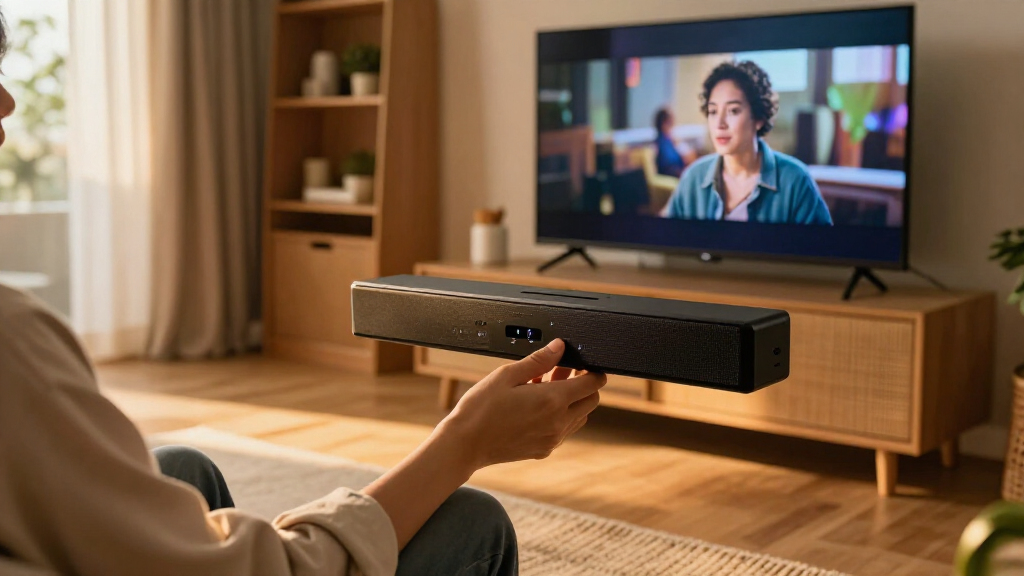
Home theater soundbars range from simple TV dialogue upgrades to multi-speaker systems with rear surrounds and Dolby Atmos. My best overall pick is the JBL Bar 700MK2, whose detachable surround speakers offer a flexible route to a more enveloping setup. The ULTIMEA Skywave X40 stands out for buyers seeking a 5.1.2-channel configuration, while the Samsung HW-B400F is a simpler choice for clearer everyday TV sound. The main tradeoff is between compact, easy-to-place bars and larger systems that need more speakers, connections, and setup space. Read on for the full comparison and help matching a soundbar to your room and listening habits.

Get business pricing on your home office setup
- Business-only prices and quantity discounts
- Tax-exempt purchasing
- Multiple users, one account, clear invoices
Complete the kit


Key Takeaways
- Surround hardware shapes the experience: systems with rear speakers, such as the amazon.com/dp/B0961X3R2H?tag=funigy-20&ascsubtag=dc-1203515″ target=”_blank” rel=”nofollow sponsored noopener”>Sony HT-S40R and LG S40TR, offer a different setup from bars that rely mainly on the front of the room.
- Dolby Atmos is not a guarantee of the same effect: the TCL S65K, Amazon Fire TV Soundbar Plus, and ULTIMEA models vary in channel layouts and speaker arrangements, so compare the whole system rather than the format label.
- Detachable surrounds trade fixed placement for flexibility: the JBL Bar 700MK2 can suit households that want surround speakers for viewing and a simpler arrangement at other times.
- Simple 2.0 and 2.1 systems have a clearer job: the Samsung HW-B400F, Bose TV Speaker, and Polk Signa S2 favor straightforward TV audio over a full surround speaker layout.
- Room fit and setup should influence the ranking: a slim bar or compact option can be a better match for a small space than a more elaborate system whose speakers are hard to place.
| Sony HT-S40R 5.1-Channel Home Theater Soundbar System |  | Best for Straightforward Surround Sound | Channels: 5.1 | Maximum output power: 600 watts | Connectivity: HDMI, optical, analog, Bluetooth | VIEW LATEST PRICE | See Our Full Breakdown |
| TCL S65K 5.1-Channel Soundbar System with Dolby Atmos and Wireless Surround Speakers |  | Best for Atmos and Room Adaptation | Audio channels: 5.1 | Maximum output power: 630 watts | Surround formats: Dolby Atmos, DTS:X | VIEW LATEST PRICE | See Our Full Breakdown |
| Samsung B-Series HW-B400F 2.0 Channel Soundbar with Built-in Subwoofer and Voice Enhance |  | Best Compact TV Upgrade | Channels: 2.0 | Power output: 40 watts | Speaker width: 25.23 inches | VIEW LATEST PRICE | See Our Full Breakdown |
| LG S40TR 4.1-Channel Home Theater Soundbar with Wireless Subwoofer and Rear Speakers |  | Best for LG TV Owners Wanting Rear Channels | Channels: 4.1 | Audio compatibility: Dolby Digital, DTS Digital | Included speakers: Soundbar, wireless subwoofer, rear surround speakers | VIEW LATEST PRICE | See Our Full Breakdown |
| Amazon Fire TV Soundbar Plus with Subwoofer and Surround Speakers, 5.1 Channel, Dolby Atmos |  | Best for Fire TV Households | Speaker channels: 5.1 | Surround formats: Dolby Atmos, DTS:X | Soundbar dimensions: 37 × 5.2 × 2.5 in | VIEW LATEST PRICE | See Our Full Breakdown |
| ULTIMEA 2.1-Channel Soundbar with Wireless Subwoofer and App Control |  | Best for Sound Customization | Channels: 2.1 | Peak output: 240 W | Subwoofer: Wireless, 6.5-inch tuned cabinet | VIEW LATEST PRICE | See Our Full Breakdown |
| Bose TV Speaker Compact Soundbar with Bluetooth and HDMI-ARC, Black |  | Best Compact Dialogue Upgrade | Audio output mode: Stereo | Drivers: Two angled full-range drivers and a center tweeter | Connectivity: Bluetooth, HDMI, optical audio, AUX | VIEW LATEST PRICE | See Our Full Breakdown |
| Polk Audio Signa S2 Ultra-Slim Sound Bar with Wireless Subwoofer |  | Best Slim Bar with Included Subwoofer | Drivers: Five full-range drivers | Subwoofer: Wireless, 5.25-inch woofer | Audio technologies: VoiceAdjust and Dolby Digital decoding | VIEW LATEST PRICE | See Our Full Breakdown |
| Saiyin Sound Bar with Subwoofer for TV and PC |  | Best for Basic TV and PC Setups | Audio output mode: Stereo | Subwoofer diameter: 5 inches | Connectivity: Bluetooth, optical, AUX | VIEW LATEST PRICE | See Our Full Breakdown |
| TCL S55H 2.1-Channel Soundbar with Wireless Subwoofer |  | Best for Virtual Surround Formats | Configuration: 2.1-channel | Audio output: Up to 220 W | Audio formats: Dolby Atmos, DTS Virtual:X | VIEW LATEST PRICE | See Our Full Breakdown |
| Assistrust 2-in-1 Detachable Soundbar for TV |  | Best Compact Upgrade | Brand and model: Assistrust KY-8000 | Speaker size: 17 inches | Audio output: Stereo | VIEW LATEST PRICE | See Our Full Breakdown |
| ULTIMEA Poseidon M60 5.1-Channel Dolby Atmos Soundbar System |  | Best Virtual Surround Without Rear Speakers | Channel configuration: 5.1 | Peak power: 300W | Drivers: 6 total: five built-in speakers and one subwoofer driver | VIEW LATEST PRICE | See Our Full Breakdown |
| ULTIMEA Skywave X40 5.1.2-Channel Soundbar System |  | Best for Wireless 5.1.2 Surround | Channel configuration: 5.1.2 | Peak power: 530W | Bass response: Down to 35Hz | VIEW LATEST PRICE | See Our Full Breakdown |
| ULTIMEA 5.1.2-Channel Dolby Atmos Soundbar System |  | Best for Dolby Atmos and Physical Surround | Channel configuration: 5.1.2 | Audio format: Dolby Atmos | Surround speakers: 2 | VIEW LATEST PRICE | See Our Full Breakdown |
| JBL Bar 700MK2 Soundbar with Wireless Subwoofer and Detachable Surround Speakers |  | Best Premium Wireless Surround | Model: Bar 700MK2 | Audio channels: 7.1 | Total power: 780W | VIEW LATEST PRICE | See Our Full Breakdown |
| home theater soundbar | Connectivity |
|---|---|
| Sony HT-S40R 5.1-Channel Home | HDMI, optical, analog, Bluetooth |
| TCL S65K 5.1-Channel Soundbar | Bluetooth, USB, Wi-Fi, HDMI, wireless |
| Samsung B-Series HW-B400F 2.0 | — |
| LG S40TR 4.1-Channel Home Thea | — |
| Amazon Fire TV Soundbar Plus w | — |
| ULTIMEA 2.1-Channel Soundbar w | — |
| Bose TV Speaker Compact Soundb | Bluetooth, HDMI, optical audio, AUX |
| Polk Audio Signa S2 Ultra-Slim | HDMI ARC, optical, AUX, Bluetooth |
| Saiyin Sound Bar with Subwoofe | Bluetooth, optical, AUX |
| TCL S55H 2.1-Channel Soundbar | HDMI eARC/ARC, optical, Bluetooth 5.2, AUX |
| Assistrust 2-in-1 Detachable S | Bluetooth 5.0, ARC, optical, and AUX |
| ULTIMEA Poseidon M60 5.1-Chann | HDMI eARC and Bluetooth 5.4 |
| ULTIMEA Skywave X40 5.1.2-Chan | — |
| ULTIMEA 5.1.2-Channel Dolby At | HDMI eARC and Bluetooth 5.4 |
| JBL Bar 700MK2 Soundbar with W | Bluetooth, Wi-Fi, HDMI, optical, and USB |
More Details on Our Top Picks
Sony HT-S40R 5.1-Channel Home Theater Soundbar System
The Sony HT-S40R is a strong fit for viewers who want physical rear speakers and a separate subwoofer without stepping up to formats or room calibration they may not need. Its 5.1-channel layout and 600 watts of stated output give movies a more enveloping presentation than the Samsung HW-B400F, which keeps everything in a compact 2.0 soundbar. Sony also offers HDMI, optical, and analog TV connections, plus Bluetooth for music playback, so it suits a wider mix of TVs and devices.
The tradeoff is that this system does not list Dolby Atmos or DTS:X support, unlike the TCL S65K and Amazon Fire TV Soundbar Plus. Choose Sony for a more traditional surround setup and flexible connections; skip it if height-format audio or a simpler, all-in-one installation matters more. Its listed drawbacks also include just one USB port.
Pros:- 5.1-channel configuration includes rear speakers and a subwoofer for surround sound.
- 600 watts of stated maximum output suits a fuller theater-style presentation than compact 2.0 options.
- HDMI, optical, analog, and Bluetooth connections accommodate varied sources.
- Sound modes and dialogue enhancement offer ways to tailor playback.
Cons:- Dolby Atmos and DTS:X support are not listed, unlike on the TCL S65K and Amazon Fire TV Soundbar Plus.
- Only one USB port is listed.
- The system’s separate rear speakers and subwoofer take more placement planning than the Samsung HW-B400F.
Best for: Movie and TV viewers who want a conventional 5.1 system with rear speakers and multiple ways to connect an older or newer TV.
Not ideal for: Buyers seeking Dolby Atmos or DTS:X playback, room calibration, or the least involved setup; the TCL S65K adds immersive formats and AI Sonic calibration.
- Channels:5.1
- Maximum output power:600 watts
- Connectivity:HDMI, optical, analog, Bluetooth
- Subwoofer connection:Wireless
- Bluetooth range:10 meters
- Dimensions:13.66 × 33.22 × 9.76 in
- Color:Black
- Warranty:1 year
Our verdict“Choose the Sony HT-S40R if you want traditional 5.1 surround, rear speakers, and broad TV connectivity without prioritizing Atmos or DTS:X.”
TCL S65K 5.1-Channel Soundbar System with Dolby Atmos and Wireless Surround Speakers
The TCL S65K makes the most sense for buyers who want 5.1-channel hardware plus Dolby Atmos and DTS:X in one system. Its wireless subwoofer and surround speakers bring more physical separation to movie effects than the Samsung HW-B400F, while the built-in center channel is aimed at keeping dialogue distinct from action. AI Sonic room calibration is another point of difference: it adjusts the sound for the room rather than relying only on preset modes.
That feature-rich approach comes with caveats. The system needs corded power, and ChoruSound requires a compatible TCL TV, so some functions may depend on the rest of your setup. Compared with the Amazon Fire TV Soundbar Plus, TCL adds room calibration, but its ChoruSound tie-in is a narrower compatibility condition. I’d pick it for format support and room adaptation, not for a fully brand-neutral feature set.
Pros:- Dolby Atmos and DTS:X support add spatial-audio formats absent from the Sony HT-S40R listing.
- Wireless subwoofer and surround speakers provide a multi-speaker setup.
- AI Sonic calibration adapts sound to the room.
- Built-in center channel is designed to keep dialogue clear.
Cons:- Corded electric power is required.
- ChoruSound requires a compatible TCL TV.
- The separate subwoofer and surround speakers need more placement space than the Samsung HW-B400F.
Best for: Home theater buyers who want Atmos and DTS:X, separate surround speakers, and room calibration, especially those already using a compatible TCL TV.
Not ideal for: Viewers who want a minimal, compact setup or expect every TV-specific feature to work across brands; ChoruSound requires a compatible TCL TV.
- Audio channels:5.1
- Maximum output power:630 watts
- Surround formats:Dolby Atmos, DTS:X
- Subwoofer driver:6.5 inches
- Connectivity:Bluetooth, USB, Wi-Fi, HDMI, wireless
- Power source:Corded electric
- Mounting type:Wall mount
- Batteries:2 AAA batteries required
Our verdict“Choose the TCL S65K if Atmos, DTS:X, and room calibration matter more than a compact footprint or brand-neutral access to every feature.”
Samsung B-Series HW-B400F 2.0 Channel Soundbar with Built-in Subwoofer and Voice Enhance
The Samsung HW-B400F is the simplest fit here for someone who wants clearer TV sound without adding rear speakers or a separate subwoofer. Its built-in subwoofer and 25.23-inch width keep the system compact, while Voice Enhance targets dialogue that gets lost in everyday programming. That makes it a very different proposition from the Sony HT-S40R, which supplies 5.1 channels and dedicated rear speakers for a more enveloping movie setup.
Samsung’s main advantage is convenience: owners of compatible Samsung TVs can control it with the TV remote, reducing another control to manage. The compromise is scale. Its 40-watt output and 2.0 layout are a better match for a smaller room than for a large home theater, and the remote-control benefits depend on a compatible Samsung TV with Bluetooth support. I’d choose it for a tidy upgrade, not for convincing rear-channel effects.
Pros:- Built-in subwoofer adds bass without a separate subwoofer enclosure.
- Voice Enhance is designed to make dialogue easier to hear.
- Compatible Samsung TV owners can use their existing TV remote.
- Compact, wall-mountable metal design suits tighter spaces.
Cons:- The 2.0-channel layout does not include dedicated rear speakers.
- 40 watts of stated output may be limited in a large room.
- Full remote-control convenience requires a compatible Samsung TV with Bluetooth support.
Best for: Samsung TV owners in apartments or smaller rooms who want better dialogue and bass without placing separate surround speakers.
Not ideal for: Home theater viewers who want true multi-speaker surround or strong output for a large room; the Sony HT-S40R and LG S40TR include rear speakers.
- Channels:2.0
- Power output:40 watts
- Speaker width:25.23 inches
- Dimensions:4.21 × 25.23 × 2.62 in
- Weight:4.6 pounds
- Mounting type:Wall mount
- Remote control:Samsung TV remote; requires 2 AAA batteries
- Warranty:1-year limited
Our verdict“Choose the HW-B400F for a compact dialogue-and-bass upgrade in a smaller room, but pick a system with rear speakers for movie-focused surround.”
LG S40TR 4.1-Channel Home Theater Soundbar with Wireless Subwoofer and Rear Speakers
The LG S40TR occupies a useful middle ground: it adds a wireless subwoofer and rear surround speakers, but uses a 4.1-channel layout rather than the 5.1 systems from Sony, TCL, and Amazon. For a viewer who wants effects from behind the seating area without chasing Atmos or DTS:X, that simpler setup may be enough. Clear Voice Plus and stereo-to-multichannel up-mixing also give it tools for dialogue and older stereo content, while WOW Interface can work with a compatible LG TV remote.
Its key compromise is that “wireless subwoofer” does not mean every speaker is wire-free: the rear speakers require a wired connection between them and AC power. The TCL S65K and Fire TV Soundbar Plus offer Atmos and DTS:X, which this LG model does not list. I’d favor LG for its straightforward surround-focused feature set, especially in an LG TV setup, but not when flexible rear-speaker placement is the priority.
Pros:- Includes a wireless subwoofer and rear surround speakers.
- Dolby Digital and DTS Digital compatibility supports common movie audio formats.
- Clear Voice Plus and stereo-to-multichannel up-mixing suit dialogue and older stereo sources.
- WOW Interface can allow control through a compatible LG TV remote.
Cons:- Rear speakers require a wired connection between them.
- Rear speakers also need AC power, limiting placement flexibility.
- Dolby Atmos and DTS:X support are not listed, unlike on the TCL S65K and Amazon Fire TV Soundbar Plus.
Best for: LG TV owners who want a subwoofer and rear speakers for surround effects, plus dialogue enhancement and up-mixing for mixed TV content.
Not ideal for: Buyers who need fully wireless rear speakers or Atmos and DTS:X support; the rear units need a wired link and AC power, and those formats are not listed.
- Channels:4.1
- Audio compatibility:Dolby Digital, DTS Digital
- Included speakers:Soundbar, wireless subwoofer, rear surround speakers
- Soundbar dimensions:28.4 × 2.5 × 3.4 in
- Subwoofer dimensions:6.7 × 12.6 × 9.9 in
- Mounting type:Tabletop
- Additional inputs:Optical input, USB port
- Enclosure material:Metal, plastic
Our verdict“Choose the LG S40TR if you want rear-channel surround and voice tools for an LG-centered setup, and can accommodate powered, linked rear speakers.”
Amazon Fire TV Soundbar Plus with Subwoofer and Surround Speakers, 5.1 Channel, Dolby Atmos
The Amazon Fire TV Soundbar Plus is a well-rounded pick for buyers who want a complete 5.1 package with Dolby Atmos and DTS:X, plus a dedicated center dialogue channel. It includes a wireless subwoofer and two wireless surround speakers, giving movies a more speaker-based presentation than the Samsung HW-B400F’s compact 2.0 design. Bluetooth streaming and Movie, Music, Sports, and Night modes also make it useful beyond film playback.
Its strongest ecosystem advantage is Fire TV remote integration, though that will matter most in a Fire TV setup. Some audio-setting customization applies only to select models, so the control experience is not uniform across compatible televisions and players. Compared with the TCL S65K, this system also supports Atmos and DTS:X but does not list AI Sonic room calibration. I’d choose Amazon for a ready-made surround bundle, not for room-adaptive tuning.
Pros:- 5.1-channel package includes a wireless subwoofer and two wireless surround speakers.
- Dolby Atmos and DTS:X support provide spatial-audio format options.
- Dedicated center channel is designed to clarify dialogue.
- Bluetooth streaming and four audio modes support varied listening.
Cons:- Some audio-setting customization applies only to select models.
- The soundbar, subwoofer, and surround speakers require space and power connections around the room.
- AI Sonic room calibration is not listed, unlike on the TCL S65K.
Best for: Fire TV households seeking Atmos and DTS:X, wireless surround speakers, a dedicated dialogue channel, and several listening modes in one system.
Not ideal for: Buyers who want room calibration or need the same audio-setting customization across every TV; some settings apply only to select models.
- Speaker channels:5.1
- Surround formats:Dolby Atmos, DTS:X
- Soundbar dimensions:37 × 5.2 × 2.5 in
- Soundbar weight:8.8 lbs
- Subwoofer dimensions:10.4 × 10.4 × 13.4 in
- Subwoofer connection:Wireless
- Surround speaker connection:Wireless
- Audio modes:Movie, Music, Sports, Night
- Ports:HDMI, optical, AC, USB-A
Our verdict“Choose the Fire TV Soundbar Plus if you want a complete Atmos-capable surround bundle and use Fire TV, but look to the TCL S65K for listed room calibration.”
ULTIMEA 2.1-Channel Soundbar with Wireless Subwoofer and App Control
I’d choose the ULTIMEA for a buyer who wants to tune TV sound rather than settle for a few fixed presets. Its 10-band equalizer and 121 preset matrices offer much finer adjustment than the Bose TV Speaker’s dialogue and bass modes, while the wireless subwoofer adds low-frequency weight without requiring a cable back to the bar. VoiceMX focuses on the vocal range, a useful way to make speech clearer without simply raising the whole soundtrack.
The tradeoff is that this remains a 2.1-channel system: unlike the TCL S55H, it does not list Dolby Atmos or DTS Virtual:X support. Its app control is a plus for listeners who like tailoring sound, but less appealing to anyone who wants a minimal setup. I’d skip it if virtual surround formats matter more than EQ flexibility.
Pros:- Wireless subwoofer allows more flexible placement than a wired subwoofer setup.
- VoiceMX targets vocal frequencies to help dialogue stand out.
- App offers a 10-band equalizer and 121 preset EQ matrices.
- Bluetooth 6.0 supports wireless audio streaming.
Cons:- 2.1-channel configuration does not provide dedicated rear surround speakers.
- No Dolby Atmos or DTS Virtual:X support is listed.
- Extensive app controls may be unnecessary for buyers who want a basic plug-and-play bar.
Best for: TV viewers who want adjustable dialogue and bass, plus wireless subwoofer placement and detailed app-based EQ control.
Not ideal for: Buyers seeking Dolby Atmos or DTS Virtual:X processing, or those who prefer sound settings controlled only by a simple remote.
- Channels:2.1
- Peak output:240 W
- Subwoofer:Wireless, 6.5-inch tuned cabinet
- Frequency response:45 Hz–18 kHz
- Maximum SPL:95 dB
- Dialogue enhancement:VoiceMX; 120 Hz–6 kHz vocal range
- App control:10-band equalizer and 121 preset EQ matrices
- Bluetooth:6.0
Our verdict“Choose the ULTIMEA if EQ control and a wire-free subwoofer matter more to you than virtual surround formats.”
Bose TV Speaker Compact Soundbar with Bluetooth and HDMI-ARC, Black
The Bose TV Speaker is the most straightforward pick here for viewers who mainly want clearer speech and a bar that takes up little space. At just 2.21 inches high and 23.38 inches wide, it can fit under many TVs without competing visually, and its center tweeter and angled full-range drivers are aimed at making dialogue easier to follow. The remote’s dialogue mode keeps that goal accessible without requiring an app or extensive setup.
Compared with the Polk Signa S2, Bose leaves out an included subwoofer, so it is less suited to movie fans who want more pronounced bass straight away. It does offer Bluetooth and HDMI or optical connections, plus compatibility with Bose Bass Module 500 and 700 units. I’d choose it for simplicity and size, but not for a fuller, bass-heavy theater presentation.
Pros:- Compact profile fits beneath many TVs with limited clearance.
- Center tweeter and dialogue mode are designed to improve speech clarity.
- Bluetooth, HDMI, optical, and AUX provide multiple connection options.
- Remote includes separate dialogue and bass modes.
Cons:- No subwoofer is included, unlike the Polk Signa S2 and other 2.1 systems in this roundup.
- HDMI cable is sold separately.
- Wall brackets and the compatible subwoofer connection cable are sold separately.
Best for: Apartment dwellers and TV viewers who want a compact, simple soundbar focused on speech clarity rather than strong bass.
Not ideal for: Movie fans who want a subwoofer included or a more bass-forward home theater setup without adding another component.
- Audio output mode:Stereo
- Drivers:Two angled full-range drivers and a center tweeter
- Connectivity:Bluetooth, HDMI, optical audio, AUX
- Dimensions:2.21 × 23.38 × 4.02 inches
- Mounting type:Wall mount
- Included accessories:Remote control and optical audio cable
- Compatible subwoofers:Bose Bass Module 500 and 700
Our verdict“Pick the Bose if clear dialogue and a compact, uncomplicated setup matter more than included subwoofer bass.”
Polk Audio Signa S2 Ultra-Slim Sound Bar with Wireless Subwoofer
The Polk Signa S2 makes a strong middle ground for a living room where the soundbar needs to stay unobtrusive but movie audio needs more weight than a compact bar alone can provide. Its roughly 2-inch-high profile can sit in front of a TV without blocking much of the screen, while the included wireless 5.25-inch subwoofer adds bass without a cable running between the two units. VoiceAdjust and Dolby Digital decoding also give it a more theater-oriented feature set than the dialogue-focused Bose TV Speaker.
That added bass makes the Signa S2 a better fit for action films and music, but the system is still 2.1-channel, not a set of rear surround speakers. The TCL S55H adds Dolby Atmos and DTS Virtual:X processing, which may appeal more to buyers chasing simulated height effects. I’d pick Polk for a slim, straightforward bar-and-subwoofer package, not a full surround layout.
Pros:- Low-profile bar is less likely to obstruct the TV screen or remote sensor.
- Included wireless subwoofer adds bass without a direct cable connection to the bar.
- VoiceAdjust helps tailor dialogue audibility.
- HDMI ARC, optical, AUX, and Bluetooth cover TV and music connections.
Cons:- 2.1-channel design does not provide dedicated rear-channel surround sound.
- Subwoofer connectivity is wireless only.
- No Dolby Atmos or DTS Virtual:X support is listed.
Best for: TV owners who want a low-profile soundbar, a separate wireless subwoofer, and dialogue adjustment for films and everyday viewing.
Not ideal for: Buyers who need dedicated rear speakers, immersive height formats, or a subwoofer that can connect by cable.
- Drivers:Five full-range drivers
- Subwoofer:Wireless, 5.25-inch woofer
- Audio technologies:VoiceAdjust and Dolby Digital decoding
- Connectivity:HDMI ARC, optical, AUX, Bluetooth
- Height:Approximately 2 inches
- Mounting:Wall-mountable or TV stand placement
- Color:Black
Our verdict“Choose the Polk Signa S2 for a discreet TV bar with included wireless bass, rather than a true surround speaker layout.”
Saiyin Sound Bar with Subwoofer for TV and PC
The Saiyin is a practical choice for someone who wants a separate subwoofer and familiar connection options without paying for features aimed at a more advanced theater setup. It supports Bluetooth, optical, and AUX, and includes a remote, wall-mount hardware, and three EQ modes. That makes it more flexible than the Bose TV Speaker for a buyer who wants bass in the box and may connect the system to a PC as well as a TV.
Its limits are clearer when compared with the Polk Signa S2: Saiyin does not support Dolby or DTS formats, and its subwoofer connects through the SUB OUT port rather than wirelessly. That means a cable is part of placement planning, and compatible encoded audio formats are off the table. I’d treat it as a basic stereo upgrade, not a substitute for the TCL S55H’s virtual surround processing.
Pros:- Dedicated subwoofer adds bass beyond what a small bar can provide alone.
- Bluetooth, optical, and AUX support common TV and PC connections.
- Three EQ modes offer simple sound adjustments.
- Remote and wall-mount hardware are included.
Cons:- Does not support Dolby or DTS audio formats.
- Subwoofer connects through the SUB OUT port, limiting placement without a cable.
- Stereo output is less suited to buyers seeking a surround-sound experience.
Best for: Budget-conscious TV or PC owners who want a simple stereo soundbar, a dedicated subwoofer, and included mounting accessories.
Not ideal for: Viewers who want Dolby or DTS support, a wireless subwoofer connection, or immersive surround processing for movie soundtracks.
- Audio output mode:Stereo
- Subwoofer diameter:5 inches
- Connectivity:Bluetooth, optical, AUX
- Bluetooth range:10 meters
- Equalizer modes:Three
- Soundbar size:16.9 inches
- Dimensions:17.55 × 12.52 × 5.71 inches
- Included components:Soundbar, subwoofer, remote, user manual, AUX cable, optical cable, brackets, pipes, and screws
Our verdict“Choose Saiyin for a straightforward TV or PC audio upgrade with a subwoofer, provided format support and wireless sub placement are not priorities.”
TCL S55H 2.1-Channel Soundbar with Wireless Subwoofer
The TCL S55H is the strongest pick in this group for buyers who want a 2.1 system with movie-focused processing. Its support for Dolby Atmos and DTS Virtual:X gives compatible content a chance at a broader, more enveloping presentation than the stereo-focused Bose TV Speaker or the format-limited Saiyin. A wireless subwoofer adds bass without tying its placement to the bar, while HDMI eARC/ARC provides a convenient TV connection.
AI Sonic room calibration is intended to adapt the sound to the listening space, and the package includes an HDMI cable and wall-mount kit, reducing setup extras compared with Bose. The tradeoff is that this is still 2.1-channel, not a system with dedicated rear speakers; the Sony HT-S40R is the more relevant alternative for shoppers seeking a 5.1 layout. TCL also positions this bar for small-to-medium rooms, so larger spaces may call for a more capable system.
Pros:- Dolby Atmos and DTS Virtual:X support add virtual surround processing.
- Wireless subwoofer provides bass without a direct cable connection to the bar.
- AI Sonic room calibration is designed to adapt audio to the room.
- HDMI cable, remote, and wall-mount kit are included.
Cons:- 2.1-channel configuration lacks dedicated rear surround speakers.
- Designed for small-to-medium rooms rather than larger listening spaces.
- Virtual surround processing is not the same as a physical multi-speaker surround system.
Best for: Small-to-medium-room viewers who want Dolby Atmos and DTS Virtual:X processing, a wireless subwoofer, and easy HDMI eARC setup.
Not ideal for: Buyers seeking dedicated rear speakers for true multi-speaker surround, or those outfitting a large room.
- Configuration:2.1-channel
- Audio output:Up to 220 W
- Audio formats:Dolby Atmos, DTS Virtual:X
- Connectivity:HDMI eARC/ARC, optical, Bluetooth 5.2, AUX
- Soundbar dimensions:31.89 × 2.36 × 3.86 inches
- Subwoofer dimensions:7.68 × 12.60 × 7.68 inches
- Included accessories:Remote with batteries, HDMI cable, power cord, wall-mount kit
- Bluetooth range:10 meters
Our verdict“Pick the TCL S55H if virtual Atmos and DTS processing matter, but choose a 5.1 system such as the Sony HT-S40R for dedicated surround speakers.”
Assistrust 2-in-1 Detachable Soundbar for TV
The 17-inch Assistrust KY-8000 is the most compact, straightforward TV upgrade in this group. Its four drivers and 80W stereo output give dialogue and everyday programming more presence than a TV’s built-in speakers, while automatic volume boost can help make quieter speech easier to hear. Movie, music, and news modes offer simple sound changes without app-based setup. Compared with the ULTIMEA Poseidon M60, though, this is a basic two-channel option: it has no subwoofer or surround speakers, so it won’t create the same sense of scale or cinematic effects. ARC, optical, AUX, and Bluetooth 5.0 provide useful connection choices, but the bar still needs AC power. I’d choose it for limited space and uncomplicated listening, not for a room where immersive home theater is the goal.
Pros:- Compact 17-inch design suits limited shelf or TV-stand space
- Four drivers and 80W output add presence over built-in TV speakers
- ARC, optical, AUX, and Bluetooth 5.0 support several source types
- Three EQ modes and automatic volume boost simplify everyday listening
Cons:- Two-channel stereo lacks dedicated surround speakers and immersive height effects
- No separate subwoofer for deep movie bass
- Requires AC power, limiting placement to areas near an outlet
Best for: Viewers with a small TV area who want clearer, fuller stereo sound and simple connection options without adding separate speakers.
Not ideal for: Home theater fans seeking surround effects, a dedicated subwoofer, or object-based Dolby Atmos playback.
- Brand and model:Assistrust KY-8000
- Speaker size:17 inches
- Audio output:Stereo
- Power output:80W
- Drivers:4
- Equalizer modes:Movie, music, and news
- Connectivity:Bluetooth 5.0, ARC, optical, and AUX
- Power and placement:AC power; tabletop mount
Our verdict“Choose the Assistrust for a compact, easy stereo upgrade, but pick the Poseidon M60 or a surround system if movie immersion matters more than simplicity.”
ULTIMEA Poseidon M60 5.1-Channel Dolby Atmos Soundbar System
The ULTIMEA Poseidon M60 is aimed at viewers who want a wider, more cinematic presentation without placing speakers behind the sofa. Its 5.1-channel Dolby Atmos setup uses five built-in speakers, side-firing drivers, and a wired wooden subwoofer to create a broader field of sound than compact stereo bars such as the Assistrust KY-8000. Voice enhancement targets a common movie frustration—dialogue getting lost under effects—while the app’s 10-band EQ, 121 presets, and surround adjustments offer more tailoring than a simple remote-controlled system. That flexibility comes with setup and placement tradeoffs: the subwoofer needs a cable, and there are no physical rear speakers, so it won’t match the discrete behind-the-listener effect of the ULTIMEA Skywave X40 or the JBL Bar 700MK2. I’d choose it for convenient surround-style sound, not for a fully separated speaker layout.
Pros:- 5.1-channel Dolby Atmos system with side-firing drivers and no rear speakers to position
- Voice enhancement helps speech stand out in busy soundtracks
- App includes a 10-band EQ, 121 presets, and adjustable surround levels
- HDMI eARC and Bluetooth 5.4 provide current connection options
Cons:- Wired subwoofer placement is limited by its cable
- No included rear speakers for discrete sound behind the listening position
- Its virtual surround approach is less physically separated than the Skywave X40 or JBL Bar 700MK2
Best for: Movie watchers who want Dolby Atmos playback and adjustable surround effects but cannot place rear speakers around the room.
Not ideal for: Buyers who want physical rear speakers, wireless subwoofer placement, or sound formats beyond the listed Dolby Atmos support.
- Channel configuration:5.1
- Peak power:300W
- Drivers:6 total: five built-in speakers and one subwoofer driver
- Subwoofer:Wired wooden cabinet, 5.3L
- Frequency response:45 Hz–18 kHz
- Audio technology:Dolby Atmos, VoiceMX, and BassMX
- Connectivity:HDMI eARC and Bluetooth 5.4
- App controls:10-band EQ, 121 presets, and 13 surround levels
Our verdict“Pick the Poseidon M60 if you want customizable Atmos-style surround without rear-speaker placement, and choose the Skywave X40 or JBL Bar 700MK2 for physical surround speakers.”
ULTIMEA Skywave X40 5.1.2-Channel Soundbar System
The ULTIMEA Skywave X40 makes the most sense for buyers who want a more complete room-filling system, including surround speakers and a wireless subwoofer. Its 5.1.2-channel layout adds height-channel support to conventional surround, while bass response down to 35Hz gives action scenes and music a deeper foundation than the Assistrust KY-8000 can offer. Wireless transmission helps reduce cable runs between system components, though the soundbar and subwoofer still need corded power. Compared with the ULTIMEA Poseidon M60, the X40 adds physical surround speakers rather than relying on a bar-based surround field; that makes placement more involved but can give effects clearer positions around the listener. It also supports 4K HDR pass-through and high-resolution audio. I’d favor it for a dedicated viewing area, while buyers seeking fewer components should look to the M60.
Pros:- 5.1.2-channel configuration combines surround and height-channel support
- Includes surround speakers and a wireless subwoofer
- 530W peak power and bass response down to 35Hz support a forceful, low-reaching presentation
- 4K HDR pass-through and 24-bit/192kHz audio support
Cons:- More speakers require more room and setup than the Poseidon M60
- System components still require corded power despite wireless transmission
- The large 43.31-inch soundbar may not suit smaller TV stands
Best for: Movie and gaming fans setting up a dedicated TV room who want physical surround speakers, height-channel support, and a wireless subwoofer connection.
Not ideal for: People with minimal space, no convenient power outlets for the system components, or a preference for a single-bar setup with very little placement work.
- Channel configuration:5.1.2
- Peak power:530W
- Bass response:Down to 35Hz
- Audio resolution:24-bit/192kHz
- Amplifier:GaN
- Video pass-through:4K HDR
- Subwoofer:Wireless; 6.5-inch driver
- Dimensions:43.31 × 2.76 × 3.94 inches
Our verdict“Choose the Skywave X40 for physical surround speakers and a wireless subwoofer in a dedicated home theater space; choose the Poseidon M60 for a simpler layout.”
ULTIMEA 5.1.2-Channel Dolby Atmos Soundbar System
This ULTIMEA 5.1.2-channel system pairs up-firing soundbar drivers with two surround speakers and a wired subwoofer, giving it a more tangible speaker layout than the Poseidon M60, which has no rear speakers. HDMI eARC supports lossless audio transmission, and the app’s 10-band EQ, 121 presets, and surround-level controls let viewers tailor sound to the room and content. Those adjustments make it a flexible home theater choice, but format support has a clear limit: it is not compatible with DTS. The wired subwoofer also needs to sit within reach of its connection, unlike the wireless subwoofer on the Skywave X40. I’d put this model on the shortlist for a Dolby Atmos-focused setup where physical surround speakers matter. Buyers with mixed-format libraries or a strong preference for wireless component placement should compare alternatives first.
Pros:- Dolby Atmos and up-firing drivers add height-effect support
- Two included surround speakers provide physical rear-channel placement
- HDMI eARC supports lossless audio transmission
- App offers a 10-band EQ, 121 sound presets, and surround-level adjustments
Cons:- Does not support DTS audio
- Wired subwoofer limits placement flexibility compared with the Skywave X40
- Multiple speakers and a separate subwoofer require more setup space than the Poseidon M60
Best for: Dolby Atmos movie watchers who want two physical surround speakers, up-firing effects, and app-based sound tuning in one system.
Not ideal for: Viewers with DTS-heavy media collections or those who need a wireless subwoofer to simplify room placement.
- Channel configuration:5.1.2
- Audio format:Dolby Atmos
- Surround speakers:2
- Subwoofer:5.25-inch, wired
- Connectivity:HDMI eARC and Bluetooth 5.4
- App controls:10-band graphic EQ, 121 presets, and surround-level adjustments
- Mounting:Tabletop or wall mount
- DTS compatibility:Not compatible
Our verdict“Choose this ULTIMEA system for Dolby Atmos with physical surround speakers, but skip it if DTS support or wireless subwoofer placement is a priority.”
JBL Bar 700MK2 Soundbar with Wireless Subwoofer and Detachable Surround Speakers
The JBL Bar 700MK2 is the most flexible premium-style pick here for buyers who want surround sound without permanently routing cables to rear speakers. Its detachable wireless speakers can be placed behind the seating area for a more direct 7.1-channel effect than the ULTIMEA Poseidon M60, which creates surround from the soundbar and has no rear units. A 10-inch wireless subwoofer and 780W total power give the system greater low-frequency scale than the Assistrust or the smaller-subwoofer ULTIMEA options. Dolby Atmos, DTS Virtual:X, Wi-Fi, and streaming support also make it a better fit for a connected entertainment setup. The tradeoffs are practical: the detachable speakers rely on battery power and need regular charging when not docked, and the system occupies more space than a compact stereo bar. I’d choose it for adaptable, full-room movie sound, not a minimal setup.
Pros:- Detachable wireless rear speakers allow flexible placement behind the listening area
- 7.1-channel configuration and 780W total power support a large-scale presentation
- 10-inch wireless subwoofer is suited to impactful low-frequency effects
- Dolby Atmos, DTS Virtual:X, Wi-Fi, Bluetooth, and HDMI provide broad playback options
Cons:- Detachable surround speakers need regular charging when separated from the bar
- Larger system and subwoofer require more space than compact soundbars
- More components and streaming features may be unnecessary for viewers seeking a simple TV dialogue upgrade
Best for: Home theater owners who want physical rear surround speakers they can detach for viewing and return to the bar for charging, plus built-in network streaming.
Not ideal for: Buyers who want a compact, low-maintenance soundbar or who do not want to manage charging detachable speakers.
- Model:Bar 700MK2
- Audio channels:7.1
- Total power:780W
- Subwoofer:10-inch, wireless
- Audio formats:Dolby Atmos and DTS Virtual:X
- Connectivity:Bluetooth, Wi-Fi, HDMI, optical, and USB
- Streaming support:Spotify Connect, AirPlay, and Google Cast
- Surround speakers:Detachable wireless rear speakers
Our verdict“Choose the JBL Bar 700MK2 for flexible physical rear surround and a large wireless subwoofer, provided you’re comfortable charging its detachable speakers.”
How We Picked
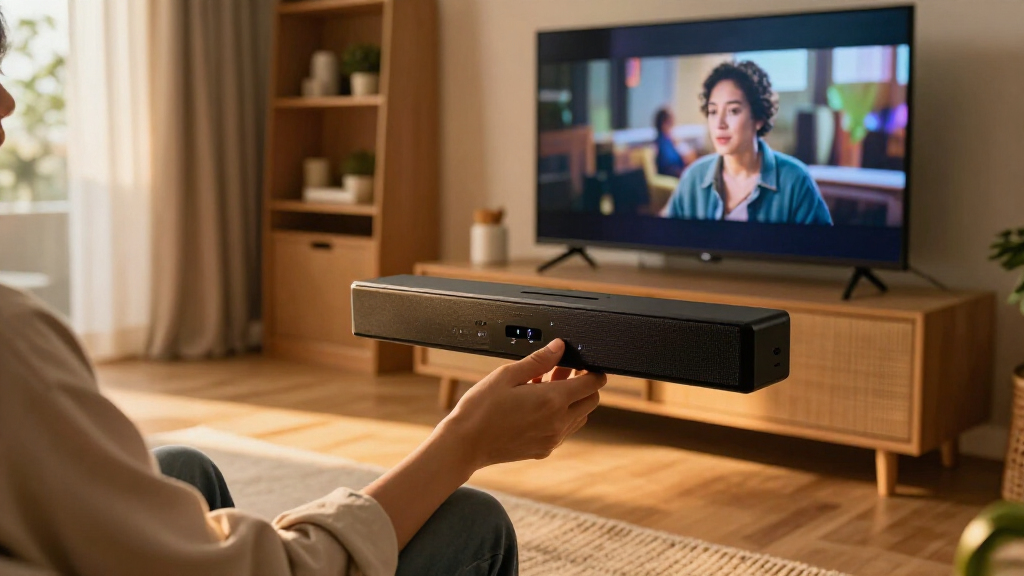
I compared these 15 options as home theater soundbars, weighing how each system is configured, what kind of room and listener it can suit, and the effort its setup asks of a buyer. The main criteria were channel layout and surround-speaker design, subwoofer inclusion, stated Dolby Atmos support, practical placement, and the ease of getting useful TV sound without adding unnecessary complexity. I also looked at how well each product’s role matched its design: a compact 2.0 bar is not judged by the same standard as a 5.1.2-channel system.
The ranking favors systems that offer a convincing balance of cinema-oriented capability, usability, and flexibility for a broad range of living rooms. More specialized or simpler models rank lower as overall choices, not because they lack a purpose, but because they suit narrower needs. I give weight to meaningful tradeoffs too: extra speakers can improve surround placement but demand more room and setup, while a compact bar is easier to accommodate but cannot provide the same speaker layout.
Factors to Consider When Choosing Home Theater Soundbars
Choosing a home theater soundbar is less about chasing the biggest channel count and more about matching the system to the room, TV, and way you watch. These broader checks can help you avoid paying for speakers you cannot place or choosing a format your setup cannot use well.
Match the Speaker Layout to Your Room
Channel numbers describe the intended speaker arrangement, but they do not tell you whether your room can support it. A system with rear speakers needs sensible placement behind or beside the main seating area, plus space for cables or power where applicable. In an open-plan room, a wall close to the sofa or a walkway through the listening area can make rear placement awkward. Measure the distance between your TV, seating, and likely speaker positions before choosing a multi-speaker kit. A simpler front-focused bar may deliver a cleaner, less cluttered setup if the room cannot accommodate surrounds. Avoid assuming that more channels automatically mean a better experience in every space.
Treat Dolby Atmos as One Part of the Setup
Dolby Atmos support can matter for compatible films and shows, but the label alone does not describe how a particular soundbar creates height effects. Channel configuration, speaker placement, room shape, and ceiling characteristics all affect what you hear. Check whether the system uses upward-firing speakers or another approach, and consider whether your ceiling and seating position suit that design. Your TV and connected devices also need to pass the audio formats you want to use. If most viewing is dialogue-heavy broadcast TV or older content, a well-matched non-Atmos system may be a more sensible fit. Choose Atmos for the content and room you actually have, not just the format name.
Check TV Connections Before Buying
Soundbars commonly connect through HDMI ARC or eARC, optical audio, or Bluetooth, but those links do not offer identical features. HDMI ARC or eARC is often the most convenient route for TV remote control and compatible audio formats, while optical can be a useful fallback on older televisions. Bluetooth is handy for music but is not always the best primary connection for watching TV because of possible delay or format limits. Look up your TV’s ports and audio settings before deciding which soundbar features you can use. If you connect a game console or streaming box through the TV, confirm that the TV can pass the audio format through to the bar. This check can prevent a system from being less capable in your setup than its specification suggests.
Decide Whether a Subwoofer Is Worth the Space
A separate subwoofer adds low-frequency weight to films and music, but it also takes floor space and can be harder to place than the soundbar itself. In a small apartment or shared home, strong bass may be less useful if you need to keep listening levels restrained. A built-in-subwoofer design or a compact 2.0 bar can reduce clutter, though it will not create the same kind of separate low-frequency presence. Think about where a subwoofer could sit without blocking a walkway or sounding boomy in a corner. Also check whether the subwoofer is wireless in signal connection only; it may still need a power outlet nearby. Choose bass performance with your neighbors, room, and placement options in mind.
Balance Dialogue Clarity Against Surround Effects
Many buyers choose a soundbar because voices are hard to hear through TV speakers, so dialogue clarity can matter more than immersive effects. Features such as voice enhancement may help make speech easier to follow, but they do not replace sensible placement or clear source audio. If you often watch news, sports, or dialogue-heavy shows, prioritize speech handling and controls you can adjust quickly. If films and games dominate, rear speakers and height effects may matter more. A common mistake is to buy a large surround system for one occasional movie night while overlooking everyday listening needs. Decide which listening problem you want to solve most often, then treat the other features as secondary.
Pay More for Capability You Can Actually Use
Extra speakers, detachable surrounds, and advanced channel layouts can add flexibility, but they also bring more pieces to place, connect, and manage. Paying for a premium system makes sense when your room, content, and listening habits can take advantage of those features. For a first soundbar or a TV in a smaller room, an uncomplicated model may be easier to live with and less demanding to set up. Check what is included in the box rather than assuming every system has the same speaker complement. Also consider whether you want a fixed surround layout or speakers you can move or detach. The best upgrade is the one that improves regular viewing without creating a setup you rarely use.
Frequently Asked Questions
Do I need rear speakers for a home theater soundbar to sound surround?
No, some soundbars aim to create a wider or more immersive effect from the front of the room, but dedicated rear speakers provide sound from physical positions behind or beside the seating area. That difference can matter most in films and games mixed with directional effects. Rear speakers also require suitable placement and may add power or cable-management needs. If your sofa is against a wall or your room is open to other spaces, a front-focused system may be easier to use. Choose physical surrounds when you have the room and want that speaker placement, not simply because the system has a larger channel number.
Will a Dolby Atmos soundbar work with any TV?
A soundbar can connect to many TVs, but access to Atmos depends on the TV’s audio connections, settings, and the source device or service. Check whether the television has HDMI ARC or eARC and whether it can pass the audio format from connected devices. A compatible streaming box or console does not help if the TV or connection limits the signal on its way to the soundbar. The room and speaker design also affect how convincing height effects seem. Before buying, verify the full chain from content source to TV to soundbar rather than relying on the Atmos label alone.
Should I choose a 2.1 soundbar or a 5.1 system for a small living room?
A 2.1 system is often the more practical choice when you want stronger TV audio and bass without placing speakers around a compact room. A 5.1 system can add more distinct surround placement, but only if you can position its rear speakers near the listening area. In a small room, the extra components may crowd the space or make setup harder without a clear benefit. Consider how often you watch surround-mixed films and whether you can keep speakers in useful positions. If dialogue and everyday programs are your main use, a simpler layout may suit you better.
Can I use a soundbar with an older TV that lacks HDMI ARC?
Often, yes, if the television has another compatible audio output, such as optical, and the soundbar accepts that connection. Optical can carry everyday TV audio, though it may not support every advanced format or control feature available through HDMI ARC or eARC. Check both devices’ ports and consult their connection guidance before choosing a model. If the TV has only a headphone output, compatibility and control may be more limited. A soundbar’s Bluetooth connection can be useful for some setups, but it is wise to confirm audio delay and TV support before relying on it.
Is a detachable-surround soundbar a good choice if I cannot leave speakers set up all the time?
It can be a useful fit if you want surround speakers for movie sessions but prefer a tidier room the rest of the time. Before choosing one, check how the speakers detach, where they recharge or connect, and how easily they return to their intended positions. A system that depends on frequent repositioning may be less convenient than a fixed bar if you watch films every day. Also consider whether the room has safe, stable places for the speakers when they are detached. This design is most appealing when flexibility solves a real space or household need.
Conclusion
For the broadest mix of surround capability and setup flexibility, I recommend the JBL Bar 700MK2 as best overall, especially for buyers who value detachable surrounds. The TCL S65K and ULTIMEA Poseidon M60 are worth comparing as value-minded multi-speaker alternatives, while the ULTIMEA Skywave X40 is my best premium-style pick for shoppers drawn to a 5.1.2-channel layout. Beginners who want a simpler upgrade can start with the Samsung HW-B400F; those focused on compact placement can look at the Bose TV Speaker or Assistrust detachable bar. Choose the Sony HT-S40R or LG S40TR if rear speakers are a priority, and the Polk Signa S2 or TCL S55H if a separate subwoofer in a less elaborate setup better fits your needs. The right pick is the system whose speakers, connections, and setup demands work in your room—not simply the one with the most channels.
Fall Picks
fall essentials
As an affiliate, we earn on qualifying purchases.