

Choosing the right home theater surround sound systems requires balancing immersive audio depth with the practicalities of living room placement. My top overall pick is the Yamaha YHT-5960U, which delivers reliable 8K HDMI connectivity and robust MusicCast integration without requiring complex receiver configuration. For those seeking a compact footprint, the Sony HT-S40R offers a streamlined 5.1 channel experience that fits smaller spaces, while the Ultimea Skywave X100 stands out for its ambitious 9.2.6 channel layout in a soundbar form factor. The primary tradeoff in this category is between the granular control of traditional component systems and the plug-and-play convenience of all-in-one soundbars. Continue reading to see how these options stack up against each other in real-world scenarios.

Get business pricing on your home office setup
- Business-only prices and quantity discounts
- Tax-exempt purchasing
- Multiple users, one account, clear invoices
Complete the kit


Key Takeaways
- Traditional receiver-based systems like the Yamaha YHT-5960U offer superior future-proofing via HDMI 2.1, whereas most soundbars are limited to 4K or lower bandwidth.
- The Ultimea Skywave X100 proves that 3D audio (Atmos) is no longer exclusive to bulky component setups, though it sacrifices some discrete rear-channel power.
- Budget systems like the Bobtot 5.1 rely heavily on virtual processing, which often results in muddy dialogue compared to dedicated center channels.
- Wireless rear speakers are now standard across mid-range picks like the LG S40TR, eliminating the biggest physical barrier to surround sound adoption.
- Brand ecosystems matter: Yamaha and Sony systems integrate better with smart home controls and streaming services than generic competitors.
| Yamaha YHT-5960U Home Theater System with 8K HDMI and MusicCast |  | Best Overall for a Traditional 5.1 Setup | Audio channels: 5.1 | Maximum output power: 80 watts | Video support: 8K HDMI 2.1, Dolby Vision, HDR formats | VIEW LATEST PRICE | See Our Full Breakdown |
| Yamaha YHT-4950U 4K Ultra HD 5.1-Channel Home Theater System with Bluetooth |  | Best Value for a Complete Wired 5.1 System | Channel configuration: 5.1 | Included components: AV receiver, five speakers, subwoofer, speaker wire | HDMI ports: 4 | VIEW LATEST PRICE | See Our Full Breakdown |
| ULTIMEA Aura A40 Pro 7.1-Channel Surround Soundbar System with Subwoofer |  | Best for Dialogue and Adjustable Surround | Channels: 7.1 | Speakers: Soundbar, subwoofer, and four surround speakers | Subwoofer bass response: Down to 45 Hz | VIEW LATEST PRICE | See Our Full Breakdown |
| Yamaha YHT-4970U 5.1-Channel Home Theater System with Dolby Atmos and 4K/120, 8K/60 HDMI |  | Best for Gaming and Newer Video Formats | Audio channels: 5.1 | Receiver: Yamaha RX300A | Audio formats: Dolby Atmos, DTS Virtual:X | VIEW LATEST PRICE | See Our Full Breakdown |
| ULTIMEA Poseidon M60 5.1-Channel Dolby Atmos Soundbar System |  | Best Compact Soundbar Setup | Audio channels: 5.1 | Peak power: 300 W | Frequency response: 45 Hz–18 kHz | VIEW LATEST PRICE | See Our Full Breakdown |
| Ultimea 7.1 Sound Bar with Subwoofer – Virtual Surround System for Smart TV |  | Best for App-Based Customization | Channels: 7.1 | Surround speakers: 2 front wired, 2 rear wireless | Connectivity: Hybrid wired/wireless | VIEW LATEST PRICE | See Our Full Breakdown |
| ULTIMEA Poseidon D70 7.1-Channel Surround Sound System with Subwoofer | 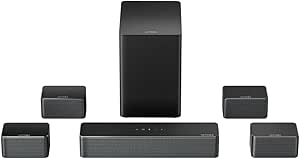 | Best for Wired Discrete Surround Speakers | Channels: 7.1 virtual surround | Peak power: 410 W | Included speakers: Soundbar, 4 wired surround speakers, wireless subwoofer | VIEW LATEST PRICE | See Our Full Breakdown |
| Bobtot 5.1 Home Theater Surround Sound System with 4″ Subwoofer |  | Best Compact Wired Pick | Channel configuration: 5.1 | Subwoofer diameter: 4 inches | Peak power: 400 W | VIEW LATEST PRICE | See Our Full Breakdown |
| Ultimea Skywave X100 Dual 9.2.6 THX-Tuned Wireless Surround Sound System |  | Best Premium Wireless Immersion | Audio channels: 9.2.6 | Peak power: 2000 W | Subwoofers: Dual 10-inch wireless subwoofers | VIEW LATEST PRICE | See Our Full Breakdown |
| ULTIMEA 5.1.2-Channel Dolby Atmos Soundbar System |  | Best for Dolby Atmos on a Moderate Setup | Channels: 5.1.2 | Audio format: Dolby Atmos | Surround technology: SurroundX | VIEW LATEST PRICE | See Our Full Breakdown |
| Sony BRAVIA Theater System 6 5.1-Channel Soundbar with Subwoofer and Rear Speakers |  | Best for Sony TV Owners | Channels: 5.1 | Audio Formats: Dolby Atmos, DTS:X | Max Output Power: 1000 Watts | VIEW LATEST PRICE | See Our Full Breakdown |
| Sony HT-S40R 5.1-Channel Home Theater Soundbar System |  | Best Value Entry-Level Surround | Channels: 5.1 | Max Output Power: 600 Watts | Connectivity: HDMI, Optical, Analog, Bluetooth | VIEW LATEST PRICE | See Our Full Breakdown |
| ULTIMEA Skywave X50 5.1.4ch Wireless Surround Sound System |  | Best Wireless Atmos System | Channels: 5.1.4 | Peak Power: 760W | Subwoofer Diameter: 8 inches | VIEW LATEST PRICE | See Our Full Breakdown |
| Klipsch Reference Dolby Atmos Home Theater System with Onkyo TX-NR7100 Receiver |  | Best Traditional Component Setup | Speaker System: 5.1-Channel Klipsch Reference | Receiver: Onkyo TX-NR7100 (9.2-ch) | Subwoofer: Klipsch R-12SW (12-inch) | VIEW LATEST PRICE | See Our Full Breakdown |
| LG S40TR 4.1 Channel Home Theater Soundbar with Wireless Rear Speakers and Subwoofer |  | Best Compact Wireless Setup | Channels: 4.1 | Audio Formats: Dolby Digital, DTS Digital | Connectivity: Wireless Rears/Sub, Optical, USB | VIEW LATEST PRICE | See Our Full Breakdown |
| home theater surround sound system | Connectivity | Channels |
|---|---|---|
| Yamaha YHT-5960U Home Theater | — | — |
| Yamaha YHT-4950U 4K Ultra HD 5 | HDMI, Ethernet, coaxial, optical, USB, auxiliary, Bluetooth | — |
| ULTIMEA Aura A40 Pro 7.1-Chann | — | 7.1 |
| Yamaha YHT-4970U 5.1-Channel H | — | — |
| ULTIMEA Poseidon M60 5.1-Chann | HDMI eARC, optical, Bluetooth 5.4 | — |
| Ultimea 7.1 Sound Bar with Sub | Hybrid wired/wireless | 7.1 |
| ULTIMEA Poseidon D70 7.1-Chann | HDMI ARC, optical, AUX, USB, Bluetooth | 7.1 virtual surround |
| Bobtot 5.1 Home Theater Surrou | Bluetooth, optical, ARC, wired | — |
| Ultimea Skywave X100 Dual 9.2. | HDMI eARC, HDMI in, optical, Bluetooth | — |
| ULTIMEA 5.1.2-Channel Dolby At | HDMI eARC, Bluetooth 5.4 | 5.1.2 |
| Sony BRAVIA Theater System 6 5 | Bluetooth, HDMI | 5.1 |
| Sony HT-S40R 5.1-Channel Home | HDMI, Optical, Analog, Bluetooth | 5.1 |
| ULTIMEA Skywave X50 5.1.4ch Wi | Dual 5GHz Wireless, Bluetooth | 5.1.4 |
| Klipsch Reference Dolby Atmos | — | — |
| LG S40TR 4.1 Channel Home Thea | Wireless Rears/Sub, Optical, USB | 4.1 |
More Details on Our Top Picks
Yamaha YHT-5960U Home Theater System with 8K HDMI and MusicCast
I’d put the YHT-5960U near the top for buyers who want a full receiver-based 5.1 system and modern TV connectivity in one package. Its four surround speakers and subwoofer give you discrete speaker placement, while YPAO room calibration helps tune the system to the room. The 8K HDMI 2.1 support, eARC, Dolby Vision, and HDR10+ also give it a newer video connection set than the YHT-4950U, which is limited to 4K/60 pass-through. MusicCast and Bluetooth add streaming flexibility, though MusicCast’s presence doesn’t make the speaker setup wireless. The tradeoff is practical: this 54-pound package needs speaker-wire routing and more placement work than the ULTIMEA Poseidon M60 soundbar. I’d choose it for a dedicated setup, not a quick, minimal-install upgrade.
Pros:- Four surround speakers and a subwoofer provide a discrete 5.1 layout.
- 8K HDMI 2.1, eARC, Dolby Vision, and HDR10+ support newer video equipment.
- YPAO automatic calibration helps adapt speaker output to the room.
- MusicCast and Bluetooth offer wireless audio streaming.
Cons:- Speaker-wire installation takes more effort than using a soundbar system.
- The 54-pound package can be cumbersome to move and position.
- Receiver-based setup requires more space and configuration than the Poseidon M60.
Best for: Movie and gaming fans who want a wired 5.1 speaker layout, current HDMI features, and automatic room calibration.
Not ideal for: Renters or buyers who want a fast, cable-light setup; the surround speakers require speaker wire, and the system is heavy to move.
- Audio channels:5.1
- Maximum output power:80 watts
- Video support:8K HDMI 2.1, Dolby Vision, HDR formats
- Room calibration:YPAO automatic calibration
- Wireless connectivity:Bluetooth, MusicCast
- Power source:Corded electric
- Item weight:54 pounds
- Warranty:2-year manufacturer warranty
Our verdict“Choose the YHT-5960U if you want a wired, receiver-based 5.1 system with newer HDMI support and can accommodate its installation demands.”
Yamaha YHT-4950U 4K Ultra HD 5.1-Channel Home Theater System with Bluetooth
The YHT-4950U is the straightforward pick for buyers who want a complete wired 5.1 package without prioritizing the latest HDMI generation. Yamaha includes the receiver, five speakers, subwoofer, and speaker wire, so there’s less guesswork about assembling compatible parts. YPAO room optimization and Virtual CINEMA FRONT also help: the latter offers a placement alternative when rear-speaker positioning is difficult. Compared with the newer YHT-5960U, this system tops out at 4K/60 pass-through rather than adding 8K HDMI 2.1, so it suits current 4K setups better than buyers planning around newer video formats. Bluetooth handles basic streaming, but there’s no broader wireless speaker functionality. I’d favor it over the Poseidon M60 when separate speakers matter more than a simpler soundbar installation.
Pros:- Includes receiver, five speakers, subwoofer, and speaker wire for a complete setup.
- 4K/60 pass-through supports many existing TV and source-device configurations.
- YPAO room optimization helps tune the system after placement.
- Virtual CINEMA FRONT provides another option when rear-speaker placement is awkward.
Cons:- 4K/60 pass-through lacks the newer gaming and 8K support of the YHT-5960U and YHT-4970U.
- Bluetooth is the only listed wireless audio feature; the speaker setup uses wires.
- Receiver and multiple speakers require more space and setup than a soundbar.
Best for: First-time home theater buyers who want a receiver, full speaker set, subwoofer, and included speaker wire for a 4K TV room.
Not ideal for: Buyers building around 4K/120 or 8K sources, or anyone who wants wireless surround speakers and minimal cable routing.
- Channel configuration:5.1
- Included components:AV receiver, five speakers, subwoofer, speaker wire
- HDMI ports:4
- Video support:4K Ultra HD at 60 frames per second; HDR, Dolby Vision, HLG
- Connectivity:HDMI, Ethernet, coaxial, optical, USB, auxiliary, Bluetooth
- Wattage:150 watts
- Frequency response:28 Hz–25 kHz
- Item weight:51.8 pounds
Our verdict“Pick the YHT-4950U for a complete, conventional 5.1 system around a 4K/60 setup, but skip it if newer HDMI gaming features are a priority.”
ULTIMEA Aura A40 Pro 7.1-Channel Surround Soundbar System with Subwoofer
The Aura A40 Pro is the most adjustment-focused option in this group: it pairs a soundbar with a subwoofer and four surround speakers, then adds app controls for tailoring voices and spatial effects. VocalMatrix and VoiceMX are aimed at making dialogue easier to follow without simply turning down ambient sound, while the 10-band EQ and 13 surround levels give hands-on listeners room to shape the presentation. That makes it a different proposition from the Yamaha YHT-4950U, whose receiver-based package emphasizes conventional connections and room optimization rather than extensive app tuning. Its 7.1-channel configuration and four surrounds are appealing, but some rear connections still need wires, so it isn’t a cable-free shortcut. The listed subwoofer response reaches 45 Hz; buyers seeking deeper stated bass extension may prefer a system with different specifications.
Pros:- Soundbar, subwoofer, and four surround speakers form a 7.1-channel system.
- VocalMatrix and VoiceMX processing target clearer dialogue.
- App provides a 10-band equalizer, 121 presets, and 13 adjustable surround levels.
- Bluetooth 6.0 supports wireless audio streaming.
Cons:- Some rear-speaker connections require wires, limiting placement flexibility.
- The stated subwoofer bass response reaches down to 45 Hz.
- It lacks the receiver-based expansion approach of Yamaha’s YHT systems.
Best for: TV and movie viewers who often struggle with dialogue and want app-based control over voices, EQ, and surround levels.
Not ideal for: Buyers who need a fully wireless rear-speaker setup, want stated subwoofer response below 45 Hz, or prefer a traditional AV receiver.
- Channels:7.1
- Speakers:Soundbar, subwoofer, and four surround speakers
- Subwoofer bass response:Down to 45 Hz
- Bluetooth:Version 6.0
- App controls:10-band equalizer, 121 sound presets, 13 adjustable surround levels
- Mounting:Tabletop or wall mount
- Dimensions:15.75 × 2.76 × 3.54 inches
- Weight:10.1 pounds
Our verdict“Choose the Aura A40 Pro if dialogue tuning and adjustable 7.1 surround matter more to you than a fully wireless installation or receiver-based system.”
Yamaha YHT-4970U 5.1-Channel Home Theater System with Dolby Atmos and 4K/120, 8K/60 HDMI
The YHT-4970U is the strongest fit here for a buyer whose home theater also serves as a modern gaming and video hub. Its RX300A receiver supports 4K/120, 8K/60, eARC, ALLM, and VRR, while Dolby Atmos and DTS Virtual:X add height-oriented processing to the 5.1 package. That combination gives it a clearer gaming advantage over the YHT-4950U, which is limited to 4K/60, and a more conventional speaker layout than the soundbar-based ULTIMEA Poseidon M60. Automatic room correction and Bluetooth Multipoint add useful setup and streaming flexibility. The system still relies on multiple wired speakers, though, and its 50.4-pound weight plus speaker placement make installation a real commitment. I’d choose it for a wired media room, not a minimalist living-room upgrade.
Pros:- 4K/120, 8K/60, ALLM, and VRR support current gaming and video setups.
- Dolby Atmos and DTS Virtual:X add immersive audio processing.
- Includes receiver, five speakers, and a powered subwoofer.
- Automatic room correction and Bluetooth Multipoint simplify tuning and streaming.
Cons:- Multiple speakers require planning, placement, and cable routing.
- The 50.4-pound package is cumbersome to move.
- The receiver-based setup is more involved than the Poseidon M60 soundbar.
Best for: Console gamers and home theater buyers who want 4K/120, VRR, and a discrete 5.1 speaker package with Atmos support.
Not ideal for: Buyers who want a compact, low-effort installation or need physically wireless surround speakers.
- Audio channels:5.1
- Receiver:Yamaha RX300A
- Audio formats:Dolby Atmos, DTS Virtual:X
- Video support:4K/120, 8K/60
- HDMI features:HDMI 2.1, eARC/ARC, ALLM, VRR
- HDR formats:Dolby Vision, HDR10+, HLG
- Included cables:80-foot speaker wire, 16-foot subwoofer cable
- Item weight:50.4 pounds
Our verdict“Pick the YHT-4970U if gaming-friendly HDMI features and a wired 5.1 layout are your priorities, and you have room for a multi-speaker installation.”
ULTIMEA Poseidon M60 5.1-Channel Dolby Atmos Soundbar System
The Poseidon M60 is the space-conscious alternative for buyers who want 5.1-channel Dolby Atmos without arranging separate rear speakers around the room. Five built-in soundbar speakers work with a wired wooden subwoofer, while HDMI eARC offers a straightforward TV connection and the app supplies EQ, surround-level adjustments, and VoiceMX dialogue enhancement. Compared with the Yamaha YHT-5960U, it needs less speaker placement and avoids a separate AV receiver, but it also gives up discrete rear speakers and receiver-based connectivity. The subwoofer’s wired connection still affects placement, and the listed 45 Hz–18 kHz response sets expectations for its range. I’d choose this over the Aura A40 Pro when simplicity and a single-bar layout matter more than four separate surround speakers and extensive 7.1 placement.
Pros:- Five built-in speakers and a wired subwoofer deliver a compact 5.1-channel arrangement.
- HDMI eARC, optical, and Bluetooth 5.4 provide flexible connection options.
- App includes a 10-band EQ, 121 presets, and 13 surround levels.
- VoiceMX processing is designed to improve dialogue clarity.
Cons:- No separate rear speakers, unlike the Aura A40 Pro and Yamaha 5.1 packages.
- The wooden subwoofer is wired, which limits placement flexibility.
- The stated frequency response is 45 Hz–18 kHz.
Best for: Apartment and living-room viewers who want Atmos-capable TV audio with a compact bar, app adjustments, and no separate rear speakers to place.
Not ideal for: Buyers seeking discrete rear-channel speakers, receiver-based expansion, or a wireless subwoofer connection.
- Audio channels:5.1
- Peak power:300 W
- Frequency response:45 Hz–18 kHz
- Maximum SPL:99 dB
- Drivers:Five built-in speakers and a wired subwoofer
- Connectivity:HDMI eARC, optical, Bluetooth 5.4
- Audio format:Dolby Atmos
- App features:10-band graphic EQ, 121 sound presets, 13 surround levels
Our verdict“Choose the Poseidon M60 if you want a compact Atmos soundbar system and accept less discrete surround placement than a multi-speaker package.”
Ultimea 7.1 Sound Bar with Subwoofer – Virtual Surround System for Smart TV
The Ultimea’s strongest case is adjustable 7.1 virtual surround paired with unusually extensive app tuning. Four surround speakers—with two wired at the front and two wireless at the rear—give you placement flexibility without routing every cable across the room. Its 121 EQ presets and 10-band equalizer also make it a better fit for listeners who like tailoring dialogue, movies, or games than a more straightforward setup such as the Bobtot 5.1. The tradeoff is that virtual processing is not the same as discrete height-channel formats, and the speaker-pairing process may take patience. Choose it for configurable surround and reduced rear cabling; skip it if you want a simple plug-and-play system or prioritize native Dolby Atmos and DTS decoding.
Pros:- Four surround speakers support a more enveloping presentation than a basic soundbar alone.
- Hybrid wired and wireless connections reduce the need to run cables to the rear speakers.
- The app offers 121 EQ presets, a 10-band equalizer, and 13 surround-level settings.
- OTA firmware updates provide a path for software improvements.
Cons:- Speaker pairing may be cumbersome during setup.
- Virtual 7.1 processing is not a substitute for native height-channel formats.
- The supplied details do not confirm Dolby Atmos or DTS decoding.
Best for: TV and gaming-room owners who want flexible rear-speaker placement and like adjusting sound profiles in an app.
Not ideal for: Buyers seeking the simplest setup or native Dolby Atmos and DTS decoding; speaker pairing can be cumbersome, and this model is described as virtual surround.
- Channels:7.1
- Surround speakers:2 front wired, 2 rear wireless
- Connectivity:Hybrid wired/wireless
- Surround-level adjustments:13
- EQ presets:121
- Equalizer:10-band
- Sound modes:Movie, Music, Voice, Sport, Game, Night
- App control:Ultimea Smart App
Our verdict“Pick this Ultimea if app-level sound tuning and flexible rear-speaker placement matter more than native Atmos support or the simplest setup.”
ULTIMEA Poseidon D70 7.1-Channel Surround Sound System with Subwoofer
The Poseidon D70 is the practical choice here for buyers who want four separate surround speakers without building a receiver-based system. Its soundbar, wired surrounds, and wireless subwoofer provide a clear step up in speaker separation from compact options such as the Bobtot 5.1, while HDMI ARC, optical, AUX, USB, and Bluetooth make it easier to connect a mix of TV and music sources. App and remote controls offer access to EQ and sound modes, though the wireless subwoofer still needs its own power outlet. The main limitation is format support: it does not decode Dolby Atmos or DTS. That makes it less suitable for buyers prioritizing object-based movie sound than the Atmos-equipped ULTIMEA 5.1.2 system.
Pros:- Includes a soundbar, four wired surround speakers, and a wireless subwoofer.
- HDMI ARC, optical, AUX, USB, and Bluetooth cover common TV and audio sources.
- App and remote control provide access to sound and EQ adjustments.
- The subwoofer connects wirelessly to the soundbar, avoiding an audio cable across the room.
Cons:- Does not support Dolby Atmos or DTS decoding.
- The four surround speakers require wired connections and may limit placement.
- The subwoofer still needs a nearby power outlet.
Best for: Viewers who want four wired surround speakers, broad connection choices, and a wireless link to the subwoofer.
Not ideal for: Movie fans whose priority is Dolby Atmos or DTS decoding, or anyone unable to place rear speakers near cable routes and a powered subwoofer outlet.
- Channels:7.1 virtual surround
- Peak power:410 W
- Included speakers:Soundbar, 4 wired surround speakers, wireless subwoofer
- Subwoofer diameter:6.5 inches
- Connectivity:HDMI ARC, optical, AUX, USB, Bluetooth
- Controls:App and remote control
- Audio format limitations:No Dolby Atmos or DTS decoding
- Mounting type:Wall mount
Our verdict“Choose the Poseidon D70 for a multi-speaker surround layout and varied inputs, but not for Atmos or DTS playback.”
Bobtot 5.1 Home Theater Surround Sound System with 4″ Subwoofer
For a smaller room, the Bobtot keeps the layout straightforward: five wired satellite speakers, a 4-inch subwoofer, and Bluetooth, optical, and ARC inputs. Its compact scale makes it a more natural match for apartments or desktop-and-TV rooms than the larger, more ambitious ULTIMEA Poseidon D70, which adds more surround speakers and a broader input set. The Bobtot’s 400W peak-power claim and small subwoofer are aimed at filling modest spaces, not delivering the reach or bass scale buyers may want in a large home theater. Wired satellites also mean you must plan cable runs around the room. Pick it if you want a compact 5.1 arrangement with familiar connections; skip it if wireless rear speakers or bigger-room output are priorities.
Pros:- Compact 5.1 setup suits small and medium-sized rooms.
- Five satellite speakers provide separate speaker positions around the listening area.
- Bluetooth, optical, and ARC support a range of TV and personal-device connections.
- Compatible with TVs, desktops, gaming consoles, projectors, and smartphones.
Cons:- Wired satellite speakers require cable routing around the room.
- The 4-inch subwoofer and stated power output may be limiting in larger spaces.
- The remote requires two AA batteries.
Best for: Apartment dwellers and small-room viewers who want a wired 5.1 speaker layout for a TV, desktop, projector, or console.
Not ideal for: Owners of large rooms, or buyers who need wireless satellite speakers and want to avoid running speaker wire.
- Channel configuration:5.1
- Subwoofer diameter:4 inches
- Peak power:400 W
- Satellite speaker size:2.75 inches
- Connectivity:Bluetooth, optical, ARC, wired
- Bluetooth range:33 feet
- Dimensions:17 × 13 × 14 inches (D × W × H)
- Power source:Corded electric
Our verdict“Choose the Bobtot for compact-room 5.1 sound and varied inputs, but look elsewhere for wireless surrounds or large-room scale.”
Ultimea Skywave X100 Dual 9.2.6 THX-Tuned Wireless Surround Sound System
The Skywave X100 Dual is the most ambitious option in this group, built for buyers who want 9.2.6-channel Dolby Atmos and DTS:X without an AV receiver or extensive speaker wiring. Its four wireless surround speakers and dual subwoofers contrast sharply with the more compact, wired Bobtot 5.1; the X100 is aimed at a dedicated cinema room where its 18Hz bass extension and height-channel format support can make full use of compatible content. CineMesh Dual 5GHz is specified for under-20ms latency, while HDMI eARC and HDMI input provide the main routes for modern sources. This scale comes with practical dependencies: you need suitable source connections, space for multiple speakers and subwoofers, and power for the equipment. It is overkill for a small TV nook.
Pros:- 9.2.6-channel architecture supports Dolby Atmos and DTS:X playback.
- Four wireless surround speakers reduce the need for long speaker-wire runs.
- Dual 10-inch subwoofers are specified to extend bass down to 18Hz.
- CineMesh Dual 5GHz is specified for wireless latency under 20ms.
Cons:- The system’s multiple speakers and dual subwoofers need substantial room and placement planning.
- Compatible HDMI eARC or optical connections are needed for the intended source setup.
- Wireless speakers and subwoofers still need power and are not fully cable-free.
Best for: Home theater owners building a large, Atmos- and DTS:X-capable room who want immersive channels without an AV receiver and long speaker-wire runs.
Not ideal for: Small-room buyers, minimalist setups, or viewers whose TV and sources lack suitable HDMI eARC or optical connections.
- Audio channels:9.2.6
- Peak power:2000 W
- Subwoofers:Dual 10-inch wireless subwoofers
- Frequency response:Down to 18 Hz
- Wireless latency:Under 20 ms
- Connectivity:HDMI eARC, HDMI in, optical, Bluetooth
- Signal-to-noise ratio:102 dB
- Control method:App
Our verdict“Choose the Skywave X100 Dual for a large, format-rich wireless cinema setup, not a compact or minimal living-room system.”
ULTIMEA 5.1.2-Channel Dolby Atmos Soundbar System
This ULTIMEA makes the most sense for buyers who want native Dolby Atmos support without moving up to a much larger system like the Skywave X100 Dual. Up-firing drivers add height effects, while two rear speakers and a wired subwoofer build a fuller surround layout than a soundbar on its own. HDMI eARC supports lossless Atmos transmission from a compatible TV, and the app’s 10-band EQ and 121 presets let listeners tailor the sound. The tradeoff is format flexibility: DTS is not supported, so some sources will not play in that format. The wired subwoofer also needs a planned position and cable route. Pick this model if Atmos is your priority and your setup supports eARC; skip it if you need DTS or want a wireless subwoofer.
Pros:- Up-firing drivers, rear speakers, and a subwoofer support an immersive 5.1.2 layout.
- HDMI eARC supports lossless Dolby Atmos transmission from compatible sources.
- The app includes a 10-band EQ, 121 sound presets, and 13-step level adjustment.
- CEC can synchronize power, volume, and input with a compatible TV.
Cons:- Does not support DTS.
- The subwoofer is wired, which restricts placement and requires cable planning.
- Atmos playback depends on a compatible TV and source connection.
Best for: TV owners with HDMI eARC who want Dolby Atmos height effects, rear surround speakers, and app-based sound adjustments.
Not ideal for: Viewers with DTS-heavy sources, TVs without HDMI eARC, or room layouts where running a subwoofer cable is inconvenient.
- Channels:5.1.2
- Audio format:Dolby Atmos
- Surround technology:SurroundX
- Subwoofer:5.25-inch wired
- Connectivity:HDMI eARC, Bluetooth 5.4
- App controls:13-step level adjustment, 10-band EQ, 121 presets
- Dimensions:31.5 × 1.81 × 3.54 inches (D × W × H)
- DTS compatibility:Not compatible
Our verdict“Choose this ULTIMEA for an eARC-connected Dolby Atmos setup with rear speakers, provided DTS support and a wireless subwoofer are not requirements.”
Sony BRAVIA Theater System 6 5.1-Channel Soundbar with Subwoofer and Rear Speakers
This system is engineered to integrate seamlessly with Sony BRAVIA TVs, offering a cohesive ecosystem that standalone systems like the ULTIMEA Skywave X50 cannot match. The 1000-watt output drives the front, center, and rear channels with authority, while Dolby Atmos and DTS:X decoding ensures modern blockbusters sound immersive rather than flat. The dedicated center channel is a significant upgrade over soundbars without discrete drivers, making dialogue crisp even during loud action sequences.
However, the wired subwoofer limits placement flexibility compared to wireless alternatives. If you do not own a compatible Sony TV, you lose access to specific integration features, making this a niche choice for brand loyalists rather than a universal upgrade for every living room.
Pros:- High 1000-watt total power output for loud, dynamic audio
- Dedicated center channel significantly improves dialogue clarity
- Full 5.1 surround configuration with rear speakers included
- Supports major immersive formats like Dolby Atmos and DTS:X
Cons:- Subwoofer connection is wired, limiting placement options
- Advanced features are restricted to compatible Sony BRAVIA TVs
Best for: Owners of Sony BRAVIA TVs who want seamless integration and high-power surround sound without complex receiver setup.
Not ideal for: Non-Sony TV owners who cannot utilize the ecosystem features, or renters who need completely wireless rear speaker placement.
- Channels:5.1
- Audio Formats:Dolby Atmos, DTS:X
- Max Output Power:1000 Watts
- Speaker Configuration:Soundbar, Wired Sub, 2 Rears
- Connectivity:Bluetooth, HDMI
- Brand:Sony
- Model:HTS60.UC2
Our verdict“This is the ideal upgrade path for Sony TV owners seeking a powerful, integrated surround experience.”
Sony HT-S40R 5.1-Channel Home Theater Soundbar System
The HT-S40R delivers genuine 5.1 surround sound at a price point that makes it a strong competitor to budget-only 2.1 setups. While it lacks the Dolby Atmos height channels found in the ULTIMEA Skywave X50, it provides a solid foundation for movie watching with 600 watts of power. The inclusion of rear speakers creates a wider soundstage than virtual surround modes, offering a more tangible sense of directionality.
Its simplicity is both a strength and a weakness; there are no complex wireless protocols to troubleshoot, but the lack of advanced video passthrough or app-based EQ tuning means you are limited to basic remote adjustments. This is a pragmatic choice for those who want real rear speakers without the premium price tag of flagship systems.
Pros:- Physical rear speakers provide true directional surround sound
- 600-watt power output is sufficient for medium-sized rooms
- Multiple input options including HDMI and Optical
- Simple setup process without complex pairing requirements
Cons:- Lacks Dolby Atmos or DTS:X height channel support
- No smartphone app for detailed equalizer adjustments
Best for: Budget-conscious buyers who want physical rear speakers for directional audio but do not need Atmos or smart home integration.
Not ideal for: Audiophiles seeking height channels for Dolby Atmos or users who require advanced app-based sound customization.
- Channels:5.1
- Max Output Power:600 Watts
- Connectivity:HDMI, Optical, Analog, Bluetooth
- Brand:Sony
- Model:HT-S40R
- Warranty:1 Year
- USB Ports:1 USB 2.0
Our verdict“A straightforward, affordable way to add physical rear speakers to your home theater setup.”
ULTIMEA Skywave X50 5.1.4ch Wireless Surround Sound System
The Skywave X50 stands out by offering 5.1.4 channel Dolby Atmos with a fully wireless design, a significant advantage over wired competitors like the Sony BRAVIA Theater System 6. The GaN amplifier technology allows for efficient power delivery, reducing heat while maintaining headroom for dynamic peaks. With bass extending down to 28Hz, the 8-inch subwoofer delivers rumble that smaller units in this class often miss.
The dual 5GHz wireless connectivity ensures stable transmission for the rear speakers, avoiding the dropouts common in lower-frequency wireless systems. However, the system requires careful placement of four separate components to achieve the intended height effect, and the aesthetic may clash with minimalist interiors due to the gold accents. It is a high-performance option for those prioritizing immersion over simplicity.
Pros:- 5.1.4 channel configuration provides realistic overhead Dolby Atmos effects
- Fully wireless rear speakers and subwoofer eliminate cable clutter
- GaN amplifiers offer high efficiency and low distortion
- Deep bass response down to 28Hz from the 8-inch subwoofer
Cons:- Complex setup requires placing multiple components for full effect
- Not suitable for outdoor or high-moisture environments
Best for: Home theater enthusiasts who want true wireless Dolby Atmos height effects without running cables to the rear of the room.
Not ideal for: Users with very small rooms where the physical footprint of four components and the subwoofer would be overwhelming.
- Channels:5.1.4
- Peak Power:760W
- Subwoofer Diameter:8 inches
- Frequency Response:Down to 28Hz
- Amplifier Type:GaN
- Connectivity:Dual 5GHz Wireless, Bluetooth
- Video Support:4K HDR Pass-through
Our verdict“The best choice for those who demand wireless convenience and true height-channel immersion in a compact package.”
Klipsch Reference Dolby Atmos Home Theater System with Onkyo TX-NR7100 Receiver
This bundle represents the traditional, high-fidelity approach to home theater, contrasting sharply with the all-in-one simplicity of the LG S40TR. The Onkyo TX-NR7100 receiver provides 9.2 channels of power, allowing for future expansion beyond the included 5.1 setup. The Klipsch R-625FA floorstanders feature up-firing drivers for Dolby Atmos, delivering a more detailed and dynamic sound than soundbars can typically achieve, particularly in larger rooms.
The 12-inch subwoofer moves significantly more air than the 8-inch units found in soundbar systems, offering deeper, more visceral bass. However, this system demands space, technical knowledge for setup, and a dedicated media wall. It is not a plug-and-play solution, but rather a commitment to high-performance audio that rewards effort with superior fidelity and flexibility.
Pros:- Onkyo receiver supports up to 9.2 channels for future upgrades
- Klipsch horn-loaded tweeters deliver high efficiency and clarity
- 12-inch subwoofer provides deep, room-filling bass
- 8K video passthrough ensures future-proofing for video sources
Cons:- Requires significant floor space for floorstanding speakers
- Complex setup involving receiver configuration and speaker wire
Best for: Audiophiles with dedicated media rooms who want expandable, high-fidelity component audio with 8K video support.
Not ideal for: Renters or apartment dwellers who cannot install floorstanding speakers or manage complex receiver wiring.
- Speaker System:5.1-Channel Klipsch Reference
- Receiver:Onkyo TX-NR7100 (9.2-ch)
- Subwoofer:Klipsch R-12SW (12-inch)
- Dolby Atmos:Up-firing elevation channels
- Receiver Power:220W per channel
- Video Support:8K/4K
- Cabinet Finish:Black wood-grain vinyl
Our verdict“A powerhouse for dedicated home theaters that prioritizes expandability and raw acoustic performance over convenience.”
LG S40TR 4.1 Channel Home Theater Soundbar with Wireless Rear Speakers and Subwoofer
The LG S40TR offers a streamlined 4.1 channel experience that is less bulky than the 5.1 systems from Sony or ULTIMEA, making it ideal for smaller living spaces. The WOW Interface is a standout feature for LG TV owners, allowing single-remote control of both the TV and soundbar, a convenience not available with third-party brands. The Crest Design with a metal grill adds a touch of sophistication while protecting the drivers.
While it lacks the discrete height channels of the ULTIMEA Skywave X50, its AI Sound Pro attempts to simulate a wider field. The rear speakers are wireless from the soundbar but still require power outlets, a minor inconvenience compared to fully battery-powered alternatives. This system is best viewed as a polished, aesthetic-first upgrade for LG ecosystem users who value simplicity over maximum channel count.
Pros:- Wireless rear speakers and subwoofer simplify cable management
- WOW Interface allows unified control with compatible LG TVs
- Clear Voice Plus technology enhances dialogue intelligibility
- Sleek metal grill design protects components and looks modern
Cons:- Rear speakers still require AC power outlets nearby
- Advanced TV integration features are locked to LG devices
Best for: LG TV owners in small to medium-sized rooms who prioritize a clean, wireless aesthetic and simple remote control.
Not ideal for: Audiophiles seeking true Dolby Atmos height channels or users with non-LG TVs who cannot use the WOW Interface.
- Channels:4.1
- Audio Formats:Dolby Digital, DTS Digital
- Connectivity:Wireless Rears/Sub, Optical, USB
- Soundbar Dimensions:28.4″ x 2.5″ x 3.4″
- Subwoofer Dimensions:6.7″ x 12.6″ x 9.9″
- Enclosure Material:Metal, Plastic
- Mounting Type:Tabletop
Our verdict“A stylish, easy-to-use surround system that shines brightest when paired with an LG television.”

How We Picked
I evaluated these home theater surround sound systems based on three primary criteria: audio immersion, connectivity versatility, and setup complexity. For immersion, I prioritized systems that deliver distinct directional cues, favoring discrete rear speakers over virtualized surround effects. Connectivity was assessed by the presence of HDMI eARC and support for high-bandwidth video formats like 8K or 4K/120Hz, which are becoming standard for next-gen gaming consoles. I also weighed the ease of installation, recognizing that many buyers prefer wireless rears and simplified calibration over manual speaker wire management.
Ranking was determined by how well each system balanced these factors for its intended audience. Premium picks were judged on their ability to reproduce dynamic range and spatial accuracy, while value picks were evaluated on how effectively they minimized the downsides of budget audio, such as weak bass or tinny highs. Systems with outdated connectivity or poor integration with modern TV standards were ranked lower, regardless of their raw wattage specifications.
Factors to Consider When Choosing Home Theater Surround Sound Systems
Selecting a surround sound system involves more than just counting speakers. You need to consider how audio interacts with your room, how it connects to your existing devices, and how much maintenance you are willing to perform. This guide breaks down the critical factors that separate a good system from a great one.
Discrete Channels vs. Virtual Surround
Many modern soundbars use software algorithms to simulate rear audio from front-firing drivers. While this creates a wider soundstage, it rarely provides the precise localization of true discrete rear speakers. If you watch action movies with complex soundscapes, discrete rear channels provide better accuracy in tracking moving objects. Virtual systems are acceptable for casual viewing in small rooms, but they often struggle with complex audio mixes where rear effects are subtle. Prioritize physical rear speakers if immersion is your primary goal.
The Importance of HDMI eARC
Audio Return Channel (eARC) is the single most important connection standard for modern home theaters. It allows your TV to send high-bitrate audio formats like Dolby Atmos and DTS:X back to your sound system without quality loss. Without eARC, you are often forced to use optical cables, which compress audio and limit you to older formats. When comparing systems, verify that both the soundbar and the receiver support HDMI eARC. This ensures you can take advantage of the full fidelity offered by streaming services and Blu-ray discs.
Room Size and Speaker Placement
A powerful system in a small room can sound boomy and distorted, while a compact system in a large open-plan space may lack presence. Measure your listening area before buying. Systems with large subwoofers need space to breathe and avoid standing waves that cause uneven bass response. For smaller apartments, compact 5.1 setups or soundbars with wireless rears, like the LG S40TR, offer a better balance of performance and footprint. Do not underestimate the impact of speaker placement on stereo imaging and surround envelopment.
Receiver Complexity vs. Soundbar Simplicity
Traditional component systems require an AV receiver, which acts as the brain of the operation. These units offer granular control over EQ, input switching, and room correction, but they come with a steep learning curve. Soundbars integrate all these functions into a single bar and subwoofer, offering a simplified user experience. Decide if you want to spend time tweaking settings for perfect calibration or if you prefer a plug-and-play solution. Receiver-based systems offer better long-term upgrade paths, while soundbars are easier to move and manage.
Gaming and Video Latency
If you use your home theater for gaming, audio latency and video passthrough capabilities are critical. Some soundbars introduce a slight audio delay that desynchronizes sound from action on screen. Look for systems that support HDMI 2.1 and variable refresh rate passthrough if you play on consoles like the PS5 or Xbox Series X. Systems without these features may limit your console to lower resolutions or frame rates. Gamers should prioritize connectivity specs over pure audio wattage to ensure a responsive experience.
Frequently Asked Questions
Is a 5.1 system better than a 7.1 system for most living rooms?
For the majority of standard-sized living rooms, a 5.1 system is sufficient and often more practical than a 7.1 setup. The two additional side speakers in a 7.1 configuration require more placement space and wiring, which can be difficult in typical apartment layouts. Most modern content is mixed for 5.1, with the extra channels in 7.1 serving mostly as ambient fillers. Unless you have a dedicated large theater room, the audio improvement from moving to 7.1 is marginal compared to the hassle of installation. A well-placed 5.1 system with high-quality speakers will outperform a poorly placed 7.1 system in most scenarios.
Do I need a separate AV receiver if I buy a soundbar?
No, you do not need a separate AV receiver if you are purchasing an active soundbar system like the Sony HT-S40R or Ultimea Aura A40 Pro. These systems have built-in amplifiers and decoding hardware, meaning you connect them directly to your TV via HDMI or optical cable. A separate receiver is only required for passive component systems, such as the Klipsch Reference setup, where you must connect speakers to an external amplifier. Soundbars are designed to simplify this process, eliminating the need for extra components and complex wiring. This makes them ideal for users who want high-quality audio without managing a rack of equipment.
How important is Dolby Atmos in a budget home theater system?
Dolby Atmos adds height channels to create a 3D audio bubble, but its impact varies greatly depending on the system’s implementation. In premium systems, up-firing drivers reflect sound off the ceiling to create convincing overhead effects. In budget systems, Atmos is often simulated through virtual processing, which can sound artificial or thin. If you are buying a budget system, prioritize strong bass and clear dialogue over Atmos support. However, if you choose a mid-range system like the Ultimea Poseidon M60, Atmos support ensures compatibility with modern streaming content and adds a layer of immersion that pure stereo or 5.1 lacks.
Can I mix and match speakers from different brands?
You can physically connect speakers from different brands to an AV receiver, but it is rarely recommended for surround sound setups. Different manufacturers use varying impedance levels, sensitivity ratings, and tonal characteristics, which can lead to an unbalanced soundstage. For example, a Klipsch front speaker might sound bright and detailed, while a generic rear speaker sounds dull and recessed. This mismatch breaks the immersion by making it obvious which direction the sound is coming from. It is better to stick to a matched set from a single manufacturer, or at least ensure that all speakers share similar sensitivity and frequency response profiles.
Why does my center channel sound muddy or quiet?
A muddy or quiet center channel is usually caused by poor placement or incorrect calibration settings. The center speaker is responsible for most dialogue, so it must be positioned at ear level and directly below or above the TV screen. If it is buried inside a TV stand or angled incorrectly, the sound will be muffled. Additionally, many systems have a default center level that is too low relative to the front left and right speakers. Check your system’s settings menu and increase the center channel gain by 2-3 dB to improve dialogue clarity. Ensuring the speaker is not obstructed by furniture is also critical for clear audio reproduction.
Conclusion
Choosing the best home theater surround sound systems depends on your room size, technical comfort level, and budget. For most buyers seeking a balance of performance and ease of use, the Yamaha YHT-5960U is the best overall choice due to its robust connectivity and reliable audio quality. If you are working with a tighter budget but still want discrete surround sound, the Sony HT-S40R offers excellent value with its wireless rear speakers. For those who want the absolute best immersive experience with true 3D audio, the Ultimea Skywave X100 is a standout premium pick that pushes the boundaries of soundbar technology. Beginners should start with a compact 5.1 system like the LG S40TR to learn the basics of placement and calibration before investing in larger component setups. Prioritize HDMI eARC and discrete channels to future-proof your investment against evolving content standards.