
Home theater surround sound systems range from simple soundbars with rear speakers to full receiver-and-speaker packages, and the best fit depends on your room, setup tolerance, and plans for future upgrades. I’d choose the Yamaha YHT-5960U as the best overall pick for buyers who want a traditional 5.1 system with modern HDMI support and room to build around an AV receiver. The Klipsch Reference 5.2 with Onkyo TX-NR7100 is the premium choice for a more ambitious speaker-based setup, while the Sony BRAVIA Theater System 6 is a simpler route to surround sound without assembling separate components. The main tradeoff is convenience versus flexibility: soundbars are easier to place and connect, while receiver systems offer more control but need more space and setup. Read on for the full breakdown, including which systems make sense for compact rooms, Atmos playback, and first-time buyers.

Get business pricing on your home office setup
- Business-only prices and quantity discounts
- Tax-exempt purchasing
- Multiple users, one account, clear invoices
Complete the kit


Key Takeaways
- Receiver-based systems lead on flexibility. The Yamaha YHT-5960U and Klipsch packages pair an AV receiver with separate speakers, which suits buyers who want more connection options and a path to expand beyond a single soundbar.
- Soundbar kits reduce setup friction. Sony, LG, TCL, and ULTIMEA options combine a main bar, subwoofer, and surround speakers, making them more practical when a full receiver-and-speaker layout is too much work.
- Dolby Atmos labels do not tell the whole story. The roundup includes Atmos soundbars and receiver-based Atmos packages; channel layout, speaker placement, and room shape still affect how convincing height effects can be.
- More channels can mean more placement demands. The 7.1-channel ULTIMEA systems add surround speakers compared with simpler 5.1 kits, but they need a room layout that can accommodate those speakers sensibly.
- Small satellite speakers favor discreet placement, not maximum scale. The Klipsch Black Reference Theater Pack is a better fit when compact speakers matter more than the fuller, expandable setup of a receiver-based Klipsch Reference system.
| ULTIMEA 7.1ch Surround Sound Bar for TV with Subwoofer |  | Best for App-Based Sound Customization | Channels: 7.1 | Peak power: 330 W | Subwoofer: Included; 18 mm high-excursion driver | VIEW LATEST PRICE | See Our Full Breakdown |
| Sony BRAVIA Theater System 6 5.1ch Soundbar with Subwoofer & Rear Speakers |  | Best for BRAVIA TV Owners | Channels: 5.1 | Audio formats: Dolby Atmos and DTS:X support | Included components: Soundbar, subwoofer, and rear speakers | VIEW LATEST PRICE | See Our Full Breakdown |
| Yamaha YHT-5960U Home Theater System with 8K HDMI and MusicCast |  | Best Receiver-Based Upgrade | Channels: 5.1 | Power output: 80 W | Included speakers: 6 | VIEW LATEST PRICE | See Our Full Breakdown |
| Yamaha YHT-4950U 4K Ultra HD 5.1-Channel Home Theater System with Bluetooth, Black |  | Best Value Receiver-Based System | Channels: 5.1 | Included components: AV receiver, 5 speakers, subwoofer, and speaker wires | Wattage: 150 W | VIEW LATEST PRICE | See Our Full Breakdown |
| Klipsch Black Reference Theater Pack 5.1 Surround Sound System |  | Best Compact Satellite Speaker Package | Channels: 5.1 | Included speaker types: Satellite speakers and subwoofer | Maximum output power: 650 W | VIEW LATEST PRICE | See Our Full Breakdown |
| LG S40TR 4.1 Channel Home Theater Soundbar with Wireless Subwoofer and Rear Speakers |  | Best for Simple Surround Sound | Channels: 4.1 | Wireless subwoofer: Yes | Rear surround speakers: Yes; wired connection required | VIEW LATEST PRICE | See Our Full Breakdown |
| Sony HT-S40R 5.1ch Home Theater Soundbar System, Black |  | Best Soundbar Pick for 5.1 Channels | Channels: 5.1 | Power output: 600W | Speaker type: Soundbar with rear speakers | VIEW LATEST PRICE | See Our Full Breakdown |
| TCL S65K S Series 5.1 Channel Soundbar System with Dolby Atmos, DTS:X, Wireless Subwoofer, and Bluetooth |  | Best for Atmos and DTS:X on a Soundbar | Channels: 5.1 | Audio formats: Dolby Atmos, DTS:X | Maximum power output: 630 watts | VIEW LATEST PRICE | See Our Full Breakdown |
| Klipsch Reference 5.2 Home Theater System with Onkyo TX-NR7100 |  | Best for Full-Scale, Bass-Forward Home Theater | Configuration: 5.2 | Included speakers: 2 floorstanding, 1 center, 2 bookshelf, 2 subwoofers | Subwoofer size: Dual 12-inch powered subwoofers | VIEW LATEST PRICE | See Our Full Breakdown |
| Yamaha YHT-4970U 5.1-Channel Home Theater System with Dolby Atmos and 4K/8K Support |  | Best for Gaming and Modern TV Connections | Channels: 5.1 | HDMI video support: 4K/120Hz, 8K/60Hz | TV connection: HDMI eARC | VIEW LATEST PRICE | See Our Full Breakdown |
| ULTIMEA 5.1CH Surround Sound Bar System with Dolby Atmos, Poseidon M60 |  | Best for Quick, App-Tuned Setup | Channels: 5.1 | Audio: Dolby Atmos | Power output: 300W | VIEW LATEST PRICE | See Our Full Breakdown |
| Klipsch Reference Dolby Atmos Home Theater System with Onkyo TX-NR7100 Receiver |  | Best for a Full-Size, Component-Based Theater | Speaker system: Klipsch Reference Dolby Atmos home theater speakers | Receiver: Onkyo TX-NR7100, 9.2-channel | Receiver power: 220W per channel | VIEW LATEST PRICE | See Our Full Breakdown |
| ULTIMEA 5.1.2ch Sound Bar with Dolby Atmos and Surround Sound System for TV |  | Best for Up-Firing Atmos Effects | Speaker configuration: 5.1.2-channel Dolby Atmos | Subwoofer diameter: 5.25 inches | Audio transmission: Lossless audio via HDMI eARC | VIEW LATEST PRICE | See Our Full Breakdown |
| ULTIMEA 7.1ch Surround Sound System for TV, 4 Surround Speakers, Subwoofer | 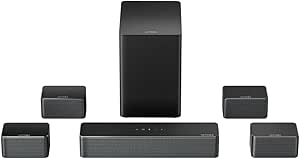 | Best for Physical Surround Speaker Coverage | Channel configuration: 7.1 virtual surround | Included speakers: Soundbar, four wired surround speakers, wireless subwoofer | Subwoofer diameter: 6.5 inches | VIEW LATEST PRICE | See Our Full Breakdown |
| ULTIMEA 7.1ch Surround Sound System for TV with Dolby Atmos, Aura A60 Pro |  | Best for App-Based Surround Customization | Channel configuration: 7.1 with Dolby Atmos | Surround speakers: Four surround speakers with SurroundX technology | Subwoofer: 5.25-inch wired subwoofer with BassMX technology | VIEW LATEST PRICE | See Our Full Breakdown |
More Details on Our Top Picks
ULTIMEA 7.1ch Surround Sound Bar for TV with Subwoofer
The ULTIMEA stands out for buyers who want a surround package with more channels and hands-on sound adjustment than a basic soundbar setup. Its 7.1-channel layout, four surround speakers, and included subwoofer are aimed at creating a broader effect than the Sony BRAVIA Theater System 6, which uses a 5.1-channel configuration. The app’s 10-band EQ and 121 presets give listeners room to tune dialogue, music, or game audio rather than relying only on fixed modes. Rear speakers connect wirelessly, though some speaker connections remain wired, so this is not a fully cable-free installation. The subwoofer’s stated bass response reaches 45 Hz, but the bar’s larger footprint and 330W peak output do not make it a substitute for a receiver-based system such as the Yamaha YHT-5960U.
Pros:- 7.1-channel design with four surround speakers for a more enveloping layout than a basic stereo bar
- App includes a 10-band graphic EQ and 121 presets for tailoring dialogue, games, and music
- Wireless rear speakers can reduce long cable runs across the room
- Included subwoofer is specified to reach down to 45 Hz
Cons:- Some rear-speaker connections remain wired, so setup still needs cable planning
- The 15.75-inch listed depth may be awkward for shallow media furniture
- Sound settings and speaker placement may take more effort than a simpler 5.1 soundbar kit
Best for: TV and gaming households that want a multi-speaker surround setup and enjoy adjusting sound profiles in an app.
Not ideal for: Buyers seeking a simple, nearly cable-free installation or a receiver-based system with broader component flexibility.
- Channels:7.1
- Peak power:330 W
- Subwoofer:Included; 18 mm high-excursion driver
- Bass response:Down to 45 Hz
- Surround speakers:4: 2 wired front and 2 rear with hybrid connection
- Bluetooth:Version 6.0
- Sound adjustment:App control, 10-band graphic EQ, 121 presets
- Dimensions:15.75 × 2.76 × 3.54 in
Our verdict“Choose this ULTIMEA if app-based tuning and a 7.1 speaker layout matter more than a fully wireless setup or receiver-level flexibility.”
Sony BRAVIA Theater System 6 5.1ch Soundbar with Subwoofer & Rear Speakers
This Sony package makes the most sense for a household already centered on a BRAVIA TV, where the brand-specific compatibility can simplify control and add access to Voice Zoom 3. It brings a 5.1-channel system with subwoofer and rear speakers together in one bundle, while Dolby Atmos and DTS:X support gives compatible content room to use immersive formats. Compared with the ULTIMEA 7.1ch, Sony offers fewer channels and less app-based EQ detail in the listed specifications, but it may suit buyers who value straightforward operation over extensive tuning. Bluetooth handles music streaming, and the remote provides a direct control option. The tradeoff is that the strongest integration is tied to compatible BRAVIA TVs, and its 35.7-inch bar still needs a suitable shelf or wall space.
Pros:- Complete 5.1 package includes a soundbar, subwoofer, and rear speakers
- Supports Dolby Atmos and DTS:X for compatible soundtracks
- Voice Zoom 3 is designed to make dialogue easier to hear
- Bluetooth supports wireless music playback
Cons:- Full TV integration depends on having a compatible BRAVIA television
- Listed 35.7-inch bar can be a poor fit for narrow media shelves
- Offers fewer channels than the 7.1-channel ULTIMEA option in this roundup
Best for: BRAVIA TV owners who want a matched soundbar, subwoofer, and rear-speaker package with immersive-format support.
Not ideal for: Buyers with a non-Sony TV seeking extensive equalizer controls, or shoppers who need a particularly compact bar.
- Channels:5.1
- Audio formats:Dolby Atmos and DTS:X support
- Included components:Soundbar, subwoofer, and rear speakers
- Maximum output power:1000 W
- Soundbar width:35.7 in
- Connectivity:Bluetooth
- Features:DSEE and Voice Zoom 3
- Control:Remote
Our verdict“Pick the Sony if your BRAVIA TV is the center of the setup and you want a bundled 5.1 system with Dolby Atmos and DTS:X support.”
Yamaha YHT-5960U Home Theater System with 8K HDMI and MusicCast
The Yamaha YHT-5960U is the clearest choice here for buyers who want a traditional receiver-and-speaker theater rather than a soundbar bundle. Its 5.1-channel system includes six speakers and an AV receiver, giving it a more component-based setup than the Sony BRAVIA Theater System 6. The receiver also brings 8K HDMI 2.1 support and compatibility with Dolby Vision, Hybrid Log-Gamma, and BT.2020 video formats, which suits a system built around modern sources and a large display. MusicCast adds a wireless streaming option, while YPAO room calibration is listed among its strengths. That flexibility comes with more installation work, heavier components, and a larger footprint than the ULTIMEA or Sony soundbar kits; it is a better fit for a planned theater space than a quick TV upgrade.
Pros:- AV receiver and six-speaker package provides a conventional, component-based 5.1 system
- 8K HDMI 2.1 support suits newer video sources and display upgrades
- Supports Dolby Vision, Hybrid Log-Gamma, and BT.2020
- MusicCast supports wireless streaming, and YPAO room calibration is listed
Cons:- At 54 pounds and with large listed dimensions, the system needs dedicated space
- Receiver and multiple speakers take more planning and setup than the Sony soundbar package
- No built-in voice assistant is listed
Best for: Movie and gaming enthusiasts who want a receiver-based 5.1 system, modern HDMI support, and room to build around separate components.
Not ideal for: Apartment dwellers or first-time buyers who want a compact, quick-install soundbar package with minimal setup.
- Channels:5.1
- Power output:80 W
- Included speakers:6
- HDMI:8K HDMI 2.1
- Supported video formats:Dolby Vision, Hybrid Log-Gamma, BT.2020
- Streaming:MusicCast
- Dimensions:35 × 35 × 15 in
- Weight:54 lb
Our verdict“Choose the YHT-5960U if you want a receiver-led 5.1 theater with modern HDMI support and can accommodate a more involved installation.”
Yamaha YHT-4950U 4K Ultra HD 5.1-Channel Home Theater System with Bluetooth, Black
The YHT-4950U is a practical way to get a complete, wired 5.1 receiver system without moving up to the YHT-5960U’s 8K HDMI support. It includes five speakers, a subwoofer, speaker wires, and an AV receiver, so buyers do not need to piece together a surround package. Its 4K HDR support, including Dolby Vision and Hybrid Log-Gamma, covers common home theater sources, while Bluetooth adds a simple route for phone audio. Compared with the Klipsch Reference Theater Pack, the Yamaha supplies its own receiver; that makes it a more complete starting point, though the Klipsch satellites offer more flexible mounting and a wireless subwoofer. The Yamaha’s wired speaker layout and roughly 52-pound total weight make it less appealing for frequent room changes or installations where running cables is difficult.
Pros:- Includes AV receiver, five speakers, subwoofer, and speaker wires for a complete 5.1 installation
- Supports 4K Ultra HD and HDR formats including Dolby Vision and Hybrid Log-Gamma
- Bluetooth supports wireless music and podcast playback
- YPAO room optimization is listed to help adapt the setup to the room
Cons:- Speaker connections are wired, which can complicate placement in finished rooms
- At 51.8 pounds, the system is cumbersome to move or rearrange
- 4K support is less future-facing than the 8K HDMI 2.1 support on the Yamaha YHT-5960U
Best for: First-time receiver-system buyers who want a complete wired 5.1 setup for movies, television, and gaming.
Not ideal for: Renters who cannot route speaker wires, or buyers seeking 8K HDMI support or a wireless subwoofer.
- Channels:5.1
- Included components:AV receiver, 5 speakers, subwoofer, and speaker wires
- Wattage:150 W
- HDMI ports:4
- Video support:4K Ultra HD, HDR, Dolby Vision, Hybrid Log-Gamma
- Connectivity:HDMI, Ethernet, coaxial, optical, USB, auxiliary, Bluetooth
- AV receiver dimensions:17 × 6 × 12 in
- Weight:51.8 lb
Our verdict“Choose the YHT-4950U for a complete, receiver-based 5.1 system with 4K HDR support, provided you can manage wired speakers.”
Klipsch Black Reference Theater Pack 5.1 Surround Sound System
Klipsch’s Reference Theater Pack is the space-saving pick for buyers who want separate surround speakers but cannot give a full receiver package much room. Its compact satellites can be wall-mounted, and the wireless subwoofer allows more freedom in choosing where bass fits best. That makes it easier to place around a living room than the larger, fully wired Yamaha YHT-4950U speaker-and-receiver bundle. The tradeoff is that this pack is not as self-contained: it requires a compatible AV receiver for optimal performance, so the receiver adds cost, wiring, and setup decisions outside the package. Tractrix Horn technology, aluminum tweeters, and graphite woofers are intended to deliver clear highs and substantial bass from small speakers, but buyers seeking the simplest all-in-one route should favor the Sony soundbar system instead.
Pros:- Compact satellite speakers take less room than the Yamaha YHT-4950U’s conventional speaker package
- Wireless subwoofer gives more flexibility for bass placement
- Satellite speakers support flexible mounting options
- Horn-loaded tweeters and graphite woofers are designed for clear highs and strong output
Cons:- Requires a compatible AV receiver for optimal performance, which is not included in the described package
- Wireless subwoofer does not make the complete system cable-free
- Not water-resistant, so it is intended for indoor home theater use
Best for: Home theater buyers with limited shelf or floor space who already own, or plan to add, a compatible AV receiver.
Not ideal for: Shoppers who need a complete receiver-and-speaker bundle, or anyone seeking a soundbar-style setup with minimal wiring.
- Channels:5.1
- Included speaker types:Satellite speakers and subwoofer
- Maximum output power:650 W
- Subwoofer:Wireless
- Speaker technologies:Tractrix Horn, aluminum tweeters, injection-molded graphite woofers
- Mounting:Floor-standing or wall mount
- Maximum range:20 m
- Weight:32 lb
Our verdict“Pick the Klipsch pack if compact, mountable satellites matter and you already have a receiver; choose a bundled Yamaha system if you need everything in one package.”
LG S40TR 4.1 Channel Home Theater Soundbar with Wireless Subwoofer and Rear Speakers
The LG S40TR is a good fit for viewers who want rear-channel effects without assembling a traditional receiver-based system. Its 4.1-channel layout includes a wireless subwoofer and rear speakers, giving movies and shows a more enveloping presentation than a soundbar alone. Dolby Audio and DTS Digital support broaden its usefulness across everyday content, while the app and WOW Interface offer convenient sound adjustments. Compared with the Sony HT-S40R, this is a less powerful, four-channel option rather than a 5.1 setup; its appeal is a relatively compact bar and straightforward TV-room package. The tradeoff is that the rear speakers still need wired connections, so wireless subwoofer placement does not mean a cable-free room. Skip it if you need a fully wireless surround layout or receiver-level expansion.
Pros:- Dedicated rear speakers and subwoofer create a more enveloping presentation than a bar alone.
- Wireless subwoofer allows more flexible bass placement.
- Dolby Audio and DTS Digital support common movie and TV formats.
- App and WOW Interface provide convenient sound and system controls.
Cons:- Rear speakers require wired connections, limiting placement flexibility.
- The 4.1-channel layout has fewer channels than the Sony HT-S40R’s 5.1 system.
- Some controls or features may depend on a compatible LG TV or device.
Best for: TV viewers who want a straightforward soundbar package with dedicated rear speakers and a wireless subwoofer.
Not ideal for: Buyers who need wireless rear-speaker connections, a receiver-based system they can expand, or a room without space for rear speakers and a subwoofer.
- Channels:4.1
- Wireless subwoofer:Yes
- Rear surround speakers:Yes; wired connection required
- Supported audio:Dolby Audio, DTS Digital
- Soundbar dimensions:28.4 x 2.5 x 3.4 inches
- Subwoofer dimensions:6.7 x 12.6 x 9.9 inches
- Inputs:Optical, USB
Our verdict“Choose the LG S40TR for a relatively simple soundbar-based surround setup, but pick a receiver system if you want more channels and room to expand.”
Sony HT-S40R 5.1ch Home Theater Soundbar System, Black
The Sony HT-S40R suits buyers who want a defined 5.1-channel layout and rear speakers without moving to a large AV receiver bundle. Its stated 600W output gives it more headroom on paper than the LG S40TR, and dialogue enhancement can help keep speech clearer when action and music compete. Bluetooth and USB add practical ways to play music, while color-coded connections make a multi-speaker setup less intimidating. Compared with the LG S40TR, Sony supplies a fifth channel, but the system’s larger footprint and connection setup call for more room and patience. The product data lists wired and wireless connectivity, though it does not clarify which speaker links are wireless, so buyers should not assume every rear connection is cable-free. This is a more channel-focused choice than a compact soundbar-only package.
Pros:- 5.1-channel configuration includes rear speakers for dedicated surround effects.
- Listed 600W output provides substantial stated system power.
- Dialogue enhancement can make speech easier to follow.
- Color-coded connections and a remote help manage setup and everyday use.
Cons:- The system takes more space than a soundbar without rear speakers.
- Multiple speaker connections can make setup less simple than a single-bar system.
- Connectivity details do not clearly identify which speaker links are wireless.
Best for: Movie and sports viewers who want a 5.1 soundbar system with rear speakers, dialogue enhancement, and Bluetooth music playback.
Not ideal for: Apartment owners with little room for rear speakers, or buyers who want clearly specified, fully wireless connections throughout the system.
- Channels:5.1
- Power output:600W
- Speaker type:Soundbar with rear speakers
- Connectivity:Wired, wireless, Bluetooth, USB
- Dialogue feature:Dialogue enhancement
- Control:Remote control
- Warranty:1 year
Our verdict“Choose the Sony HT-S40R if you want a 5.1 soundbar package with rear speakers and dialogue controls, and have room for its multi-part setup.”
TCL S65K S Series 5.1 Channel Soundbar System with Dolby Atmos, DTS:X, Wireless Subwoofer, and Bluetooth
The TCL S65K S Series is the feature-led soundbar choice in this group, combining 5.1-channel playback with Dolby Atmos and DTS:X. Those formats can add compatible height and spatial cues, while AI Sonic Auto Room Calibration is designed to adapt sound to the room rather than leave placement entirely to guesswork. Bluetooth, Wi-Fi, USB, and HDMI give it a broad connection list, and the wireless subwoofer offers more freedom in bass placement. Compared with the Sony HT-S40R, TCL emphasizes immersive-format support and room calibration rather than a clearly stated 600W output and dialogue enhancement. The listing describes wireless surround speakers, but the provided speaker details are limited, so check what components and connections are included before buying. Multiple pieces still mean more setup than a one-piece bar.
Pros:- Dolby Atmos and DTS:X support adds compatibility with immersive audio formats.
- AI Sonic Auto Room Calibration is designed to tailor playback to the room.
- Wireless subwoofer offers more placement flexibility.
- Bluetooth, Wi-Fi, USB, and HDMI provide varied connectivity options.
Cons:- A multi-component 5.1 setup takes more placement and connection work than a single soundbar.
- The supplied data does not clearly detail the surround-speaker configuration.
- Mounting hardware and specific warranty terms are not described.
Best for: Soundbar buyers who want Atmos and DTS:X support, room calibration, and several ways to connect TVs and music sources.
Not ideal for: Shoppers who need clearly documented speaker contents and mounting hardware, or who prefer a minimal, single-unit installation.
- Channels:5.1
- Audio formats:Dolby Atmos, DTS:X
- Maximum power output:630 watts
- Subwoofer diameter:6.5 inches
- Connectivity:Bluetooth, USB, Wi-Fi, HDMI, wireless
- Room feature:AI Sonic Auto Room Calibration
- Mounting type:Wall mount
Our verdict“Pick the TCL S65K if immersive-format support and room calibration matter more to you than a clearly documented, minimal setup.”
Klipsch Reference 5.2 Home Theater System with Onkyo TX-NR7100
The Klipsch Reference 5.2 bundle is the choice here for buyers willing to build a dedicated theater room around separate speakers and an AV receiver. Two floorstanding speakers, a center channel, bookshelf surrounds, and dual 12-inch subwoofers make this a much larger and more substantial setup than the LG S40TR or Sony HT-S40R soundbar systems. The included Onkyo TX-NR7100 receiver brings listed 8K/4K compatibility and 220W per channel at 6 ohms, so this package offers a route to a more configurable system rather than a compact TV upgrade. Its size and complexity are the price of that flexibility: placement, wiring, and receiver setup demand room and planning. The 5.2 configuration also differs from an Atmos-oriented system; the listed speakers do not include dedicated upward-firing modules.
Pros:- Complete 5.2 package includes an AV receiver, center channel, surrounds, and floorstanding speakers.
- Dual 12-inch powered subwoofers support substantial low-frequency output.
- Onkyo receiver supports listed 4K/8K video formats.
- Separate speakers allow more placement options than a soundbar system.
Cons:- Large speakers and two subwoofers require considerable floor space.
- Receiver, speaker, and cable setup can be demanding for first-time home theater owners.
- The listed configuration is 5.2 and does not specify dedicated height speakers.
Best for: Home theater builders with a large room who want separate floorstanding and bookshelf speakers, dual subwoofers, and an AV receiver.
Not ideal for: Small-room viewers, beginners seeking plug-and-play setup, or buyers who need a compact soundbar or dedicated height speakers.
- Configuration:5.2
- Included speakers:2 floorstanding, 1 center, 2 bookshelf, 2 subwoofers
- Subwoofer size:Dual 12-inch powered subwoofers
- Receiver:Onkyo TX-NR7100
- Receiver output:220W per channel at 6 ohms
- Video compatibility:8K/4K receiver
- Enclosure materials:Wood, plastic
Our verdict“Choose the Klipsch bundle for a spacious, receiver-based 5.2 theater with dual large subwoofers, not for a compact or quick-install TV room.”
Yamaha YHT-4970U 5.1-Channel Home Theater System with Dolby Atmos and 4K/8K Support
The Yamaha YHT-4970U makes the most sense for buyers pairing a surround system with a modern TV or gaming console. Its listed 4K/120Hz and 8K/60Hz HDMI support, along with eARC, targets newer video setups, while automatic room correction can help tune the system after its separate speakers are placed. Dolby Atmos and DTS Virtual:X add immersive processing options, and Bluetooth with Multipoint pairing supports casual music playback. Compared with the Klipsch Reference 5.2 bundle, Yamaha is a 5.1 package rather than a dual-subwoofer 5.2 arrangement, making it the more restrained choice for buyers prioritizing video connections over extra bass hardware. It still requires multiple components and sturdy placement for a listed 50.4-pound system. The supplied specs do not identify speaker dimensions or power output, so check fit and output needs before choosing.
Pros:- Listed 4K/120Hz and 8K/60Hz support suits newer video sources and displays.
- HDMI eARC supports connection to compatible TVs.
- Automatic room correction can help tune playback after speaker placement.
- Dolby Atmos, DTS Virtual:X, and Bluetooth broaden playback options.
Cons:- The 5.1 configuration offers fewer subwoofer channels than the Klipsch Reference 5.2 bundle.
- Separate components take more setup and room planning than a soundbar package.
- The supplied product data does not list speaker dimensions or system power output.
Best for: Console gamers and home theater owners upgrading to a 4K/120Hz or 8K-capable display who want automatic room correction.
Not ideal for: Buyers seeking a compact soundbar, a specified high-output system, or a 5.2 layout with dual subwoofers.
- Channels:5.1
- HDMI video support:4K/120Hz, 8K/60Hz
- TV connection:HDMI eARC
- Audio formats:Dolby Atmos, DTS Virtual:X
- Room correction:Automatic room correction
- Wireless audio:Bluetooth with Multipoint pairing
- Item weight:50.4 pounds
Our verdict“Choose the Yamaha YHT-4970U if modern gaming and TV video connections are priorities and you have space for a separate 5.1 speaker system.”
ULTIMEA 5.1CH Surround Sound Bar System with Dolby Atmos, Poseidon M60
The Poseidon M60 is a sensible pick for a buyer who wants a compact route to 5.1 Dolby Atmos without assembling a receiver-based speaker package. Its claimed setup time of under a minute and app-based sound profiles make it simpler to get running than the Klipsch Reference system with Onkyo TX-NR7100, which has more components and a steeper setup process. The VoiceMX dialogue enhancement also targets a common TV-audio problem: speech getting lost under effects and music.
Its 300W output and wired wooden subwoofer offer a straightforward way to add weight to action scenes, but the subwoofer still needs a cable connection, and the surround-speaker design is more limited than a package with separate rear speakers. Choose it for convenience and tuning options, not maximum speaker separation or an expandable, receiver-led theater.
Pros:- 5.1-channel Dolby Atmos presentation in a simpler soundbar-style package
- VoiceMX enhancement is aimed at making dialogue easier to follow
- App control offers personalized sound profiles
- 300W output and a wooden subwoofer add bass impact
Cons:- The subwoofer requires a wired connection
- Surround placement is more limited than systems with separate rear speakers
- Mounting hardware is not specified in the supplied product details
Best for: TV owners who want a fast-to-set-up Dolby Atmos bar, app-based sound adjustments, and clearer dialogue without building a receiver-and-speaker system.
Not ideal for: Buyers seeking widely separated rear speakers, a wireless subwoofer, or the flexibility of a component-based receiver system.
- Channels:5.1
- Audio:Dolby Atmos
- Power output:300W
- Frequency response:45 Hz–18 kHz
- Maximum SPL:99 dB
- Connectivity:HDMI eARC, Bluetooth 5.4, app control
- Subwoofer:Wired wooden enclosure with 18 mm high-excursion driver
- Setup:Claimed setup time under 1 minute
- Dialogue feature:VoiceMX technology
Our verdict“Choose the Poseidon M60 if you want quick setup and app-tuned 5.1 Atmos, but favor the Klipsch-Onkyo package for a more speaker-separated, component-based theater.”
Klipsch Reference Dolby Atmos Home Theater System with Onkyo TX-NR7100 Receiver
This Klipsch bundle is the most traditional theater build in this group: Reference speakers, a 12-inch powered subwoofer, and an Onkyo 9.2-channel receiver give buyers separate components rather than a single soundbar-led setup. Built-in elevation channels are designed to add overhead effects for Dolby Atmos, while the large subwoofer has more physical capacity for low-frequency impact than the compact subwoofers in the ULTIMEA Poseidon M60 and Aura A60 Pro.
The tradeoff is room, wiring, and setup effort. This is a better fit for someone willing to position multiple speakers and configure a receiver than for a viewer who wants a quick TV upgrade. Its 8K/4K support and wireless streaming broaden its role beyond movies, but the supplied details do not specify a simple, minimal-footprint installation. Pick it for a more component-driven cinema system, not convenience.
Pros:- Onkyo 9.2-channel receiver provides a component-based system foundation
- Built-in elevation channels support Dolby Atmos overhead effects
- 12-inch powered subwoofer is suited to substantial low-frequency output
- Wireless streaming and 8K/4K support add flexibility for connected home theaters
Cons:- Multiple large speakers require more floor and placement space than soundbar systems
- Receiver and speaker setup can be demanding for beginners
- A more involved component package brings greater installation complexity
Best for: Home theater builders with room for separate speakers who want a receiver-based Dolby Atmos setup for films, gaming, and music.
Not ideal for: Apartment dwellers or first-time buyers seeking a compact, quick-install soundbar with minimal wiring and speaker placement.
- Speaker system:Klipsch Reference Dolby Atmos home theater speakers
- Receiver:Onkyo TX-NR7100, 9.2-channel
- Receiver power:220W per channel
- Video support:8K/4K support
- Subwoofer:Klipsch R-12SW, 12-inch powered
- Connectivity:Wireless streaming and voice-control support
- Speaker technologies:Tractrix Horn, Linear Travel Suspension Tweeter, Injection Molded Graphite Woofer
- Cabinet finish:Black wood-grain cabinets with scratch-resistant finish
Our verdict“Choose this Klipsch-Onkyo bundle if you have room and want a receiver-led Atmos theater; choose the Poseidon M60 for a faster, simpler installation.”
ULTIMEA 5.1.2ch Sound Bar with Dolby Atmos and Surround Sound System for TV
This ULTIMEA 5.1.2 system is aimed at viewers who want Atmos effects from a soundbar with upward-firing speakers, rather than a full receiver-and-speaker installation. The 5.1.2 layout adds height channels to the surround presentation, giving it a different focus from the Poseidon D70, which emphasizes four wired surround speakers but does not list Dolby Atmos support. HDMI eARC with lossless audio transmission is a useful match for compatible TVs and sources, while app control lets owners adjust the sound without relying only on preset modes.
The payoff depends on the source and room: the product data says DTS audio is unsupported, so buyers with DTS-heavy libraries should look elsewhere. Its 5.25-inch subwoofer adds bass, but this remains a soundbar package rather than the more substantial, separate-speaker arrangement of the Klipsch-Onkyo bundle. It suits TV-centered setups where height effects and a relatively compact footprint matter more than broad format support.
Pros:- 5.1.2-channel layout includes upward-firing speakers for Atmos height effects
- HDMI eARC supports lossless audio transmission from compatible sources
- App control allows sound adjustments and personalization
- Tabletop or wall-mount installation gives placement options
Cons:- DTS audio format is not supported
- Full functionality depends on compatible TVs or connected devices
- The 5.25-inch subwoofer is a smaller-scale bass option than the Klipsch 12-inch unit
Best for: TV owners with HDMI eARC who want Dolby Atmos height effects, app-based tuning, and a soundbar-style installation.
Not ideal for: Viewers with DTS-focused media collections or buyers who want the flexibility and speaker separation of a receiver-based system.
- Speaker configuration:5.1.2-channel Dolby Atmos
- Subwoofer diameter:5.25 inches
- Audio transmission:Lossless audio via HDMI eARC
- Control:Dedicated app
- Mounting:Tabletop or wall mount
- Enclosure material:Metal
- Bluetooth range:15 meters
- Power source:Corded electric
- Compatibility:Television
Our verdict“Choose this ULTIMEA if upward-firing Atmos and eARC matter more than DTS support or the larger, separate-speaker scale of the Klipsch-Onkyo system.”
ULTIMEA 7.1ch Surround Sound System for TV, 4 Surround Speakers, Subwoofer
The Poseidon D70 takes a different route from the Atmos-focused soundbars here: four wired surround speakers create more placement points around a room, while a wireless subwoofer avoids running an audio cable back to the bar. That makes it a practical choice for buyers who want a pronounced surround layout for movies, sports, or gaming without moving up to the receiver-based Klipsch-Onkyo package. HDMI ARC, optical, Bluetooth, and USB connections also cover a range of TV and personal-device setups.
Its 7.1 label refers to virtual surround sound, and the listed encoding is PCM 2.0 stereo; Dolby Atmos and DTS decoding are not supported. That limits its format flexibility compared with the ULTIMEA 5.1.2 Atmos bar and Aura A60 Pro. The four wired speakers also mean placement takes more effort, and the wireless subwoofer still needs power. Choose it for speaker coverage and connection variety, not height effects or advanced format decoding.
Pros:- Four wired surround speakers provide multiple placement points around the listening area
- Wireless subwoofer avoids an audio cable running back to the soundbar
- HDMI ARC, optical, Bluetooth, and USB offer varied connection options
- App and remote controls allow sound adjustments
Cons:- Does not support Dolby Atmos or DTS decoding
- Wired surround speakers add placement and cable-management work
- The subwoofer still needs a power outlet
Best for: Viewers who want multiple surround-speaker positions and broad wired connection choices for TV, gaming, and sports.
Not ideal for: Atmos or DTS users, and anyone who wants a minimal-cable installation or a receiver-based system with dedicated format support.
- Channel configuration:7.1 virtual surround
- Included speakers:Soundbar, four wired surround speakers, wireless subwoofer
- Subwoofer diameter:6.5 inches
- Listed encoding:PCM 2.0 stereo
- Connectivity:HDMI ARC, optical, Bluetooth, USB
- Control:App and remote control
- Audio modes:Stereo and surround
- Speaker size:2.25 inches
- Power source:Corded electric
Our verdict“Choose the Poseidon D70 for multiple surround-speaker positions and connection options, but pick the 5.1.2 ULTIMEA if Atmos height effects are a priority.”
ULTIMEA 7.1ch Surround Sound System for TV with Dolby Atmos, Aura A60 Pro
The Aura A60 Pro combines a 7.1-channel layout with Dolby Atmos and extensive app tuning, making it the most adjustment-focused ULTIMEA option in this batch. Its listed four surround speakers and SurroundX technology aim for a more enveloping presentation than the simpler Poseidon M60, while wireless rear speakers can reduce the cable run between the front of the room and the listening area. A 10-band equalizer and 121 preset EQ matrices give detail-minded owners more ways to tailor dialogue, music, and effects than the Poseidon D70’s listed app and remote controls.
That flexibility comes with more components to place and configure, and the product specifies an ideal room size of 108 to 270 square feet. The 5.25-inch subwoofer is wired, so it is not a fully cable-free setup. Compared with the large Klipsch-Onkyo system, the Aura keeps a soundbar-style form, but it does not offer the same receiver-based component approach. It fits buyers who value tuning options and Atmos over minimal setup.
Pros:- 7.1-channel system supports Dolby Atmos
- Wireless rear surround speakers can reduce long cable runs
- 10-band equalizer and 121 preset EQ matrices offer extensive sound customization
- BassMX subwoofer technology and adjustable bass, midrange, and treble provide tuning control
Cons:- Multiple components can make setup more involved than a basic soundbar
- The wired 5.25-inch subwoofer needs a cable and power placement
- Listed optimal room range of 108 to 270 square feet may not suit very small or very large spaces
Best for: Home theater owners with a medium-sized room who want Dolby Atmos, wireless rear-speaker connections, and detailed app-based EQ control.
Not ideal for: Buyers with very small rooms, minimal setup tolerance, or a preference for a receiver-based system and larger subwoofer.
- Channel configuration:7.1 with Dolby Atmos
- Surround speakers:Four surround speakers with SurroundX technology
- Subwoofer:5.25-inch wired subwoofer with BassMX technology
- Peak power:420W
- Equalizer:10-band EQ with 121 preset EQ matrices
- Control:ULTIMEA app
- Listed room range:108–270 square feet
- Compatibility:Home theater, projector, smartphone, television
- Bluetooth range:15 meters
Our verdict“Choose the Aura A60 Pro if you want Atmos, wireless rear connections, and deep app tuning; choose the Klipsch-Onkyo bundle for a larger receiver-based system.”

How We Picked
I compared these 15 systems as home theater choices, not as a feature checklist. The main criteria were surround-channel layout, the type of system (soundbar kit or AV receiver with separate speakers), support for current video and audio formats where specified, and the practical demands of connecting and placing each component. I also considered whether a setup suits a buyer seeking an easy TV upgrade or someone ready to arrange speakers around a room.
The ranking favors useful balance over the biggest spec claim. Receiver packages place higher when their flexibility and connection options are a meaningful advantage; soundbars rise when simpler installation and a bundled layout better serve the likely buyer. Compactness, channel count, and Atmos support shape each product’s role, but none automatically makes a system a better pick: room fit, speaker positioning, and what equipment the buyer already owns matter just as much.
Factors to Consider When Choosing Home Theater Surround Sound Systems
Before choosing a system, decide what you want surround sound to improve and how much hardware your room can accommodate. These buying factors help separate real fit from headline specs, especially when comparing soundbars with receiver-based packages.
Soundbar Kit or AV Receiver?
A soundbar kit combines the main front channels in one unit, often with a subwoofer and separate rear speakers, so it can be easier to connect and keep tidy. An AV receiver routes sources to individual speakers and gives you more control over the system, but it adds another box, more cables, and a longer setup process. A common mistake is choosing a receiver system for its flexibility without checking whether there is room for the receiver and speakers near the TV. The reverse mistake is buying a soundbar kit when you already want to change speakers or add components later. I’d prioritize simplicity when the system needs to fit into an existing living room with minimal rearrangement. Choose a receiver when control, connections, and an upgrade path matter more than convenience.
Match Channel Layout to the Room
Channel counts such as 5.1, 7.1, and 5.1.2 describe different speaker arrangements, but a larger number is only useful if the room can support the layout. Rear speakers need useful positions around the listening area; placing them together beside the TV will not create the same surround effect. A 7.1 kit can make sense when there is space for its extra surround speakers, while a 5.1 system may be easier to place in a small or crowded room. In a soundbar system, advertised channel counts can describe virtual processing as well as separate physical speakers, so check what is actually included. Measure the room and mark likely speaker locations before choosing. That quick exercise can prevent an elaborate package from becoming a front-heavy setup.
Treat Atmos Support as One Part of the Setup
Dolby Atmos and DTS:X support can expand the sound formats a system handles, but the label alone does not guarantee convincing overhead effects. Some systems use upward-firing or dedicated height speakers, while soundbars may create height cues through their design and processing. Ceiling height, reflective surfaces, and where listeners sit all affect what reaches the audience. Buyers sometimes pay extra for a format they rarely use, or assume Atmos will compensate for poorly placed surround speakers. Check both the system’s speaker arrangement and the sources you expect to watch. If most listening is ordinary TV or stereo music, a well-placed conventional surround setup may be a better match than chasing format support.
Check Connections Against Your Existing Gear
List the devices you plan to connect, such as a game console, streaming player, disc player, and TV, then compare them with the system’s stated inputs and HDMI features. An AV receiver can simplify switching multiple sources, while a soundbar may rely more heavily on the TV’s available connections. Video support terms such as 4K, 8K, and HDMI compatibility can vary by input and feature, so check the exact specifications rather than assuming every port handles every signal. Another common oversight is forgetting that a TV and sound system both need compatible audio connections for the desired formats. If you plan to replace a console or television soon, connection flexibility may matter more than a current device list suggests. This is a practical reason to favor a receiver for a multi-device setup.
Plan for Wiring, Power, and Speaker Placement
Wireless subwoofer or rear-speaker links can reduce signal cables, but they do not remove the need to power components or find suitable locations. A system with several separate speakers may need cable runs across the room, and that can shape where furniture and listening seats can go. Before buying, check the distance from likely rear-speaker positions to power outlets and the TV area. Do not assume that “wireless” means every speaker can be placed anywhere without a cable. If visible wiring is a deal-breaker, look for a layout that matches the room rather than relying on a feature label. Buyers who can plan cable routes often gain access to more flexible receiver systems without making the room feel cluttered.
Pay for the Upgrade You Will Actually Use
Paying more makes sense when the extra capability solves a real need: receiver flexibility for several sources, a fuller speaker layout for a suitable room, or dedicated height effects for Atmos content. It makes less sense to choose a complex system just because its channel count is higher. A compact speaker package can be the smarter choice when discreet placement matters more than future expansion, while a straightforward soundbar may suit someone who mainly wants clearer, more enveloping TV audio. Think about who will use the system and whether they are comfortable changing inputs or settings. Buyers should also account for the space and accessories a larger setup may require. The right spend is the one that improves the listening setup without adding features the room cannot make good use of.
Frequently Asked Questions
Should I choose a soundbar system or a receiver-based surround system?
Choose a soundbar system when a compact main unit, simpler connection process, and bundled speakers suit your room and routine. A receiver-based package makes more sense if you want to connect several sources through one hub, adjust the system in more detail, or leave room for speaker changes later. Neither format guarantees better surround sound by itself; placement and the room layout matter. Check how many speakers are separate from the main unit and where they can realistically sit. If you do not want to route speaker wire or manage more components, a soundbar kit is usually the easier starting point.
Will a 7.1 system sound better than a 5.1 system in a small living room?
Not automatically. A 7.1 setup adds surround speakers, but those channels need sensible positions around the listening area to contribute useful separation. In a small room, furniture, walls, and short distances can make the extra speakers difficult to place well. A well-positioned 5.1 setup may give a more coherent result than a 7.1 system with speakers crowded together. Check the room dimensions and likely seating position before treating channel count as a quality ranking. If placement is limited, prioritize speaker positioning over adding channels.
Do I need Dolby Atmos for a home theater system?
You do not need Atmos to get surround sound, and a conventional 5.1 system can still be a sensible choice for TV, films, and games. Atmos support is more useful if you watch content mixed for it and have a system layout capable of reproducing height effects. The result depends on the speaker design, room surfaces, and seating position, not just the format name on the box. Check whether the system uses separate height speakers, upward-firing drivers, or soundbar processing. If those effects are not a priority, connections and speaker placement may matter more to your decision.
Can I use these systems with a TV, game console, and streaming device?
Often, but the available connections differ between a soundbar kit and an AV receiver package. A receiver can be a convenient switching point for several devices, while a soundbar may depend on the TV to pass audio from connected sources. Before buying, count your devices and compare that list with the system’s HDMI and other stated inputs. Also check that the TV supports the audio connection or pass-through needed for the formats you want. This simple compatibility check can prevent a system from requiring extra switching hardware or a change to how devices are connected.
How much space and wiring should I plan for before buying?
Plan for the main unit, subwoofer, any separate rear or surround speakers, and the cables or power connections each one needs. Soundbar systems can reduce the amount of speaker wire, but a wireless link does not necessarily eliminate power cables or placement limits. Receiver-based systems need a ventilated spot for the receiver and may require speaker wire from that location to each speaker. Mark likely speaker positions and check nearby outlets before ordering. If you cannot place rear speakers behind or beside the seating area, a larger channel count may add hassle without delivering its intended effect.
Conclusion
For most buyers, I’d start with the Yamaha YHT-5960U: it combines a traditional 5.1 speaker layout with receiver-based flexibility and modern HDMI support. For value-minded shoppers who want a bundled surround setup without a separate receiver, compare the ULTIMEA 5.1CH Poseidon M60 and Sony HT-S40R around the formats, connections, and room layout you need. The Klipsch Reference 5.2 with Onkyo TX-NR7100 is my premium recommendation for buyers ready to make room for a more involved receiver-and-speaker system. For beginners, the Sony BRAVIA Theater System 6 offers a more direct route to a soundbar-based surround package; for a compact speaker footprint, look at the Klipsch Black Reference Theater Pack. Choose by room and setup needs first: the best system is the one whose speakers you can place and whose connections fit your gear.