
TL;DR

Get business pricing on your home office setup
- Business-only prices and quantity discounts
- Tax-exempt purchasing
- Multiple users, one account, clear invoices
Emacs first ran at MIT’s Artificial Intelligence Laboratory in 1976, marking 50 years of a text editor that remains in use. Its customizable design grew from earlier editing tools, while the community around it helped shape the free software movement and the GNU Project.
Emacs turns 50 in 2026, marking five decades since the full-screen text editor first ran at the MIT Artificial Intelligence Laboratory. The editor’s customizable approach helped make it a lasting programming tool, while the software-sharing community built around it contributed to the history of free software and the GNU Project, according to MIT Technology Review.
Emacs grew out of TECO, an editor created by MIT’s Dan Murphy in 1962 for the PDP-1. Its commands began as single uppercase letters, and as TECO developed, programmers used it as a language for writing editing macros. In 1971, Carl Mikkelsen created Control-R, an add-on that displayed edits on video terminals as users made them. It was a step toward interactive, on-screen editing, though the display showed only a few lines at a time.
In 1976, MIT researcher Richard M. Stallman set out to improve Control-R after seeing a full-screen editor called E at Stanford’s AI Lab. A key design decision made every key run its own macro, allowing users to customize the editor. Stallman, Guy Steele Jr., David Moon and others also agreed on a shared set of commands, including Meta-F to move forward a word and Meta-B to move back. The name EMACS referred to “Editor Macros” or “Editing Macros.”
The editor was distributed through a sharing arrangement: Stallman sent copies to people who mailed him magnetic tape and a prepaid return envelope, with the expectation that they would return improvements. Other versions followed. Bernard S. Greenberg wrote an Emacs for the Multics operating system while working at Honeywell; the company commercialized it after it won an award at a software conference in 1980. James Gosling also made a version that became a commercial product. The anniversary account describes Emacs as still widely used, but does not give current user or adoption figures.
Emacs matters both as an editing tool and as an early example of software shaped by users who could alter and redistribute it. Its macro-based customization let programmers adapt the editor to their own work, while a common command set helped people share a recognizable way of using it. The editor’s reach beyond the MIT lab showed how a tool could develop through contributions from a wider community.
That sharing history also connects Emacs to the GNU Project. MIT Technology Review reports that Stallman’s experience with commercialized versions of Emacs helped spur his effort to create an operating system that users could freely share and improve. The article presents this as part of the history leading to the free software movement and GNU/Linux, not as the sole cause of either. For readers who use modern editors, Emacs offers an early example of the extensibility and user customization that remain familiar features of programming tools.
Popular right now
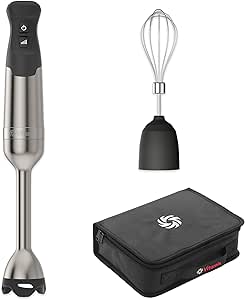
Vitamix 5-Speed Immersion Blender 3-Piece Bundle with Whisk and Storage Case

KitchenAid Classic Series 4.5-Quart Tilt-Head Stand Mixer, Onyx Black

Dyson Car+Boat Cordless Handheld Vacuum
As an affiliate, we earn on qualifying purchases.
From TECO to Full-Screen Editing
Before video terminals became available, programmers worked with paper tape, punch cards and line editors. A line editor on a teletype let a user enter code one line at a time, with output printed rather than displayed as a screen of text. The shift to terminals made it possible to see changes on-screen while editing, but early tools such as Control-R could show only a small portion of a file.
Emacs developed from that change in how people interacted with computers. Its immediate predecessor, Control-R, already refreshed a video display as edits were made. Stallman’s work expanded the idea by making commands easier to customize and establishing a shared set of key bindings. The 1976 anniversary marks the first run of Emacs at MIT; it does not mean the editor’s entire design appeared at once, since it drew on tools and collaboration developed over the preceding years.
““My goal was not to construct a great new text editor. I was trying to address a social problem.””
— Guy Steele Jr., quoted by MIT Technology Review
What the Anniversary Account Leaves Open
The anniversary report describes Emacs as still widely used, but offers no current usage statistics, comparisons with other editors or breakdown by operating system. It also does not specify the precise anniversary date on which the first version ran in 1976. The article documents historical milestones and influence; it does not measure how much of today’s editor design or free software activity can be attributed to Emacs alone.
The Editor After Its 50th Year
The anniversary itself is the development reported here; the source does not announce a new release, a project change or a planned celebration. Emacs’s ongoing status can be followed through its software project and user community, but the report provides no schedule for future milestones. The central anniversary question is how a tool first built for MIT researchers continues to be maintained and used, a point the supplied account leaves without new figures or forecasts.
Key Questions
When did Emacs first run?
According to MIT Technology Review, Emacs first ran in 1976 at the MIT Artificial Intelligence Laboratory. The year 2026 marks its 50th anniversary.
Who created Emacs?
Richard M. Stallman led the effort to improve Control-R and establish the editor called EMACS. The work also involved MIT lab members including Guy Steele Jr. and David Moon, and built on earlier tools created by Dan Murphy and Carl Mikkelsen.
What does the name EMACS mean?
The name referred to “Editor Macros” or “Editing Macros,” reflecting the editor’s roots in TECO macros and customizable commands.
How did Emacs relate to the GNU Project?
The report says the commercial sale of Emacs versions helped spur Stallman to start the GNU Project, an effort to build an operating system that could be freely shared and improved. It links Emacs’s sharing community to the wider history of free software, without treating the editor as the only cause.
Source: technologyreview.com