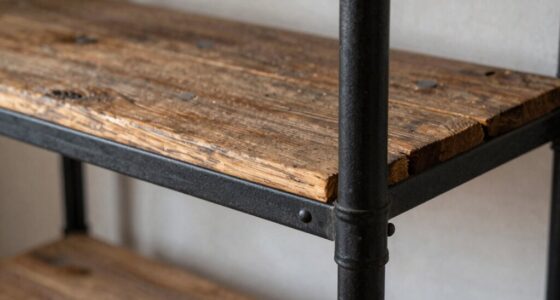
A tall, narrow bookcase can easily tip over if it’s not properly anchored or placed against a sturdy wall, making safety a top concern. You should distribute the weight evenly, with heavier items at the bottom, and guarantee the unit is well-built and assembled correctly. Positioning it in a corner or against a wall adds extra stability. To learn how to keep yours safe and secure, keep exploring this important topic.

Get business pricing on your home office setup
- Business-only prices and quantity discounts
- Tax-exempt purchasing
- Multiple users, one account, clear invoices
Key Takeaways
- Tall, narrow bookcases have a higher center of gravity, increasing the risk of tipping if not properly stabilized.
- Wall anchoring is crucial to prevent accidental toppling, especially in busy or unstable environments.
- Proper weight distribution, with heavier items at the bottom, enhances overall stability.
- Quality construction and secure assembly ensure the bookcase remains sturdy over time.
- Strategic placement against walls or in corners reduces the likelihood of wobbling or tipping.

Tall, narrow bookcases can add valuable storage space to small rooms, but their slim design often raises concerns about stability. You might wonder if they’ll tip over easily, especially in homes with children or pets. That’s where wall anchoring becomes essential. Securing your bookcase to the wall guarantees it stays upright, even when you’re loading or retrieving books. Without anchoring, the risk of toppling increases, especially if the weight isn’t evenly distributed or if someone bumps into it unexpectedly. Proper wall anchoring provides peace of mind, making your storage solution safer and more reliable. Additionally, understanding weight distribution is crucial, as it helps keep the center of gravity low and enhances stability. When you fill your narrow bookcase, you should aim to keep heavier items at the bottom and lighter ones above. This lowers the center of gravity, enhancing stability. If you place heavy books at the top, the bookcase becomes top-heavy, making it more prone to tipping over when you open doors or pull out shelves. Consistently balancing the weight ensures the structure remains steady, reducing the risk of accidents. It’s a simple step that makes a significant difference in how secure your bookcase feels in your space. In addition to anchoring and weight distribution, consider the construction quality of your bookcase. A sturdy, well-built unit with a solid back panel and reinforced shelves will naturally be more stable. When you assemble it, follow the manufacturer’s instructions carefully, ensuring all screws and brackets are tight. Loose joints or weak materials can compromise stability, no matter how well you anchor or distribute weight. Also, placing the bookcase against a wall maximizes its stability, preventing the side from wobbling or leaning. Proper placement** in the room is equally important, as it can influence overall stability and safety. Carefully selecting the right location can help prevent accidental tip-overs and make your space safer. Additionally, considering the overall room layout can help you position the bookcase in a way that minimizes risks and maximizes stability. It’s also beneficial to understand potential hazards, such as uneven flooring or nearby furniture, that could affect stability over time. You should also think about the placement of your tall, narrow bookcase in the room. Position it in a corner or against a sturdy wall to provide additional support. Avoid placing it in high-traffic areas where bumps and jostles are more likely. Regularly checking the wall anchors and making sure shelves aren’t overloaded will keep your bookcase secure over time. When you pay attention to these details—wall anchoring, weight distribution, construction quality, and placement—you’ll find that tall, narrow bookcases become safer, more reliable storage options** that serve your needs without risking stability.
As an affiliate, we earn on qualifying purchases.
Frequently Asked Questions
How Do I Secure a Tall Narrow Bookcase to the Wall Safely?
To secure your tall narrow bookcase safely, start by attaching wall anchors or anti-tip devices to the back of the unit and wall. Use a drill to insert the anchors into wall studs or drywall anchors for extra support. Then, connect the anti-tip straps securely to both the bookcase and the wall. This prevents tipping and keeps your furniture stable, ensuring safety for everyone in your home.
What Materials Are Best for Enhancing Stability in Narrow Bookcases?
You should opt for steel brackets or metal straps, as they offer excellent material durability and secure the bookcase firmly to the wall. Wood screws and wall anchors also enhance stability without compromising aesthetic appeal. Using high-quality, rust-resistant materials guarantees longevity and safety, especially for narrow, tall units prone to tipping. These materials provide the strength needed while maintaining the visual appeal of your space.
Can Adding Weight to the Bottom Improve Stability?
Think of your bookcase as a ship; adding weight to the bottom shifts the center of gravity lower, enhancing stability. By carefully adjusting weight distribution, you prevent tipping over, especially in tall, narrow designs. You’re fundamentally anchoring it against the forces that threaten to topple it. This simple step can make a significant difference in safety, giving you peace of mind while keeping your favorite books secure.
How Does the Height-To-Width Ratio Affect Stability?
The height-to-width ratio considerably impacts stability because a taller, narrower bookcase has a higher center of gravity, making it more prone to tipping. You should focus on proper load distribution, placing heavier items at the bottom to lower the center of gravity. A balanced height-to-width ratio helps keep the load centered and stable, reducing the risk of toppling, especially in narrow, tall designs.
Are There Specific Safety Standards for Tall Narrow Bookcases?
Yes, there are safety standards for tall narrow bookcases. These standards guarantee that the design aesthetics and material durability prioritize stability and safety. You should look for products compliant with regulations like the ASTM F2057, which specify tip-over prevention features. By choosing a bookcase adhering to these standards, you protect your space from potential accidents, especially if it’s tall and narrow, and assure it remains both stylish and secure.
tall narrow bookshelf safety straps
As an affiliate, we earn on qualifying purchases.
As an affiliate, we earn on qualifying purchases.
Conclusion
Think of your tall narrow bookcase as a mighty tree in a storm. Without strong roots and steady branches, it’s bound to sway or topple. Ensuring stability isn’t just about safety; it’s about preserving the integrity of your space and your treasured collections. When you prioritize proper anchoring and balance, you’re nurturing a resilient, steadfast guardian of your belongings—ready to stand tall through any gust of life’s challenges.
As an affiliate, we earn on qualifying purchases.
As an affiliate, we earn on qualifying purchases.
Halloween Picks
halloween
As an affiliate, we earn on qualifying purchases.