
The beam spread of your picture light is essential because it determines how well your artwork is highlighted and how it interacts with the surrounding space. A narrow beam focuses light on specific details, while a wider spread offers gentle, even illumination across the entire piece. Choosing the right beam angle and temperature affects mood and visual impact. If you want to optimize your display, understanding this aspect can truly elevate your setup—keep going to discover more.

Get business pricing on your home office setup
- Business-only prices and quantity discounts
- Tax-exempt purchasing
- Multiple users, one account, clear invoices
Key Takeaways
- Beam spread determines how evenly and effectively artwork is illuminated, impacting visual appeal and viewer perception.
- Proper beam angle enhances focal points or provides a soft, uniform light, shaping the artwork’s presentation.
- Color temperature combined with beam spread influences the mood, highlighting details or creating ambiance.
- Inadequate beam spread can cause uneven lighting, shadows, or glare, detracting from artwork quality.
- Strategic light positioning and beam selection maximize aesthetic impact and prevent unwanted light spill.
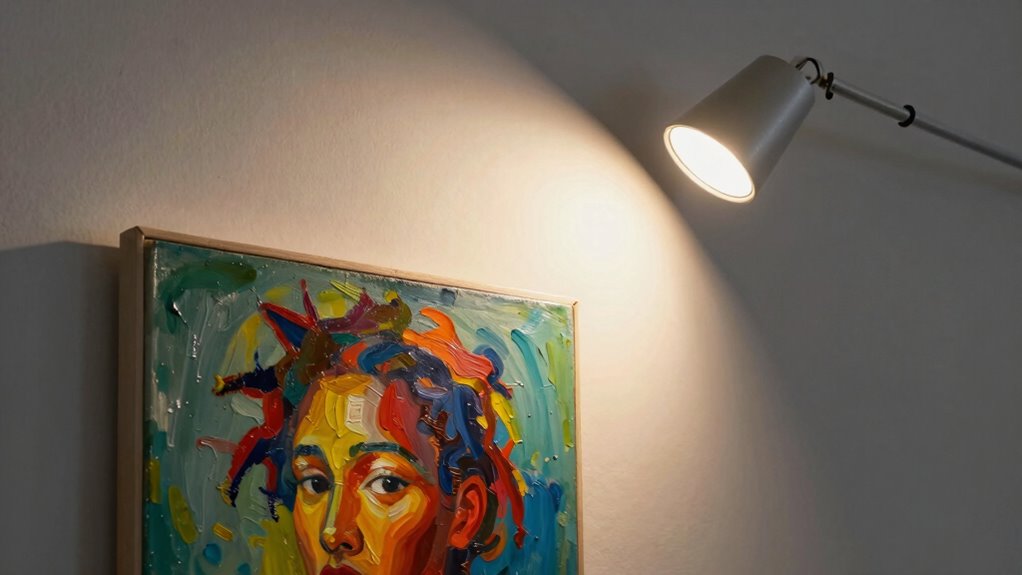
Understanding how a picture light’s beam spreads is essential for achieving ideal illumination and highlighting artwork effectively. When choosing a light, you might focus on brightness or style, but the beam spread plays a vital role in how well your artwork is showcased. Two key factors influence this spread: color temperature and beam angle. These elements determine not just how bright the image appears but also how the light interacts with the piece and the surrounding space. Additionally, the beam angle can influence the overall aesthetic and ambiance of the display area by controlling the amount of light diffusion. Color temperature affects the mood and perception of your artwork. Measured in Kelvin (K), it determines whether the light appears warm, neutral, or cool. A warmer temperature, around 2700K to 3000K, creates a cozy, inviting atmosphere, while cooler temperatures, around 4000K to 5000K, give a crisper, more clinical look. When considering beam spread, the color temperature helps you decide how evenly the light will fall across the artwork. For example, a narrow beam with a higher color temperature can produce a sharp, focused glow that emphasizes details, whereas a wider beam with a warmer temperature offers a softer, more ambient effect. The beam angle is what truly defines how your picture light disperses its illumination. If you opt for a narrow beam angle—typically less than 30 degrees—you’ll get a concentrated, intense light that highlights specific areas or details. This is ideal for emphasizing focal points in a painting or photograph. On the other hand, a wider beam angle—around 60 degrees or more—spreads light more broadly, creating an even wash over the entire piece. This is perfect when you want to avoid harsh shadows and achieve a balanced, natural look. Understanding how these factors interact helps you match the right picture light to your artwork and space. A narrow beam with a cool color temperature can add drama and focus to a piece, while a wider beam with warmer tones lends a relaxed, inviting feel. It’s also worth noting that the beam angle influences how much light spills onto adjacent areas. If your goal is to spotlight a single piece without illuminating nearby walls or frames, a narrow beam is preferable. Conversely, if you want a softer, more uniform glow, a wider beam will serve you better. Considering light positioning is also crucial, as it impacts the overall effectiveness of your lighting setup and how the beam spread interacts with your space. Properly positioning your lights can enhance the visual impact of your artwork and create a more harmonious environment.
picture light with adjustable beam spread
As an affiliate, we earn on qualifying purchases.
As an affiliate, we earn on qualifying purchases.
Frequently Asked Questions
How Does Beam Spread Affect Picture Visibility in Different Room Sizes?
You’ll notice that beam spread directly impacts picture visibility across different room sizes. A narrow spread creates focused gallery illumination, highlighting specific art pieces, ideal for small rooms. Conversely, a wider beam disperses light evenly, offering broad light focal points perfect for larger spaces. Adjusting beam spread guarantees your artwork remains vibrant and well-lit, regardless of room size, enhancing overall display and viewer experience.
Can Beam Spread Be Adjusted on All Types of Picture Lights?
Oh, absolutely, because every picture light comes with a magical beam spread dial, right? Sadly, no. You’ll find that beam spread terminology varies, and not all fixtures are compatible with adjustable options. Some lights have fixed spreads, making it tricky to customize. So, before buying, check fixture compatibility and whether the light offers adjustable beam spread, or you might end up with a glare-filled disaster instead of perfect illumination.
What Is the Ideal Beam Spread for Highlighting Artwork?
For highlighting artwork, an excellent beam spread is narrow, around 10 to 20 degrees, to focus the light precisely without spill. Keep in mind that your chosen color temperature should enhance the artwork’s tones, typically around 3000K to 4000K. Also, mount the light at the right height—about 6 to 12 inches above the artwork—to achieve peak illumination without causing glare or uneven lighting.
How Does Beam Spread Influence Energy Efficiency?
A narrower beam angle concentrates light, making your artwork look vibrant while using less energy, which boosts energy efficiency. When you choose the right color temperature, it enhances the artwork’s appearance without needing extra brightness. Conversely, a wider beam angle spreads light more broadly but can waste energy illuminating areas you don’t need. So, selecting the proper beam angle and color temperature helps you save energy and achieve the perfect illumination.
Are Narrow or Wide Beams Better for Small or Large Pictures?
You’ll want a wide beam for small pictures, ironically, because narrow beams seem more precise but can leave your artwork in shadows. For large pictures, a narrow beam might seem tempting, yet it risks uneven lighting. Consider beam color to match the ambiance, and installation height to guarantee the light spreads evenly. Ultimately, choosing the right beam spread enhances your display, making even modest art shine brilliantly.
artwork display LED picture light
As an affiliate, we earn on qualifying purchases.
As an affiliate, we earn on qualifying purchases.
Conclusion
Just like a lighthouse guides ships safely through darkness, understanding the beam spread of your picture light can transform your space. When you choose the right spread, you create a warm, inviting glow that highlights your artwork beautifully. Ignoring this detail is like sailing without a compass—your décor might miss its true potential. So, think of your light as a beacon, illuminating your treasures and turning your room into a gallery worth exploring.
warm white picture light 60 degree beam
As an affiliate, we earn on qualifying purchases.
As an affiliate, we earn on qualifying purchases.
narrow beam picture light for focal points
As an affiliate, we earn on qualifying purchases.
As an affiliate, we earn on qualifying purchases.
Columbus Day / Indigenous Peoples' Day Picks
long weekend sales
As an affiliate, we earn on qualifying purchases.