
TL;DR

Get business pricing on your home office setup
- Business-only prices and quantity discounts
- Tax-exempt purchasing
- Multiple users, one account, clear invoices
Hunker reports that decorative, layered lighting is emerging as a kitchen design trend for 2027, moving attention beyond a single central ceiling fixture. The report points to sconces, lamps, sculptural fixtures and accent lighting, but does not provide survey data or evidence that the trend will appear in kitchens everywhere.
Layered decorative lighting is being forecast as a kitchen design trend for 2027, according to a report by Hunker. The approach uses multiple fixtures—including sconces, lamps and accent lights—to make kitchens feel warmer and more adaptable than rooms lit mainly by a single central ceiling fixture.
Hunker’s report describes a shift away from treating kitchen lighting as a purely functional feature. It says designers are considering kitchens as both workspaces and gathering places, prompting more varied lighting intended to serve practical needs while contributing to the room’s appearance. The report does not cite a survey, sales figures or other data establishing how widespread the shift is.
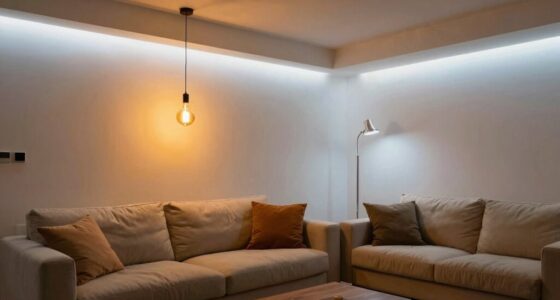
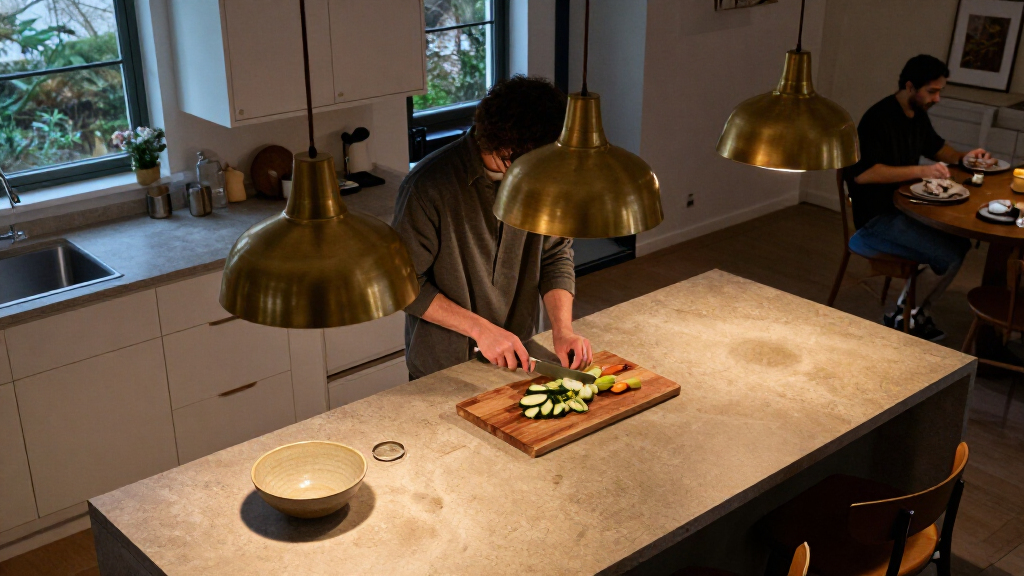
The suggested approach combines light sources at different heights and for different purposes. A central fixture might be joined by wall sconces, pendants or counter lamps, with under-cabinet or other task lighting retained where needed. Hunker also highlights sculptural shapes, warm metals, textured shades and dimmable or portable options as design choices appearing in the forecast.
For smaller additions, the article points to rechargeable table lamps that can sit on a kitchen counter. Accent lighting, including strip lights at a home bar or uplighting for an architectural feature, can draw attention to specific parts of the room. These are examples from the report, not requirements for adopting the trend.
Why Kitchens May Get Softer Light
The forecast reflects a broader design idea: kitchens can function as social rooms as well as places to prepare food. A mix of lighting can allow people to use the same space for food preparation, dining and gathering, rather than relying on one bright overhead source for every activity. The report frames decorative fixtures as a way to add atmosphere alongside illumination.
For homeowners, the practical implication is that a lighting update need not begin with replacing every fixture. Adding a lamp, a sconce or targeted accent lighting may create more variation, although the appropriate choices depend on the room’s layout and how it is used. Task lighting still matters where clear visibility is needed for cooking; decorative lighting is not a substitute for adequate illumination.
The forecast also points to lighting as a visible part of a kitchen’s overall design. Fixtures with distinctive forms, finishes or materials can contribute to the room’s character. That can matter to readers planning a renovation, but Hunker’s report does not establish that these choices will increase a home’s value or prove more popular than other styles.
As an affiliate, we earn on qualifying purchases.
From One Fixture to Layers
Many kitchens use a central ceiling fixture alongside island pendants or under-cabinet lighting. Hunker describes the 2027 direction as extending that familiar combination, with decorative fixtures treated as part of the room’s design rather than only as sources of light. The forecast is a design report, not a formal industry-wide projection.
The article attributes a related prediction to Michaela Sedlak of ODE Design, speaking to House Beautiful: “Sconces, art-style picture lights, and other architectural lighting will become just as important if not more than pendant lights.” Her comment points to greater variety in fixture types, but it remains a designer’s forecast rather than evidence of current adoption rates.
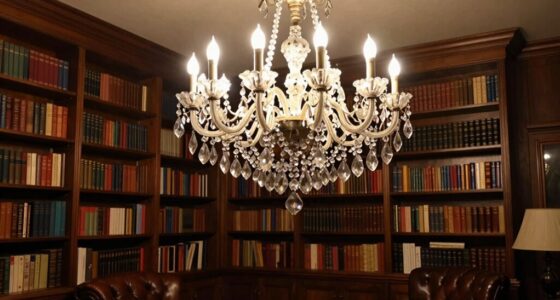
Hunker’s examples range from woven shades and aged brass accents to high-gloss pendants and portable lamps. The common thread is layering light at different heights and using some sources to emphasize features, rather than depending exclusively on overhead lighting.
“Sconces, art-style picture lights, and other architectural lighting will become just as important if not more than pendant lights.”
— Michaela Sedlak of ODE Design, quoted by House Beautiful
adjustable LED table lamp for kitchen
As an affiliate, we earn on qualifying purchases.
As an affiliate, we earn on qualifying purchases.
How Broad the Trend Will Be
The report does not provide consumer survey results, sales data or market forecasts to show how many homeowners or designers are adopting layered decorative lighting. Its headline’s suggestion that the look will appear “everywhere” is not backed by a measured adoption rate in the supplied material. The extent and pace of any shift remain unclear.
It is also unknown which specific fixture styles or finishes will become most common, or whether the forecast will vary by home type, budget or region. The article offers design examples and a designer’s prediction; it does not establish that one lighting scheme is suitable for every kitchen.
sculptural pendant lighting fixtures
As an affiliate, we earn on qualifying purchases.
As an affiliate, we earn on qualifying purchases.
What to Watch in 2027
As 2027 approaches, readers can look for whether designers, retailers and homeowners feature more sconces, portable lamps and accent lighting in kitchen projects. Sales figures or broader industry surveys would help show whether the forecast is translating into widespread adoption; none are included in the report.
For anyone considering a change, the report’s practical suggestion is to think in layers: retain lighting for cooking tasks, then consider additional sources for atmosphere or to highlight a feature. Which fixtures make sense will depend on the kitchen’s layout and needs. The trend’s reach will become clearer as more projects and market information emerge.
As an affiliate, we earn on qualifying purchases.
Key Questions
What kitchen lighting trend is forecast for 2027?
Hunker identifies layered decorative lighting as a trend to watch, with multiple sources used instead of relying mainly on one central ceiling fixture.
Which fixtures are mentioned in the report?
The report names sconces, pendants, table lamps and accent lighting, along with sculptural fixtures and options with warm metals or textured shades.
Does the report prove the trend will be common in every kitchen?
No. It offers a 2027 design forecast but provides no adoption survey, sales figures or other data showing how widespread the approach will be.
Does decorative lighting replace task lighting?
No. The report describes adding decorative and accent sources to a lighting scheme. Kitchens still need adequate task lighting for cooking and other practical activities.
Source: rss
Columbus Day / Indigenous Peoples' Day Picks
long weekend sales
As an affiliate, we earn on qualifying purchases.