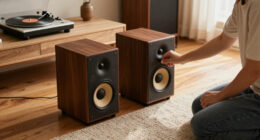
Adding acoustic panels in your living room can markedly reduce noise and echo, creating a more comfortable space. By absorbing sound waves bouncing off walls and furniture, they improve sound clarity and prevent reflections. You can choose from various materials, styles, and sizes to match your decor while optimizing performance. Proper placement at reflection points makes a big difference. If you keep exploring, you’ll discover simple tips to install and maintain them for the best results.

Get your home office setup delivered free — and shop member deals
- Fast, free delivery on millions of items
- Access to Prime Big Deal Days deals on October 6–7
- Prime Video, Amazon Music and more included
Key Takeaways
- Acoustic panels reduce echo and noise, creating a more peaceful and comfortable living room environment.
- Proper placement of panels at reflection points enhances sound quality and clarity.
- Stylish designs and colors allow panels to blend seamlessly with home decor.
- Selecting the right material, like mineral wool or fabric-covered foam, optimizes sound absorption for specific needs.
- Easy DIY installation and maintenance ensure long-term performance and aesthetic appeal.
acoustic wall panels for living room
As an affiliate, we earn on qualifying purchases.
As an affiliate, we earn on qualifying purchases.
How Acoustic Panels Reduce Noise and Echo in Your Living Room

Acoustic panels are highly effective at reducing noise and echo in your living room because they absorb sound waves that bounce off walls and furniture. The material options for these panels vary, including foam, fabric-wrapped, mineral wool, and wood, each offering different levels of sound absorption. Foam panels are lightweight and affordable, ideal for high-frequency sound control, while mineral wool provides excellent absorption for low-frequency sounds. Fabric-wrapped panels combine style with functionality, blending seamlessly into your decor. By trapping sound waves, these panels prevent them from bouncing around the room, creating a quieter, more comfortable space. Incorporating sound absorption techniques like acoustic panels can significantly improve the room’s acoustics and overall comfort. Additionally, understanding the material properties of each option can help you select the most effective solution for your specific needs. Considering the installation options can also ensure that your acoustic treatments are both effective and aesthetically pleasing. Properly installed panels can also help prevent the reflections that contribute to echo and sound distortion, further enhancing the listening experience. Choosing the right soundproofing materials can maximize the effectiveness of your acoustic treatment and create a more peaceful environment.
As an affiliate, we earn on qualifying purchases.
How to Choose the Best Acoustic Panels for Your Space

Choosing the right acoustic panels for your space involves considering several key factors to guarantee ideal sound absorption and aesthetic harmony. First, evaluate material options—fiberglass, foam, or fabric-covered panels offer different soundproofing qualities and durability. Next, think about color choices; select hues that complement or subtly contrast your decor to maintain visual appeal. Finally, consider panel size and shape to fit your room’s dimensions and layout. Additionally, understanding child-friendly materials can help ensure the panels are safe and suitable for homes with kids. Incorporating soundproofing standards can also guide you in selecting panels that meet safety and performance benchmarks. Being aware of acoustic material certifications can further ensure you choose high-quality, effective options. Recognizing environmentally sustainable materials can also contribute to a more eco-friendly living space. Moreover, selecting panels with proper installation methods guarantees optimal performance and longevity.
As an affiliate, we earn on qualifying purchases.
Stylish Acoustic Panel Designs That Fit Your Decor

When selecting acoustic panels, matching their design to your living room’s decor can make a significant difference in creating a cohesive and stylish space. You’ll find a variety of color options that blend seamlessly with your existing palette or add a bold pop of contrast. Material varieties range from fabric-covered panels to sleek wood or foam designs, allowing you to choose textures that complement your furniture and decor style. For a modern look, opt for clean, minimalist panels in neutral tones. If you prefer a more eclectic vibe, colorful or patterned options can serve as statement pieces. The key is to select designs that enhance your aesthetics while still providing effective sound absorption. Incorporating traditional skills into the design process can also help create unique, handcrafted panels that reflect cultural heritage and craftsmanship. When choosing the right materials, considering their sound absorption properties can ensure both style and functionality are achieved. Conducting a material durability assessment can help your acoustic panels maintain their appearance and effectiveness over time. Additionally, paying attention to material maintenance can also assist in selecting options that are easy to clean and sustain. With the right style, your acoustic panels become both functional and visually appealing.
decorative sound absorption panels
As an affiliate, we earn on qualifying purchases.
As an affiliate, we earn on qualifying purchases.
Easy Tips for Installing Your Acoustic Panels

Installing acoustic panels can be straightforward if you follow a few simple steps. First, plan your panel placement by identifying areas where sound reflects most, such as walls behind speakers or near seating. Second, for DIY installation, gather necessary tools like a level, measuring tape, and appropriate wall anchors. Third, carefully mark where each panel will go to guarantee even spacing and alignment. Use a level to make sure panels are straight before attaching. Proper panel placement maximizes sound absorption and keeps your living space visually appealing. Keep measurements consistent and avoid rushing the process. Additionally, understanding sound reflection points can help you optimize your panel placement for the best acoustic results. Recognizing room acoustics can further enhance the effectiveness of your acoustic treatment. Considering soundproofing techniques can also help reduce unwanted noise from outside sources. To ensure your panels perform optimally, it’s helpful to learn about sound absorption and how different materials influence sound quality. Being aware of sound diffusion can also improve the overall acoustic environment. With these tips, your DIY installation becomes manageable, efficient, and results in a better acoustic environment.
Maintain and Maximize Your Acoustic Panel Performance

Once your acoustic panels are in place, maintaining their performance guarantees your living room stays acoustically optimized over time. Regularly check the material options to guarantee panels remain undamaged and effective. Cleaning techniques vary depending on the material; some panels need gentle dusting, while others might require more careful vacuuming. Proper installation techniques are essential for long-term performance—guarantee panels stay securely mounted and aren’t shifted or loosened. Avoid exposure to excessive moisture or direct sunlight, which can degrade materials. If you notice a decline in sound absorption, consider repositioning panels or adding more where needed. Understanding material properties and consistent upkeep help you maximize their lifespan and acoustic benefits, keeping your living space peaceful and sound-perfect. Additionally, staying informed about digital project spaces can help you discover innovative ways to track and manage your maintenance routines more effectively, especially by utilizing air quality monitoring tools to ensure your environment remains comfortable and healthy. Incorporating regular inspections can further ensure that your acoustic panels continue to perform optimally over time. Keeping tabs on environmental factors can also prevent unexpected deterioration of your panels.
Frequently Asked Questions
Are Acoustic Panels Safe for Children and Pets?
Yes, acoustic panels are generally safe for children and pets if you choose non-toxic, low-VOC materials. You should guarantee they’re securely mounted to prevent any risk of falling. For child safety and pet protection, avoid panels with sharp edges or toxic glues. Regularly inspect them for damage. By selecting safe, well-installed panels, you create a quieter, safer living space that benefits everyone.
Can Acoustic Panels Improve Sound Quality for Music Listening?
Did you know acoustic panels can boost sound clarity by reducing echoes? They definitely improve your music listening experience. By absorbing excess sound, they help create a cleaner, more detailed audio environment. With acoustic panels, you’ll notice enhanced music quality, sharper vocals, and richer instrument tones. So, if you want better sound quality in your living room, these panels are a smart choice for music enhancement.
How Long Do Acoustic Panels Typically Last?
Acoustic panels usually last between 10 to 15 years, depending on material durability and panel maintenance. If you regularly clean them and avoid excessive moisture or sunlight, you can extend their lifespan. High-quality materials like dense foam or wood tend to be more durable. Over time, you might need to replace or reposition panels to maintain ideal sound quality and appearance, but with proper care, they’ll serve you well for years.
Are There Eco-Friendly or Sustainable Acoustic Panel Options?
Yes, you can find eco-friendly acoustic panels that make you feel good about your choices. Think of them as the superheroes of sustainability—made from recycling materials and biodegradable options, they help reduce waste and environmental impact. By choosing these green alternatives, you’re not only improving your living space’s acoustics but also contributing to a healthier planet. Eco-conscious options let your decor be both stylish and kind to the Earth.
Do Acoustic Panels Require Professional Installation or Can I Do It Myself?
You can definitely do DIY installation of acoustic panels if you’re comfortable with basic tools and measurements. Many panels come with adhesive strips or mounting hardware, making the process straightforward. However, for a seamless, professional look—especially with larger or more complex setups—consider seeking professional assistance. They guarantee proper placement and maximum soundproofing, saving you time and guaranteeing a clean, polished result.
Conclusion
Incorporating acoustic panels into your living room subtly transforms your space from a lively hub to a peaceful retreat. With a few thoughtful choices and simple installation tips, you’ll create an environment where every conversation is clearer and every moment feels calm. Think of it as adding a gentle whisper of serenity—quietly enhancing your daily comfort without overwhelming your décor. Embrace this small change, and enjoy a more harmonious, inviting living space.
Evergreen bestsellers Picks
bestsellers
As an affiliate, we earn on qualifying purchases.