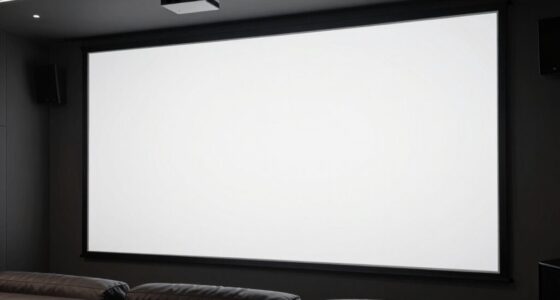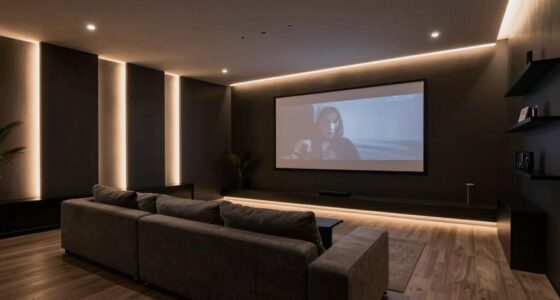
Your media room’s seating distance might feel off because you’re not aligned with ideal viewing angles and sound placement. Sitting too close can cause eye strain and poor sound distribution, while sitting too far reduces detail and clarity. When your seats aren’t positioned correctly, it’s hard to fully enjoy the immersive experience you’re after. If you want to discover how to fix this and make everything feel just right, keep going—there’s more to learn.
Key Takeaways
- Incorrect seating distance can cause eye strain, making the viewing experience uncomfortable until properly adjusted.
- Sitting too close or too far distorts image perception and diminishes sound clarity, creating a sense of imbalance.
- Proper measurement of eye-to-screen distance ensures optimal viewing angles and immersive media enjoyment.
- Misaligned seating positioning can lead to glare, reflections, and poor acoustics, making the setup feel off.
- Once the ideal distance is found, visual and audio harmony enhances comfort, clarity, and overall media room satisfaction.

Klein Tools Laser Distance Measure, Measures in Feet, Inches, Meters
ACCURATE: Laser Distance Measure measures 2-Inches to 100-Feet with precision: +/- 1/16-Inch for the first 30-Feet, and +/-…
As an affiliate, we earn on qualifying purchases.
As an affiliate, we earn on qualifying purchases.
Why Your Seating Placement Affects Comfort and Viewing Quality
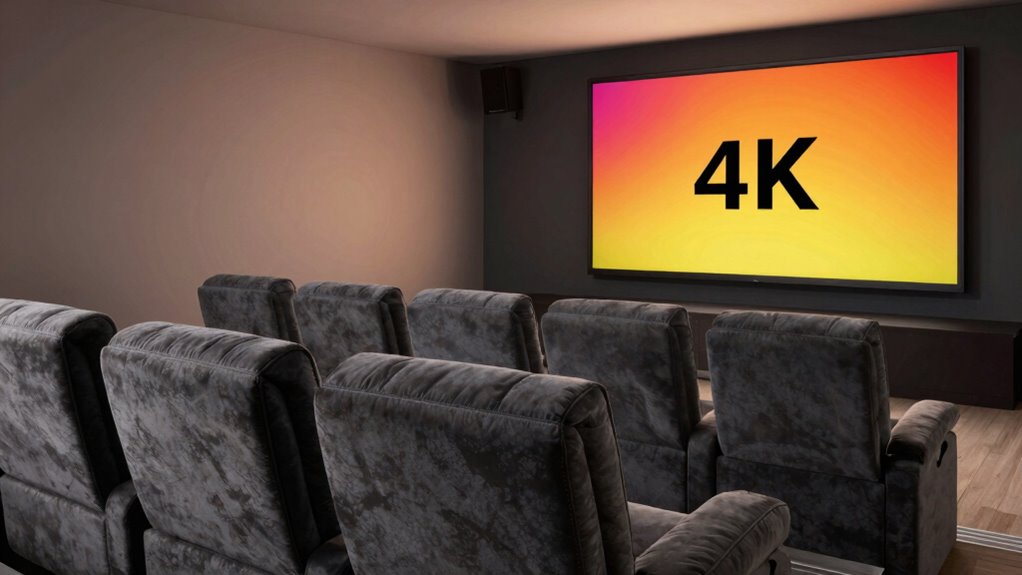
Your seating placement directly impacts both how comfortable you feel and how well you can enjoy the content on your screen. Proper positioning guarantees you experience ideal viewing angles, reducing strain on your neck and eyes. It also helps maximize soundproofing improvements, so you won’t be distracted by outside noise, creating a more immersive experience. Lighting optimization plays a role too; sitting at the right distance minimizes glare and reflections on the screen, making images clearer and more vibrant. If you’re too close, you risk discomfort and poor sound distribution, while sitting too far can diminish detail and sound clarity. Additionally, seating distance influences the overall acoustics of your media room, helping to prevent sound from becoming muddled or echoing. Optimal seating placement is essential for balancing comfort, sound quality, and visual enjoyment. By carefully choosing your seating placement, you create a balanced environment that enhances comfort, sound quality, and visual enjoyment—all essential for a perfect media room experience.

SESHINELL Lazy Chair with Ottoman, Modern Accent Chair Contemporary Sofa Chair with Armrests, Reading Chair and Folding Footstool Set for Living Room, Bedroom, Office, Dark Grey
【ERGONOMIC & COMFY DESIGN】This lazy chair features an ergonomic seat and armrest that provide excellent support for your…
As an affiliate, we earn on qualifying purchases.
As an affiliate, we earn on qualifying purchases.
Common Seating Mistakes in Media Rooms (And How to Spot Them)
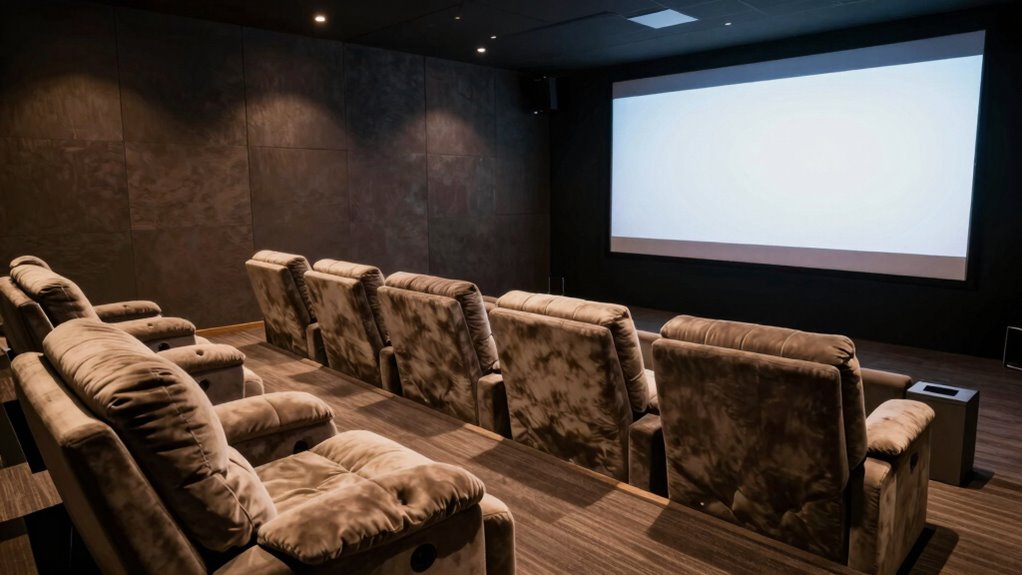
Many common seating mistakes can undermine your media room experience, often without you realizing it. Poor seating ergonomics can lead to discomfort during long viewing sessions, making it hard to stay focused. For example, seats that are too hard, too soft, or positioned incorrectly can cause strain on your back and neck. Additionally, neglecting acoustic optimization through your seating arrangement can create sound reflections or dead spots, diminishing audio clarity. Spotting these mistakes involves checking if your seats promote good posture and if they’re arranged to minimize sound interference. Avoid placing seats too close or too far from the screen, and guarantee they’re positioned to support ideal sound distribution. Correcting these issues improves both comfort and sound quality, elevating your media room experience.

NeatiEase Wood Slat Wall Panels, 4-Piece 96" x 12.6", Soundproof & Noise Cancelling, Acoustic Wall Panels (Black)
Modern and Elegant Design – The wood slat wall panels have been carefully designed to effortlessly transform any…
As an affiliate, we earn on qualifying purchases.
As an affiliate, we earn on qualifying purchases.
The Science of Viewing Angles and Eye Perception
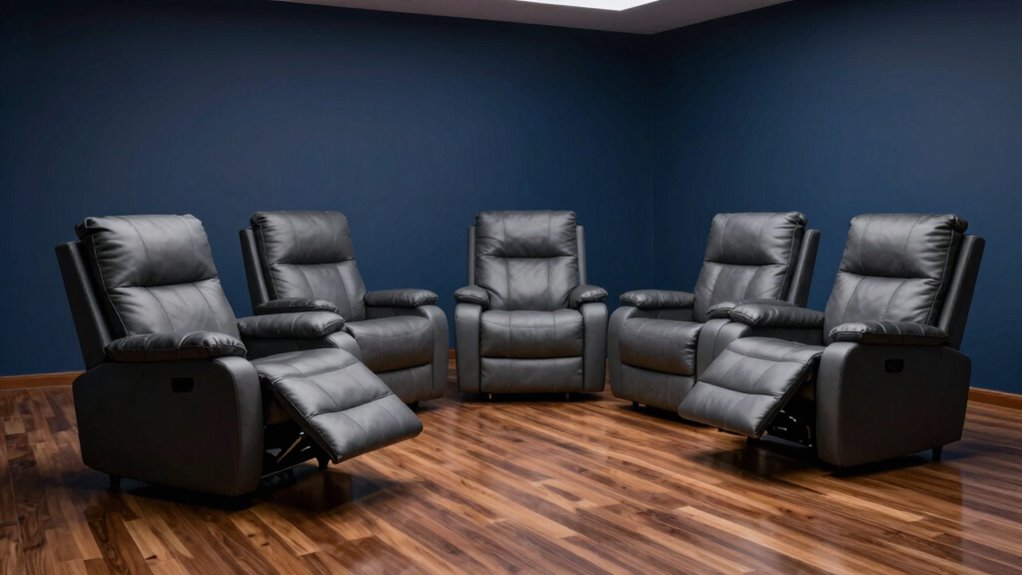
Understanding the science behind viewing angles and eye perception is essential for enhancing your media room setup. Your visual perception depends heavily on the angles at which you view the screen. When you sit at an ideal viewing angle, your eyes process images more accurately, reducing distortion and eye strain. The human eye perceives images best within a certain range of viewing angles; outside this zone, colors may fade and details become harder to distinguish. This explains why sitting too far to the side or too close can make the picture feel wrong, even if the screen size seems right. By understanding how your eyes perceive images at different angles, you can position your seating for a more immersive, comfortable viewing experience. Additionally, viewing angles influence how well you can enjoy content without experiencing color shifts or blurriness.

Sweetcrispy Massage Recliner Chair for Adults, Adjustable Home Theater Seating with Lumbar Support for Living Room, Modern Fabric Reclining, Grey
【Adjustable Reclining Comfort】Effortlessly switch between 90° and 160° reclining positions to suit your needs, whether it’s sitting upright,…
As an affiliate, we earn on qualifying purchases.
As an affiliate, we earn on qualifying purchases.
How to Measure and Adjust Your Seating Distance for the Perfect Setup
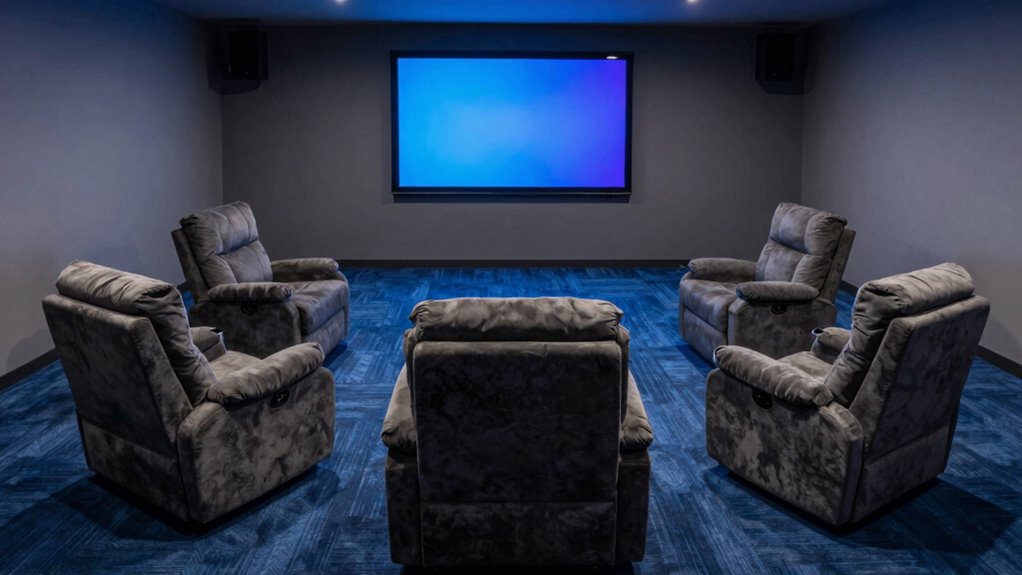
To achieve the ideal viewing experience, measuring and adjusting your seating distance accurately is key. Start by sitting at your chosen spot, then use a tape measure to find the distance from your eyes to the screen’s center. Consider the screen size and recommended viewing distances for maximum clarity. To enhance the setup, perform audio calibration to ensure sound complements your visual experience, and optimize lighting to reduce glare. Use this table to guide your adjustments:
| Adjustment Focus | Tips |
|---|---|
| Seating Distance | Match screen size with distance for clarity |
| Audio Calibration | Fine-tune speakers for balanced sound |
| Lighting Optimization | Minimize glare and reflections |
Proper measurement and adjustments create a balanced, immersive media room.
Tips for Creating a Balanced, Immersive Media Room Experience
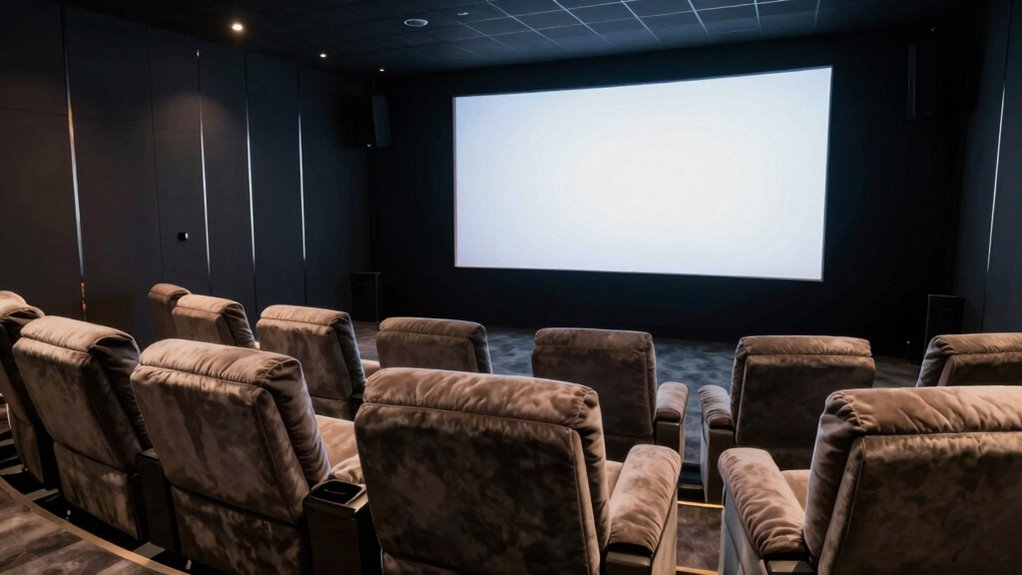
Creating a balanced, immersive media room starts with thoughtful planning and attention to detail. First, optimize the acoustics by adding rugs, curtains, and sound panels to minimize echo and enhance sound clarity. Second, invest in lighting control to create the right ambiance; use dimmable lights or smart lighting systems to adjust brightness as needed. Third, arrange your seating to promote a natural flow and maintain proper distance from screens, ensuring everyone gets an even viewing experience. These steps help you craft a space where sound feels rich and visuals are sharp, making your media experience truly immersive. Prioritizing acoustic optimization and lighting control guarantees your room feels just right, pulling you into the action without distractions.
Frequently Asked Questions
How Does Room Lighting Influence Perceived Seating Comfort?
Room lighting greatly influences your perceived seating comfort by creating the right ambiance. Ambient lighting helps soften shadows and make the space feel cozy, while glare reduction minimizes eye strain from screens. When lighting is well-balanced, you’ll notice less discomfort and feel more relaxed in your media room. Adjusting these lighting elements guarantees you stay comfortable during long viewing sessions, making the experience more enjoyable and immersive.
What Materials Are Best for Soundproofing Media Room Seating Areas?
For soundproofing your media room seating areas, use soundproofing fabrics like dense, thick textiles that absorb sound effectively. Combine these with acoustic panels strategically placed on walls or behind seating to reduce echo and noise leakage. These materials work together, creating a quieter environment and enhancing your viewing experience. Make sure the fabrics are comfortable and match the room’s aesthetic for the best results.
Can Adjustable Furniture Improve Long-Term Viewing Comfort?
Yes, adjustable furniture can considerably improve your long-term viewing comfort. Opt for modular pieces with ergonomic design features, allowing you to customize your seating position easily. This flexibility helps reduce strain on your neck and back during extended viewing sessions. By adapting your seating to your body’s needs, you’ll enjoy a more comfortable, immersive experience, making it easier to relax and focus on your favorite media without discomfort.
How Often Should I Reassess My Media Room Seating Arrangement?
Think of your media room as a living, breathing space—you should reexamine your seating arrangement every few months. Adjustments keep your seating posture comfortable and your furniture arrangement optimized for viewing angles and distance. If you notice discomfort or fatigue, it’s time to tweak the setup. Regularly re-evaluating ensures your space adapts to your evolving needs, making every movie night feel like a first-run premiere.
Are There Specific Color Schemes That Enhance Viewing Experience?
Choosing a color scheme based on color psychology can boost your viewing experience, so opt for calming hues like blue or green to reduce eye strain. Incorporate contrast enhancement with darker walls and lighter furniture or accents, which helps reduce glare and makes images pop. Avoid overly bright or busy patterns that can distract, and instead, select colors that promote focus and comfort, creating an ideal environment for movies and gaming.
Conclusion
Think of your media room as a dance floor; the right distance is your perfect rhythm. When you’re too close or too far, it’s like missing a beat—uncomfortable and off. But once you find that sweet spot, everything flows seamlessly, and your viewing experience becomes a mesmerizing performance. Trust the science, make those adjustments, and soon your media room will feel just right—like the perfect dance partner guiding you into pure cinematic harmony.