Choosing the right screen gain for your projector room depends on your lighting conditions and how you want your images to look. Higher gain screens make images brighter but can cause glare and limited viewing angles, while lower gain screens offer better color accuracy and wider viewing angles. Balancing gain with ambient light and room setup is key to avoiding common pitfalls. If you keep these tips in mind, you’ll find out how to optimize your setup further.
Key Takeaways
- Higher gain screens boost brightness but may cause glare and narrow viewing angles, especially in well-lit rooms.
- Low gain screens offer better color accuracy and wider viewing angles but require a darker environment for optimal brightness.
- Matching screen gain to ambient light conditions is crucial for balanced image quality and viewer comfort.
- Excessively high gain screens can lead to hot-spotting and color washout, reducing overall image clarity.
- Proper installation and lighting control are essential to maximize the benefits of your chosen screen gain.

Projector Screen with Stand, Paris RHÔNE 100-inch Outdoor Indoor Projector Screen 16:9 4K HD PVC, 1.5 Gain Portable Wrinkle-Free Movie Screen for Home Backyard Theater with Carry Bag, Ground Nails
Premium PVC Projector Screen: Made with cinema-grade 1.5 gain PVC material and multi-layer coating for clear, bright, and…
As an affiliate, we earn on qualifying purchases.
As an affiliate, we earn on qualifying purchases.
What Is Screen Gain and Why It Matters
Screen gain refers to how much light a projector screen reflects compared to a standard white, matte surface. This measurement directly affects color accuracy and overall image quality. A higher gain screen reflects more light, making images appear brighter, especially in well-lit rooms. However, this can sometimes cause glare or wash out colors if not chosen carefully. In rooms with ambient light, understanding gain helps you select a screen that maintains color accuracy without sacrificing brightness. If ambient light is high, a screen with a higher gain might be beneficial to keep images vivid. Conversely, in darker rooms, a lower gain screen offers better color fidelity and reduces hot-spotting. Ultimately, knowing your room’s lighting conditions and desired image quality helps you pick the right gain for your projector setup. Additionally, screen positioning and viewing angles are important factors to consider when choosing a gain level. For example, selecting the appropriate gain also involves understanding how light reflection impacts overall image consistency across different seating areas. Considering ambient light conditions can further help optimize your viewing experience, especially when combined with appropriate ventilation to reduce indoor light contamination that can affect perceived image quality. Properly managing ambient light can prevent unwanted interference with the projected image, ensuring a clearer and more immersive viewing experience.

High gain 100 Inch Projector Screen – Wall Mounted – 2.6X Brightness and High Contrast 30% ALR -16:9 White Screen – by SilverMagic
★【BRIGHTNESS BOOST】This screen displays significantly brighter images than a normal white screen when viewed from center seats (up…
As an affiliate, we earn on qualifying purchases.
As an affiliate, we earn on qualifying purchases.
How Different Screen Gains Affect Brightness and Contrast
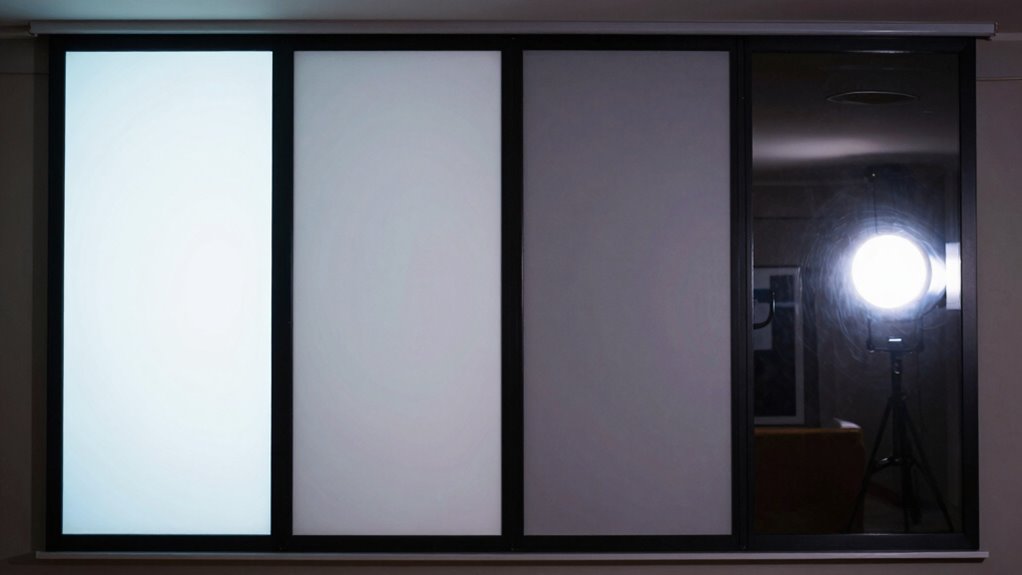
Higher screen gains reflect more light, making images look brighter and more vivid. This increased brightness can improve clarity, especially in rooms with ambient light, but it may also impact color accuracy. Understanding screen gain is essential for optimizing image quality based on your room’s lighting conditions. High-gain screens tend to enhance contrast, helping dark scenes appear richer, but they can sometimes cause hot spotting—areas that seem brighter than others. Conversely, lower gain screens distribute light more evenly, which preserves color fidelity and reduces glare. If ambient light is a concern, a higher gain screen can boost brightness, but it might compromise color accuracy and contrast consistency. Balancing gain with your room’s lighting conditions is key to achieving ideal image quality, ensuring your projector delivers vibrant, well-defined visuals without sacrificing true-to-life colors. Additionally, understanding how ambient light conditions impact your display can guide your choice of screen gain for optimal viewing. Recognizing the effect of light scattering can also help in selecting the right screen to minimize unwanted glare and reflections. For example, choosing a screen with the appropriate reflectivity properties can significantly improve overall picture quality in varying lighting environments.

Mdbebbron 120 inch Projector Screen 16:9 Foldable Anti-Crease Portable Projector Movies Screens for Home Theater Outdoor Indoor Support Double Sided Projection
CONVENIENT TO STORAGE AND CARRY : Compact one-piece,lightweight and folding design. You can fold the projector screen in…
As an affiliate, we earn on qualifying purchases.
As an affiliate, we earn on qualifying purchases.
The Downsides of High Gain Screens
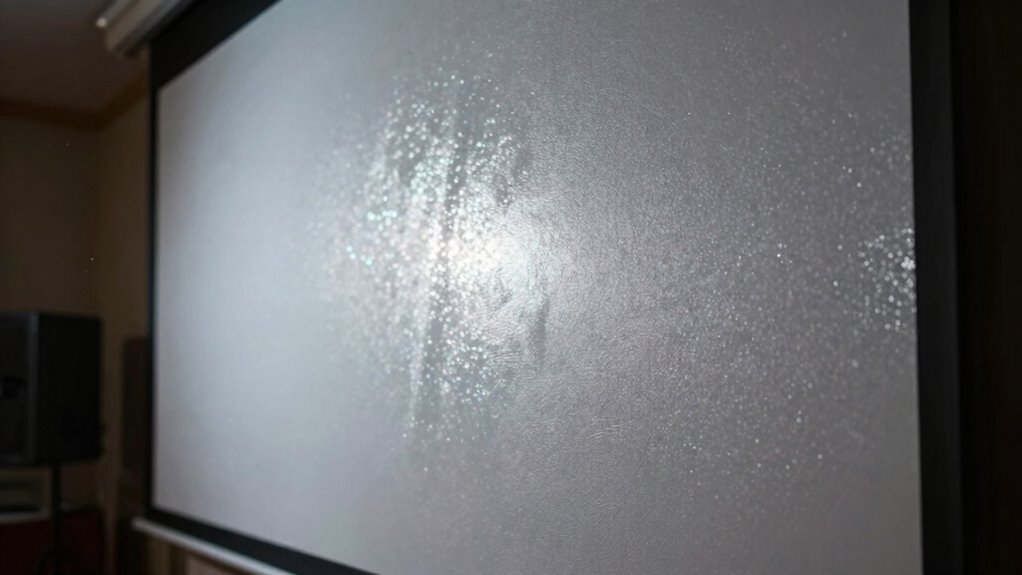
While high-gain screens can boost brightness and contrast, they also come with notable disadvantages. You might notice increased screen glare, which can cause discomfort and make viewing difficult from certain angles. Color distortion is another common issue, where colors appear washed out or overly saturated, reducing picture accuracy. Additionally, the viewing angle becomes narrow, meaning if you’re not directly in front, your image can look dim or distorted. This is particularly problematic in multi-user environments, where consistent image quality is essential. This can be especially frustrating during group presentations or home theater setups where multiple viewers are involved. High-gain screens focus light into a small area, intensifying glare and compromising image quality for anyone off-center. Moreover, the narrow viewing angle can limit the effectiveness of the screen in dynamic or multi-user environments. Ultimately, these drawbacks can outweigh the benefits if your room setup doesn’t support the narrow viewing sweet spot.
projector screen with wide viewing angles
As an affiliate, we earn on qualifying purchases.
As an affiliate, we earn on qualifying purchases.
How to Choose the Best Screen Gain for Your Room
Choosing the right screen gain depends largely on your room’s lighting conditions, seating arrangement, and viewing needs. If your room has high ambient lighting, opt for a screen with a higher gain, such as 1.8 or more, to reflect more light and improve brightness. For darker rooms, a lower gain screen around 1.0 to 1.3 works well, providing a broader viewing angle and better color accuracy. The screen material influences how light is reflected; matte surfaces reduce glare, while glossy ones increase brightness but may cause hot spots. Consider how much ambient lighting enters the room and choose a screen material that balances brightness and image clarity. Your goal is to match the screen gain with your room’s specific lighting and setup for best viewing.
Top Tips to Optimize Your Screen Gain for Better Viewing
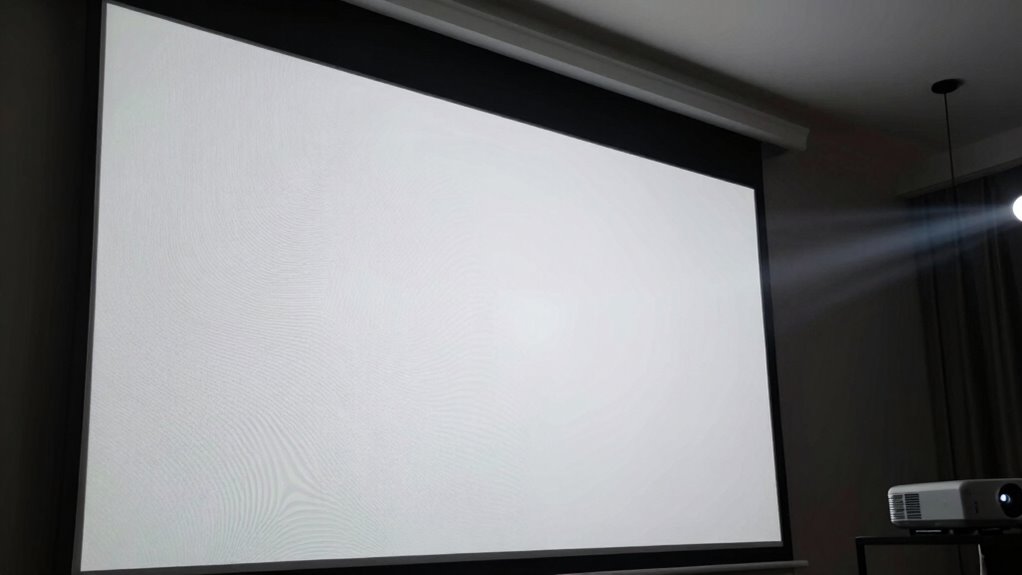
To get the most out of your projector screen, focus on positioning it correctly relative to your room’s lighting and seating arrangement. Proper placement minimizes glare and enhances color accuracy. Here are top tips to optimize your screen gain:
- Mount the screen at eye level for consistent viewing angles and better color perception.
- Use blackout curtains or dim lighting to prevent ambient light from washing out images, ensuring true color accuracy.
- Follow installation tips such as ensuring the screen is taut and level to avoid distortions that can affect image quality.
- Consider the screen gain to select the appropriate screen type for your room conditions and viewing preferences.
Frequently Asked Questions
How Does Room Size Influence Optimal Screen Gain?
Room size directly influences the ideal screen gain because larger rooms require lower gain screens to prevent excessive brightness and reflections. In smaller spaces, higher gain screens can boost brightness without creating harsh lighting reflections. You should consider room acoustics too; a bigger room with poor acoustics benefits from lower gain screens to reduce glare, while lighting reflections are minimized in larger rooms with appropriate gain choices.
Can Screen Gain Impact Projector Lifespan?
Think of your projector screen as the heart of your setup; higher gain screens can strain your projector more, potentially impacting its lifespan. While screen gain doesn’t directly damage your projector, it can influence screen durability and color fidelity over time. Using a screen with appropriate gain helps maintain image quality without overworking your projector, keeping both your visuals sharp and your equipment running smoothly—it’s a win-win situation.
Is Higher Gain Always Better for Ambient Light Conditions?
Higher gain screens aren’t always better in ambient light conditions because they reflect more light, which can lead to increased glare and reduced image clarity. If your room has lots of ambient light, a lower gain screen helps minimize reflection and maintains better contrast. You need to balance gain with your environment to avoid washed-out images. So, choose a screen gain that matches your ambient light levels for ideal viewing.
How Do Different Projector Types Interact With Various Screen Gains?
Projector types perfectly pair with specific screen materials and gains. For instance, DLP projectors work well with high-gain screens, boosting brightness, but narrow viewing angles. LCD projectors excel with medium-gain screens, offering broader viewing angles for larger audiences. Laser projectors perform reliably across various gains, balancing brightness and viewing angles. To optimize image quality, consider your projector type, the screen’s gain, and how viewers will see it from different angles.
What Maintenance Is Required for High Gain Screens?
You need to regularly clean your high gain screen to maintain best image quality. Use a soft, lint-free cloth and mild cleaning solution suitable for the screen material, ideally every few months or when dust and fingerprints appear. Avoid harsh chemicals or abrasive materials, as they can damage the surface. Proper maintenance guarantees your screen stays bright and reflective, enhancing your viewing experience and prolonging its lifespan.
Conclusion
By understanding screen gain, you can pick the perfect screen for your projector room. For instance, if you have a bright room, opting for a higher gain screen will boost visibility, but watch out for glare. Conversely, in a darker space, a lower gain might provide better contrast. With the right choice and some tweaks, you’ll enjoy sharper images and richer colors, turning your home theater into a true cinematic experience.