To get the best sound, place your speakers about 1-2 feet from the walls, adjusting as needed based on your room’s acoustics. Closer to walls causes excessive reflection and boomy bass, while too far can make sound hollow. Precise measurement and small tweaks can prevent overwhelming echoes or thin sound, saving you from costly upgrades or poor performance. Keep experimenting to find the perfect balance—more tips await if you want to fine-tune your setup.

Get your home office setup delivered free — and shop member deals
- Fast, free delivery on millions of items
- Access to Prime Big Deal Days deals on October 6–7
- Prime Video, Amazon Music and more included
Key Takeaways
- Proper speaker distance from walls reduces sound reflections, preventing muddiness and ensuring clearer, more accurate audio.
- Measuring 1-2 feet from walls is a good starting point for optimal sound quality.
- Small adjustments in distance can significantly improve bass response and reduce echo or hollowness.
- Correct placement minimizes echoes and comb filtering, enhancing overall listening clarity.
- Precise measurements and fine-tuning prevent costly upgrades and improve your audio experience.
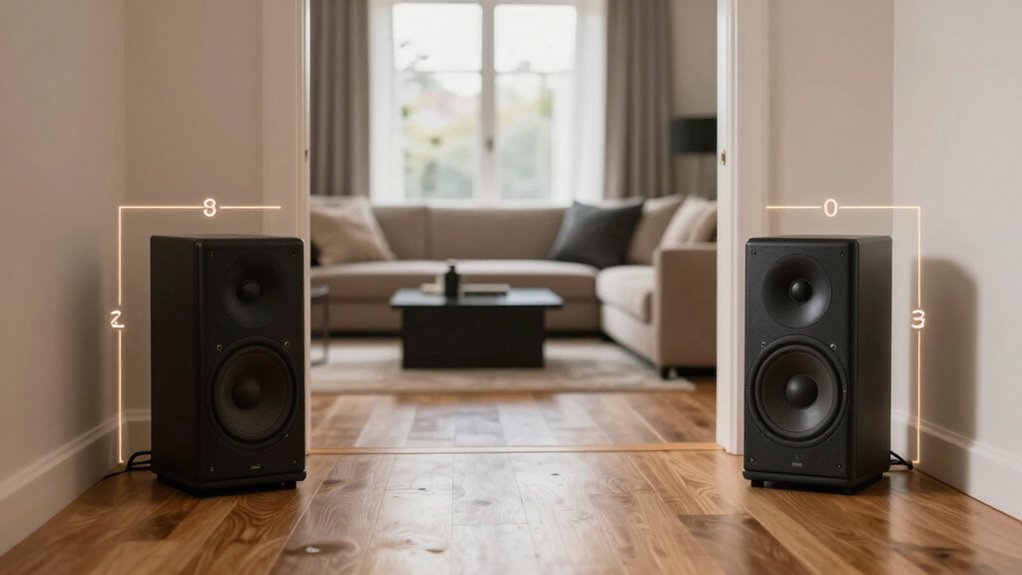
When setting up your speakers, the distance between them and nearby walls can considerably impact sound quality. This isn’t just about aesthetics or convenience; it directly influences how sound waves travel and interact within your space. Your room’s acoustics, in particular, play a crucial role in shaping the listening experience. If your speakers are too close to walls, especially the back and side walls, you might notice excessive sound reflection. These reflections can cause a muddiness or boomy bass, making your audio sound less clear and more distorted. Conversely, placing speakers too far from walls can result in a lack of bass reinforcement, leaving your sound thin or hollow.
Proper speaker distance from walls enhances clarity and bass, creating a more immersive listening experience.
Understanding how room acoustics and sound reflection work together helps you find the sweet spot for speaker placement. When sound waves hit walls, they bounce back toward your ears, creating reflections that blend with the direct sound from your speakers. If these reflections are too strong or arrive at the wrong time, they interfere with the direct sound, causing comb filtering or echoes that distort audio clarity. To avoid this, you need to measure proper distances from walls. A good starting point is positioning your speakers roughly one to two feet away from any nearby wall. This distance reduces direct sound reflection, preventing overwhelming echoes or bass buildup. Knowing the importance of sound reflection can guide you in optimizing your setup for better acoustics. Additionally, considering room acoustics and how they influence sound behavior helps you achieve a more balanced listening environment. Making small adjustments based on acoustic treatment can further improve sound quality by reducing unwanted reflections. It’s also helpful to use a simple measurement tool to ensure consistent placement and optimal sound performance.
Adjusting the speaker distance from walls isn’t just about avoiding problems—it’s also about optimizing sound quality. Experiment with varying the distance slightly, and listen carefully. Moving speakers even a few inches can change how sound reflects and interacts within your room. If you notice excessive echo or bass boom, try increasing the distance from the walls. If the sound feels hollow or lacks depth, bringing them closer might help reinforce the low frequencies. Remember, the room’s acoustics and its influence on sound behavior highlight the importance of tailored speaker placement. The goal is to strike a balance where direct sound and reflections complement each other, creating a natural and immersive listening experience.
Ultimately, measuring and adjusting the distance from walls is a simple yet effective step to improve your audio setup. It allows you to control how sound waves reflect and interact with your room’s acoustics, leading to clearer, more balanced sound. Don’t rely solely on visual placement or assumptions—use your ears and some simple measurements. With a little experimentation, you’ll avoid costly mistakes and enjoy a more authentic sound that truly makes the most of your speakers’ potential. Proper distance from walls is a key measurement that can dramatically enhance your listening environment, saving you from the frustration of poor sound and the expense of unnecessary upgrades.
speaker distance measurement tool
As an affiliate, we earn on qualifying purchases.
As an affiliate, we earn on qualifying purchases.
Frequently Asked Questions
How Often Should I Adjust My Speaker Placement?
You should adjust your speaker placement whenever you notice a change in sound quality or after making acoustic treatments in your room. Regularly checking speaker isolation helps maintain ideal sound, especially if furniture or walls shift. Typically, a quarterly or biannual review works well. Keep experimenting with distance from walls and positioning to find the best sound, ensuring your speakers stay properly aligned for the clearest, most accurate listening experience.
Does Room Size Affect Speaker Distance Recommendations?
Room size definitely impacts speaker distance recommendations, as larger spaces require more precise speaker calibration to avoid sound chaos. Bigger rooms can amplify room acoustics issues, making it seem like your sound is bouncing around wildly. You should adjust your speakers based on room size and acoustics, ensuring they’re positioned to optimize sound clarity. Remember, proper placement in relation to walls and room dimensions is key to epic, distortion-free audio.
Can Improper Placement Damage My Speakers?
Improper placement can indeed damage your speakers over time. When speakers are too close to walls, they can suffer from excessive vibrations or overheating due to poor insulation, especially if they lack adequate acoustic treatment. This stress can lead to internal component damage. To prevent this, guarantee proper speaker insulation and maintain recommended distances from walls. Proper placement not only protects your speakers but also enhances sound quality.
What’s the Ideal Speaker Distance for Different Genres?
For different genres, the ideal speaker distance varies to optimize speaker isolation and minimize sound reflection. For bass-heavy genres like hip-hop or electronic, place your speakers slightly farther apart, around 3-4 feet, to prevent sound reflection issues. For vocals or acoustic music, closer placement enhances clarity. Adjust based on your room’s acoustics, ensuring minimal sound reflection and good speaker isolation, to get the best audio experience regardless of genre.
How Do I Measure the Exact Distance From Wall to Speaker?
You measure the exact distance from wall to speaker with a tape measure or a ruler, ensuring the speaker is placed where it’s isolated from wall vibrations. Ironically, this simple step can make or break your sound quality. Use acoustic treatment to absorb reflections and improve clarity. Keep the speaker’s front panel parallel to the wall, and double-check measurements for perfect speaker isolation, boosting your listening experience effortlessly.
speaker placement distance ruler
As an affiliate, we earn on qualifying purchases.
As an affiliate, we earn on qualifying purchases.
Conclusion
By paying attention to how close your speakers sit to the walls, you shape your entire listening experience. Imagine the sound waves dancing freely, without harsh echoes or muffled whispers, filling your space with clarity and depth. When you find that perfect distance, it’s like tuning an instrument—every note resonates just right. So, measure carefully, adjust thoughtfully, and let your audio setup breathe, transforming your room into a haven of rich, immersive sound.
acoustic room measurement device
As an affiliate, we earn on qualifying purchases.
As an affiliate, we earn on qualifying purchases.
As an affiliate, we earn on qualifying purchases.
Halloween Picks
halloween
As an affiliate, we earn on qualifying purchases.