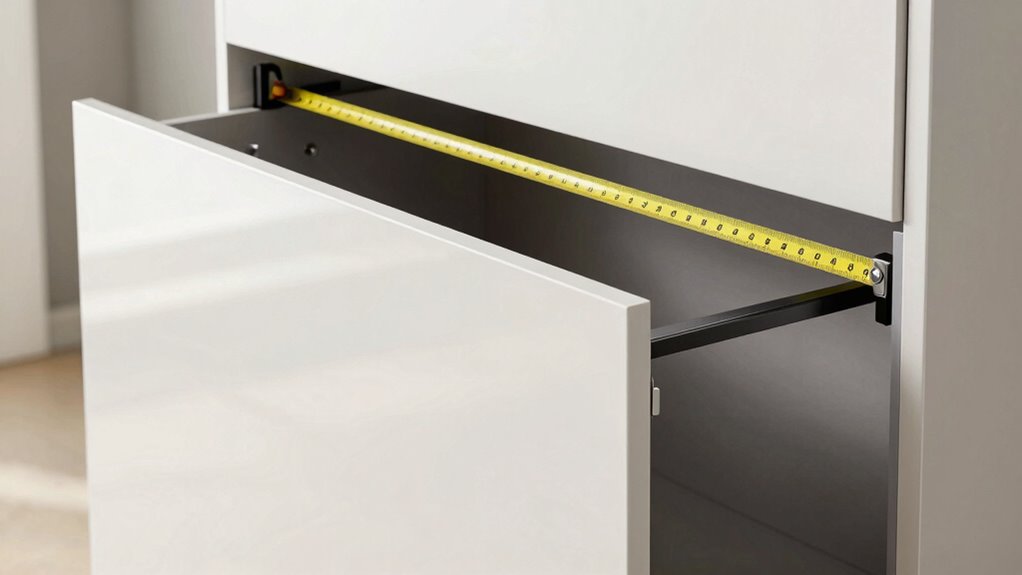

To avoid buying the wrong sliding door cabinet, you need to measure the clearance carefully. Start by measuring the width and height of the opening, including all hardware like rollers and tracks. Check for obstructions like moldings or furniture, and make certain there’s enough space for the door to open fully without blocking access. Proper measurements help you select the right size and hardware, saving you from costly mistakes. Keep going to find out more tips you can’t miss.

Get business pricing on your home office setup
- Business-only prices and quantity discounts
- Tax-exempt purchasing
- Multiple users, one account, clear invoices
Key Takeaways
- Measure the full width and height of the cabinet opening, including hardware, to ensure proper fit.
- Check for obstructions like moldings or furniture that may affect clearance and accessibility.
- Follow manufacturer guidelines for specific hardware clearance requirements to prevent misfits.
- Include space needed for door operation, ensuring smooth sliding without blocking nearby furniture.
- Use precise measurements to optimize space, avoiding excess clearance that reduces storage or aesthetics.
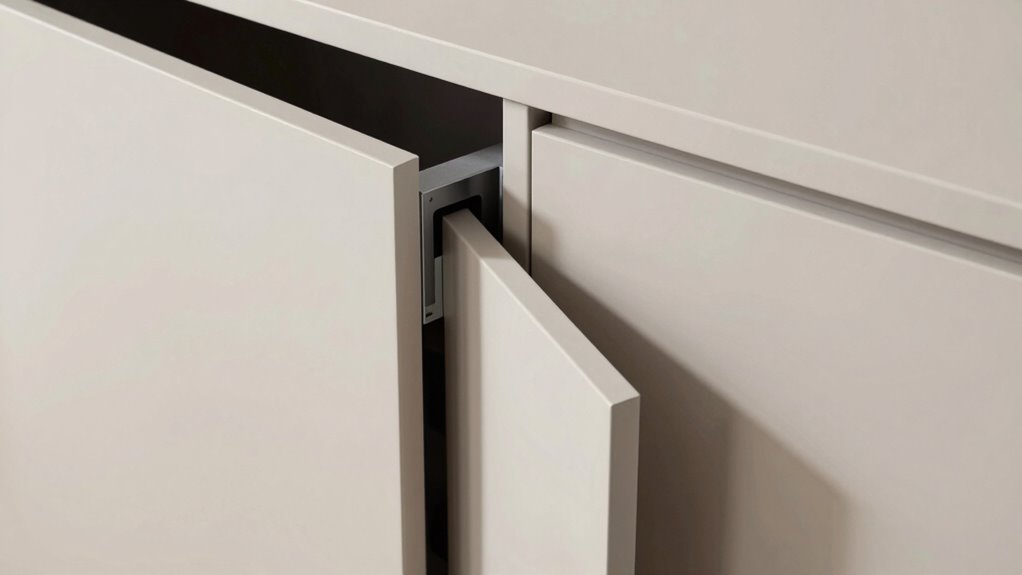
Have you ever struggled to open a sliding door cabinet because there wasn’t enough clearance? It’s a common frustration, especially when you’re trying to maximize space in a tight area. Proper measurement of your cabinet’s clearance is essential to avoid this problem and ensure smooth operation. When you measure correctly, you prevent the hassle of installing hardware that doesn’t fit or choosing a cabinet that becomes an obstacle rather than a solution. The key is understanding how much space you need for the door to slide effortlessly without hitting walls, furniture, or other objects.
Start by measuring the width and height of the opening where you plan to install the sliding door. Then, measure the total width of the door itself, including any hardware that will be attached, such as rollers or tracks. Remember, hardware installation can add extra width, so always account for these components when taking your measurements. If you overlook this step, you might buy a door that’s too narrow or wide, leading to frustration and the need for returns or modifications. Accurate measurement helps you select the right hardware and door size, streamlining the entire setup process.
Space optimization is another critical aspect of measuring clearance. Sliding doors are popular because they save space compared to traditional swinging doors, but only if you measure correctly. If you don’t leave enough clearance on the side where the door slides open, it can block access to other parts of the room or furniture. Conversely, too much clearance can be wasteful, reducing your storage capacity or making the space look awkward. By carefully measuring the available space and considering how much clearance the hardware requires, you ensure your cabinet functions smoothly while making the best use of your room.
When planning your installation, consider the entire layout. Check for obstructions on both sides of the cabinet, including baseboards, moldings, or nearby furniture. This will help you determine the minimum clearance needed for the door to slide fully open without obstruction. Properly planning your hardware installation and clearance measurements will not only protect your investment by preventing damage but also optimize your space, making your room more functional and visually appealing. Additionally, understanding your hardware requirements and how they impact your measurements can help prevent costly mistakes during installation. Knowing how to measure clearance space accurately is vital for achieving a seamless fit and smooth operation.
Furthermore, consulting manufacturer guidelines can provide specific recommendations tailored to your hardware, ensuring a proper fit and reliable performance.
Frequently Asked Questions
How Do I Measure for Sliding Door Cabinet Clearance Accurately?
To measure sliding door cabinet clearance accurately, start by determining the door track’s height and width. Make sure you include enough space for smooth operation and space optimization, avoiding obstructions. Measure the distance from the track to the wall or adjacent furniture. Keep in mind that proper clearance prevents doors from sticking or crashing. Double-check your measurements, and consider any hardware or handles that might affect the space needed for seamless sliding.
What Are Common Mistakes When Measuring Clearance?
You might mistake the clearance size by ignoring decorative hardware or interior lighting that can add to the door’s width or height. Always measure with these elements in place, not just the door itself. Rushing the process or using a tape measure at an angle can lead to inaccurate results. Double-check your measurements, ensuring the door can slide smoothly without hitting hardware or lighting fixtures, preventing costly mistakes.
Does Clearance Vary With Different Door Types?
Yes, clearance varies with different door types. For instance, decorative hardware like handles or pulls can require extra space to open fully, affecting clearance needs. Material durability also plays a role, as heavier or more robust doors may need greater clearance for smooth operation. You should consider these factors to guarantee your sliding door cabinet functions perfectly—otherwise, you risk buying a door that won’t slide properly or fit seamlessly.
How Much Clearance Is Needed for Smooth Operation?
For smooth operation, you need about 1/4 inch to 1/2 inch clearance between the sliding door and the cabinet frame. This space guarantees hardware compatibility and prevents sticking or jamming. Don’t forget, aesthetic considerations matter too—you want enough clearance to keep the look clean without sacrificing functionality. Measure carefully to balance these needs, ensuring your sliding door glides effortlessly while maintaining a pleasing appearance.
Can Clearance Be Adjusted After Installation?
Yes, you can adjust clearance after installation. If your sliding door isn’t gliding smoothly, check the door frame and hardware. Most hardware allows for easy adjustment—simply loosen or tighten components to modify the clearance. This helps guarantee a perfect fit and smooth operation. Regularly inspecting and adjusting the hardware keeps your sliding door functioning well, preventing issues caused by improper clearance or misalignment over time.
Conclusion
Now that you know the importance of sliding door cabinet clearance, you’re armed with the secret to a perfect fit. Think of it as unfastening a treasure chest—your space will flourish with harmony and ease. No more frustrating guesses or costly mistakes. With this simple measurement in your toolkit, your home becomes a symphony of style and function, where every door glides open to reveal a world of organized beauty. Your perfect fit is just a measurement away.
Fall Picks
fall essentials
As an affiliate, we earn on qualifying purchases.