Your storage ottoman’s weight capacity is vital for safety and durability, yet many overlook it when choosing a piece. If you overload it, you risk structural damage, instability, or even accidents, especially if kids use it as seating. Material and design also influence how much weight it can handle. To keep your furniture lasting longer and functioning safely, always check the weight limits—there’s more you should know before making that purchase.
Key Takeaways
- Always check the manufacturer’s specified weight limit to prevent overloading and damage.
- Weight capacity may differ for sitting versus storage—verify both before use.
- Overloading beyond limits can compromise stability and cause structural failure.
- Proper weight distribution ensures longevity and safety of the ottoman.
- Material and design influence the maximum weight support and durability.
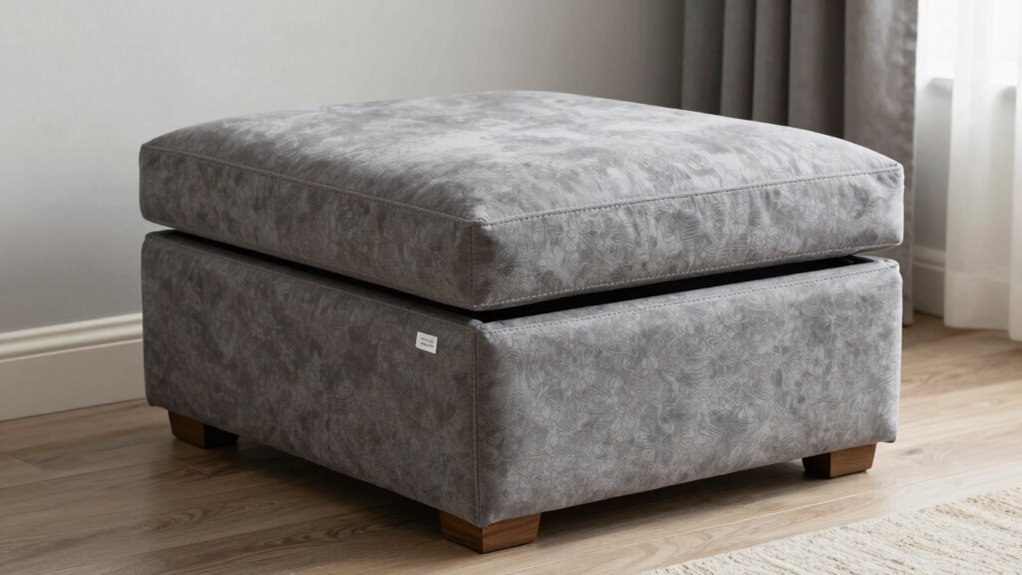
When choosing a storage ottoman, understanding its weight capacity is essential to guarantee safety and durability. This detail often gets overlooked amid the appeal of decorative accents or the promise of space saving solutions, but it’s critical for ensuring your piece can handle everyday use without risking damage or injury. Many people focus on how a storage ottoman looks or how it fits into their decor, but knowing its weight limits keeps you from overloading it and causing structural issues. It’s not just about aesthetics; it’s about practicality and safety. Additionally, considering the child safety aspect is important if you have young children around, as an overloaded or unstable ottoman can pose hazards. Storage ottomans come in a wide range of designs, from sleek contemporary styles to plush, traditional looks. No matter the style, most are designed to serve dual purposes: providing a comfortable footrest or extra seating while also offering hidden storage. When considering these pieces as decorative accents, you want them to enhance your room’s visual appeal without compromising safety. Checking the weight capacity ensures that you’re picking a sturdy piece that can support the weight of people sitting or leaning on it, especially if you plan to use it as additional seating during gatherings.
Space saving solutions are a huge selling point for storage ottomans, but many buyers forget that the compact design often means a sturdy frame with specific weight limits. Overloading your ottoman can lead to warping, cracking, or even collapse, which defeats the purpose of having a reliable space-saving solution. If you intend to use your ottoman for storage of heavy items like books, blankets, or even small appliances, make sure to verify its weight capacity beforehand. This helps prevent damage to furniture and ensures longevity. It’s worth noting that weight capacity isn’t always evident from the product description. Some manufacturers specify the maximum load for sitting, while others focus on the weight of stored items. Always read the specifications carefully—if you’re unsure, contact the seller or manufacturer directly. Also, keep in mind that proper weight distribution can help prolong the life of your ottoman and maintain its stability over time. The type of materials used in the construction can also influence the overall stability of the piece. Properly understanding and adhering to weight limits can also help you avoid warranty issues and costly repairs. Remember, exceeding the recommended weight can void warranties and lead to costly repairs or replacements. To keep your ottoman functional and safe, distribute weight evenly and avoid sudden impacts or excessive loads.
In the end, understanding your storage ottoman’s weight capacity isn’t just about safety; it’s about making a smart investment. By choosing a piece with an appropriate load limit, you’re ensuring your decorative accents and space saving solutions remain durable and reliable for years to come. It’s a small detail that makes a significant difference in how well your furniture performs and how safe your living space remains.
As an affiliate, we earn on qualifying purchases.
Frequently Asked Questions
Can I Use a Storage Ottoman Outdoors?
You shouldn’t use a storage ottoman outdoors unless it’s specifically designed for outdoor use. Outdoor protection and fabric durability are essential because exposure to sunlight, rain, and humidity can damage standard materials. Most indoor storage ottomans aren’t built to withstand these elements, leading to mold, fading, or warping. If you want outdoor storage, look for one made with weather-resistant materials to guarantee durability and longevity.
How Does Weight Capacity Vary With Different Materials?
Your storage ottoman’s weight capacity varies based on its material durability and design. Heavier-duty materials like solid wood or metal can support more weight due to better weight distribution, while softer materials like fabric or MDF may have lower limits. Always check the manufacturer’s specifications to guarantee the material’s strength matches your needs, especially if you plan to use the ottoman for sitting or heavy storage.
Is the Weight Limit the Same for Sitting and Storage?
Like a knight’s armor, your storage ottoman’s weight limit for sitting and storage isn’t always the same. Usually, the weight capacity for sitting is higher, thanks to better material durability and optimized weight distribution. When you sit, the load spreads evenly, but storing heavier items might reduce the overall limit. Always check the manufacturer’s specifications, and avoid overloading to keep your ottoman sturdy and safe.
What Are Signs of Overloading a Storage Ottoman?
Signs of overloading your storage ottoman include visible sagging, warping, or cracks in its structure, which threaten its durability. If you notice uneven weight distribution when sitting or storing items, it indicates you’re exceeding its capacity. Overloading strains the hinges and frame, reducing lifespan. To keep it sturdy and safe, avoid piling excessive weight and distribute loads evenly. Regularly check for signs of stress to prevent damage.
How Do I Reinforce an Ottoman to Hold More Weight?
Think of your ottoman as a brave knight facing a heavier burden. To reinforce it, add extra wooden planks or plywood beneath the top for extra support. Use heavy-duty screws or brackets during ottoman reinforcement, ensuring they’re tightly secured. Distribute weight evenly and avoid overloading. Follow these weight capacity tips, and your ottoman will stand strong, ready for more weight without risking damage.
As an affiliate, we earn on qualifying purchases.
Conclusion
Before you buy a storage ottoman, understanding its weight capacity helps you avoid surprises. Imagine hosting a family gathering where everyone wants a seat—your sturdy ottoman comfortably supports their weight, keeping everyone safe and relaxed. By checking the weight limits and choosing wisely, you guarantee your ottoman remains a reliable, stylish addition to your home. Don’t let surprises spoil your comfort—know the limits before you sit!
As an affiliate, we earn on qualifying purchases.
As an affiliate, we earn on qualifying purchases.