

The most important change you can make to improve your home library is controlling humidity levels. Keep it between 40-50% to prevent mold, warping, and pest damage. Regularly monitor with a hygrometer and adjust with humidifiers or dehumidifiers as needed. Consistent humidity helps preserve your collection and avoids costly repairs. Staying vigilant and fine-tuning your environment makes a big difference—keep going to discover how to master this essential aspect even further.
Play games included with Prime
Start a Prime free trial and play with Amazon Luna on your devices.
As an affiliate, we earn on qualifying purchases.
Key Takeaways
- Maintain consistent humidity levels between 40-50% to prevent mold, warping, and pest damage.
- Use a reliable hygrometer to monitor and adjust humidity regularly.
- Incorporate a humidifier or dehumidifier to stabilize moisture in your home library.
- Ensure proper air circulation to prevent mold and uneven humidity fluctuations.
- Regularly calibrate monitoring devices and address any signs of mold or damage promptly.
digital hygrometer for home library
As an affiliate, we earn on qualifying purchases.
As an affiliate, we earn on qualifying purchases.
Why Humidity Matters for Your Home Library
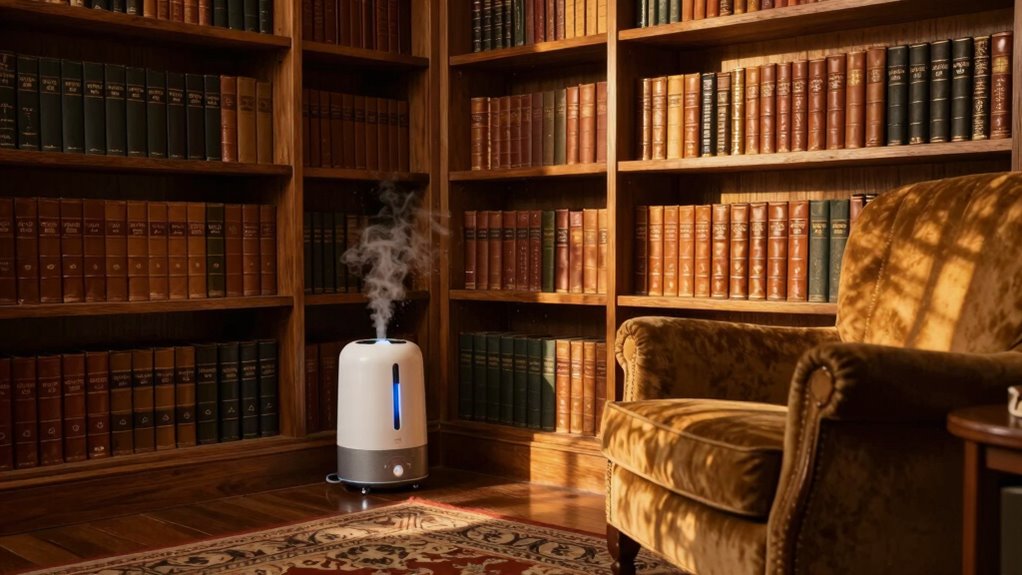
Maintaining proper humidity levels is essential for preserving the integrity of your home library. When climate control isn’t managed, books can suffer from damage like warping, cracking, or mold growth. Too much moisture accelerates deterioration, while too little causes pages to become brittle and fragile. Proper humidity helps guarantee book preservation by maintaining a stable environment, preventing these issues. It also helps in preventing pest infestations, which can further harm your collection. Maintaining the right environment reduces the likelihood of airborne contaminants settling on your books and causing damage. It’s not just about comfort; it’s about safeguarding your collection for the long term. Consistent climate control creates a balanced atmosphere, reducing the risk of pests and mold. By monitoring and adjusting humidity levels, you protect your books and keep them in ideal condition. Regularly checking hygrometer readings can help you keep humidity in the optimal range and prevent unseen damage. Additionally, understanding the science of humidity can help you make more informed decisions about your climate control methods. Ultimately, controlling humidity is a key step in maintaining a healthy, lasting home library. climate control plays a vital role in creating this stable environment and ensuring your collection’s longevity.
humidifier for books and collectibles
As an affiliate, we earn on qualifying purchases.
As an affiliate, we earn on qualifying purchases.
What Is the Ideal Humidity Range for Your Books?

Maintaining the right humidity level is key to preserving your books, with the ideal range typically between 30% and 50%. Fluctuations outside this range can cause damage like warping or mold, so monitoring your environment is essential. By keeping humidity steady, you help your collection stay in good shape for years to come.
Optimal Humidity Levels
Have you ever wondered what the ideal humidity range is for preserving your books? For effective historical preservation and climate control, keep your home library between 40-50% humidity. This range prevents mold growth, paper warping, and ink deterioration. To maintain perfect conditions:
- Use a hygrometer to monitor moisture levels accurately.
- Adjust your humidifier or dehumidifier as needed.
- Guarantee proper ventilation to stabilize humidity fluctuations.
- Regularly assess your cloud server solutions to ensure your storage environment remains optimal.
Maintaining this balance supports the longevity of your collection and guarantees your books stay in prime condition. Consistent humidity levels are vital for preventing damage, especially if you’re aiming for long-term preservation. Proper climate control systems are essential for adapting to variable environments, ensuring your collection remains safe regardless of external conditions. Additionally, using humidity control devices can further help sustain stable conditions and prevent unexpected fluctuations. Regular monitoring and maintenance of your environment can also help preemptively address issues caused by humidity fluctuations, protecting your valuable collection over time.
Effects of Humidity Fluctuations
Even slight fluctuations in humidity can considerably impact your books’ condition over time. When humidity levels swing outside the ideal range, it creates a humidity imbalance that accelerates deterioration. Excess moisture can cause pages to warp, stick, or develop mold, while low humidity makes paper brittle and prone to cracking. These fluctuations also weaken adhesives in bindings, leading to pages falling out. Proper moisture regulation is essential to prevent these issues. Maintaining a stable home library environment minimizes these risks and ensures your collection stays in top condition for years to come. Small changes in humidity might seem minor, but over time, they compound, resulting in irreversible damage. Consistent humidity helps maintain the structural integrity of your books and preserves their appearance, especially when humidity fluctuations are carefully controlled.
Monitoring and Maintaining
To safeguard your books from harm, it’s crucial to observe and uphold the appropriate humidity levels in your home library. Maintaining ideal climate control helps with book preservation and prevents damage. The perfect humidity range is between 40-50%. To monitor and maintain this, you should:
- Use a hygrometer to regularly check humidity levels.
- Adjust your environment with a humidifier or dehumidifier as needed.
- Ensure proper ventilation to prevent mold and warping.
- Being aware of climate control is essential for protecting your collection from long-term damage.
Consistent monitoring keeps fluctuations in check, protecting your collection. By staying within the recommended range, you help preserve your books’ pages, covers, and bindings. Staying vigilant with climate control is key to long-term book preservation and a thriving home library.
As an affiliate, we earn on qualifying purchases.
How to Detect Signs of Humidity Damage in Your Library?
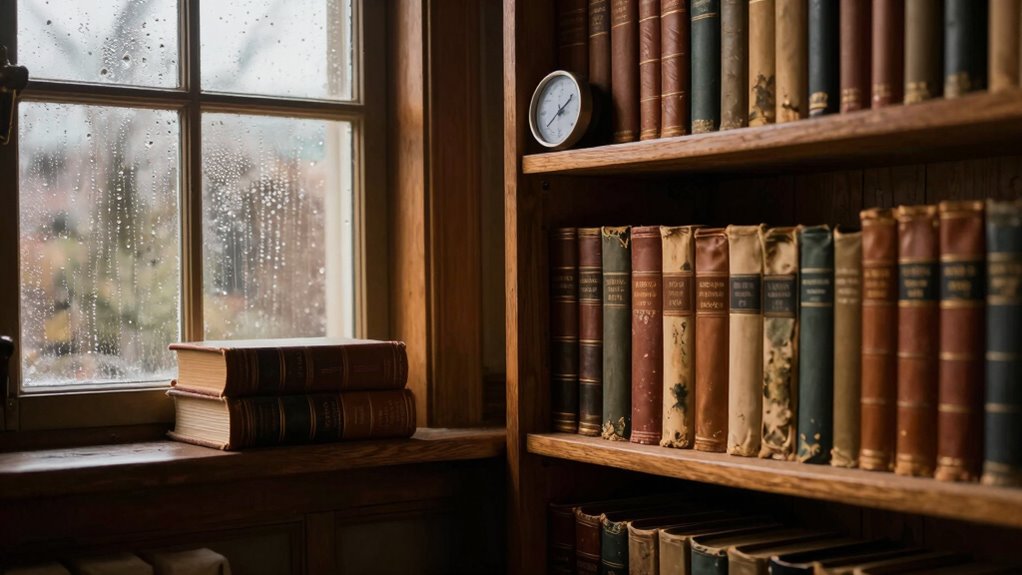
Detecting signs of humidity damage in your library requires careful observation and attention to detail. Look for visible mold growth on books, shelves, or walls, which often appears as fuzzy spots or dark patches. Pest infestations, like silverfish or beetles, thrive in damp environments and can damage book pages and bindings. Pay attention to musty odors, which indicate excess moisture. Check for warping or buckling of book covers and pages, signs of prolonged humidity exposure. Use the following imagery to visualize potential issues:
| Signs of Damage | Visual Indicators |
|---|---|
| Mold growth | Fuzzy gray or black patches on books |
| Pest infestation | Tiny holes or frass (insect droppings) |
| Warping or buckling | Bent or wavy pages and covers |
| Musty odor | Persistent damp smell |
| Discoloration | Stains or yellowing of pages |
climate control system for library
As an affiliate, we earn on qualifying purchases.
As an affiliate, we earn on qualifying purchases.
Measuring and Monitoring Humidity in Your Home

To keep your home library safe, you need reliable tools to measure humidity levels accurately. Knowing the ideal indoor humidity range helps you maintain a healthy environment for your books. Using monitoring techniques and tips guarantees you stay on top of humidity changes before they cause damage. Regularly checking your digital hygrometer ensures precise readings and helps you respond promptly to any fluctuations. Proper humidity control is essential to prevent mold and deterioration of your collection. Maintaining appropriate levels also supports overall animal welfare by reducing mold spores and dust mites that can affect both your books and pets. Implementing air quality strategies, such as using HEPA filters and ensuring proper ventilation, further contributes to a healthier indoor environment. Additionally, understanding how innovative assistive technology can help monitor environmental conditions can provide extra peace of mind for maintaining your collection.
Tools for Humidity Measurement
Wondering how to keep your home’s humidity levels just right? The key is using the right tools to measure and monitor consistently. First, invest in smart sensors—these connect to your devices and provide real-time data, making adjustments easier. Second, pay attention to hygrometer placement; place it away from windows, vents, or direct sunlight to get accurate readings. Third, regularly check your hygrometer to guarantee it’s functioning properly and calibrate it if needed. Smart sensors can often alert you via apps when humidity swings outside your desired range. Additionally, understanding the importance of accurate measurements helps ensure your home stays comfortable and healthy. Proper measurement techniques are essential for reliability and precision. Accurate placement and reliable tools give you a clear picture of your home’s humidity, helping you make informed adjustments effortlessly. With these tools, maintaining the perfect environment becomes straightforward.
Ideal Indoor Humidity Levels
Achieving the right indoor humidity starts with knowing the ideal range for comfort and health. For a home library, maintaining humidity between 40-60% is vital for both your comfort and preservation efforts. Proper humidity control helps prevent mold, musty odors, and wood warping, which are especially important for historical preservation of books and furniture. Too low humidity can cause paper to become brittle, while excessive moisture encourages mold growth. Use a hygrometer to monitor levels regularly and adjust with humidifiers or dehumidifiers as needed. Keeping humidity within this range supports a stable environment, protecting your collection and maintaining a comfortable space. Understanding humidity levels is essential for optimal preservation of your valuable items, especially since moisture levels can be influenced by various factors in your home environment. Regularly measuring and monitoring humidity helps you respond quickly to changes and maintain the ideal conditions.
Monitoring Techniques and Tips
Monitoring humidity levels accurately is vital for maintaining the right environment in your home library. To guarantee proper climate control and protect your books, consider these tips:
- Use a reliable digital hygrometer to get precise readings.
- Place the device away from windows and vents to avoid false measurements.
- Check humidity levels regularly, at least once a week, to catch fluctuations early.
- Incorporate climate control systems like humidifiers or dehumidifiers to maintain consistent humidity levels.
Consistent monitoring helps you detect changes that could harm book preservation. If humidity drifts out of the ideal range, take immediate action to adjust your climate control systems. This proactive approach keeps your library safe from mold, warping, and other damage, ensuring your collection remains in excellent condition for years to come.
Simple Ways to Maintain the Right Humidity Levels
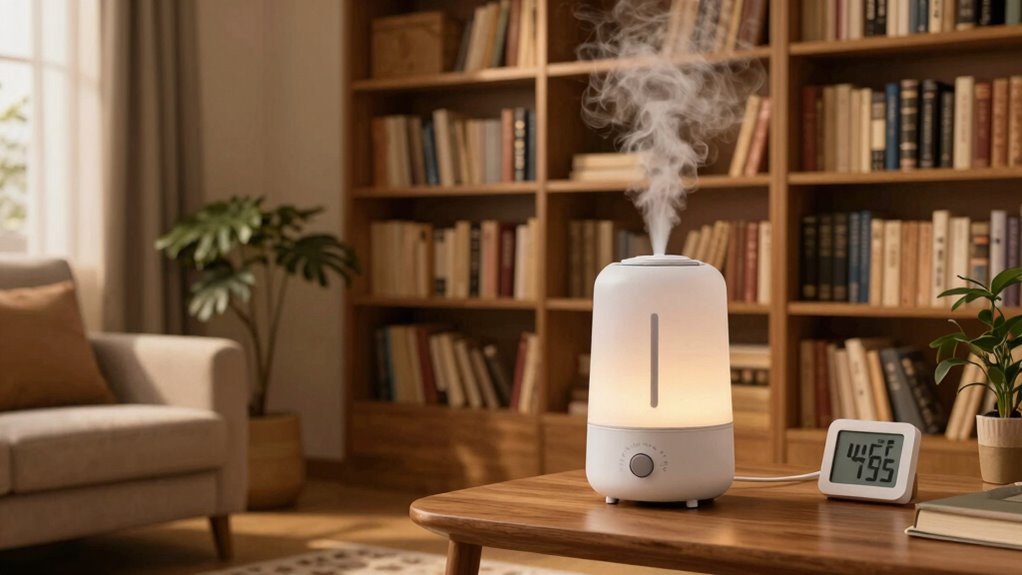
Maintaining the right humidity levels in your home library is essential for protecting your book collection and creating a comfortable environment. To do this easily, use a humidifier or dehumidifier to adjust moisture levels as needed. Keep air circulating by opening windows regularly or using fans, which helps prevent mold and mustiness. Proper air circulation also supports even humidity distribution, promoting book preservation. Additionally, understanding the importance of digital content creation can help you develop a comprehensive approach to managing your reading and learning spaces. Visualize your space like this:
| Dry Environment | Ideal Humidity Zone | Humid Environment |
|---|---|---|
| Cracked leather | Steady moisture | Mold growth |
| Dusty shelves | Balanced airflow | Musty smell |
Consistent adjustments keep humidity stable, protecting your books while maintaining a cozy reading space.
Troubleshooting Common Humidity Problems
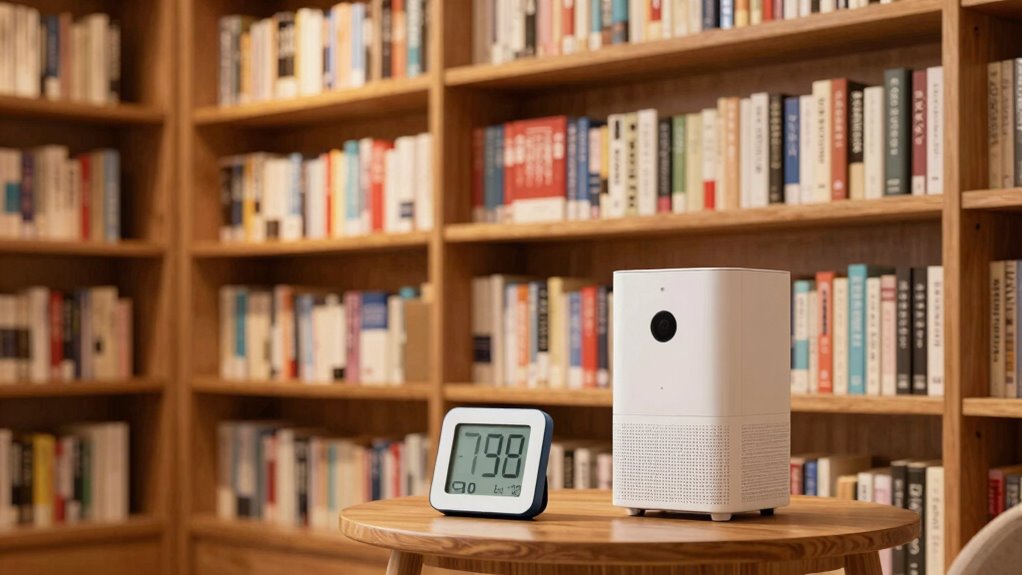
When humidity levels fluctuate unexpectedly in your home library, it can lead to issues like mold growth or dried-out pages. To troubleshoot, focus on humidity control to stabilize conditions. First, check your hygrometer regularly to monitor levels. Second, adjust your humidifier or dehumidifier accordingly to maintain ideal humidity for library preservation. Third, guarantee proper ventilation to prevent excess moisture buildup or dryness. If mold appears, isolate affected items and improve air circulation. For drying out pages, add moisture gradually using a humidifier or silica gel packs. Consistent monitoring and adjustments help prevent damage, ensuring your collection stays in top shape. Addressing these common humidity problems keeps your home library protected and preserves your books for years to come.
Tips for Keeping Your Library Safe and Long-Lasting With Proper Humidity
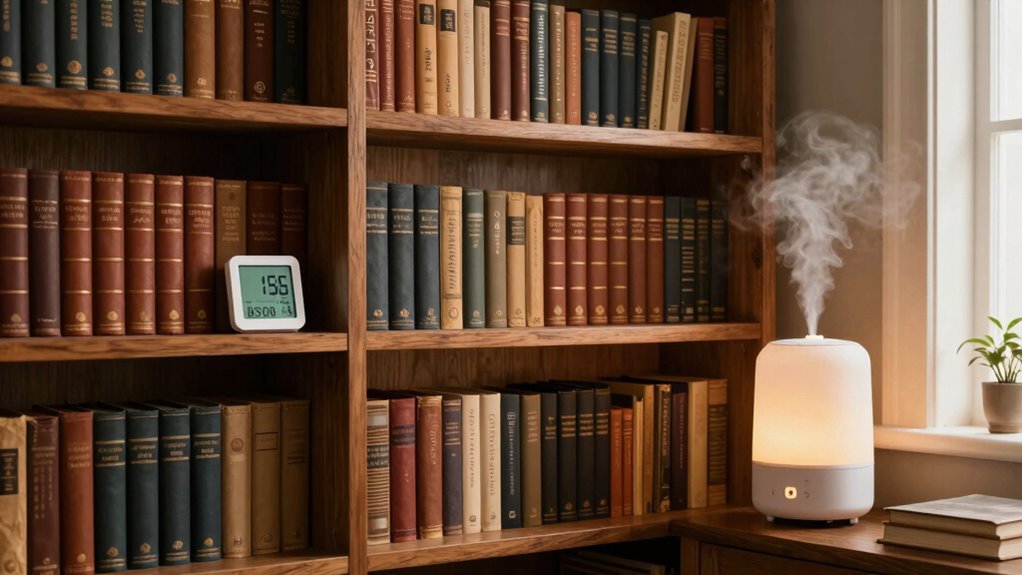
Ensuring your home library remains safe and long-lasting relies heavily on controlling the humidity levels effectively. Proper humidity prevents mold growth and paper deterioration, keeping your collection in top shape. When arranging books for display, avoid overcrowding to promote air circulation, which helps maintain consistent humidity. Keep your shelf organization neat, allowing airflow between books and preventing moisture buildup. Use dehumidifiers or humidifiers as needed to stay within the ideal range of 40-60% humidity. Regularly check and adjust these settings to avoid fluctuations. Additionally, consider using silica gel packs or other moisture absorbers on shelves to protect delicate pages. Consistent humidity control not only preserves your books but also makes your library a more inviting and functional space.
Frequently Asked Questions
Can Humidity Levels Affect Book Mold Growth?
Yes, humidity levels can affect mold growth on your books. When humidity is too high, mold prevention becomes difficult, and mold can easily develop. Using humidity sensors helps you monitor and maintain ideal levels, ideally between 30-50%. Keeping humidity balanced prevents mold growth and preserves your collection. Regularly checking sensors and adjusting dehumidifiers or humidifiers ensures your home library stays mold-free and well-preserved.
How Quickly Does Humidity Change Impact Book Condition?
Humidity fluctuation can damage your books faster than you can blink. You’ll see signs in days if the humidity spike or drop is extreme, causing warping or mold. Proper air circulation helps stabilize humidity levels, preventing rapid changes that harm your collection. Regularly monitoring and maintaining consistent humidity guarantees your books stay pristine longer, avoiding the chaos of rapid deterioration caused by sudden environmental shifts.
Are There Specific Humidity Levels for Different Book Genres?
For ideal book preservation, aim for humidity levels around 40-50%, regardless of genre. Rare or delicate books benefit from slightly lower humidity to prevent mold and warping, while older or leather-bound collections may tolerate a tad higher levels. Consistent humidity regulation is key to keeping all genres in top condition. Monitoring humidity with a hygrometer helps you maintain the perfect environment and protect your diverse library.
What Are the Best Tools to Control Humidity in a Home Library?
Think of your home library as a delicate ecosystem; the right tools keep it thriving. To control humidity, you should use a combination of book storage solutions that balance moisture and humidity monitors for precise readings. A dehumidifier or humidifier can help maintain ideal levels. These tools work together like a symphony, ensuring your collection stays pristine, protected, and inviting for years to come.
How Does Seasonal Weather Affect Library Humidity Management?
Seasonal fluctuations greatly impact your library’s humidity management. During winter, dry air lowers humidity, risking damage to your collection, while summer brings higher moisture levels, risking mold growth. You should monitor indoor air quality regularly and adjust humidifiers or dehumidifiers accordingly. By staying proactive, you maintain stable humidity year-round, protecting your books and preserving ideal conditions for your home library.
Conclusion
Maintaining the right humidity in your home library can increase your books’ lifespan by up to 60%, according to experts. By keeping humidity levels stable—ideally between 40-50%—you’re protecting your collection from warping, mold, and pest damage. Regular monitoring and simple adjustments make a big difference. With just a few mindful steps, you’ll create a perfect environment where your books stay pristine and your library remains a treasured space for years to come.
Fall Picks
fall essentials
As an affiliate, we earn on qualifying purchases.