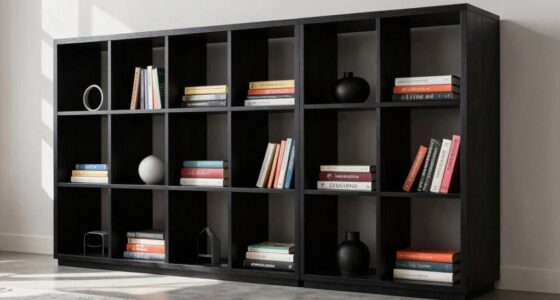
The number of books your shelf can hold depends on its size, material, and construction. Heavier books, like textbooks or art books, reduce its capacity and increase stress on the supports. Solid wood and metal shelves support more, while particleboard or glass are more limited. Proper installation and even weight distribution are key to avoiding damage or collapse. Keep an eye on safety tips to get the most from your space — more useful info ahead.

Get business pricing on your home office setup
- Business-only prices and quantity discounts
- Tax-exempt purchasing
- Multiple users, one account, clear invoices
Key Takeaways
- The shelf’s material and construction determine its maximum weight and book capacity.
- Heavier books reduce the total number a shelf can safely hold.
- Proper support, reinforcement, and even weight distribution extend shelf lifespan.
- Always check the manufacturer’s weight limit before loading books.
- Consider wall support and anchors to prevent sagging or collapse under load.

The number of books a shelf can hold depends on several factors, including its size, material, and construction. When you’re picking out a shelf, it’s easy to focus on the aesthetic or the number of books you want to display, but understanding its capacity requires a bit more insight. One essential aspect is the weight of each book. Heavier books, like textbooks or large art books, put more stress on the shelf, limiting how many you can safely stack without risking damage or collapse. You might find yourself surprised at how quickly a shelf’s capacity diminishes once you add weight, so always take into account the average weight of your collections.
The weight of your books significantly impacts how many a shelf can safely hold.
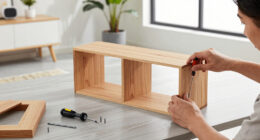
Shelf material plays a key role in determining how many books it can support. For example, solid wood shelves tend to be sturdier and can usually hold more weight compared to thinner, less durable materials like particleboard or MDF. Metal shelves often offer high strength-to-weight ratios, allowing you to pack in more books without fear of sagging. Conversely, glass shelves, while elegant, typically have lower load limits, especially if they’re thin or unsupported in the middle. It’s important to verify the maximum weight capacity specified by the manufacturer or to assess the material’s strength yourself—if it’s a DIY project, you want to make sure the material can handle the cumulative weight of your books. Additionally, proper support can make a significant difference in how much weight a shelf can safely bear over time. Proper installation techniques, including the use of appropriate anchors and supports, are crucial to ensure safety and durability.
Another factor to keep in mind is the construction of the shelf itself. Shelves with thicker, reinforced edges or additional support beams can hold more books safely. The spacing between the shelves also matters; narrower gaps mean fewer books per shelf, but they can also distribute weight more evenly, reducing the risk of sagging. When you load a shelf, distribute the weight evenly across its surface rather than stacking large books in one corner, which can cause warping or bowing. Proper support structures are crucial for ensuring the durability and longevity of your shelving unit as it bears weight over time. Additionally, considering the weight distribution techniques can prevent uneven stress and prolong the life of your shelves.
It’s also important to consider the shelf’s load capacity, which can vary widely depending on the quality of the construction and materials used. Lastly, don’t forget to think about the overall design and how much weight your wall or furniture can support. If you’re mounting a shelf on drywall without proper anchors or studs, weight capacity becomes even more critical. Always double-check weight limits and choose a shelf that matches both your aesthetic preferences and the practical needs of your book collection. Taking these factors into account ensures your books stay safe and your shelf remains sturdy for years to come.
heavy duty wall mounted bookshelf
As an affiliate, we earn on qualifying purchases.
As an affiliate, we earn on qualifying purchases.
Frequently Asked Questions
How Do Weight Limits Affect Shelf Capacity Over Time?
Weight limits impact shelf capacity over time because uneven weight distribution can cause stress, leading to sagging or breakage. If you overload a shelf, it might need reinforcement to maintain stability. Regularly check the weight distribution and consider shelf reinforcement if you notice sagging. Properly distributing weight guarantees your shelves hold more books safely and extend their lifespan without risking damage.
Can Irregularly Shaped Books Reduce Shelf Capacity?
Irregularly shaped books can definitely reduce shelf capacity because their unique book shapes don’t fit as neatly, leaving gaps and unused space. You’ll find that odd shapes, like large art books or oddly sized titles, challenge shelf flexibility, making it harder to maximize space. To accommodate these, consider adjustable or more flexible shelves that can adapt to various shapes, helping you make the most of your storage despite unusual book dimensions.
How Does Moisture Impact Shelf Strength and Book Storage?
Moisture weakens shelf strength by causing wood to warp or rot, which reduces its capacity to hold books safely. High humidity effects can lead to mold growth on your books and shelf surfaces, damaging both. To prevent this, control indoor humidity levels and guarantee proper ventilation. Regularly checking for moisture and mold helps in mold prevention, keeping your shelf sturdy and your books in good condition over time.
Is There an Optimal Shelf Height for Maximum Book Capacity?
You should aim for a shelf height of about 12 to 15 inches for maximum book capacity, especially if you’re stacking thick books or using sturdy shelf materials like solid wood or metal. This height allows you to comfortably stack books without risking damage or warping. Keep in mind, lighter materials like particleboard may need shorter heights to maintain strength, preventing sagging or bowing under heavy loads.
Do Decorative Items on Shelves Decrease Overall Book Capacity?
Decorative items on shelves do decrease your overall book capacity, but they also add decorative balance and enhance aesthetic considerations. You can’t pack your shelves completely with books without sacrificing style, so strategically placing a few ornaments or photos creates visual interest without overcrowding. Balancing books and decorative pieces guarantees your shelves stay functional and attractive, making your space inviting while still holding a good number of books.
adjustable wooden bookshelf with reinforcement
As an affiliate, we earn on qualifying purchases.
As an affiliate, we earn on qualifying purchases.
Conclusion
Remember, choosing the right shelf isn’t just about capacity; it’s about balance—like Icarus soaring too close to the sun. Overloading can weaken the structure, risking a crash. So, think ahead, weigh your books, and respect the shelf’s limits. By doing so, you’ll keep your collection safe and your space organized, much like a well-tended garden that flourishes without overgrowth. After all, a little caution today prevents chaos tomorrow.
metal book shelf with high weight capacity
As an affiliate, we earn on qualifying purchases.
As an affiliate, we earn on qualifying purchases.
glass shelf with support brackets
As an affiliate, we earn on qualifying purchases.
As an affiliate, we earn on qualifying purchases.
Fall Picks
fall essentials
As an affiliate, we earn on qualifying purchases.