
To prevent bookshelf sagging, choose sturdy materials like solid wood or reinforced metals, and guarantee proper support with brackets or corbels. Pack books carefully, placing heavier ones at the bottom and evenly distributing weight across shelves. Regularly inspect your shelves for signs of strain or damage, and reinforce or replace them as needed. If you want to keep your shelves sturdy longer, there’s more you should know to protect your collection.

Get business pricing on your home office setup
- Business-only prices and quantity discounts
- Tax-exempt purchasing
- Multiple users, one account, clear invoices
Key Takeaways
- Use sturdy, high-strength materials like solid wood or reinforced engineered wood for long-lasting support.
- Install decorative brackets or hidden supports to evenly distribute weight and prevent sagging.
- Pack books with heavier items on the bottom to maintain balance and reduce stress on the shelf.
- Regularly inspect shelves for signs of stress, warping, or loosened supports, and address issues promptly.
- Distribute weight evenly across shelves and avoid overloading to maintain structural integrity over time.
As an affiliate, we earn on qualifying purchases.
How to Choose the Best Materials for Supporting Your Bookshelf
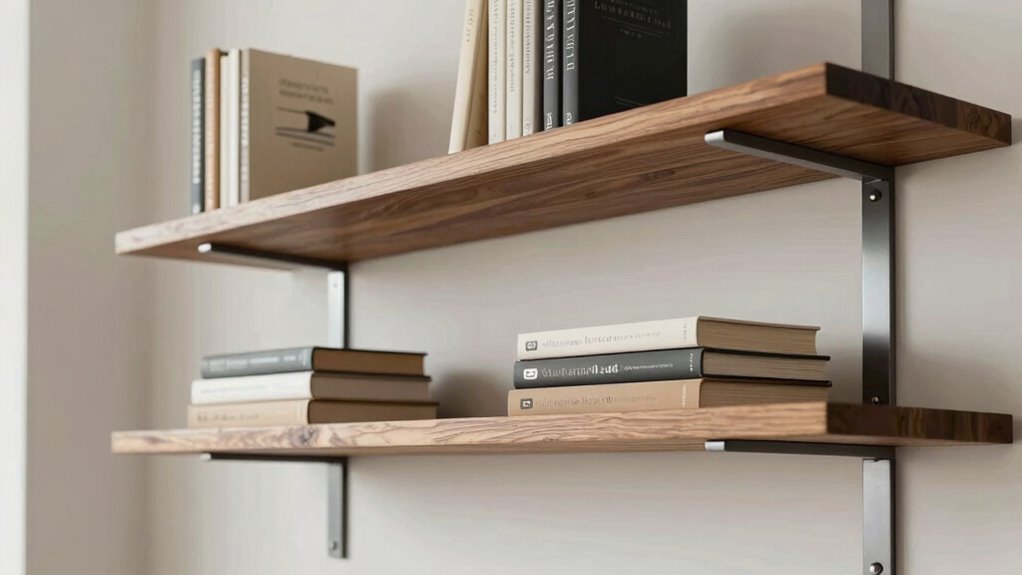
Choosing the right materials for supporting your bookshelf is essential to prevent sagging and guarantee durability. You want materials that stand the test of time and handle the weight of your books without bending or warping. Solid wood, like oak or maple, offers excellent material durability and naturally adds aesthetic appeal with its rich grain and warm tones. Engineered woods, such as plywood or MDF, can also be sturdy options if they’re properly reinforced, providing strength at a lower cost. Metal supports, like steel or aluminum, deliver high durability and a modern look, especially for heavy or industrial-style shelves. When selecting materials, consider both how long they’ll last and how they’ll look in your space. Additionally, understanding material durability can help you make a more informed choice. The right choice assures your bookshelf remains sturdy and visually appealing for years to come, especially when considering appropriate reinforcement methods for added stability. For added confidence, researching support techniques can help ensure your shelves hold up over time. Properly assessing load capacity is also key to choosing materials that won’t fail under heavy loads. Furthermore, evaluating the weight distribution across the shelves can help prevent uneven sagging and extend the lifespan of your bookshelf.
As an affiliate, we earn on qualifying purchases.
Tips for Packing Books Without Causing Sagging
To pack your books without causing sagging, start with proper packing materials like sturdy boxes and dividers. Always pack heavy books on the bottom and lighter ones on top, and make sure to distribute the weight evenly across the shelf. This approach helps prevent undue stress and keeps your bookshelf sturdy. Incorporating sustainable packing materials can also reduce environmental impact. Additionally, using appropriate storage solutions designed for weight distribution can further help maintain the integrity of your bookshelf over time. Being mindful of consumer tips can ensure you select the best options for long-term shelf health. Understanding market analysis principles can also help you make informed decisions about your storage and organization strategies, ultimately contributing to a safer and more durable storage environment.
Use Proper Packing Materials
Using the right packing materials is essential to prevent books from sagging during the move. Proper supplies guarantee your books stay in top shape, preserving their beauty and value. When you choose quality materials, you’re actively supporting book preservation and maintaining their aesthetic appeal.
- Use sturdy, acid-free boxes to protect against damage and keep their vibrant covers intact
- Wrap delicate books in bubble wrap or tissue to prevent scratches and tears
- Fill empty spaces with packing paper or foam to avoid shifting and weight strain
- Avoid overpacking; keep books upright for better support
- Label boxes clearly to handle each with care, safeguarding their condition
- Additionally, understanding the importance of air quality during storage can help prevent mold and deterioration. Ensuring proper ventilation reduces humidity, which is crucial for book preservation.
With thoughtful packing materials, you’ll help your books stay pristine, making your move smoother and your collection more lasting.
Pack Heavy Books Strategically
Packing heavy books carefully is essential to prevent sagging and damage during your move. When organizing your book storage, place heavier books on the bottom of boxes to maintain stability and avoid crushing lighter items. Use sturdy, reinforced boxes to support the weight without compromising the box’s integrity. Keep books upright or flat to preserve their condition and prevent warping. Be mindful of shelving aesthetics by avoiding overstuffing boxes, which can lead to bulging and damage. Properly packed heavy books help maintain your shelves’ structural integrity and keep your collection looking neat. Remember, strategic packing guarantees your books arrive undamaged and your shelving remains attractive and functional. Prioritize weight distribution and secure packing to protect your prized collection.
Distribute Weight Evenly
Distributing weight evenly across your packed boxes is essential to prevent bookshelf sagging and guarantee safe transport. Proper bookweight balance ensures that no single area bears excessive load, protecting your shelves from damage. Effective load management means stacking books with heavier items at the bottom and lighter ones on top, creating stability. Remember, uneven weight distribution can cause bookshelves to warp or collapse over time. Additionally, considering the regional culture and unique design of your bookshelf can help maintain its integrity and aesthetic. A well-balanced approach not only preserves your bookshelf’s structure but also enhances its overall appearance. Using the right cleaning tools for your shelves can also help maintain their condition and prevent weakening over time.
As an affiliate, we earn on qualifying purchases.
Adding Reinforcements to Keep Your Shelf Sturdy

To make sure your bookshelf remains sturdy under the weight of your books, adding reinforcements is a smart move. You can enhance stability by installing decorative shelf accents that serve both aesthetic and structural purposes. These accents can be simple metal brackets or decorative corbels that support the shelves’ weight more evenly. For heavier items or frequent use, consider using proper reinforcement techniques to ensure long-term durability. For a personalized touch, explore custom reinforcement options—like adjustable braces or hidden supports—that blend seamlessly with your decor. Reinforcements help prevent sagging over time, especially when shelves hold heavier items. Incorporating well-designed reinforcement options can also improve the overall strength and durability of your bookshelf. Additionally, selecting materials that are compatible with your existing decor ensures a cohesive look. By choosing the right reinforcements, you’ll guarantee your bookshelf stays sturdy and attractive, protecting your books and investments. Remember, well-placed reinforcements are the key to long-lasting, reliable shelving.
As an affiliate, we earn on qualifying purchases.
How to Maintain Your Shelf and Avoid Overloading
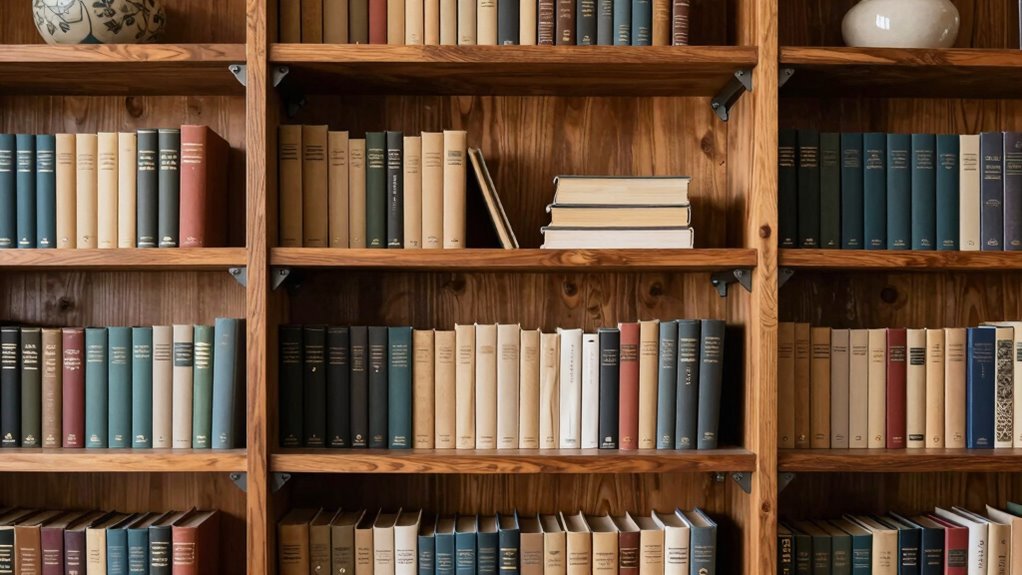
To keep your bookshelf in good shape, make sure to distribute weight evenly across all shelves. Regularly check for any signs of sagging or damage, so you can address issues early. By staying attentive and mindful of load limits, you’ll prevent unnecessary strain and prolong your shelf’s lifespan. Incorporating home organization tips can help you optimize space and maintain structural integrity. Additionally, understanding personality testing can assist in identifying your organizational strengths and weaknesses, leading to more effective storage solutions. Being aware of weight distribution principles can further enhance your ability to prevent sagging and preserve your shelves over time. Paying attention to material strength can also help you select the right shelves that can withstand your intended load, ensuring durability and safety over the years. Recognizing structural support techniques can provide extra reinforcement to prevent sagging in heavier or frequently accessed shelves.
Proper Weight Distribution
Ensuring proper weight distribution is essential for preventing bookshelf sagging, and it it starts with placing heavier items on lower shelves. This helps maintain the shelf’s flexibility and reduces stress on the structure. Overloading one area can cause uneven pressure, risking permanent damage. To keep your shelves sturdy and safe, consider these tips:
- Balance the book weight evenly across each shelf
- Avoid stacking books too high in one spot
- Use shelf dividers to distribute weight more effectively
- Place heavier books towards the bottom for stability
- Regularly reassess and adjust to prevent overloading
- Structural support can also enhance the durability of your bookshelf, especially if you have a large collection. Incorporating DIY decor ideas for reinforcement can further improve stability and add a personalized touch to your storage solution.
Regular Shelf Inspection
Regularly inspecting your shelves is essential for spotting potential issues before they become serious problems. Check for uneven book alignment, which can cause weight imbalance and sagging. Guarantee shelf labeling is clear and accurate, helping you organize and prevent overloading specific areas. During inspections, look for signs of stress, such as warping or loosened brackets. Use this opportunity to redistribute heavy books evenly across shelves, reducing strain. Keep a simple maintenance schedule: weekly visual checks and monthly detailed reviews. To stay organized, use the table below to track shelf condition and weight distribution:
| Shelf | Book Alignment | Shelf Labeling |
|---|---|---|
| Shelf 1 | Good | Clear |
| Shelf 2 | Slight uneven | Accurate |
| Shelf 3 | Needs adjustment | Outdated |
Picking the Right Shelf Design for Your Space and Collection
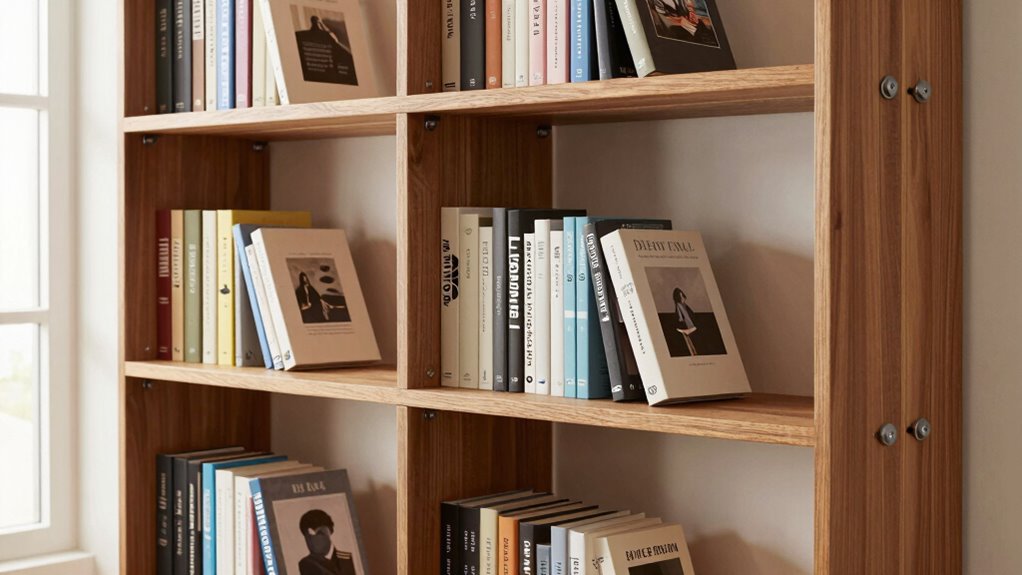
Choosing the right shelf design starts with evaluating your space and collection. Think about how much room you have and what aesthetic options suit your style. Do you want a sleek, modern look or something more rustic? Consider how to maximize space while maintaining stability. Proper design can enhance your room’s vibe and prevent sagging over time.
Here are some tips to guide you:
- Select shelves that match your decor and evoke the right mood
- Prioritize space optimization to fit more books without clutter
- Choose adjustable or modular designs for flexibility
- Opt for sturdy materials that support heavy collections
- Consider wall-mounted options to save floor space and add visual interest
Troubleshooting Sagging Shelves and Knowing When to Replace
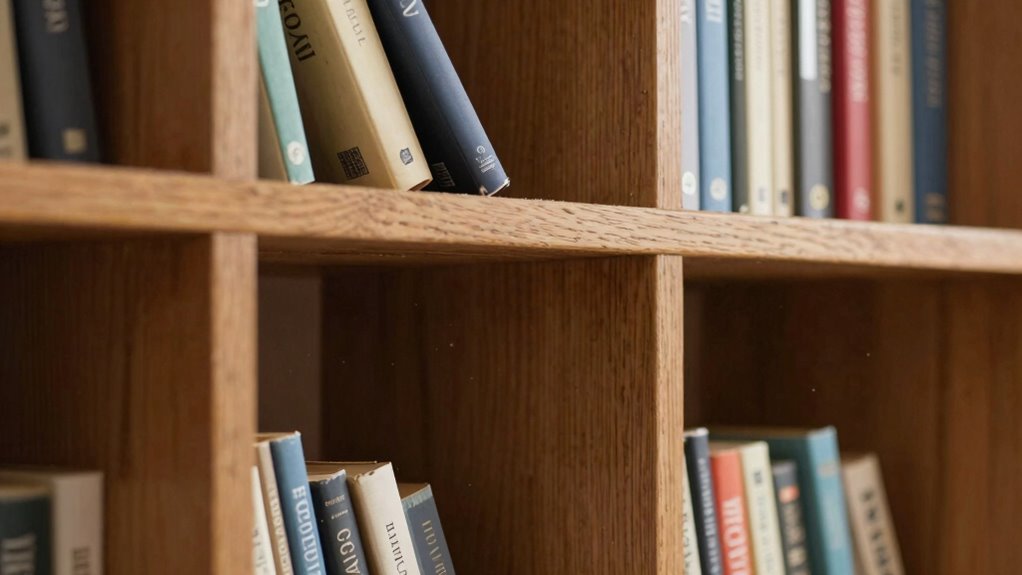
When you notice your shelves start to sag, it’s a clear sign that something’s not right, and addressing the issue promptly can prevent further damage. Common shelf sagging causes include overloading, weak materials, or poor support. To troubleshoot, check for uneven weight distribution and loose brackets. If the sagging worsens or the shelf warps visibly, it’s time to consider replacement indicators. These include cracked or split wood, persistent bowing, or loosened supports that won’t tighten. Use this quick reference:
| Issue | Cause | Replacement indicator |
|---|---|---|
| Sagging shelf | Excess weight, weak wood | Persistent bowing, cracks |
| Warped shelf | Moisture, age | Visible deformation |
| Loose supports | Wear, poor installation | Inability to tighten |
| Cracks or splits | Material fatigue | Structural failure |
Knowing when to replace guarantees your bookshelf remains safe and reliable.
Frequently Asked Questions
Can Weight Distribution Prevent Bookshelf Sagging Effectively?
Yes, proper weight distribution can effectively prevent bookshelf sagging. You should focus on book arrangement and weight balancing, placing heavier books on lower shelves for stability. Distribute weight evenly across shelves, avoiding concentrated loads that strain the material. By maintaining balanced weight, you reduce stress on the shelves and support their longevity, ensuring your bookshelf stays sturdy and sag-free over time.
Are There Specific Tools Recommended for Reinforcement Installation?
Think of shelf reinforcement as giving your bookshelf a backbone. For installation, you’ll want mounting tools like a drill, level, and screwdriver to guarantee secure attachment. Use shelf reinforcement brackets or anchors designed for weight support, and apply them with precise mounting tools. These tools help you install reinforcement properly, preventing sagging and keeping your books safe. A sturdy setup is just a few good tools away from becoming your bookshelf’s best friend.
How Often Should I Check for Early Signs of Sagging?
You should check for early signs of sagging every few months during regular book maintenance. Look for uneven shelves, bowing, or gaps between books and the shelf edges, which indicate declining shelf stability. Catching these issues early allows you to reinforce the shelf before serious damage occurs. Regular inspections help maintain your bookshelf’s strength and prevent sagging, ensuring your collection stays secure and organized for years to come.
Do Certain Wall Types Require Special Mounting Techniques?
Think of your wall as the stage for your bookshelf’s performance; if the stage isn’t sturdy, neither is the show. Different wall materials, like drywall, brick, or concrete, demand specific mounting methods for safety. For drywall, use anchors and studs; for brick or concrete, select masonry anchors and drills. Tailoring your mounting techniques guarantees your shelves stay upright, avoiding a fall that could turn your display into a disaster.
What Are Eco-Friendly Materials for Sturdy Bookshelf Support?
You should consider using sustainable wood or recycled composites for sturdy, eco-friendly bookshelf support. Sustainable wood comes from responsibly managed forests, reducing environmental impact, while recycled composites reuse materials like plastics and wood fibers, providing durability without harming the planet. Both options guarantee your bookshelf remains strong and stable, giving you peace of mind that you’re supporting a greener future while enjoying a sturdy storage solution.
Conclusion
By following these tips, you’ll turn your bookshelf into an indestructible fortress—so strong, it could withstand a tornado! No more sagging, no more worries. Your books will stay perfectly upright, and your shelves will stand tall for years to come. Say goodbye to collapsing shelves and hello to a stunning, steadfast display that’s as resilient as your love for your collection. Get ready to conquer bookshelf sagging once and for all!
Columbus Day / Indigenous Peoples' Day Picks
long weekend sales
As an affiliate, we earn on qualifying purchases.